Wood vs. Composite Decking: Which Is Better?
It's one of the first questions that comes up when planning a new deck — and it's also one of the most debated. Talk to three contractors and you might get three different answers, often shaped by what they prefer to install rather than what's actually right for your situation.
The honest answer is that neither material is universally better. Each has real advantages and real tradeoffs, and the right choice depends on your budget, how long you plan to stay in the home, how much maintenance you're willing to do, and how the deck will be used.
This guide gives you a straight comparison — no upselling, no agenda.
What We're Actually Comparing
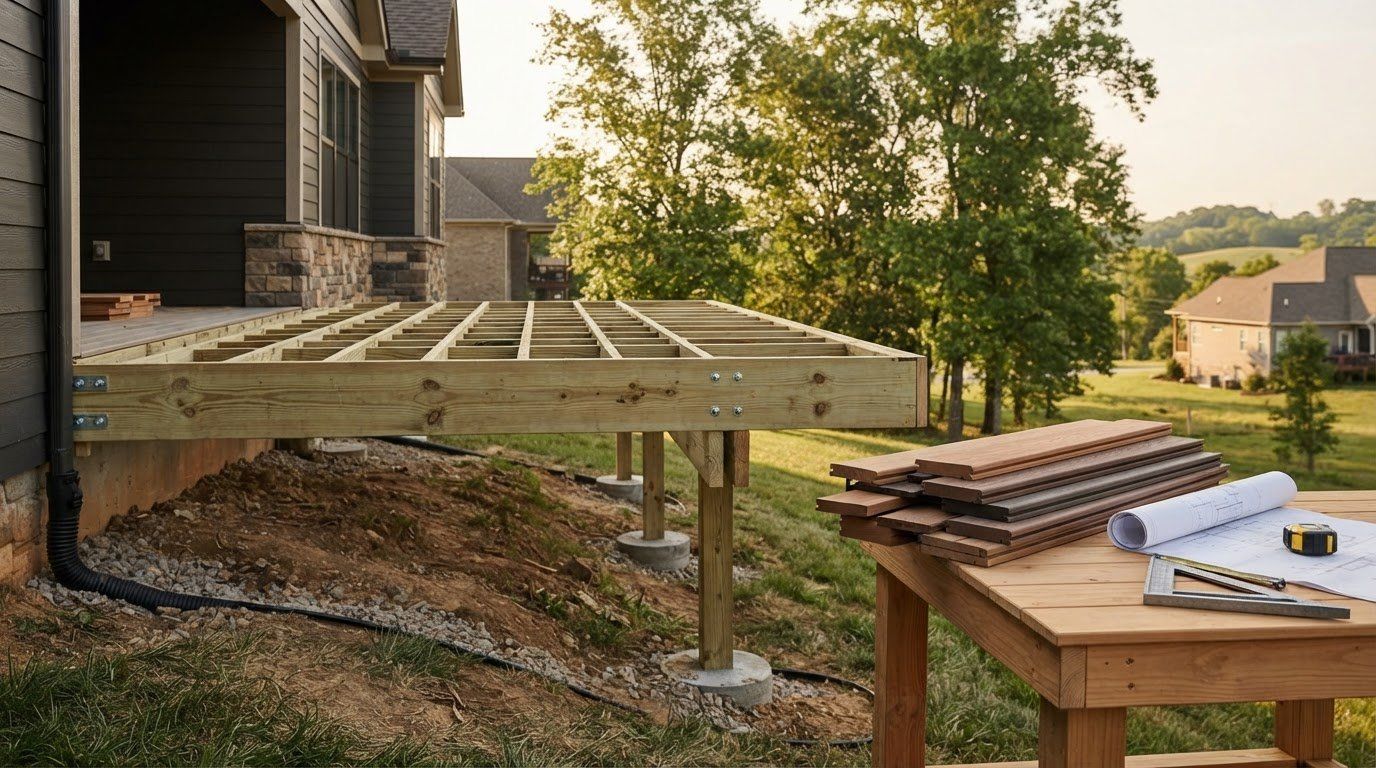
"Wood decking" in a residential context almost always means pressure-treated pine — lumber that's been chemically treated to resist rot, insects, and moisture. It's what you'll find at every hardware store and what most budget-conscious homeowners default to.
There are other wood options — cedar, redwood, tropical hardwoods like ipe — but they're significantly more expensive than pressure-treated pine and less commonly used in Louisville. We'll reference them where relevant, but this comparison focuses on pressure-treated wood because that's what most homeowners are actually choosing between.
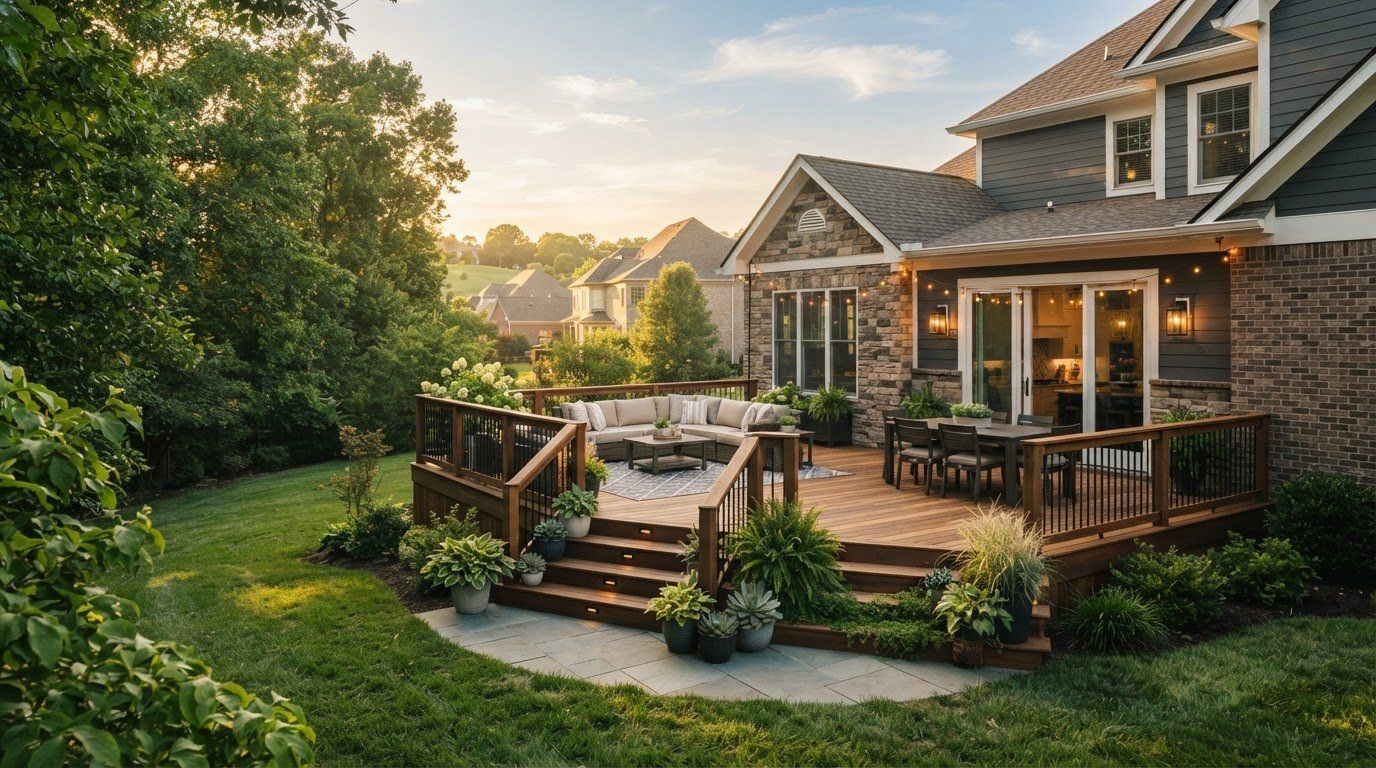
"Composite decking" covers several different products, but the most relevant category for Louisville homeowners is capped composite — boards made from a wood fiber and plastic core, wrapped in a protective polymer shell. Brands like TimberTech, Trex, and Azek fall into this category. Older uncapped composites had significant problems with fading, staining, and moisture absorption — those issues are largely solved in modern capped products.
The Core Tradeoff in One Sentence
Pressure-treated wood costs less upfront and requires more ongoing maintenance. Composite costs more upfront and requires almost no maintenance.
Everything else in this wood vs composite cost comparison is a variation on that theme.
Wood vs. Composite Decking: Side-by-Side
| Pressure-Treated Wood | Capped Composite | |
|---|---|---|
| Upfront cost | Lower | 2–3x higher |
| Lifespan | 15–25 years | 25–30+ years |
| Maintenance | Annual sealing/staining | Occasional cleaning only |
| Appearance | Natural wood look | Consistent, wood-like finish |
| Heat retention | Low–moderate | Moderate–high (color dependent) |
| Splinters | Yes | No |
| Scratch resistance | Moderate | Good (capped composite) |
| Fade resistance | Poor–moderate | Good–excellent (capped) |
| Eco impact | Renewable, chemical treatment | Mixed materials, long lifespan |
| DIY-friendly | Yes | Yes, but heavier |
| Resale appeal | Standard | Better (lower maintenance) |
These are installed costs including framing, decking material, and basic railing. They don't include premium features like built-in seating, pergolas, or lighting.
Composite Decking Pros and Cons
The Pros
No annual maintenance. This is the central selling point. Capped composite doesn't need to be sealed, stained, or treated. Cleaning is occasional — soap and water, or a composite-specific cleaner for stubborn stains. For homeowners who don't want a seasonal maintenance task, this is genuinely transformative.
Consistent appearance over time. Pressure-treated wood grays, checks, and warps as it weathers. Composite holds its color and profile much more consistently. Quality capped products carry 25–30 year fade and stain warranties.
No splinters. Relevant for families with kids and pets — composite boards don't develop the surface splintering that aging wood does.
Resistance to moisture and insects. The polymer shell on capped composite makes it largely impervious to the rot and insect damage that affects wood. In Louisville's humid summers, this is a meaningful advantage.
Long lifespan. A quality capped composite deck, properly installed, lasts 25–30 years or more with minimal intervention.
The Cons
Upfront cost. Two to three times the price of pressure-treated wood for the decking material alone. That's a real barrier for many homeowners.
Heat retention. Dark-colored composite boards can get hot in direct sun — hot enough to be uncomfortable barefoot. We'll cover this in detail below.
Scratches are more visible. While capped composite resists general wear well, deep scratches from furniture dragging or sharp objects are more noticeable than on wood because the cap layer is cut through to the different-colored core. These aren't repairable the way wood can be sanded.
Heavier. Composite boards are significantly heavier than wood, which affects both shipping costs and installation labor.
How Long Does Composite Decking Last?
A properly installed capped composite deck lasts 25–30 years under typical residential conditions. Premium products like TimberTech's Terrain and Legacy collections carry 30-year or limited lifetime warranties against fading, staining, and structural failure.
The key qualifier is "capped composite." Earlier composite products from the 1990s and early 2000s had serious longevity issues — they absorbed moisture, grew mold, and faded badly. Those problems are what gave composite decking a negative reputation that some homeowners still carry. Modern capped products are a fundamentally different material.
Pressure-treated pine, by comparison, lasts 15–25 years depending on maintenance diligence and environmental conditions. A well-maintained deck in a dry, sunny location can reach 25 years. A neglected deck in a shaded, humid Louisville backyard might start showing serious deterioration in 10–12 years.
Does Composite Decking Get Hot?
Yes — this is a real concern worth understanding honestly.
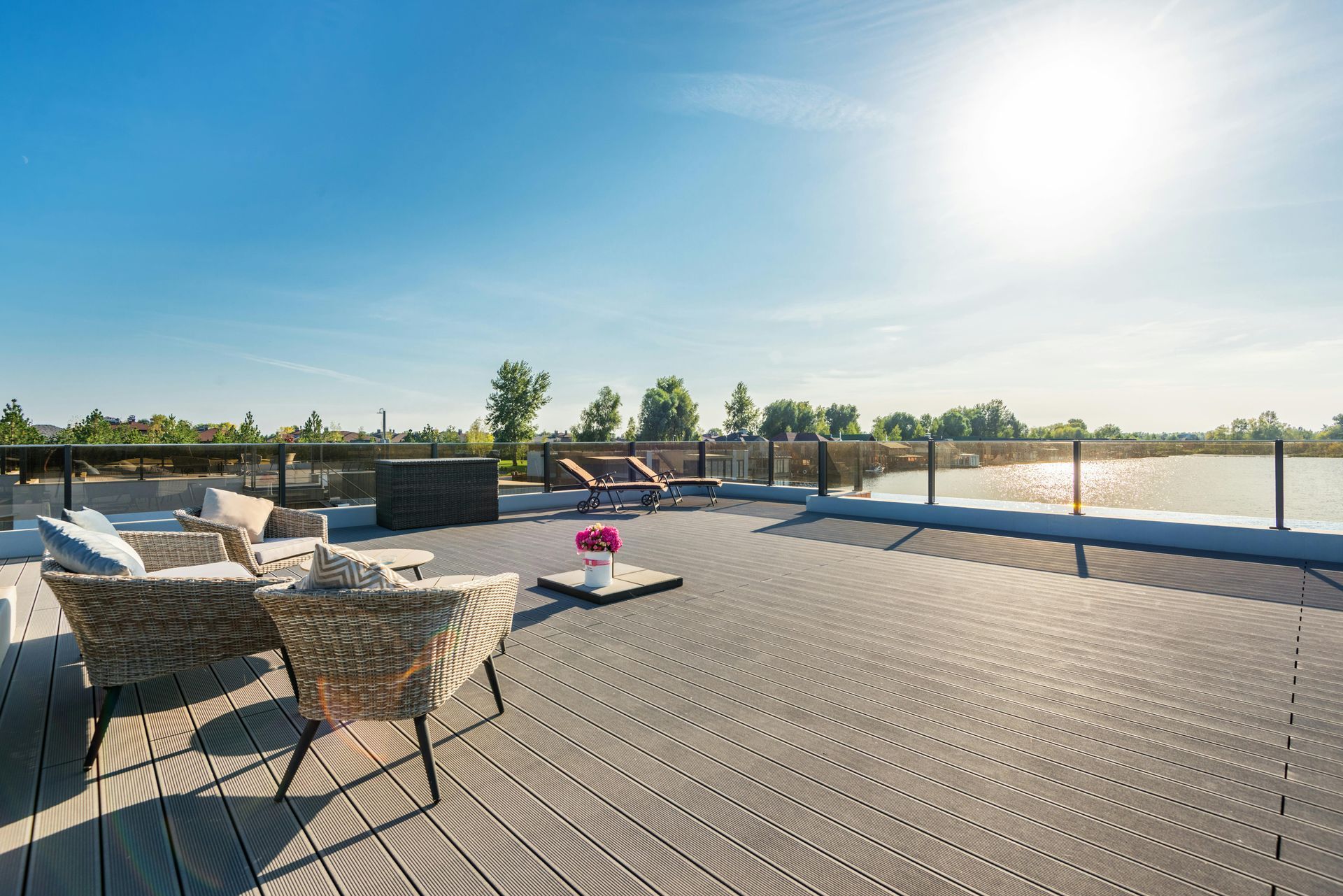
Dark-colored composite boards in direct sun can reach surface temperatures of 150°F or higher on a hot summer day. That's hot enough to be uncomfortable or even painful to walk on barefoot.
A few important context points:
Color matters enormously. Light-colored and lighter-toned composite boards stay significantly cooler than dark ones. A light gray or tan composite board in the same conditions might reach 100–110°F — still warm, but manageable.
Wood also gets hot. Pressure-treated wood in direct sun reaches temperatures similar to mid-range composite. The difference is more pronounced with very dark composite compared to natural wood.
Shade changes the equation. A deck that's covered, shaded by trees, or on a north-facing exposure doesn't experience the same heat buildup. If your deck gets full afternoon sun in a Louisville summer, factor color selection into your composite choice.
Best decking material for weather considerations in Louisville: For a sunny, south or west-facing deck, lighter composite colors or pressure-treated wood are the practical choices if heat is a primary concern. For shaded or covered decks, dark composite works without issue.
Composite Decking Maintenance Requirements
This is one of the strongest practical arguments for composite. Here's what the maintenance calendar actually looks like:
Pressure-treated wood deck (annual):
- Spring: Clean the deck surface, check for rot and loose fasteners
- Spring/early summer: Apply sealant or stain (needs to be dry for 2–3 days)
- Ongoing: Replace boards that crack, split, or develop significant rot
- Every 3–5 years: Consider a full restain/reseal
Composite deck (annual):
- Spring: Rinse with garden hose, clean any stains with soap and water
- That's essentially it
For staining, composite can't be done — once composite is manufactured, the color is set. That's a limitation if you want to change the look later, but it's also what eliminates the recurring stain-and-seal task.
One maintenance area that applies to both:
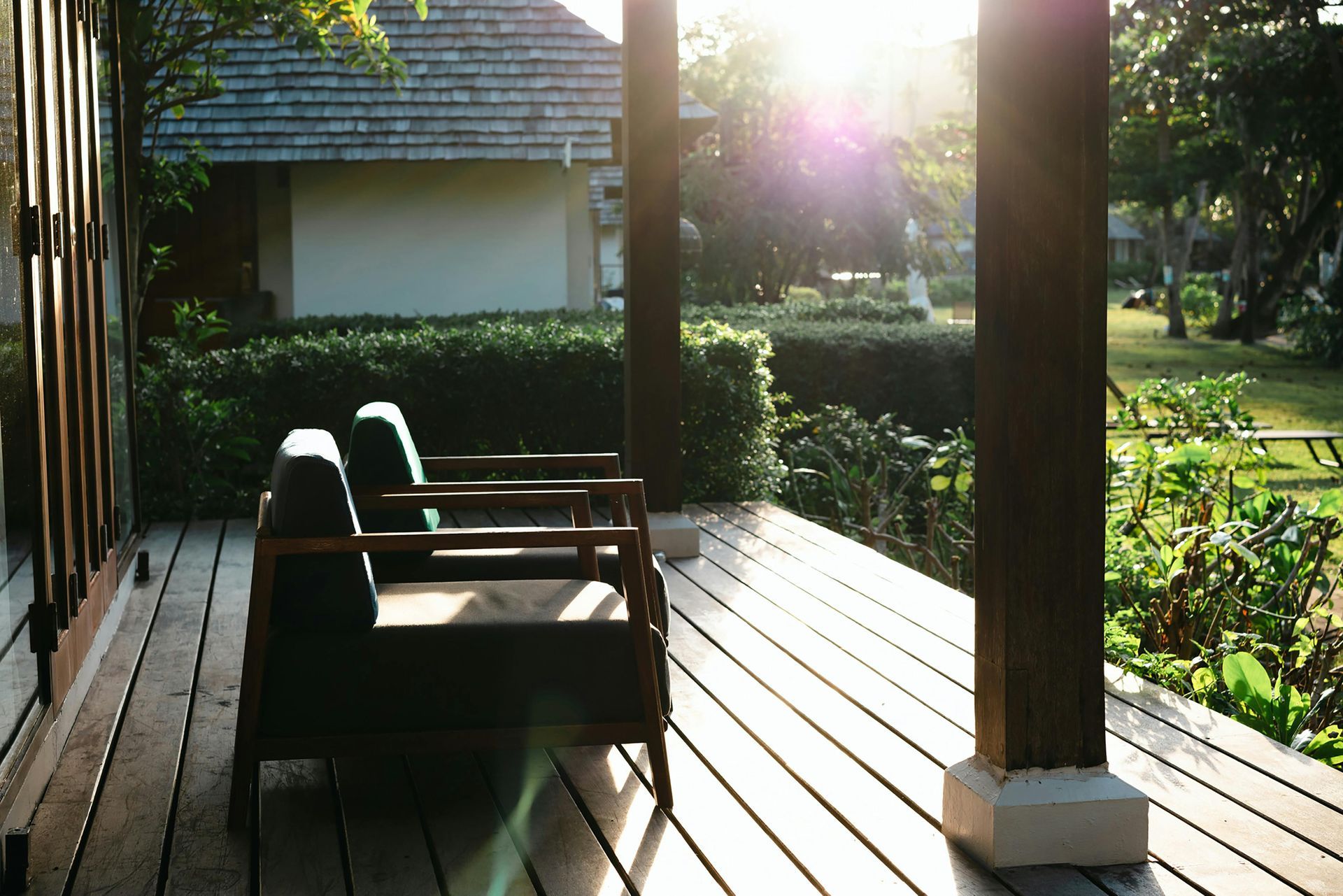
the frame. Whether the decking boards are wood or composite, the substructure is almost always pressure-treated lumber. That framing still needs periodic inspection for rot and structural integrity, regardless of what's on top.
Is Composite Decking Worth It?
It depends entirely on your priorities and timeline.
The case for composite is strongest when:
- You plan to own the home for 10+ years
- You want to eliminate seasonal maintenance
- The deck will see heavy use (kids, pets, entertaining)
- You're building a higher-end outdoor space where aesthetics matter long-term
- The deck is in a shaded or humid location where wood rot is accelerated
The case for pressure-treated wood is strongest when:
- Budget is the primary constraint
- You're planning to sell within 5 years
- You enjoy the natural look of real wood and are willing to maintain it
- The deck is a simpler structure in a dry, sunny location
The honest middle ground: For most Louisville homeowners who plan to stay in their home for 10+ years, composite's lower lifetime cost and maintenance elimination make it the smarter financial choice — even though the upfront number is harder to swallow.
For homeowners planning a shorter stay or working with a tighter budget, a well-built pressure-treated deck makes complete sense and will deliver good value if maintained properly.
What About Cedar, Ipe, and Other Wood Options?
Cedar is naturally rot-resistant and doesn't require chemical treatment. It looks beautiful and smells great when new. The downside: it still needs sealing and staining to maintain appearance, and it costs 2–3x more than pressure-treated pine. In Louisville's climate, the cost premium over pressure-treated wood rarely makes sense unless you strongly prefer the aesthetic.
Ipe and other tropical hardwoods are extraordinarily durable — 40–50 year lifespans are realistic. They're also extremely expensive ($15–$25 per linear foot for material alone), heavy, and require specialized installation tools. They represent a very small niche of the Louisville decking market.
For most homeowners, the realistic choice is between pressure-treated pine and composite. The premium wood options exist, but they occupy a different price tier altogether.
Louisville-Specific Considerations
A few factors specific to building a deck in this market:
Humidity. Louisville's humid summers accelerate wood degradation significantly compared to drier climates. A pressure-treated deck that might last 25 years in Colorado will likely show meaningful wear by year 15 here without consistent maintenance. This tilts the composite argument more favorably than national averages suggest.
Freeze-thaw cycles. Kentucky winters aren't severe, but repeated freeze-thaw cycles affect wood more than composite. Water that penetrates wood grain expands when it freezes, gradually breaking down the material from within. Composite is largely unaffected.
Most Louisville decks need permits. Decks over 200 square feet or attached to the house generally require a Jefferson County building permit. Make sure your contractor handles this — a deck built without required permits creates problems at resale and with homeowner's insurance. This applies regardless of which material you choose.
FAQ
Is composite decking really worth the extra cost?
For homeowners staying in the home 10+ years, typically yes. The maintenance savings over a decade offset a meaningful portion of the upfront premium, and the longer lifespan means you're comparing one composite installation against potentially two wood replacements over 30 years.
How long does pressure-treated wood last on a deck?
With consistent maintenance — sealing or staining every 2–3 years and prompt board replacement when rot develops — 15–25 years is realistic in Louisville's climate. Without maintenance, expect significant deterioration by year 10–12 in humid or shaded conditions.
Can composite decking be painted or stained?
No. The polymer cap on composite boards doesn't accept paint or stain. The color you choose at purchase is permanent. This eliminates the maintenance task but also limits your ability to change the look later.
Which decking material holds up better to heavy furniture?
Both handle normal patio furniture well. Composite is more resistant to moisture-related warping under heavy planters and outdoor furniture legs. Wood can develop soft spots under consistently wet furniture over time.
Does composite decking add more resale value than wood?
Generally yes — primarily because buyers factor in the absence of near-term maintenance. A 3-year-old composite deck looks nearly identical to a new one. A 3-year-old wood deck that hasn't been maintained looks its age, and buyers mentally subtract the refinishing cost.
The Bottom Line
Neither material is wrong. They solve different problems for different budgets and timelines.
If you want the lowest upfront cost and are committed to annual maintenance, pressure-treated wood builds a perfectly good deck. If you want to build something once and not think about it again for 25 years, composite is the smarter long-term investment.
The mistake most homeowners make is comparing only the installation quotes without accounting for 10–15 years of maintenance costs on the wood side. When that full picture is on the table, composite's premium shrinks considerably.
If you're planning a deck project in Louisville and want to walk through material options, pricing, and what makes sense for your specific backyard — our decking professionals offer free estimates and will give you an honest comparison without pushing you toward the higher-margin option.