
How Often Should You Clean Your Gutters?
Most homeowners think about their gutters twice a year — when leaves are falling in October and when something visibly goes wrong. That's understandable. Gutters are up high, they don't announce problems quietly, and cleaning them is nobody's idea of a good Saturday.
But neglecting them has a cost that sneaks up on you. A clogged gutter doesn't just look bad — it redirects water toward your fascia board, your siding, and eventually your foundation. By the time the damage is obvious, you're often looking at repairs that dwarf what a regular cleaning would have cost.
This guide gives you a clear, honest answer to the frequency question — and it accounts for the specific conditions that affect Louisville homes.
The Short Answer (And Why It's Not That Simple)
The standard recommendation is twice a year — once in late spring, once in late fall. For many homes, that's genuinely enough.
But the honest answer is: it depends on your yard.
A home surrounded by mature oak trees needs more attention than a house with a concrete lot and one small maple twenty feet away. A home with pine trees nearby may need quarterly cleaning. A home with gutter guards needs less frequent full cleanings but still needs periodic inspection.
The twice-a-year baseline assumes a typical suburban Louisville home with moderate tree coverage and no gutter protection system. If your situation differs from that baseline, your gutter cleaning schedule should too.
How to Set the Right Cleaning Frequency for Your Home
Four factors determine how often your gutters actually need attention:
1. Tree Coverage
This is the biggest variable. Different trees shed at different times and in different volumes:
| Tree Type | Shedding Pattern | Cleaning Impact |
|---|---|---|
| Oak | Heavy fall leaf drop, late season | At minimum twice a year |
| Pine / Evergreen | Year-round needle and cone drop | Quarterly cleaning recommended |
| Maple | Spring seed pods + fall leaves | Spring and fall both critical |
| Sweet gum | Spiky balls year-round | More frequent inspections needed |
| No trees nearby | Minimal debris | Once a year may be sufficient |
If pine or sweet gum trees overhang your roofline, the standard two-times-a-year schedule isn't adequate. Needles accumulate in gutter channels faster than leaves and form dense mats that are harder to flush out.

2. Your Local Climate
Louisville averages over 46 inches of rainfall annually — well above the national average. That means your gutters are working harder than those in drier climates, and debris buildup creates bigger problems faster.
Kentucky's storm season (spring through early summer) brings heavy rain events that can overwhelm partially clogged gutters in a single afternoon. Cleaning before storm season — late March to early April — is important here specifically because of that pattern.
3. Your Roof Pitch
Steeper roofs shed debris more efficiently than low-slope roofs. A flat or low-pitch roof allows leaves and granules to accumulate on the surface before eventually washing into the gutter — adding to the load. If your home has a low-pitched section (common over additions and covered porches), those gutters may need more frequent attention.
4. Whether You Have Gutter Guards
COMMON MISCONCEPTION: Gutter guards don't eliminate the need for cleaning — they reduce it.
Gutter guards keep large debris out of the channel, but small particles (pine needles, shingle granules, seed pods) still get through or accumulate on top. Most homes with quality gutter guards can go 1–2 years between full cleanings, but the guards themselves need to be inspected and brushed off at least once a year.
If you have guards and haven't checked them in three or more years, it's worth a look. A mat of debris on top of the guard behaves exactly like a clogged gutter — water sheets over the edge instead of entering the system.
Recommended Gutter Cleaning Schedule by Home Type
| Home Type | Recommended Frequency |
|---|---|
| No trees nearby | Once a year (fall) |
| Moderate deciduous tree coverage | Twice a year (spring + fall) |
| Heavy deciduous coverage | 3 times a year |
| Pine or evergreen trees overhead | 4 times a year (quarterly) |
| Home with gutter guards | Once every 1–2 years + annual inspection |
| After any major storm | Visual inspection, clean if needed |
When to Clean Gutters: The Best Times of Year
When to clean gutters matters almost as much as how often. Here's how to time it for Louisville's climate:
Late Spring (April–May)
This is the most important cleaning window Louisville homeowners miss. Spring brings:
- Maple seed pods ("helicopters") that pack tightly into gutters
- Oak tassels and pollen debris
- Post-winter buildup of granules washed from shingles during freeze-thaw cycles
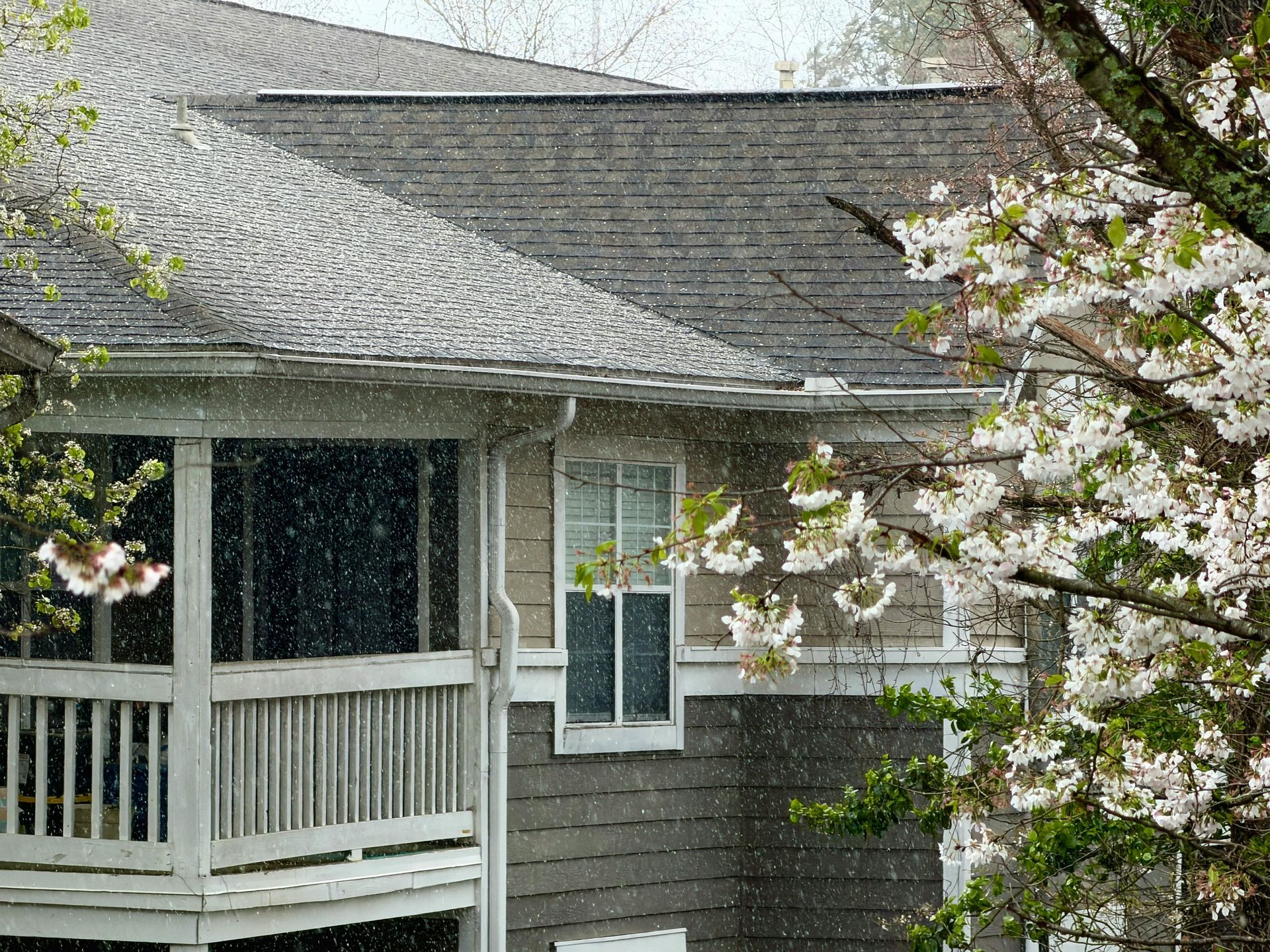
Cleaning in April also prepares your system for the spring rainy season, when heavy storms are most frequent in Kentucky. A partially clogged gutter during a 2-inch rain event is where most water damage starts.
Late Fall (November)
The classic timing — after peak leaf fall but before hard freezes. The goal is to enter winter with clear gutters so that snowmelt and ice can flow freely. A gutter packed with wet leaves in December becomes a solid mass of debris and ice in January, adding weight and potentially pulling the gutter away from the fascia.
PRO TIP: Don't clean too early in fall. Cleaning in September when trees are only half done dropping leaves means you'll need to do it again in November anyway. Wait until about 80% of the leaves have fallen.
After Major Storms
Louisville's spring storm season can dump significant debris — broken branches, leaf clusters, and displaced nesting material — in a single event. Do a visual check from the ground after any major storm. If you see debris hanging over the edge or water overflowing during the next rain, that's your signal.
Should You Clean Gutters in Spring?
Yes — and for Louisville homeowners specifically, spring cleaning is arguably more important than fall.
Spring debris accumulates differently. Seed pods, pollen, and granule buildup after winter are denser and harder to flush than dry fall leaves. And spring is when Louisville gets its heaviest rainfall.
A gutter that drained fine in October might be 40% blocked by May from winter accumulation alone — even if no leaves fell into it.
Spring cleaning is also when you're most likely to spot damage from winter ice, including:
- Bent or separated hangers from ice weight
- Gutter sections pulling away from the fascia
- Cracked joints from freeze-thaw expansion
Signs Your Gutters Need Cleaning Now
Gutter cleaning frequency guidelines are useful, but your gutters will also tell you when they need attention between scheduled cleanings. Watch for:
- Overflowing water during rain — the most obvious sign of a clog
- Plants growing in gutters — means enough organic material has accumulated to support root growth
- Sagging sections — debris and standing water add weight the system isn't designed to hold
- Visible debris hanging over the lip or packed into downspout openings
- Water staining on siding below the gutter line — chronic overflow
- Granules in the gutters — technically not a clog, but worth noting; heavy granule accumulation means your shingles are aging
- Bird or animal nesting — once nesting material is established, water can't pass through
If you're seeing any of these, don't wait for your scheduled cleaning date.
Do Gutters Need to Be Cleaned Every Year?
Short answer: almost certainly yes.
Even in low-tree environments — because other debris accumulates regardless of leaf cover. Shingle granules wash in steadily throughout the year. Wind carries seeds and organic material. Dirt builds up in the channel. And downspout screens catch material that eventually restricts flow.
The only homes where once every two years might be appropriate: properties with essentially no trees within 50 feet, in a climate with mild rainfall, with quality gutter guards installed and regularly inspected. That describes a small minority of Louisville homes.
For most homeowners in this area — with a mature tree canopy that's typical of older Louisville neighborhoods — annual cleaning at minimum is the right baseline, with spring cleaning as a strong additional recommendation.
How Often to Clean Gutters with Guards
This deserves its own section because it's the question we hear most often after customers have guards installed.
How often to clean gutters with guards depends on the type of guard:
| Guard Type | Expected Maintenance |
|---|---|
| Micro-mesh (best) | Inspection every 1–2 years, occasional surface cleaning |
| Reverse curve | Annual inspection; debris can accumulate at the opening |
| Screen/perforated | Every 1–2 years; small debris passes through |
| Foam insert | Annual check; debris and algae grow on top |
The key point: guards shift the maintenance from inside the gutter to on top of the guard. You still need to get up there periodically. The difference is that a 10-minute surface cleaning replaces a 2-hour debris removal job.

How to Inspect Your Gutters Between Cleanings
You don't need to get on a ladder every month. A basic visual check from the ground takes less than five minutes and can catch problems before they turn into repairs. Do this once a month during fall and spring, and after any significant storm.
From the Ground (No Ladder Required)
Walk the perimeter of your house and look for:
- Water stains on the siding below the gutter line — a sign of chronic overflow or a leak at a seam
- Gutter sections visibly sagging or pulling away from the roofline — means a hanger has failed or the fascia behind it is softening from moisture
- Debris hanging over the lip — leaves, sticks, or bird nesting material visible from below
- Downspout outlets — check that they're clear and directing water away from the foundation, not pooling at the base
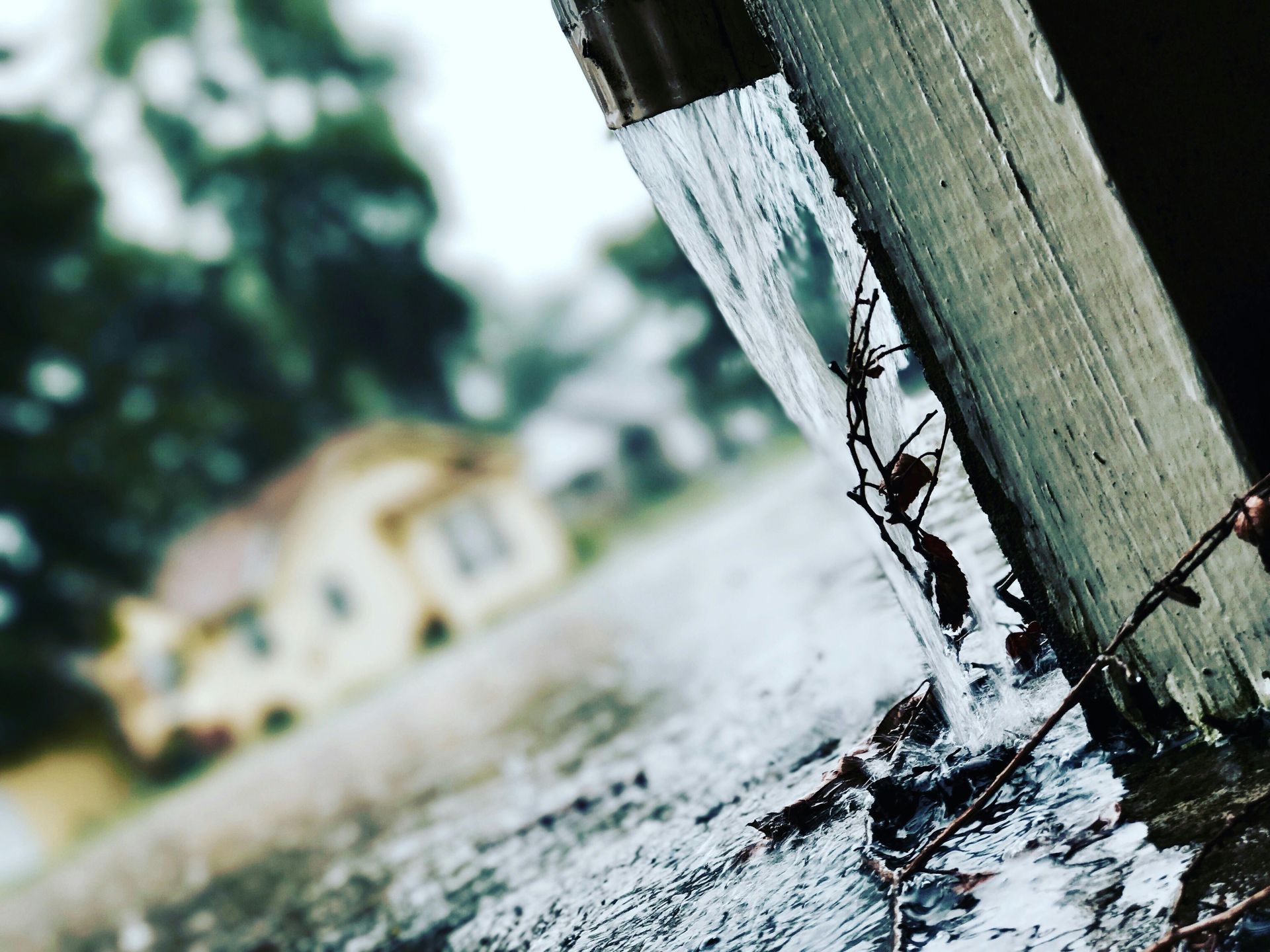
PRO TIP: The best time to check is during a moderate rain. Watch where the water goes. If it's sheeting over the front of the gutter instead of flowing to the downspout, you have a blockage. If it's dripping behind the gutter between the channel and the fascia, you have a separation or a failed back seal.
From a Ladder (Once or Twice a Year)
If you're comfortable on a ladder and your home is single-story, a hands-on inspection takes about 20 minutes:
- Check the channel for standing water — water sitting in the gutter hours after rain means the slope is off or the downspout is partially blocked
- Press on the fascia board behind the gutter — it should feel solid. Soft or spongy wood means moisture has been getting behind the gutter, likely for a while
- Check hanger spacing and condition — hangers should be spaced no more than 24–36 inches apart. Any that are loose, bent, or pulling out of the fascia need to be re-secured
- Flush the downspout with a hose — water should flow freely from the outlet at the bottom. If it backs up, there's a blockage somewhere in the vertical section
- Look at the joints and end caps — these are the most common leak points on sectional gutter systems. Any separation, rust, or dried sealant pulling away needs attention before the next rain

What to Do If You Find a Problem
| What You See | What It Means | DIY Fix? |
|---|---|---|
| Debris clog | Standard maintenance issue | Yes — scoop and flush |
| Loose hanger | Fastener failed or fascia softening | Yes if fastener only; call a pro if fascia is soft |
| Leaking seam | Sealant dried out | Yes — gutter sealant, ~$8 at hardware store |
| Sagging section | Multiple hanger failures or weight issue | Depends on scope |
| Soft fascia behind gutter | Water damage to wood — structural | Call a pro |
| Downspout won't flush | Blockage in vertical section or underground drain | Try a plumber's snake first |
The soft fascia finding is the one that most homeowners miss because it's not visible until you touch it. By the time fascia has softened enough to feel spongy, water has usually been sitting behind the gutter for months. Catching it early — before it spreads to the rafter tails behind it — is the difference between a $200 repair and a $1,500–$3,000 one.
If your inspection turns up hanger failures, fascia damage, or a downspout that won't clear, our gutter services team can assess and repair while they're already on-site. It's also worth asking about gutter guards at that point — if your system is in good shape and you're tired of the maintenance cycle, guards can significantly reduce how often you're up on that ladder.
DIY vs. Professional Gutter Cleaning
Can you clean your own gutters? Yes — with a stable ladder, gloves, a gutter scoop, and a hose. For a single-story home with accessible gutters, DIY cleaning is straightforward.
Where it gets complicated:
- Two-story or taller homes — ladder safety becomes a real concern
- Homes with steep roof pitches — working near the roofline adds risk
- Homes with extensive downspout networks — flushing and checking all outlets takes longer than most homeowners expect
- After storm damage — if you suspect the gutter pulled away or a hanger broke, a professional can assess while cleaning
A professional cleaning typically includes checking hanger integrity, testing downspout flow, and spotting early signs of fascia damage — which a DIY cleaning often doesn't cover.
What Louisville's Climate Means for Your Schedule
We've mentioned the rainfall numbers, but here's the practical implication: Louisville gutters work harder and clog faster than gutters in drier regions. The freeze-thaw cycle in Kentucky winters is particularly rough — ice expansion stresses seams and hangers, and debris frozen into gutters during winter comes loose in spring and washes into downspouts in clumps.
If you've been following a once-a-year fall cleaning schedule and noticing overflow problems in spring, that's why. Louisville's spring conditions — heavy rain, lots of organic debris — justify treating spring cleaning as mandatory rather than optional.
Our gutter services include seasonal cleaning as well as full assessment of hanger condition and downspout flow. If your gutters are due for attention, or if you're considering gutter guards to reduce long-term maintenance, we're happy to take a look.
FAQ
How often should you clean gutters in a wooded area?
Homes with significant deciduous tree coverage should clean at minimum twice a year — spring and fall. If pine or evergreen trees overhang the roofline, quarterly cleaning is the right approach. The key is not missing the spring window, which is when seed pods and winter buildup create the heaviest load.
What is the best time to clean gutters?
Late April and November are the two ideal windows for Louisville homes. Late April clears spring debris before the heavy rain season. November clears fall leaves before freezing temperatures lock debris in place.
How many times a year to clean gutters on an average home?
Twice a year covers most Louisville homes with moderate tree coverage. Homes with heavy or evergreen tree coverage need 3–4 times. Homes with quality gutter guards in low-debris environments may manage with once every 1–2 years plus annual inspection.
Do I need to clean gutters if I have gutter guards?
Yes — less frequently, but not zero. Guards keep large debris out, but small particles accumulate on the guard surface and inside the channel over time. Inspect annually and clean the guard surface as needed. Full cleanings every 1–2 years are still recommended.
What happens if you never clean your gutters?
Debris accumulation leads to overflow, which sends water into the fascia board, siding, and eventually your foundation. Standing water in gutters also attracts mosquitoes, supports plant growth, and accelerates rust and corrosion in the gutter system itself. It's one of the most cost-effective maintenance tasks a homeowner can do — skipping it eventually creates much bigger repair bills.