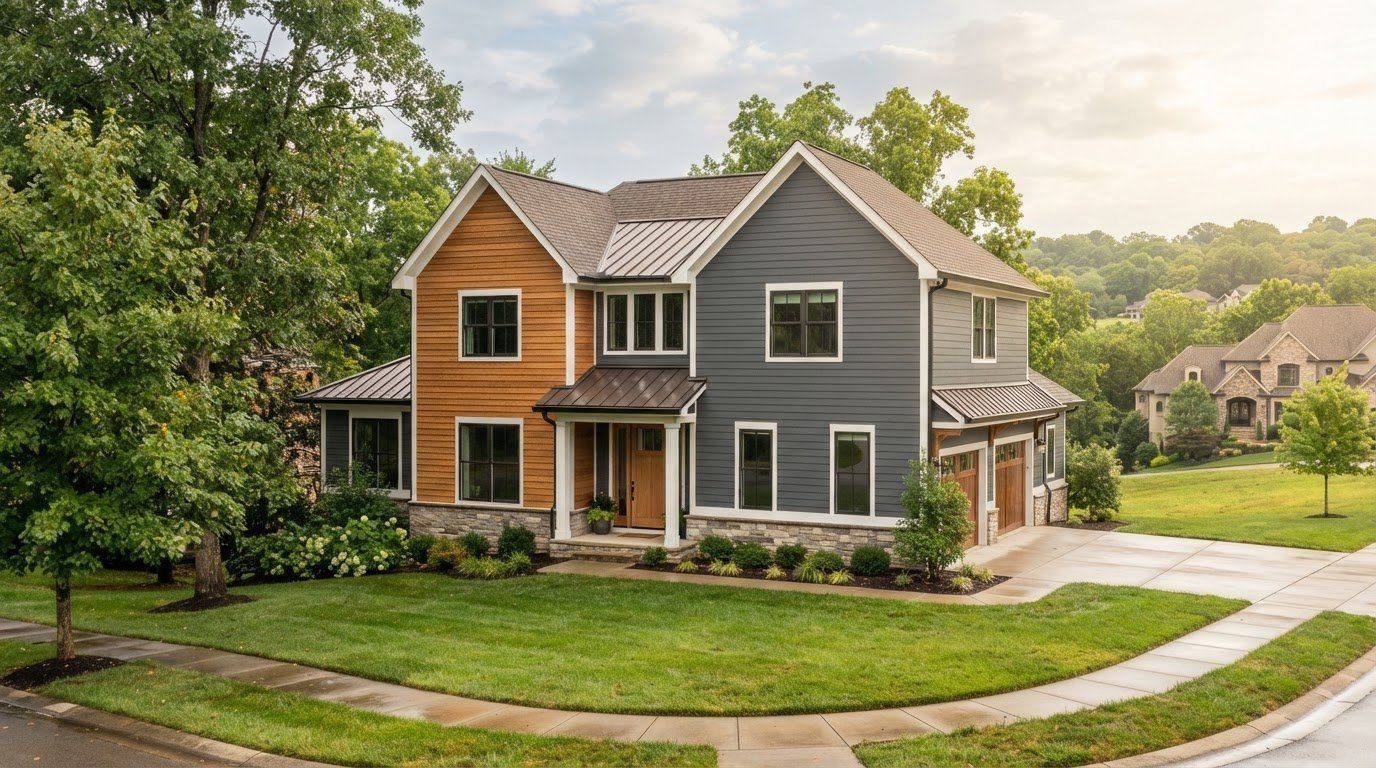
LP SmartSide Siding Louisville KY: The Ultimate 2026 Homeowner’s Installation Guide

Pat McIntyre • August 23, 2026

If you believe all siding materials offer the same protection against the Ohio Valley's punishing humidity, you are likely setting your home up for a costly failure. Most Louisville homeowners feel a justified sense of anxiety when choosing an exterior, fearing that moisture will eventually lead to rot or that a contractor will disappear the moment a leak occurs. When you choose LP SmartSide siding Louisville, you aren't just selecting a product; you're investing in a specialized defense system designed to thrive where traditional wood and vinyl often fail. It is a decision that moves you from uncertainty to long term stability.

This guide provides everything you need to know about the premier siding choice for 2026, from technical durability to the specific installation standards required for a valid warranty. You'll discover how this engineered wood technology outperforms competitors in the Louisville climate while maximizing your home's curb appeal and ROI. We will also outline how to verify contractor credentials to ensure your project is backed by the 50-year limited warranty and a professional 10-year labor guarantee. By the end of this article, you will have the clarity needed to transform your home into a maintenance free masterpiece.

Key Takeaways

  • Learn why the Ohio Valley's humidity makes standard materials a risk and how engineered wood provides a superior moisture barrier according to Louisville building standards.
  • Understand the science behind the SmartGuard process, which utilizes zinc borate and water-resistant waxes to prevent fungal decay.
  • Compare the impact resistance and installation efficiency of LP SmartSide against fiber cement to ensure you're maximizing your home's long term ROI.
  • Follow our 5-step installation roadmap to avoid common moisture detection failures and secure a flawless LP SmartSide siding Louisville transformation.
  • Identify the specific advantages of hiring an LP Master Lead to protect your investment with an industry-leading 10-year craftsmanship warranty.

Why Louisville Homes Need More Than Standard Vinyl Siding

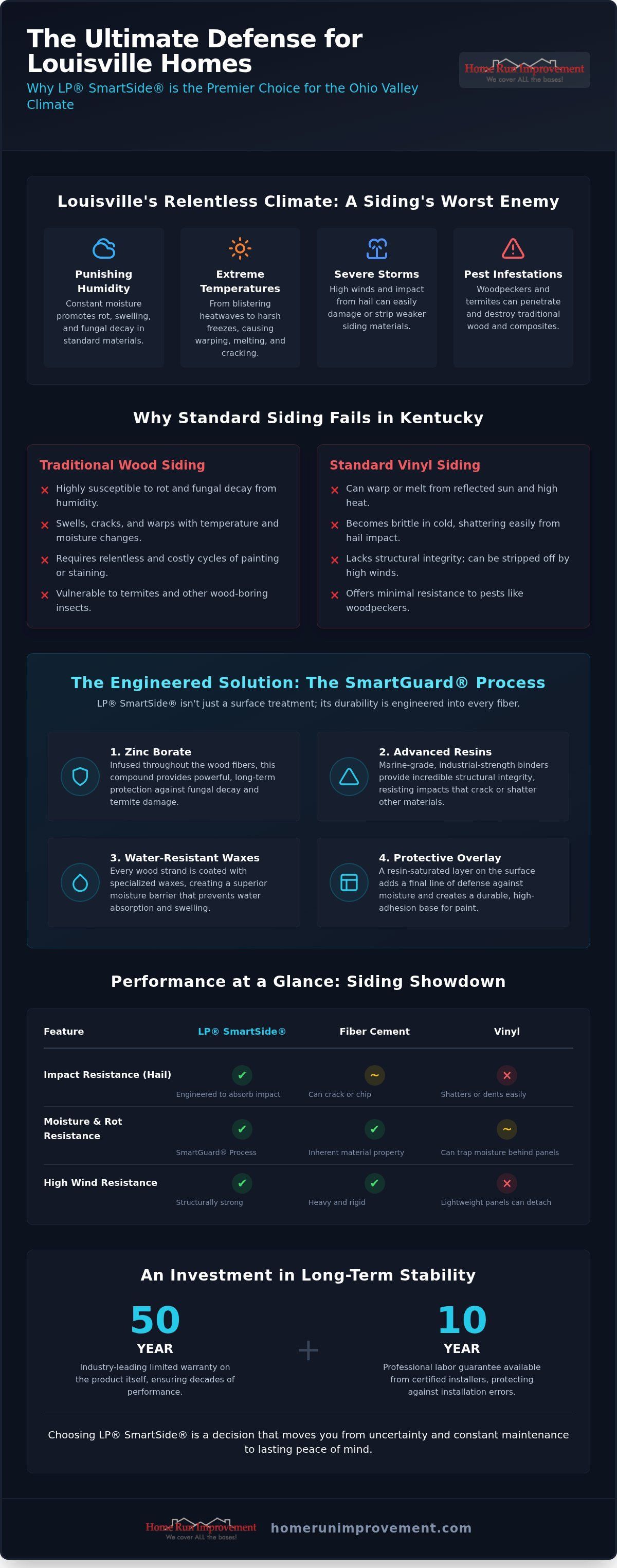
Living in the Ohio Valley requires an exterior that can handle more than just curb appeal. Louisville weather is relentless. Homeowners here face a unique set of environmental challenges, from bone-chilling January freezes to the blistering 2026 summer heatwaves. If you choose a budget-grade exterior, you're essentially inviting moisture into your wall cavities. Choosing LP SmartSide siding Louisville provides a necessary barrier against these extremes. It ensures your home remains a sanctuary rather than a liability.

Standard materials often fail under the weight of Kentucky's climate. We frequently see vinyl siding that has warped or even melted due to reflected sunlight from energy-efficient windows. Beyond heat, local wildlife like woodpeckers find traditional wood and some composites easy to penetrate. This leads to structural damage, pest infestations, and costly repairs that most warranties don't cover. Engineered wood offers a modern answer. It combines the aesthetic of historic Louisville architecture with the resilience of advanced material science, providing a defense that natural wood simply can't match.

To better understand why this material is a top choice for local homeowners, watch this helpful video:


https://www.youtube.com/watch?v=LNVFbtBBSGY


The Problem with Traditional Wood in the South

Natural cedar and pine might look beautiful initially, but they are highly susceptible to National Weather Service reported humidity levels. In Louisville, the air is often thick with moisture. This moisture penetrates natural wood fibers, causing them to swell, rot, and eventually fail. Maintaining the paint or stain on real wood is a relentless, expensive cycle. If you don't stay ahead of it, the Kentucky humidity will win every time. Engineered alternatives provide that classic look without the constant threat of decay.

Vinyl Siding vs. Louisville Storms

While vinyl siding installation Louisville remains a popular budget-friendly option, it often lacks structural integrity during severe weather. High winds can strip lightweight vinyl panels right off a house. This leaves the substrate exposed to driving rain and potential mold growth. Brittle vinyl is also no match for the hail that frequently accompanies our spring thunderstorms. LP SmartSide offers the impact resistance needed to survive these events without the cracking or denting common in thinner alternatives. It's the protective expert's choice for long-term peace of mind.

The Science of LP SmartSide: Engineered for Kentucky Durability

While traditional materials rely on surface coatings, LP SmartSide siding Louisville is built with durability baked into every fiber. It is a high-performance engineered wood siding treated with the proprietary SmartGuard process. This isn't just a marketing term; it's a rigorous manufacturing standard that ensures every board can withstand the specific environmental pressures of the Ohio Valley. When you choose this material, you're investing in a product that has been tested to perform in the most demanding conditions.

The strength of this siding comes from four essential components of protection:

  • Zinc Borate: Infused throughout the wood to resist fungal decay and wood-boring insects.
  • Resins: Marine-grade adhesives that provide incredible structural strength and impact resistance.
  • Waxes: Water-resistant coatings that protect individual wood strands from internal moisture.
  • Overlay: A resin-saturated finish that creates a durable base for paint and resists moisture intrusion.

SmartGuard is a multi-level treatment that prevents fungal decay and termite damage.

Impact resistance is where this technology truly shines during the volatile spring months. If a 2026 Louisville hail storm hits, standard vinyl often shatters and fiber cement can crack. LP SmartSide is engineered to absorb the energy of high-velocity impacts, protecting your home's structural envelope from a breach. When investing in LP SmartSide siding Louisville, you're choosing a product that remains resilient even when the weather turns aggressive.

Resistance to Rot and Termites

Kentucky’s climate is a breeding ground for subterranean termites and wood-destroying fungi. To combat this, the manufacturing process infuses zinc borate throughout the material. This acts as a natural deterrent for pests common in our region. Additionally, water-resistant waxes are used to coat every wood strand, preventing moisture absorption during heavy rainy seasons. Research from the Louisiana-Pacific Corporation confirms that this deep-level treatment is vastly superior to top-down applications found in lesser products.

Aesthetic Versatility for Louisville Architecture

Durability doesn't mean you have to sacrifice the character of your property. Whether you're matching the historic look of Anchorage or Glenview homes, you have options that mimic traditional cedar grain or offer smooth finishes for contemporary designs. The use of 16-foot boards is a significant advantage. These longer lengths result in fewer seams across your home's facade, creating a cleaner, more professional appearance. If you're ready to see how these textures look on your specific property, you can schedule an exterior design consultation with our team.

Evaluating the Investment: LP SmartSide vs. Fiber Cement

If you're weighing your options for a home exterior, you've likely encountered the debate between fiber cement and LP SmartSide siding Louisville. While both are upgrades over vinyl, they perform differently under the specific pressures of the Kentucky climate. Fiber cement is notoriously brittle and heavy. This weight often leads to higher labor costs and a greater risk of boards cracking during transport or while being nailed into place. LP SmartSide is significantly lighter and more resilient, which translates to a faster, more secure installation for your property.

Efficiency matters for more than just the schedule. Engineered wood boards come in 16-foot lengths, which is four feet longer than standard fiber cement panels. This means your home will have fewer seams, creating a more cohesive look and reducing the number of potential entry points for moisture. Over a 20-year period, these small technical advantages add up to a significantly lower total cost of ownership because you won't be dealing with the breakage issues common with heavier materials.

Choosing the right material is a strategic financial move. High-quality exterior upgrades are proven to increase home value in Louisville by boosting both structural integrity and aesthetic appeal. In fact, Siding material comparisons in recent cost-versus-value reports show that engineered wood consistently ranks as a top performer for ROI. You aren't just buying boards; you're securing your home's equity against the elements.

Material Comparison: Strength and Flexibility

Brittle materials don't handle movement well. Many neighborhoods in Louisville, from the Highlands to St. Matthews, feature homes with foundations that have settled over decades. If a house shifts even slightly, fiber cement can develop hairline fractures that allow water to seep behind the siding. LP SmartSide siding Louisville possesses a flexible strength that allows it to move with your home. It resists the cracking that often forces homeowners to replace individual fiber cement panels prematurely, providing a more reliable long-term envelope.

Maintenance Requirements

Your weekends shouldn't be spent scrubbing your house. LP SmartSide is designed for minimal upkeep, requiring only a periodic rinse with a garden hose and mild detergent to look new. Because the material is less porous than fiber cement, paint bonds more effectively to the surface. This superior adhesion means your factory-finished color won't flake or peel as easily, even under the intense Kentucky sun. We back this long-term performance with our 10-year craftsmanship warranty, ensuring your investment stays protected long after the crew leaves.


How to Plan Your LP SmartSide Installation: A 5-Step Guide

A successful siding project is the result of methodical planning and uncompromising execution. If you treat LP SmartSide siding Louisville as a simple "pull and replace" job, you are likely overlooking the critical details that ensure long-term performance. We follow a structured 5-step process to protect your investment and ensure your home remains the most resilient on the block. Each phase is designed to eliminate the common pitfalls that lead to moisture damage and warranty denials.

  • Step 1: Professional Exterior Audit. We begin with a deep-dive moisture detection sweep of your existing substrate. If there is rot hidden in your sheathing, we find it and fix it before the new siding goes up.
  • Step 2: Profile and Color Selection. You'll select from Lap, Shake, or Vertical profiles. We then help you choose an Expert Finish color that complements the specific architectural style of your neighborhood, whether you're in Anchorage or a more contemporary development.
  • Step 3: Substrate Preparation. Your home needs a high-quality house wrap to act as a secondary drainage plane. We ensure the substrate is flat and secure to prevent "waving" in the finished boards.
  • Step 4: Precision Cutting and Sealing. This is the technical heart of the project. Every cut must be precise, and every exposed edge must be treated to prevent moisture intrusion.
  • Step 5: Final Inspection and Registration. We perform a comprehensive walkthrough to verify every detail. Once we're satisfied, we assist you with the official warranty registration.

The Importance of Proper Flashing

Flashing is the number one failure point in residential siding. In Louisville, our heavy spring rains will find even the smallest gap in your home's armor. If flashing isn't integrated correctly around windows, doors, and rooflines, moisture will eventually cause structural rot. We take a holistic approach to water management, often coordinating your project with a professional gutter installation Louisville KY. This ensures that every drop of water is channeled safely away from your home's exterior envelope and foundation.

Sealing and Painting Best Practices

The longevity of your exterior depends on how the installer handles the material on-site. All field-cut edges must be sealed to maintain the 50-year warranty. Master Lead installers don't take shortcuts with "DIY-grade" techniques; we use specialized sealants that are designed to bond with engineered wood. We also pay close attention to the local temperature during the application. If the sealant is applied during extreme humidity or freezing temperatures, it won't cure properly. We monitor these environmental factors to ensure every joint is airtight and warrantied for the long haul.

Schedule your professional exterior audit today

Why Home Run Improvement is Louisville’s LP SmartSide Master Lead

Selecting the right material is only half the battle. If your installer doesn't understand the specific expansion and contraction rates of engineered wood, your 50-year warranty is effectively worthless. Home Run Improvement holds the designation of being Louisville's only LP SmartSide Preferred Contractor at the "Expert" level. This Master Lead status isn't just a certificate on a wall. It represents rigorous, ongoing technical training and a proven track record of excellence in the field. When you choose us for your LP SmartSide siding Louisville project, you are hiring a team that has been vetted by the manufacturer itself.

We don't just rely on manufacturer claims; we stand behind our own work. Every siding project we complete comes with an explicit 10-year craftsmanship warranty. This is your local safety net. If a trim piece loosens or a seal fails within a decade of installation, we're the ones who come out to fix it. As a locally owned and operated business serving Louisville and Southern Indiana, our reputation is built on long-term stability rather than quick turnarounds. This commitment to quality is why we've become a trusted home contractor in Louisville for everything from roofing to complete basement transformations.

Our Local Expertise in Anchorage, Prospect, and Beyond

Neighborhoods like Glenview, Hurstbourne, and Prospect often have strict HOA guidelines regarding exterior aesthetics and material approvals. We understand these local nuances and help you navigate the approval process with confidence. Our crews treat your property with the same care we'd give our own homes. We maintain clean, organized job sites to minimize disruption to your daily life. Don't just take our word for it. Check out our Google Reviews to see what your neighbors in Anchorage and Crestwood have to say about our precision and professionalism.

Your Next Step to a Protected Home

Your home’s exterior is an ecosystem. If your LP SmartSide siding Louisville is perfect but your gutters are failing, your foundation is still at risk. We specialize in an integrated approach that combines specialized siding installation with professional roofing and gutter systems. This ensures your entire home envelope is managed by a single, accountable expert. Taking the next step toward a protected home is simple. You can schedule your free LP SmartSide estimate with Home Run Improvement to receive a comprehensive, no-obligation audit of your exterior. We provide the clarity you need to make an informed investment in your home's future.

Secure Your Home’s Future with Specialized Protection

Investing in your home’s exterior is a significant decision that requires more than just picking a color. You now understand that the Ohio Valley humidity demands a material engineered for resilience. By choosing LP SmartSide siding Louisville, you are opting for a system that resists rot, termites, and impact damage better than traditional alternatives. This choice, combined with a professional 5-step installation process, ensures your property remains a high-value asset for decades.

As a locally owned Louisville small business, we take personal responsibility for every board we nail into place. Our status as an LP SmartSide Master Lead Certified contractor means we adhere to the highest technical standards in the industry. We encourage homeowners to research exterior energy efficiency to see how quality siding impacts long term utility costs. You deserve the peace of mind that comes with a 10-year craftsmanship warranty protecting your investment.

Get Your Free LP SmartSide Estimate Today

Don't leave your home’s defense to chance. Secure a beautiful, maintenance-free exterior that is built to last through every Kentucky season.

Frequently Asked Questions

How much does LP SmartSide installation cost in Louisville?

The total investment for your project depends on several variables including your home's square footage and the complexity of its architectural features. While material costs fluctuate based on the current market, choosing the ExpertFinish pre-finished line can impact the initial labor required on-site. We recommend a professional audit to determine the specific needs of your property. This ensures you receive an accurate assessment that accounts for local building permit requirements and structural preparation.

Does LP SmartSide siding really last 50 years?

LP SmartSide comes with a 50-year limited warranty that covers the structural integrity of the boards. This longevity is a result of the SmartGuard treatment which protects against fungal decay and termite damage. However, the warranty is only fully enforceable if the installation follows strict manufacturer guidelines. When you choose LP SmartSide siding Louisville, you're securing a product designed to outlast traditional wood by decades. Proper maintenance and professional sealing of all field-cut edges are essential.

Can LP SmartSide be installed over existing siding?

Installing new boards over existing siding is a shortcut that often leads to catastrophic failure. This practice traps moisture between layers, promoting rot and mold growth that stays hidden until the damage is severe. We always remove old materials to inspect the substrate and install a high-quality house wrap. Following industry inspection standards ensures your home’s drainage plane functions correctly. Bypassing this step voids the manufacturer warranty and compromises your structural envelope.

Is LP SmartSide better for Louisville weather than HardiePlank?

LP SmartSide often outperforms fiber cement in the Ohio Valley due to its superior impact resistance and flexibility. While fiber cement can be brittle and prone to cracking during Louisville’s freeze-thaw cycles, engineered wood moves naturally with your home. The 16-foot board lengths also mean fewer seams compared to the 12-foot standard of competitors. This reduces potential water entry points. For many homeowners, the lighter weight and durability of LP SmartSide siding Louisville provide a better long-term value.

How do I maintain my LP SmartSide siding in Kentucky humidity?

Maintaining your exterior in Kentucky's high humidity is straightforward. You should clean the surface annually using a cloth or soft brush with a solution of water and mild detergent. Avoid using a pressure washer, as high-pressure water can force moisture behind the panels. It's also vital to keep your gutter systems clear to prevent overflow. Regularly inspecting the sealant around windows and doors helps maintain the moisture barrier during our intense rainy seasons.

What is the difference between an LP Preferred Contractor and a Master Lead?

The Master Lead designation is the highest level of certification awarded by LP. While a Preferred Contractor has met basic requirements, a Master Lead has completed advanced technical training and maintains a higher volume of successful installations. Home Run Improvement is currently the only contractor in the region with this "Expert" level status. This distinction ensures your project is handled by professionals who understand every nuance of the product, which is critical for securing your 10-year craftsmanship guarantee.

Does LP SmartSide come in different colors and textures?

You have access to a wide array of aesthetic choices through the ExpertFinish line. This collection includes various colors designed to remain vibrant under the intense sun. Textures range from a traditional cedar grain that mimics natural wood to smooth finishes for a more modern look. You can also choose from different profiles such as lap, vertical siding, or shakes. This versatility allows you to match the historic character of Anchorage homes or create something entirely unique.

How long does a typical siding replacement take in Louisville?

A typical siding replacement usually takes between one and two weeks to complete. Factors such as the size of your home, the complexity of the trim work, and local weather conditions will influence the final schedule. We prioritize a methodical approach to ensure every step, from the initial moisture audit to the final warranty registration, is performed correctly. Our crews work efficiently to minimize disruption while maintaining the high standards required for our specialized 10-year labor warranty.
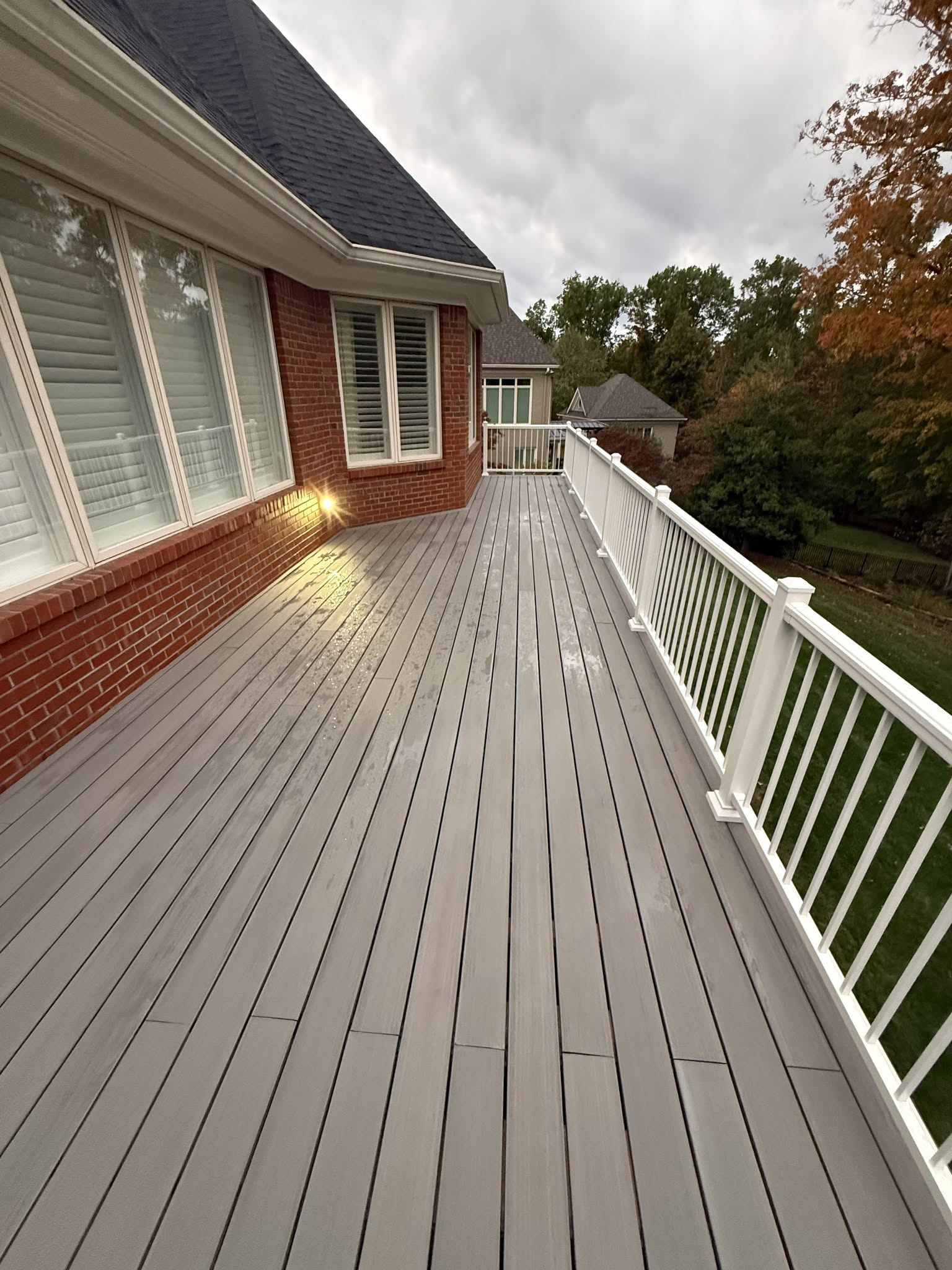
November 18, 2026
A backyard deck should mean more time outdoors, not endless chores. In Kentucky, choosing deck boards involves more than finding the right color. Humid summers, heavy rain, winter freezes, and temperature changes can all affect performance. So, which decking material is the best choice for your home? Wood, composite, and PVC each offer advantages depending on budget, maintenance expectations, and how the deck will be used. Here is how the three options compare for homes in Louisville and across Kentucky. Why Kentucky Weather Matters When Choosing Decking
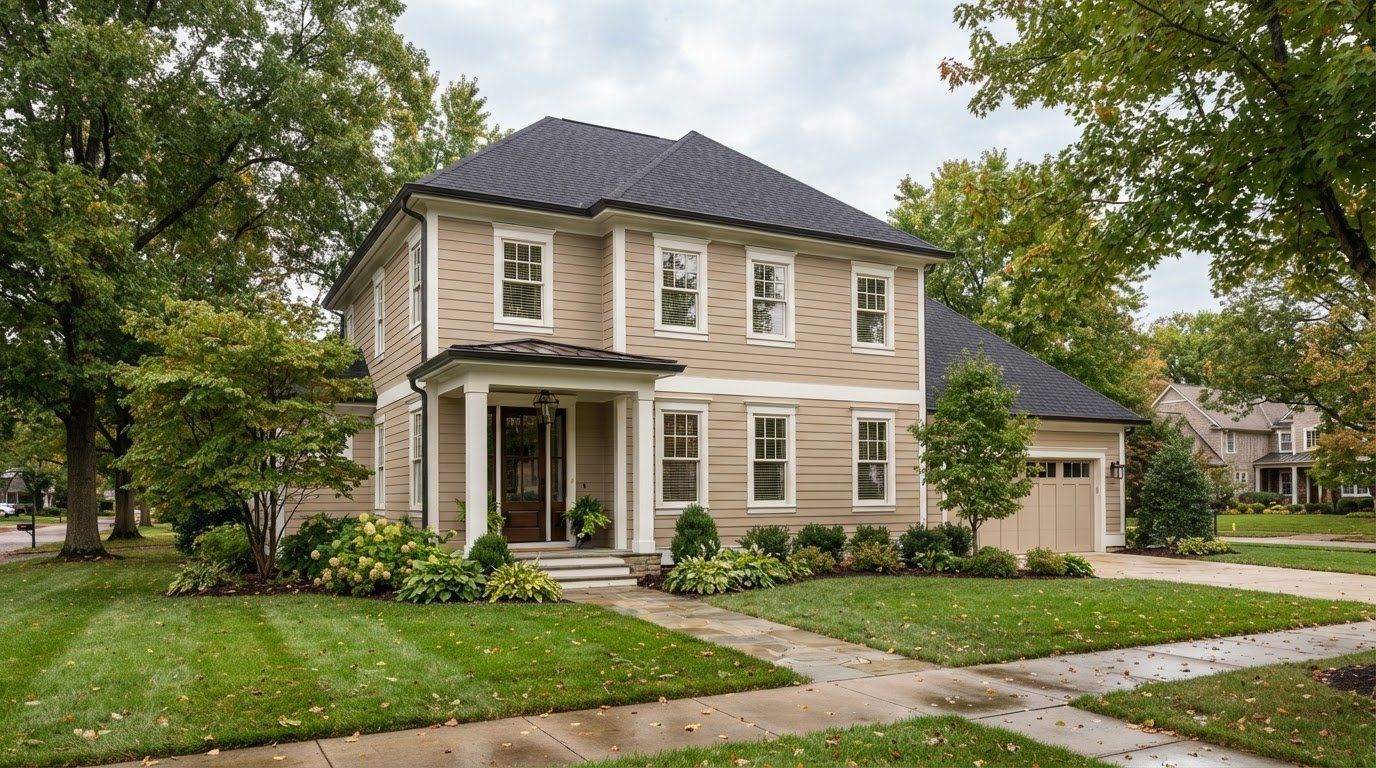
Two-story beige house with white trim, front porch, garage, and a green lawn on a tree-lined street
By Pat McIntyre • October 29, 2026
How LP SmartSide trim and fascia resist rot, termites and hail, cut repainting, and what the 5/50-year and ExpertFinish warranties cover. Louisville installs.
By Pat McIntyre • October 27, 2026
When comparing LP SmartSide vs Hardie board for Kentucky’s climate, installation quality and wall exposure matter as much as the material. LP SmartSide’s engineered wood can absorb impact energy, which may be an advantage where hail or stray objects are a concern. Its moisture performance depends on details such as sealed cut edges, proper clearances, and a maintained finish. Both options can suit a Kentucky home, but they respond differently to impacts, moisture, and finishing needs. The practical choice is not about naming one material the winner, but matching its strengths to your home and priorities. This comparison explains how the materials differ, what to consider about finishes and impact resistance, and why careful installation matters through humid summers, spring storms, and winter freeze-thaw cycles. You’ll have a practical framework for deciding which option better fits your home. Key Takeaways Compare the materials’ composition to understand how each may suit your home’s priorities and exterior conditions. Weigh factory finishes against field painting, including how future touch-ups may affect your maintenance plans. Use the impact comparison to decide which siding better matches your concerns about hail and everyday knocks. Pay close attention to flashing, clearances, and cut-edge sealing, because installation details shape moisture performance. Use the decision guide to connect your finish preferences, exposure, and maintenance expectations to a practical siding choice. Engineered wood and fiber cement siding composition Material composition shapes how siding handles impacts, moisture, and installation. LP SmartSide is engineered wood made from wood strands bonded with resin binders. Its SmartGuard treatment uses zinc borate to help resist fungal decay and termites. That treatment supports durability, but it doesn’t make installation details optional. The LP Building Solutions product information describes the manufacturer’s siding range. Fiber cement is a different material, with a mineral-based composition associated with strong fire resistance. Unlike engineered wood, it doesn’t rely on wood strands as its structural base. The distinction matters when comparing how each siding responds to everyday exposure. Neither material alone determines a wall’s complete moisture protection; flashing, clearances, and finish maintenance matter too. James Hardie’s product information covers its fiber cement siding products. LP SmartSide combines a resin binder and overlay system with SmartGuard treatment. These components make it an engineered wood product, not solid lumber. It is lighter than fiber cement, which can simplify handling and installation. Its edges still need protection: sealing field cuts helps limit moisture entry, especially around trim and openings. MaterialCompositionNotable characteristicPractical considerationLP SmartSideWood strands, resin binders, and SmartGuard treatmentLighter than fiber cementSeal cut edges and maintain the finishFiber cementMineral-based siding materialStrong mineral-based fire resistancePlan handling and installation around its material properties Use this comparison as a starting point, not a stand-alone performance guarantee. The wall’s layers work together: siding sheds weather, while housewrap and flashing help manage water behind it. At a window, for example, proper flashing directs water away from the opening instead of letting it collect at the siding edge. A replacement project should account for these supporting details, not just the visible board material. Composition also shapes maintenance. Engineered wood’s treated surface and sealed cut edges need attention where boards meet trim or openings. Fiber cement’s mineral-based composition offers a different profile, including strong fire resistance. With either material, finish condition and water management affect exterior performance over time. If siding replacement is part of a broader home update, Louisville homeowners can consider the project alongside Kentucky remodeling services . For the material decision itself, weigh composition alongside impact concerns, finish preferences, and the wall’s exposure. Choose engineered wood if its lighter handling and impact-absorbing composition match your priorities. Choose fiber cement if mineral-based fire resistance is central to your decision. Factory finishes, site painting, and touch-ups LP SmartSide and James Hardie siding can have factory-applied finishes or be painted in the field. The choice affects when painting happens, the finished appearance, and how future touch-ups fit into maintenance. Factory finishing means the coating is applied before the siding reaches the job site. Field painting takes place after installation and can cover cut edges and trim details. Factory-applied finishes can simplify the installation sequence because the siding arrives coated. Field painting adds a step after the boards are installed, making preparation and application part of the job. Either approach needs a sound surface and careful attention to joints, edges, and repairs. For example, a replacement board may need precise finishing to blend with the surrounding exterior. LP SmartSide is typically repainted every 8-12 years. That interval gives homeowners a useful planning point, but the condition of the finish and exposure also matter. Inspect sun-facing walls, joints, and areas where water may splash. If paint is worn or damaged, timely touch-ups help maintain the protective finish. Fiber cement siding can also be field-painted or finished at the factory. Appearance matters, too. A consistent finish can unify trim, corners, and long wall sections, while site painting provides a finishing step after installation. Compare the selected color with the home’s roof, trim, and nearby exterior materials before committing. On a replacement project, matching existing surfaces may take more attention than choosing a color for a complete re-side. Siding finish alone does not determine energy efficiency. For LP SmartSide and James Hardie, insulation depends on the wall assembly behind the siding, including the insulation selected and how it is installed. Treat finish selection and insulation planning as separate decisions. Terms such as “cellulose” and “ColorPlus” may come up in siding discussions, but they should not distract from comparing the finish options under consideration. Focus on whether the product arrives factory-finished or will be painted on site, and how future repairs will be finished. Ask how cut edges, trim, and replacement boards will be coated so these details support the overall appearance. For a Louisville home, compare finish timing, repainting plans, and the look you want across the full exterior. If you’re weighing those details for a siding project, discuss your siding plans . Impact and hail resistance For Louisville homeowners comparing impact resistance, LP SmartSide’s engineered wood composition offers a distinct advantage. It can absorb impact energy rather than crack or shatter as readily as a more rigid surface. That can matter when hail strikes a wall or a stray ball hits siding near a yard. LP SmartSide siding has a Class 4 impact rating. Still, neither LP SmartSide nor Hardie fiber cement siding is hail-proof, so severe impacts can damage either material. Fiber cement’s stiffness gives it a different response to a direct hit. A concentrated impact may crack or chip the board, while engineered wood’s flexibility can absorb some force. The result depends on the object, impact location, and severity. For example, a hailstone striking an exposed board edge may cause different damage than one hitting the broad face. Compare likely damage patterns, not just a rating, when choosing siding. Handling during installation also affects the finished wall. Boards can be damaged before they face the weather, including during unloading, carrying, cutting, or fastening. Keep materials supported, avoid striking board edges, and inspect each piece before installation. If a board cracks or chips during the work, replacing it before completion prevents visible damage from remaining in the exterior. Repairability is another practical comparison. Both LP SmartSide and James Hardie siding can be repaired one board at a time. After an impact, identify the damaged board, inspect the surrounding area, and replace the affected section as needed. A single-board repair can address localized damage without replacing an entire wall, though matching the existing finish remains part of the plan. Impact resistance and pest resistance are separate considerations. LP SmartSide’s SmartGuard treatment uses zinc borate to help resist fungal decay and termites. This treatment does not make the siding immune to hail damage, and impact performance does not indicate pest protection. Evaluate each characteristic separately: consider likely impacts when assessing durability, then consider the treatment’s role in resisting decay and termites. Central Kentucky’s recurring winter freeze-thaw cycles are another reason to inspect siding after seasonal weather. Look over exposed faces, corners, and board joints for visible cracks, chips, or loose sections. After hail, check storm-facing areas and spots near trees or open yards. These checks can help identify damage early on either engineered wood or fiber cement siding. Choose LP SmartSide if impact absorption is a leading priority; choose Hardie fiber cement if its other material characteristics better suit your plans. With either option, careful installation and prompt attention to damaged boards support the exterior’s ongoing performance. Installation requirements Moisture control starts before the first siding board is fastened. Prepare the wall properly, install housewrap, and flash windows and doors so water can drain outward. For LP SmartSide and James Hardie siding, correct flashing at openings, proper overlap between horizontal courses, and clearance from grade help protect the wall assembly. Clearance matters at several transitions. Keep siding away from soil, roof lines, and hard surfaces, where splashback or trapped moisture can affect exposed edges. At a window, flashing should direct water over the layer below. At a roof-to-wall connection, leave the required separation rather than allowing siding to rest against the roof surface. LP SmartSide has specific edge and placement requirements. Seal field-cut edges, and keep the bottom edge away from the ground and roof line. Promptly sealing cuts protects exposed material. These steps are especially important around corners, openings, and trim, where boards may need to be cut to fit. Prepare the wall and install housewrap before siding. Flash windows, doors, and other penetrations. Maintain proper clearances at grade, roof lines, and hard surfaces. Seal LP SmartSide cut edges and overlap horizontal courses correctly. Handling differs between materials. LP SmartSide is lighter than fiber cement, which can simplify carrying and positioning boards during installation. James Hardie fiber cement should be handled appropriately for the material and work area. With either option, accurate cuts and careful fastening help keep courses aligned and reduce avoidable damage. Warranty protection depends on meeting installation requirements. Both LP SmartSide and James Hardie warranties require following the manufacturer’s instructions. Details such as clearances, flashing, and edge treatment are part of installing siding as specified, not mere finishing touches. Shortcuts can undermine intended performance and warranty coverage. Installation costs depend on project scope and required work, not just the siding material. Wall preparation, openings, trim, flashing, and the number of cuts all shape the job. A straightforward wall with few interruptions differs from one with many windows, corners, or transitions. Compare estimates by reviewing the preparation and water-management steps included, rather than judging the material alone. For a durable result, compare LP SmartSide and James Hardie installation plans with the wall’s layout. Proper preparation, drainage details, and manufacturer-compliant methods are essential for either choice. Moisture and weather resistance Central Kentucky has humid summers, heavy spring storms, hail, and recurring winter freeze-thaw cycles. LP SmartSide’s engineered wood benefits from sealed edges and maintained paint, while fiber cement offers strong mineral-based fire resistance. Neither siding is hail-proof, and impact performance differs. For fire performance, LP SmartSide can be used in a one-hour fire-rated wall assembly over 5/8-inch Type X gypsum. That assembly detail does not make the siding alone a code approval; the wall configuration and applicable requirements matter. LP SmartSide Moisture Protection LP SmartSide uses SmartGuard treatment with zinc borate to help resist fungal decay and termites. This treatment complements, but does not replace, water-management details. In Central Kentucky, moisture performance depends on proper clearances, sealed field cuts, and maintained paint. Check siding at board ends, penetrations, and areas exposed to splashback. A cut edge near a window needs sealing, for example, while a bottom edge needs clearance from the ground. If paint wears or a joint admits water, address the finish and drainage before moisture reaches the engineered wood substrate. These steps help limit conditions that contribute to rot. Unlike a comparison based only on composition, this protection depends heavily on installation and upkeep. Factory treatment helps resist decay and termites, but it cannot compensate for water trapped behind siding. Include joints and high-splash areas in an annual walkaround, and address visible gaps or damaged finishes promptly. Hardie Board Moisture and Freeze-Thaw Performance Hardie board is fiber cement, a mineral-based material with strong fire resistance. Its moisture performance still depends on the wall assembly: flashing, overlapping courses, and clearance from grade help direct water away. These details matter during humid summers and heavy spring storms, when water can collect at openings or lower wall sections. Recurring winter freeze-thaw cycles make effective drainage important for either siding choice. Water lingering at joints or edges can challenge the exterior assembly as temperatures change. Keep roof lines and hard surfaces from becoming contact points, and maintain clear drainage paths around windows and doors. Fiber cement differs from engineered wood in composition, but neither replaces proper flashing. Compare the materials by considering how the wall sheds water, rather than assuming one siding eliminates moisture risk. LP SmartSide has an impact-resistance advantage, but hail can damage either option. For both products, attention to clearances and drainage details is central to weather performance. Discuss your siding project Home Run Improvement: LP SmartSide Siding Home Run Improvement installs LP SmartSide siding for homeowners weighing its impact resistance, finish needs, and moisture-management requirements. If those features fit your priorities, the next step is planning how the material and installation details will work with your home’s exterior. Home Run Improvement is an Owens Corning Preferred Contractor and LP SmartSide Master Lead, with craftsmanship backed by a 10-year warranty. Bring your questions about siding selection, wall preparation, and project details to Home Run Improvement. A clear plan connects the material comparison to the work your home needs. Contact Home Run Improvement to discuss your siding project. Turn Your Siding Choice Into a Clear Project Plan The LP SmartSide vs. Hardie board decision for Kentucky’s climate becomes more useful when tied to the work your home needs next. Before moving forward, note your priorities: the look you want, the upkeep you’re comfortable with, and the exterior areas that need attention. This short list gives the project conversation a practical starting point. Then consider how siding work fits with other exterior improvements. Coordinating siding, roofing, or vinyl siding decisions can help you plan the overall look and sequence of work. Focus on a clear scope, including material selection, preparation, and installation details. A good plan makes these choices understandable before work begins. Contact Home Run Improvement to discuss your siding project With your priorities in hand, you can take the next step with a steadier view of what your home needs. Frequently Asked Questions So which one should you choose? For the LP SmartSide versus Hardie board decision in Kentucky’s climate, choose according to your leading priority. LP SmartSide suits homeowners who value engineered wood’s impact absorption and lighter handling. Hardie fiber cement may better fit priorities around mineral-based fire resistance. Before deciding, consider the home’s exposure, preferred finish, and maintenance plans. A homeowner in Louisville concerned about frequent hail may weigh impact performance differently from someone focused on fire resistance. What do local siding experts think? A useful local recommendation starts with the house, not a universal winner. In Louisville and nearby communities, siding choices should account for humid summers, spring storms, and winter freeze-thaw cycles. A sound comparison also considers wall layout, exposed corners, trees, and existing exterior conditions. Ask for a clear explanation of the proposed material, finish plan, and installation scope so options can be compared on the same basis. When is LP SmartSide the best choice for your house? LP SmartSide is a strong fit when impact absorption, lighter board handling, and engineered wood are priorities. It may suit a home with exposed wall sections or a yard where stray impacts are a concern. Consider the maintenance commitment, too: the finish needs upkeep, and edges require protection. If mineral-based fire resistance is your main priority, weigh that factor carefully before choosing engineered wood. Which one wins? Neither material wins in every category. LP SmartSide has an impact-resistance advantage, while fiber cement offers strong mineral-based fire resistance. To break a tie, rank your priorities: impact concerns, fire resistance, preferred finish, and willingness to maintain painted siding. Then decide which trade-off matters least to your household. This approach is more useful than naming one product the best choice for every Kentucky home. How do Kentucky humidity, rain, and freeze-thaw cycles affect siding durability? These conditions make water management and finish upkeep important to siding durability. Humid summers and spring storms expose walls to moisture, while winter freeze-thaw cycles repeatedly stress exterior materials and joints. Look closely at walls beneath roof edges, around openings, and near ground-level splash zones. For homes in Louisville or Southern Indiana, these exposure points help shape the maintenance plan. What is the installed cost per square foot in Kentucky? Installed siding cost depends on the project and is provided after a quote request. Home dimensions, wall layout, removal needs, trim, openings, and preparation affect the scope. A square-foot figure alone may not reflect those differences, especially when a home needs more repairs or detailed work. Compare estimates by checking what they include, such as removal, wall preparation, flashing, installation, and finish work. How do installation methods and labor costs compare? Both materials need careful wall preparation, water management, and installation according to manufacturer requirements. LP SmartSide is lighter, which can simplify handling, while fiber cement requires handling suited to the material. Labor needs depend on wall shape, access, openings, trim, and preparation. For an apples-to-apples comparison, review the planned steps and included work rather than judging labor by the siding name alone. Which siding is best for Kentucky homes near trees, moisture, or wildfire risk? Match the choice to the specific exposure. Near trees, consider possible impacts from hail or falling branches, and inspect walls where moisture collects. LP SmartSide offers an impact-resistance advantage; fiber cement has strong mineral-based fire resistance. For wildfire concerns, don’t treat siding alone as a complete fire-safety measure. The wall assembly matters, and LP SmartSide can be used in a one-hour fire-rated wall assembly over 5/8-inch Type X gypsum.