Best Decking Materials for Louisville and Kentucky Homes: Composite vs. PVC vs. Wood
A backyard deck should mean more time outdoors, not endless chores.
In Kentucky, choosing deck boards involves more than finding the right color. Humid summers, heavy rain, winter freezes, and temperature changes can all affect performance.
So, which decking material is the best choice for your home? Wood, composite, and PVC each offer advantages depending on budget, maintenance expectations, and how the deck will be used.
Here is how the three options compare for homes in Louisville and across Kentucky.
Why Kentucky Weather Matters When Choosing Decking
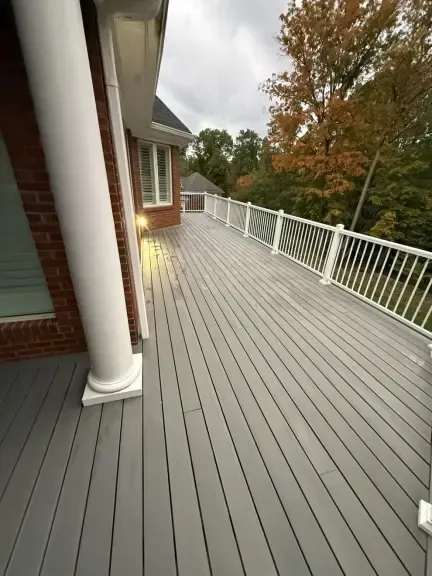
Kentucky decks face prolonged summer moisture and winter freeze-thaw cycles. Rain and humidity can leave wood boards damp, especially in shaded areas. Moisture inside small cracks can freeze and expand, worsening damage.
Direct afternoon sunlight adds surface heat, fading, and temperature-related movement.
No material is automatically ruled out, but drainage, ventilation, fasteners, and upkeep matter. Experienced deck builders should consider each before recommending a product.
1. Wood Decking: Natural Beauty at a Lower Starting Cost
Wood remains popular for its natural appearance and affordable installation. Pressure-treated pine is budget-friendly, while cedar and hardwoods offer other looks at higher prices.
How Wood Handles Humidity and Freeze-Thaw
Wood absorbs and releases moisture, contributing to swelling, shrinking, cupping, and splitting. Damp conditions encourage decay around joints and areas where water collects.
In winter, water entering cracks may freeze and widen them. Protective finishes and drainage help but cannot eliminate wood's response to weather.
Pros and Cons of Wood Decking
Advantages:
- Usually a lower upfront cost, especially with pressure-treated lumber.
- Authentic grain and a natural appearance that can be stained or painted.
- Individual damaged boards can often be replaced.
Considerations:
- Needs periodic cleaning, inspection, and staining or sealing, depending on the product.
- Can develop splinters, cracks, or warped boards.
- Ongoing maintenance adds to its lifetime cost.
Best for: Homeowners who prioritize initial affordability and do not mind a regular maintenance schedule.
2. Composite Decking: A Balance of Durability and Value
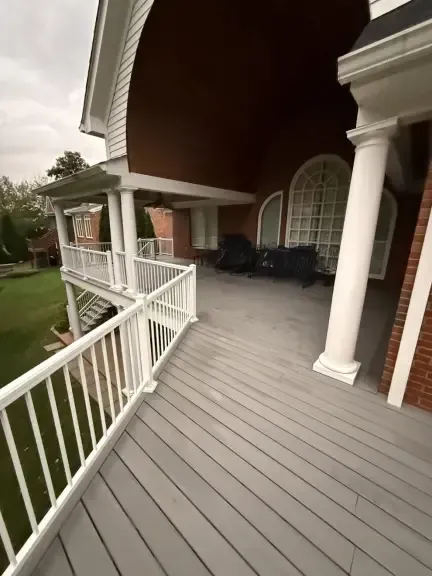
Composite combines wood fibers and polymers. Modern products, including TimberTech composite boards, use a protective cap to limit moisture exposure, staining, and fading.
It offers a middle ground for homeowners seeking wood-like looks with less upkeep.
How Composite Performs in Louisville and Kentucky
Capped composite resists everyday moisture better than wood during humid summers and frequent rain. It is also easier to maintain, with no routine staining or sealing.
Not all boards are identical: cap coverage matters, and exposed wood-containing sections may be more vulnerable than PVC. Temperature changes also cause movement, making manufacturer-specified gaps and fasteners essential.
Pros and Cons of Composite Decking
Advantages:
- Resists rot, splintering, and many common surface stains.
- Available in convincing wood-look colors and textures.
- Lower routine maintenance than wood.
- Often costs less upfront than premium PVC options.
Considerations:
- Higher initial investment than basic pressure-treated lumber.
- Can become hot in direct sunlight, depending on color and product.
- Still needs cleaning and proper drainage.
Best for: Families seeking an attractive, long-lasting deck without annual staining projects.
3. PVC Decking: Strong Moisture Resistance With Minimal Upkeep
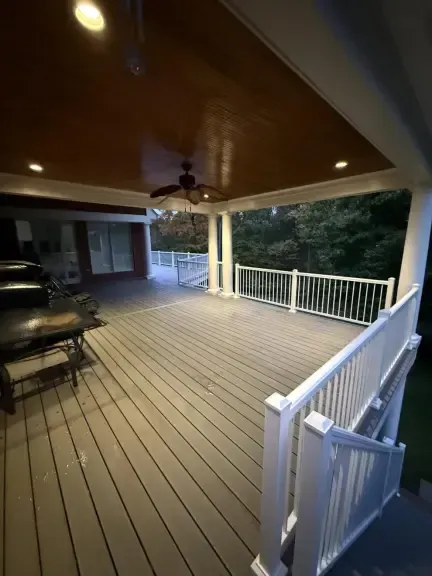
PVC decking, or capped polymer decking, contains no wood fibers. TimberTech Advanced PVC offers high moisture resistance and wood-inspired finishes.
How PVC Handles Humidity and Winter Weather
Without wood fibers, PVC is especially appealing for exposed decks, shaded yards, poolside spaces, and persistently wet conditions.
It resists rot and splintering, but still moves as temperatures change. Correct gaps, fasteners, and manufacturer-approved installation remain essential during Kentucky's seasonal shifts.
Pros and Cons of PVC Decking
Advantages:
- Excellent moisture resistance, including in persistently damp settings.
- No sanding, staining, or sealing required.
- Lightweight boards and a wide selection of premium finishes.
- Strong resistance to rot, insects, and splintering.
Considerations:
- Often carries a higher upfront price than wood or many composite lines.
- Can heat up in direct sun; surface temperature varies by collection and color.
- Requires precise installation to accommodate thermal movement.
Best for: Homeowners who prioritize moisture performance and minimal maintenance over the lowest purchase price.
Louisville Decking Costs in 2026: Wood vs. Composite vs. PVC
The cost of installing a new deck in Louisville depends on the material, deck size, design complexity, and installation requirements. While pressure-treated wood generally offers the lowest upfront cost, composite and PVC decking can provide better long-term value through reduced maintenance and longer lifespans.
Here's a breakdown of typical installed decking costs in Louisville, KY, for 2026.
| Factor | Pressure-Treated Wood | Composite (Trex, TimberTech) | PVC (AZEK/TimberTech) |
|---|---|---|---|
| Installed cost per sq. ft. | $25–$50 | $45–$85 | $55–$85 |
| Typical 12 × 16 ft. deck (192 sq. ft.) | $4,800–$9,600 | $8,600–$16,300 | $10,600–$16,300 |
| Typical lifespan | 10–15 years | 25–30+ years | 30–50 years |
| Maintenance | Seal or stain every 2–3 years | Routine washing | Routine washing |
Note: These figures represent estimated installed costs for 2026, not official Home Run Improvement quotes. Estimates are based on regional and national data. Actual project costs vary depending on materials, framing, labor, and design features.
Composite vs. PVC vs. Wood: A Quick Comparison
| Factor | Wood | Capped Composite | Advanced PVC |
|---|---|---|---|
| Upfront cost | Generally lowest | Moderate to high | Often highest |
| Moisture resistance | Depends on treatment and upkeep | Very good; varies by cap design | Excellent |
| Freeze-thaw concerns | Moisture in cracks can worsen damage | Proper gaps and drainage needed | Proper gaps and drainage needed |
| Routine maintenance | Cleaning plus periodic finishing | Cleaning; no routine staining | Cleaning; no routine staining |
| Appearance | Authentic natural grain | Wood-inspired textures | Premium wood-inspired textures |
Which Material Makes the Most Sense for Your Home?
Consider how your household will use the space.
Choose wood if the initial budget is your main priority. It can work well when properly installed and maintained, especially for homeowners comfortable with future refinishing.
Choose composite if you want a practical balance. For many Louisville families, capped composite delivers attractive styling, solid weather resistance, and manageable long-term upkeep without reaching the highest material price tier.
Choose PVC if moisture resistance comes first. If your deck is exposed to frequent rain, sits beside a pool, or receives limited drying sunlight, advanced PVC deserves a close look.
Lighter colors may be more comfortable in strong sun. Railings, stairs, and deck size also affect cost. Ask deck contractors to compare fully installed estimates, not just board prices.
Don't Overlook the Structure Beneath the Boards
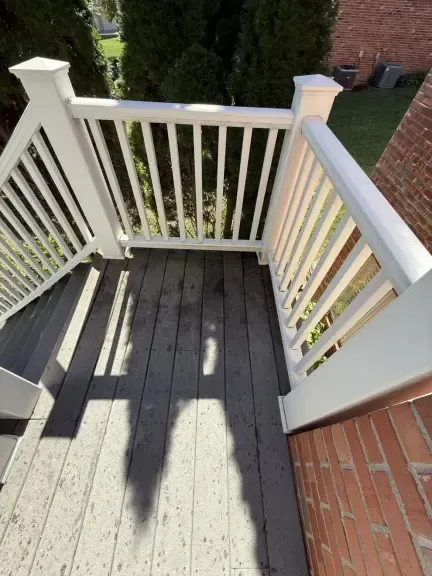
Premium decking cannot compensate for an unsafe frame. Joists, beams, posts, ledger connections, flashing, and footings need evaluation. Drainage and airflow protect the structure.
If your deck has loose railings or soft framing, get an assessment. A quick deck repair job in Louisville may fix isolated problems, but replacing boards alone will not solve structural deterioration.
Qualified deck builders can explain whether your frame can safely support new boards and identify repairs before work begins.
Why Professional Installation Matters for Composite and PVC
Engineered decking requires precise board spacing, proper joist support, compatible fasteners, and adequate ventilation to ensure long-term performance. Professional installation helps prevent structural problems and ensures your deck meets the manufacturer's requirements.
At Home Run Improvement, we're a locally owned and operated deck contractor serving Louisville, KY. As a TimberTech/AZEK Platinum Pro, we specialize in helping homeowners choose and install durable composite and PVC decking. We also back our work with a 10-year craftsmanship warranty.
Whether you're considering traditional wood, low-maintenance composite, or premium PVC, we'll help you plan a deck that complements your home, suits your budget, and withstands Kentucky's changing seasons.
Get ahead of the spring rush!
Contact Home Run Improvement or call (502) 379-7415 today to schedule your free deck estimate this winter and secure your preferred spring installation date.
What Our Louisville Customers Say
At Home Run Improvement, we take pride in delivering quality workmanship and dependable service to Louisville homeowners. Here's what one of our satisfied customers had to say:
“Very happy with cost, timeliness and the clean up everyday at the completion of the work day.”
Stephanie S., Home Run Improvement Customer
Whether you're replacing an aging deck or upgrading an outdoor living space, our goal is to deliver lasting results with attention to detail.
Frequently Asked Questions
1. How long do wood, composite, and PVC decks last?
The lifespan of your deck depends on the material, installation quality, maintenance, and exposure to Kentucky's weather.
- Wood decking: Pressure-treated wood typically lasts 10–15 years with regular cleaning, staining, and sealing.
- Composite decking: Most quality composite decking lasts approximately 25–30 years or longer with proper installation and maintenance.
- PVC decking: Premium PVC decking can last 30–50 years or longer, thanks to its excellent resistance to moisture, rot, and insects.
TimberTech also provides manufacturer warranties that vary by collection:
- TimberTech Composite Decking: 25-year or 30-year limited product and fade-and-stain warranties.
- TimberTech Advanced PVC Decking: Limited lifetime product warranty, plus a 35-year or 50-year limited fade-and-stain warranty, depending on the collection.
These warranties are subject to the manufacturer's terms, conditions, and exclusions. You can review the details on TimberTech's official warranty page.
2. Does PVC decking get hot in the sun?
Yes, PVC decking can become hot in direct sunlight, particularly in darker colors. However, certain TimberTech Advanced PVC products feature heat-reducing technology designed to keep surfaces cooler than some traditional composite boards.
We recommend considering lighter board colors, shaded areas, and your deck's sun exposure when selecting materials for Kentucky's hot summers.
3. Can you install new deck boards over an existing frame?
Yes, we can install new composite, PVC, or wood decking over an existing frame if the underlying structure is safe and meets the new material's installation requirements.
Before replacing deck boards, we inspect the joists, beams, posts, and connections for rot, deterioration, and structural damage. We also check joist spacing to ensure compatibility with the selected decking material.
If your existing frame is damaged or unsuitable, we may recommend repairs or replacement before installing new boards.
4. Do you need a permit to build or replace a deck in Louisville, KY?
Yes, Louisville Metro requires building permits for certain deck construction and renovation projects.
According to Louisville Metro's official construction guidelines:
- Attached decks: Any deck or porch attached to your home requires a building permit.
- Freestanding decks: A permit is required if the deck exceeds 200 square feet.
- Elevated decks: A permit is required if any portion of the deck is more than 30 inches above the ground.
- Decks serving an exit door: A permit is required if the deck serves one of the home's required exit doors, even when it is freestanding.
Replacing existing deck boards may have different permit requirements depending on the scope of work and whether structural modifications are involved.
We recommend confirming the applicable requirements before beginning construction. You can find complete information on the Louisville Metro Government's official deck permitting page.