How to Increase Home Value with Strategic Remodeling in Louisville KY (2026 Guide)

Pat McIntyre • August 24, 2026

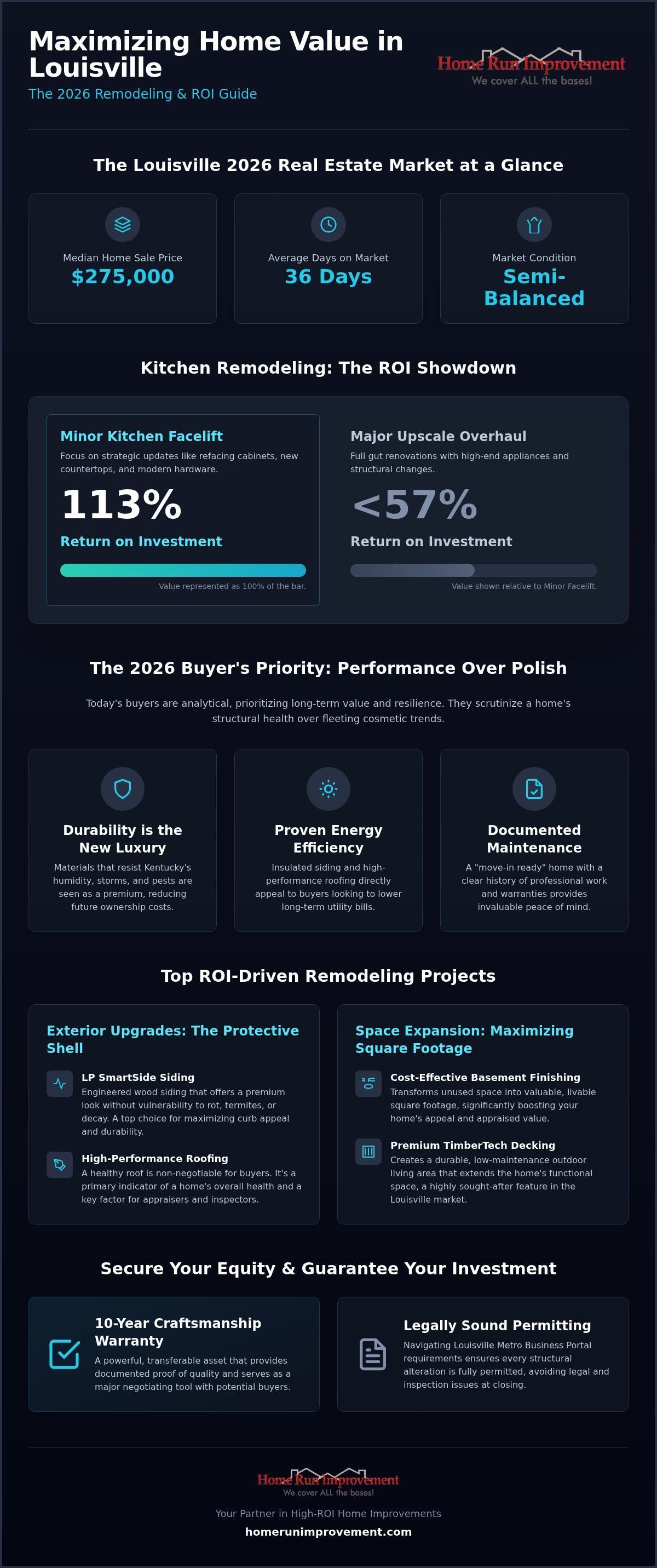
Did you know that in the 2026 Louisville market, a minor kitchen facelift can yield a 113% return, while major upscale overhauls often struggle to recoup even half that cost? You want to ensure every dollar spent on your property translates into actual equity, yet the fear of over-improving for your specific neighborhood is a valid concern that keeps many homeowners stuck in a cycle of hesitation. Finding the right way to increase home value remodeling Louisville properties requires a balance between local buyer demands and high-performance materials that withstand Kentucky weather. If you invest in the wrong materials or hire contractors who cut corners, then you risk losing your investment to the next severe storm or a savvy home inspector.

This guide will show you how to identify high-ROI projects that Louisville buyers crave and explain how to protect your investment with professional-grade warranties. When you choose materials like engineered wood siding over standard vinyl, you aren't just changing an aesthetic; you're installing a protective shell for your home's equity. We will break down the exact exterior upgrades and interior refinements currently dominating the Louisville real estate market, providing a prioritized list of improvements that deliver both immediate curb appeal and long-term financial security.

Key Takeaways

  • Identify why minor kitchen updates currently yield a 113% ROI, far outpacing the returns of upscale gut renovations in the 2026 Louisville economic landscape.
  • Learn how to increase home value remodeling Louisville exteriors by choosing high-performance LP SmartSide siding to create a resilient, low-maintenance shell.
  • Maximize your property's usable square footage with cost-effective basement finishing or premium TimberTech decking solutions designed for long-term durability.
  • Secure your equity with a 10-year craftsmanship warranty that serves as a powerful, transferable asset when negotiating with potential buyers.
  • Navigate the Louisville Metro Business Portal requirements to ensure every structural alteration is fully permitted and legally sound.

The 2026 Louisville Real Estate Market: What Drives Value?

In 2026, Louisville's real estate market has transitioned into a semi-balanced state where median home sale prices hold steady at approximately $275,000. For homeowners, the process of improving a home is no longer about chasing the latest aesthetic trend; it's about strategic equity protection. Remodeling ROI in our local market is now defined by how well a project addresses the "performance gap" between aging structures and modern efficiency standards. If you ignore the structural integrity of your home in favor of temporary decor, you'll likely see a diminished return when it's time to sell.

When you look to increase home value remodeling Louisville properties, you must understand that today's buyers are more analytical than ever. With average days on market reaching 36 days, shoppers have the time to scrutinize your home's exterior shell and mechanical health. If your siding is failing or your roof is nearing its end of life, no amount of interior paint will save the deal. High-performance, low-maintenance exteriors have become the primary value drivers because they represent a significant reduction in future ownership costs. Buyers are willing to pay a premium for the peace of mind that comes with professional workmanship.

To better understand how market shifts impact your property's worth in 2026, watch this helpful video:


https://www.youtube.com/watch?v=xzA-d9lKCgw


Louisville Neighborhood Trends: Anchorage to Prospect

The "Neighborhood Standard" is a strict rule for Louisville property owners. If you live in Anchorage, KY, buyers expect architectural continuity and premium materials that honor the historic character of the area. Conversely, in Prospect, KY, the focus shifts toward modern durability and large-scale functional spaces. Over-improving is a risk if your upgrades exceed the expectations of your specific zip code. However, failing to meet the baseline of Glenview, KY standards will result in a stagnant listing that buyers avoid. You must match the material quality to the local streetscape to protect your investment.

The 2026 Buyer Mindset: Efficiency and Durability

Rising energy costs and volatile weather have fundamentally changed what buyers value. While the National Association of Realtors (NAR) 2024 Remodeling Impact Report previously highlighted the joy of new surfaces, the 2026 buyer prioritizes insulated siding and high-performance roofing. They want a "move-in ready" home with a documented maintenance history. If you can prove that your remodel reduced utility loads or improved the home's resilience against Kentucky's unpredictable storm patterns, you position yourself to increase home value remodeling Louisville residences more effectively than those who only focused on cosmetic fads. Durability is the new luxury.

High-ROI Exterior Upgrades: Siding and Roofing Excellence

Your home's exterior serves as the primary defense for your property's equity. In the 2026 market, shoppers view the "shell" of a house as a direct indicator of its overall health. If your home's exterior looks neglected, buyers will assume the interior systems are equally compromised. To increase home value remodeling Louisville residences, you must prioritize high-performance materials that offer both visual impact and structural resilience. While cosmetic interior changes are emotional, exterior upgrades are financial; they provide the "protective equity" that appraisers and inspectors value most.

When you compare vinyl siding to engineered wood, the ROI gap becomes clear in our local climate. Vinyl remains a cost-effective, low-maintenance choice that appeals to a broad range of buyers. However, for those looking to maximize returns in neighborhoods like Glenview or Anchorage, engineered wood provides a premium aesthetic that mimics traditional cedar without the vulnerability to rot. According to the industry-standard Cost vs. Value Report, exterior replacements consistently rank among the highest-returning projects because they improve energy efficiency and curb appeal simultaneously.

LP SmartSide: The New Standard for Louisville Curb Appeal

LP SmartSide has emerged as the premier choice for homeowners who refuse to compromise on durability. Unlike traditional wood, it's treated with a proprietary process to resist Kentucky's intense humidity, termites, and fungal decay. This resilience is critical for maintaining your home's worth over time. If you install materials that degrade within five years, then you haven't built value; you've merely delayed a problem. The Remodeling 2024 Cost vs. Value Report confirms that siding replacement is a top-tier investment, especially when using advanced materials that offer deep wood-grain textures and superior impact resistance.

Roofing as a Value Anchor

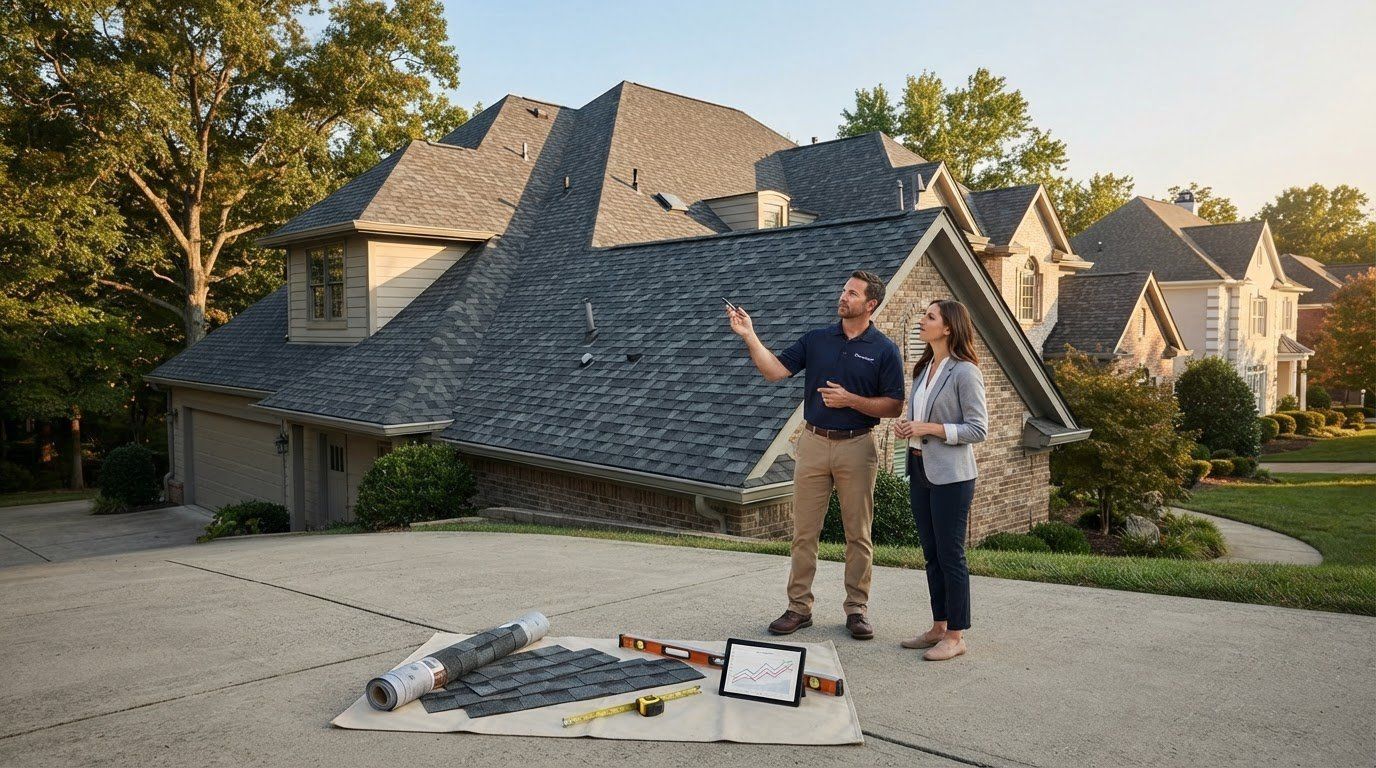
A new roof acts as a home inspection insurance policy for sellers. When a buyer sees a documented installation from an Owens Corning Preferred Contractor, their anxiety about hidden water damage or structural failure vanishes. We utilize the SureNail advantage, a triple layer of reinforcement in the nailing zone that provides incredible gripping power. This isn't just a technical detail. It's a selling point that ensures wind protection and Class A fire resistance, which can often lead to lower insurance premiums for the next owner.

Visible roof quality is the first thing a Louisville appraiser looks for when approaching a property. If the shingles are curling or missing granules, the appraisal will likely take a significant hit before the professional even steps inside. Investing in a high-quality roofing system ensures your home stands out as a secure, low-risk asset. If you are ready to secure your property's future, you can request a professional exterior assessment to determine which upgrades will most effectively increase home value remodeling Louisville properties in your specific zip code.

Interior Value Drivers: Kitchen and Bathroom Remodeling

While exterior upgrades protect your equity, interior renovations provide the emotional heart that closes the deal. In the 2026 market, the secret to successfully using a minor kitchen remodel to increase home value remodeling Louisville properties lies in restraint. National data indicates that a minor kitchen facelift currently yields an impressive 113% return on investment. If you over-invest in a major upscale renovation, then you risk recouping only about 36% of those costs. Smart homeowners focus on high-impact changes that refresh the space without requiring a total structural overhaul. According to recent home renovation ROI data, these targeted updates provide the best path to maximizing resale value.

Choosing finishes that appeal to the broadest range of Louisville buyers is essential for a quick sale. Today's shoppers prioritize clean lines and durability over trendy fads that may feel dated in two years. For a deeper dive into specific material selections and local trends, see our sibling guide: Kitchen Remodeling Louisville: The 2026 Buying Guide.

Kitchen Secrets for Maximum Resale

In 2026, quartz countertops have become the non-negotiable standard for high-value kitchens. This material offers the resilience and stain resistance that busy families demand. Successful kitchen remodeling in Louisville requires a calculated balance of modern technology and classic architectural continuity. Appraisers now look specifically for energy-efficient appliances and functional storage solutions like deep pull-out drawers and pantry organizers. If your kitchen lacks these modern conveniences, it will feel obsolete regardless of its aesthetic appeal. Focus on these core elements to ensure your investment translates into a higher appraisal figure.

Bathroom Renovations that Pay Off

The transition from "master baths" to "primary suites" is a defining trend in 2026. Buyers in Louisville, KY are looking for a spa-like retreat that emphasizes wellness and organization. To increase home value remodeling Louisville bathrooms, you should prioritize these high-demand features:

  • Walk-in Showers: Large-format tile and frameless glass enclosures create a sense of luxury and accessibility.
  • Double Vanities: Essential for primary suites, providing personal space and improved morning efficiency.
  • Neutral Palettes: Use soft grays, whites, or earth tones to allow buyers to envision their own decor.
  • High-Quality Fixtures: Swapping out dated hardware for brushed nickel or matte black provides an immediate, cost-effective win.

Lighting is another critical factor that often gets overlooked. If you install layered lighting—combining recessed cans with elegant vanity sconces—then you instantly improve the perceived value of the room. These refinements create a polished, move-in ready atmosphere that resonates with today's discerning buyers.


Expanding Functional Square Footage: Basements and Decks

Adding usable space is the fastest way to increase home value remodeling Louisville properties. In a market where inventory remains limited, buyers prioritize homes that offer specialized zones for work and relaxation. If you can transform an underutilized area into a high-functioning room, then you immediately elevate your home's market position. However, these additions must be executed with structural precision to ensure they don't look like an afterthought. An addition that fails to match the original architectural continuity can actually detract from your property's curb appeal and appraisal value.

Basement Remodeling: New Living Space

Basement finishing represents the most cost-effective method for expanding your home's footprint because the foundation and exterior walls already exist. In 2026, we see high demand for multi-generational living suites and premium home offices that support the hybrid work era. Moisture management is the non-negotiable first step for any Kentucky basement. If you skip professional waterproofing or vapor barriers, then you risk mold issues that will destroy your ROI during a home inspection. A properly finished basement significantly boosts your "Price per Square Foot" metric, making your home more competitive against similar listings in neighborhoods like Hurstbourne or Jeffersontown.

TimberTech Decking: Outdoor Equity

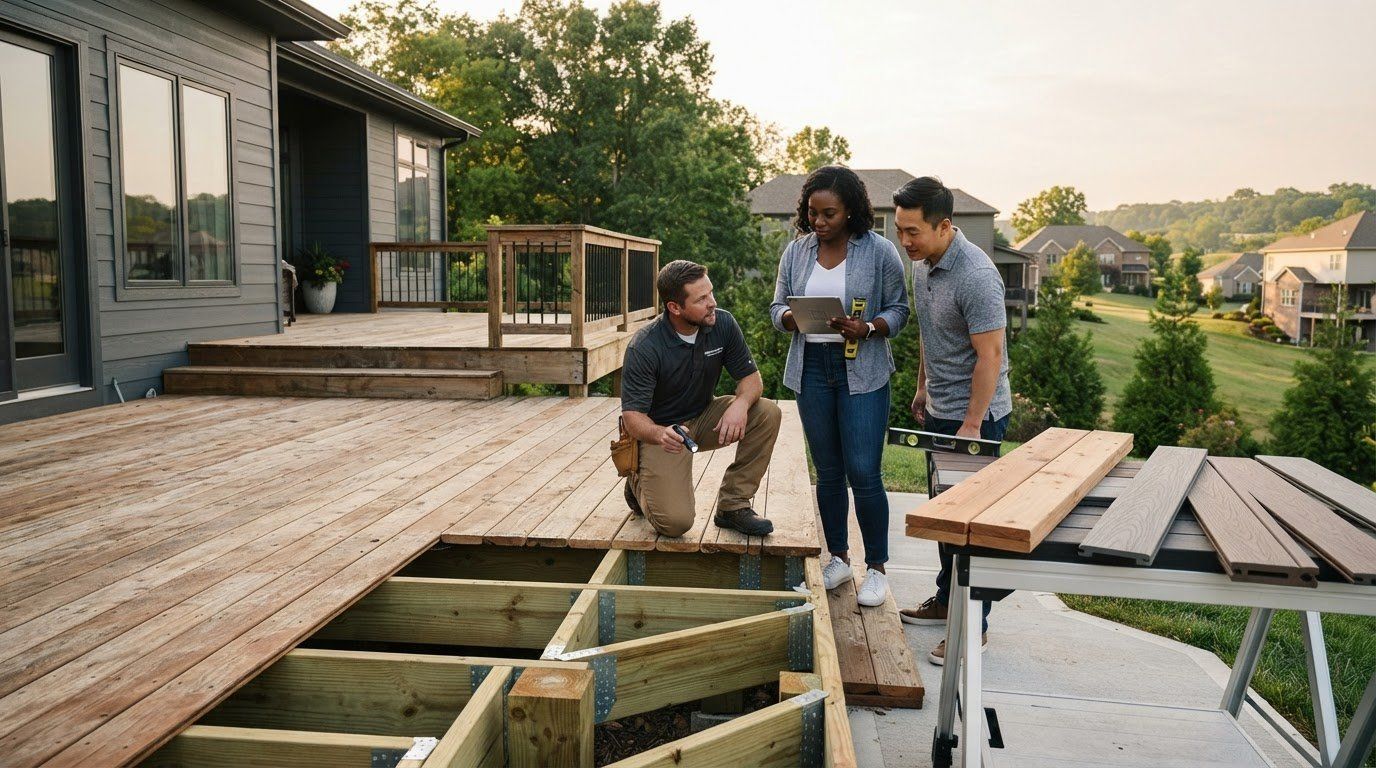
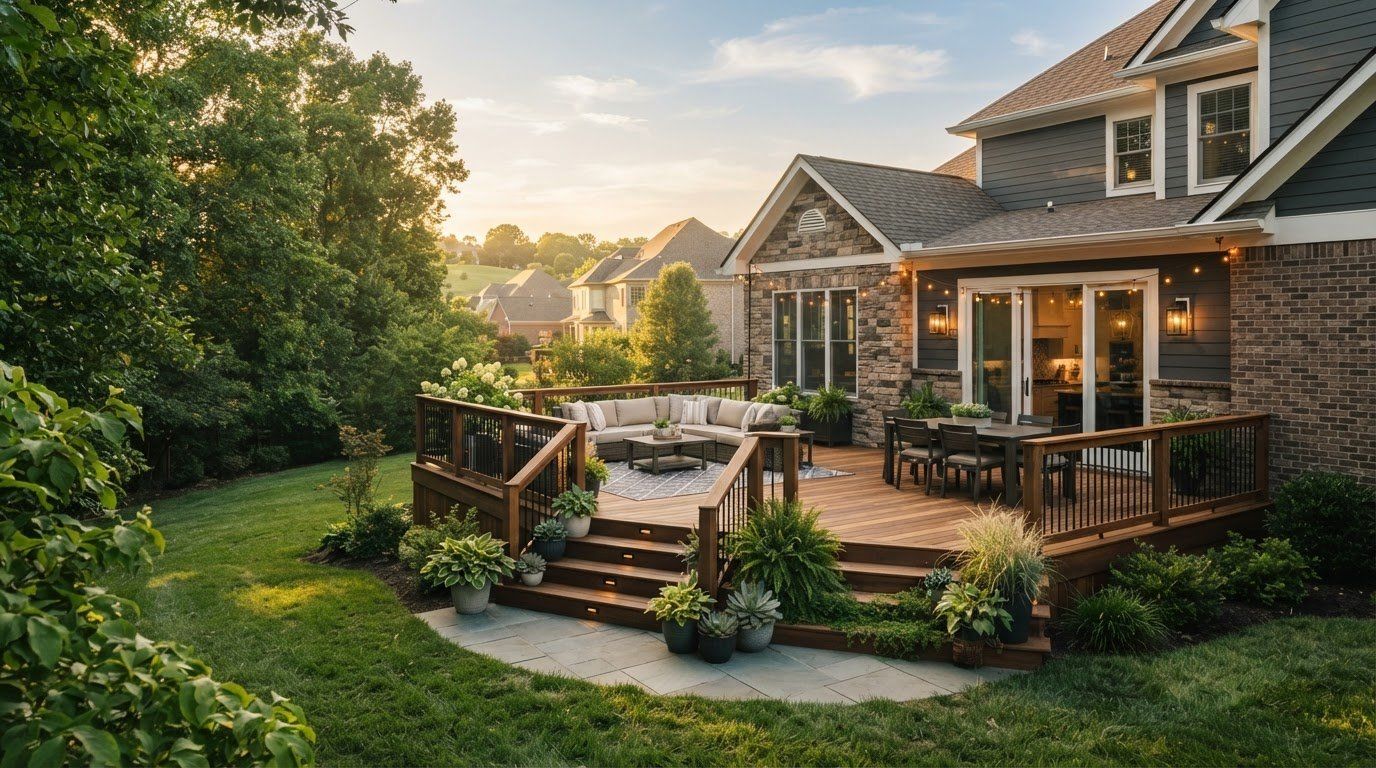
Expanding your living space outdoors is equally vital for modern Louisville buyers. A professional decking installation using TimberTech Advanced PVC provides a high-end, low-maintenance solution that resists the extreme temperature swings common in the Ohio Valley. This is a strategic way to increase home value remodeling Louisville homes because it creates a durable "outdoor room" that buyers love. We prioritize "fastener-free" surfaces by utilizing hidden-fastener systems like CONCEALoc®. This creates a sleek, barefoot-friendly deck that looks as polished as your interior flooring.

To protect your investment, we use ProTac Joist Tape on the substructure. This prevents moisture from rotting the wood frame, ensuring the deck's structural integrity matches the longevity of the PVC surface. Code compliance is mandatory; decks more than 30 inches above grade require a permit through the Louisville Metro Business Portal to avoid legal complications during a sale. Professional installation ensures your deck remains a safe, valuable asset for decades.

Schedule your square footage expansion consultation

The 'Invisible' Value: Quality and Transferable Warranties

The most significant value in a remodel is often the part you cannot see. While a new kitchen or high-performance siding offers immediate visual appeal, the documentation behind that work provides the long-term security buyers demand. To truly increase home value remodeling Louisville properties, you must look beyond the surface and focus on the integrity of the installation. A 10-year craftsmanship warranty acts as a financial shield for your equity. It transforms a standard home improvement into a certified asset that can be used as a powerful closing tool during price negotiations.

If you choose the lowest bid from an uncertified contractor, you often pay the highest price in the long run. Poor installation can void material warranties and lead to structural failures that destroy your property's worth. Buyers in 2026 are increasingly wary of "flipped" houses where corners were cut to save on labor costs. When you present proof of professional certifications, such as LP Master Lead status or being an Owens Corning Preferred Contractor, you provide a level of peace of mind that uncertified competitors simply cannot match. This professional backing ensures the work complies with the legal standards of federal warranty law, protecting both you and the future owner.

Warranty as a Marketing Asset

When it's time to sell, your professional upgrades should be the centerpiece of your marketing strategy. You should explicitly mention the transferable craftsmanship warranty in your Zillow listing description or MLS notes. Most homeowners only have material warranties, which cover product defects but ignore the most common cause of failure: poor labor. By highlighting a decade of guaranteed workmanship, you differentiate your home from every other listing on the block. This local accountability is why having roots in the community matters; a warranty is only as good as the company's commitment to staying in business to honor it.

Choosing a Trusted Local Partner

Selecting a locally owned contractor ensures that your investment is handled by someone who understands Kentucky's specific architectural requirements and weather patterns. National franchises often lack the personal accountability that comes with being a fixture in the Louisville community. Before you sign any contract, use Google Reviews to verify that your chosen partner has a consistent history of reliability and precision. This due diligence is the final step in your journey to increase home value remodeling Louisville homes effectively.

Use this final checklist to vet your Louisville remodeling contractor before work begins:

  • Verify Certifications: Ensure they hold Master Lead or Preferred Contractor status with major manufacturers.
  • Demand Labor Guarantees: Confirm they offer at least a 10-year craftsmanship warranty in writing.
  • Check Local Longevity: Choose a partner with deep roots in the Louisville area to ensure long-term support.
  • Request a Detailed Estimate: A professional quote should clearly outline material specs and permit handling.

Protecting Your Investment in the 2026 Market

Strategic decisions to increase home value remodeling Louisville properties start with a focus on durability and localized market demands. In 2026, the most successful homeowners are those who prioritize high-performance exterior shells and functional interior refinements over fleeting aesthetic fads. By selecting resilient materials like LP SmartSide and high-quality roofing, you create a "protective equity" that appraisers and buyers value. These upgrades ensure your home stands out as a low-risk, move-in-ready asset in a competitive landscape.

Our status as an Owens Corning Preferred Contractor and LP SmartSide Master Lead reflects our commitment to uncompromising standards. When you choose a partner who offers a 10-year craftsmanship warranty, you aren't just buying a remodel; you're securing a transferable asset for the next owner. Staying informed on Louisville building permit requirements ensures your project adds documented, legal value to your home. We look forward to helping you fortify your property's worth.

Schedule Your Free Louisville Remodeling Estimate Today

Take the first step toward a more valuable home by partnering with experts who treat your property with the same care as their own. Your journey to increased equity and peace of mind begins with a professional assessment tailored to your neighborhood's specific standards.

Frequently Asked Questions

What remodeling project has the highest ROI in Louisville for 2026?

Garage door replacement currently leads the market with an ROI reaching up to 268%. While this exterior upgrade offers the highest overall return, a minor kitchen remodel is the most effective interior project to increase home value remodeling Louisville properties, yielding approximately 113%. These specific projects succeed because they address immediate buyer needs without the high overhead of major structural changes. You should consult the 2024 Cost vs. Value Report for detailed local project comparisons.

Does siding replacement actually increase home value?

Siding replacement is one of the most reliable ways to build equity because it fundamentally improves the home's "protective shell." In 2026, buyers prioritize low-maintenance exteriors that promise longevity against Kentucky's humidity. If you install premium materials like engineered wood, you improve energy efficiency and aesthetic appeal simultaneously. This upgrade often returns a significant portion of its cost by eliminating the immediate maintenance anxieties that often cause buyers to lower their initial offers.

Is a kitchen remodel worth it if I'm selling in two years?

A minor kitchen remodel is absolutely worth the investment if you plan to sell within two years. High-impact facelifts like updating countertops or hardware often return more than 100% of their cost in the current market. However, you should avoid major upscale renovations, which typically recoup only 36% of the investment. Focus on creating a clean, modern look that allows potential buyers to envision themselves in the space. Research from the National Association of Realtors supports these targeted updates.

How much value does a finished basement add in Kentucky?

Finishing a basement is the most efficient way to add functional square footage to a Louisville home. It directly impacts your "price per square foot" metric, which is a primary data point used by professional appraisers. While exact returns vary by neighborhood, adding a high-end office or guest suite creates the specialized zones that 2026 buyers crave. Ensure your contractor follows Kentucky Building Codes to guarantee the space is legally recognized as a finished living area.

What is the difference between an Owens Corning Preferred and a standard contractor?

An Owens Corning Preferred Contractor has met strict requirements for professionalism and reliability that standard contractors often lack. This status allows us to offer superior warranty protection and specialized installation techniques that safeguard your home's integrity. When you choose a certified expert, you ensure that your roofing system is installed to exact manufacturer specifications. This professional backing is a significant asset when you attempt to increase home value remodeling Louisville residences during a future sale.

Do I need a permit for a deck addition in Louisville?

You will need a building permit in Louisville if your deck is more than 30 inches above the ground. This requirement ensures that the structure meets safety standards for load-bearing capacity and railing height. All applications are processed through the Louisville Metro Business Portal. If you fail to secure the proper permits, you may face fines or complications that stall your home's closing process when you eventually decide to sell the property.

How can I tell if a contractor is truly local to Louisville?

You can verify a contractor's local status by checking their physical office address and their history in the community. Truly local firms have deep knowledge of regional architecture and weather patterns from Anchorage to Prospect. Look for a partner with locally owned roots and a robust collection of feedback from Louisville residents. National franchises often lack the personal accountability and long-term craftsmanship warranties that a dedicated local expert provides for your property's long-term stability.

Are gutter guards a good investment for home resale?

Gutter guards are an excellent investment because they reduce the long-term maintenance burden for the next homeowner. Discerning buyers value "invisible" upgrades that protect the foundation from water damage and eliminate the need for dangerous ladder work. When combined with a high-performance roofing system, these guards act as a preventative measure that keeps the home's exterior shell in peak condition. This attention to detail signals to buyers that the property has been meticulously maintained over the years.
By Pat McIntyre August 24, 2026
Your countertop is the most-touched surface in your home. It holds morning coffee, absorbs the chaos of weeknight dinners, and catches every eye that walks into your kitchen. Choosing between quartz and granite is one of those decisions that feels deceptively simple until you realize how many variables actually matter. The global countertops market was valued at $157.7 billion in 2025 and is projected to reach $267.4 billion by 2033, a number that tells you two things: countertops matter enormously to homeowners, and both quartz and granite are fighting hard for your remodeling dollars. In my experience helping homeowners navigate this exact decision, the wrong choice almost always comes down to one thing: picking based on appearance alone, then discovering the maintenance realities after installation. This guide walks through every meaningful difference, cost, durability, maintenance, resale value, and lifestyle fit, so you can choose with confidence. And if you want an expert local team to handle the measurement, selection, and installation, Home Run Improvement is the place to start. Key Takeaways Quartz wins on maintenance: Quartz is maintenance-free, stain resistant, and 100% non-porous, with a sealed-for-life surface that never needs to be reapplied. If you cook frequently and want zero upkeep, quartz is the practical default. Granite wins on heat and authenticity: Granite is strong and heat-resistant; you can set down hot pans without worry, but it does need sealing to protect against stains. For serious cooks, that tradeoff is often worth it. Pricing is closer than most people think: According to SlabWise's 2026 countertop pricing guide , quartz countertops run $50-$150 per sq ft installed, while granite countertops run $40-$175 per sq ft installed, the widest price range due to slab variety. Do not assume granite is always cheaper. Quartz is the fastest-growing segment: Engineered quartz countertops are expected to grow at a CAGR of 8.2% from 2026 to 2033, driven by their durability, easy maintenance, and wide range of designs. Buyer demand increasingly favors low-maintenance surfaces, a factor that matters for resale. Both materials add resale value: According to Remodeling Magazine's Cost vs. Value Report cited by Wise Stone Choice , a minor kitchen remodel like replacing outdated countertops with new quartz countertops can recoup up to 85.7% of its cost in added resale value. Choose the material that fits your kitchen style and buyer demographic. Quick-Start Prioritization Framework Start here if you're: A busy family or renter: Quartz, its non-porous surface requires zero sealing and cleans up with soap and water. A serious home cook who loves natural materials: Granite, superior heat resistance means you can move pans directly from stove to counter without stress. Renovating to sell: Quartz in a neutral tone photographs better and signals "move-in ready" to modern buyers. Working with a tighter budget: Entry-level granite starts lower than entry-level quartz; compare slab-by-slab before deciding. Planning an outdoor kitchen: Granite only, quartz is not warranted or recommended for outdoor use due to UV sensitivity. What Each Material Actually Is Before comparing performance, it helps to understand what you are actually buying. Quartz: Engineered, Not Quarried Most quartz countertops contain 85-90% natural quartz minerals, with the remaining 10-15% consisting of polymer resins and color pigments. That polymer resin is what makes quartz non-porous, and it is also the source of its one significant limitation: sensitivity to prolonged heat and UV radiation. Quartz begins with hard raw quartz, bonded together by vacuum compression and high-performance resins and pigments. Manufacturers turn these elements into a vibrating solid, high-density slab, creating surfaces that mimic the graceful veining of marble or the industrial grit of concrete. The result is a surface that looks like natural stone but behaves like a precision-engineered product. Pro tip: When shopping for quartz, always ask about the manufacturer's warranty. According to Granite Prestige , there has been "a boom in quartz manufacturing over the last five years" with an increase in low-quality quartz that is "far less durable and prone to staining, chipping, and heat damage." Stick to established brands like Silestone, Caesarstone, or Cambria for full warranty protection. Granite: 100% Natural Stone Granite is a purely natural stone that comes straight from the earth. Granite slabs are cut, polished, and turned into stunning stone countertops. Granite offers a unique, one-of-a-kind pattern in every slab, making it a favorite for homeowners who love the look of natural stone. Granite is an igneous rock formed under extreme heat and pressure, which gives it a Mohs hardness rating of 6 to 7 and makes it one of the most scratch- and heat-resistant natural stone countertop materials available. That geological origin, formed over millions of years, is both its greatest strength and the reason no two slabs ever look alike. This overview breaks down the fundamental differences between quartz and granite as materials, which makes it easier to follow the comparisons throughout this article. Durability: How Each Material Holds Up Over Time Scratch and Impact Resistance Granite ranks 6 to 7 on the Mohs hardness scale, resists heat and scratches better than most countertop materials, and routinely lasts the life of a house. For context, a steel knife blade runs around 6.5 on that same scale, meaning granite can handle everything a typical kitchen throws at it. Quartz is equally hard and even more flexible than granite, which helps it resist chipping and cracking. Its engineered nature provides a slight "give," making it ideal for active families and frequent entertainers. The resin binder that makes quartz non-porous also acts as a micro-level shock absorber. In my experience, the edge zone is where granite tends to show vulnerability first. Granite's real weaknesses are acid etching if left unsealed and cracking at unsupported edges. If your kitchen layout includes an island with a deep overhang or a sink cutout without proper support, discuss edge reinforcement with your installer. Lifespan Properly sealed and professionally installed, granite countertops routinely last 30 to 50 years and can hold up for a century in the right conditions. That kind of longevity makes the material cost much easier to justify on a per-year basis. About 60% of granite countertops show damage after 10 to 15 years, according to Rock Solid Tops , which means the remaining 40% are still pristine well past that mark. The deciding factor, nearly every time, is how consistently the stone was sealed and maintained. If you install granite and commit to the upkeep, it outlasts almost everything else in your kitchen. Heat Resistance This is where granite has a clear advantage. Granite is strong and heat-resistant, and you can set down hot pans without worry. Quartz, by contrast, becomes vulnerable above a specific threshold. Quartz is sensitive to extreme heat above 300°F and UV sensitivity, so it is not recommended for outdoor use. Always use a trivet with quartz. Always. Repeated direct contact with hot pans causes the resin binders to discolor and, in severe cases, permanently warp. Maintenance: The Real Cost You Pay Every Year Quartz Requires Almost Nothing Quartz is non-porous, which means liquids will not soak in. It does not require sealing, making it a low-maintenance option for busy families and professionals. For regular cleaning, just use warm water, a soft cloth, and a drop of mild dish soap. Wipe with circular motions, and you are done, no special granite cleaner or sealing schedule is needed. That simplicity is genuinely transformative in a household with kids, pets, or anyone who cooks daily. The surface that cleans up in 30 seconds is one you will actually keep clean. Granite Requires Periodic Sealing Most granite countertops benefit from re-sealing every 12-24 months. Some dense, dark granites such as absolute black can go 3-5 years between sealings. Light, porous granites may need annual sealing. The water test is the simplest diagnostic available. Place a few drops of water on the surface and wait 10-15 minutes. If the water beads up and sits on the surface, your sealer is still working. If the water absorbs into the stone and darkens it, it is time to reseal. Run this test every six months in a busy kitchen. Pro tip: Avoid cleaning products that contain vinegar, lemon juice, ammonia, or bleach, as these can damage the sealant and dull your granite surface over time. Use a pH-neutral cleaner or mild dish soap mixed with water instead. Dense granites with minimal porosity may require sealing every 2-4 years, while more porous varieties need attention every 6-12 months. Before buying a slab, ask your fabricator about the porosity level, this single factor affects your annual maintenance load more than any other. Cost Comparison: What You Will Actually Pay in 2026 Installed Price Ranges Pricing for both materials follows the same basic formula: material cost plus fabrication plus installation. According to SlabWise's 2025-2026 granite vs. quartz cost comparison : In 2025 to 2026, granite countertops typically cost $40 to $100 per square foot installed, while quartz runs $50 to $120 per square foot installed. Quartz almost always costs more, mainly because of manufacturing overhead and brand premiums. The gap is roughly $10 to $30 per square foot on mid-range slabs, though entry-level granite and entry-level quartz can land at nearly the same price. For brand-name quartz, expect to pay more. Mid-range products from brands like Silestone, Caesarstone, or MSI Q Premium sit at $65 to $90 installed. Premium designer slabs with waterfall edges can push well past $150 per square foot installed. Total Project Cost The average quartz project runs about $4,500, but you could spend anywhere from $1,000 to $12,000 depending on your specific situation. For granite, the national average to purchase and install granite countertops is $3,250, according to HomeAdvisor, which can be over 10% of the cost of a full kitchen remodel, which stacks up to an average of $25,656. The action this data points to: Get itemized quotes for both materials in your specific slab choice before assuming one is cheaper. Entry-level granite often undercuts entry-level quartz, but a premium granite slab can rival designer quartz pricing. Compare actual slab-to-slab, not category-to-category. Pro tip: Home Run Improvement provides templating and professional installation for both quartz and granite, meaning you get accurate square-footage measurement before committing to material costs. This alone can prevent costly ordering mistakes. Aesthetics and Design Versatility Granite's Irreplaceable Uniqueness If you want the look of natural stone, granite is unique. No two pieces are alike, meaning your granite countertop will have its own distinctive pattern, whether you choose classic brown granite or a more dramatic black or white tone. Granite is perfect for statement kitchens, dramatic waterfall islands, and bold bathroom vanities. Each slab is a conversation piece. Picture hosting a dinner party where the countertop itself becomes a topic of admiration. If you want your kitchen to feel like it has a story, no engineered product can replicate that. Quartz's Design Flexibility Quartz countertops are more uniform. Since quartz is engineered, you can expect consistent colors and patterns across the slab. This makes it a great option if you prefer a sleek, contemporary aesthetic. Quartz in luxury spaces is ideal for seamless, clean-lined designs, including spa-like bathrooms, crisp modern kitchens, and hotel-inspired bars. The consistency of quartz makes it easy to design large spaces without worrying about mismatched patterns. For long kitchen runs or matching islands to perimeter counters, that consistency is a practical design advantage. Quartz vs Granite for Outdoor Kitchens This is a section most comparison guides skip, and it is one of the most important distinctions for homeowners planning outdoor spaces. Granite is one of the best materials for outdoor countertops. It is naturally heat-resistant, UV-resistant, and highly durable. Granite countertops are also impervious to moisture, making them ideal for outdoor kitchens and patios where the countertop will be exposed to varying weather conditions. Quartz, by contrast, should not be installed outdoors in most cases. Every major quartz manufacturer explicitly excludes outdoor use from their warranties. The polymer resin in quartz (5-10% of the material) degrades under UV radiation, causing yellowing, fading, and surface damage. Many manufacturers do not cover outdoor use under their warranties due to UV sensitivity. Thermal expansion from extreme temperature changes can cause the material to expand and contract, leading to potential cracking or warping. The bottom line for outdoor projects: Use granite. If you love quartz aesthetics, save it for your indoor kitchen and choose granite for any outdoor entertaining area. Resale Value: Which Material Makes More Financial Sense? Both materials add measurable value at resale, but the market is shifting. Quartz has emerged as the fastest-growing segment within the kitchen countertop market, according to Market Research Future's countertop market analysis , reflecting buyer preferences that increasingly reward low-maintenance finishes. Today's homebuyers are looking for finishes that are modern, neutral, and move-in ready. Quartz checks all those boxes. It delivers a high-end look while staying practical, especially for families and buyers who do not want the hassle of sealing or deep cleaning surfaces. The National Association of Realtors' remodeling research consistently shows mid-range kitchen remodels, which typically include stone countertops, recovering 50 to 80 percent of their cost at resale depending on the market. Granite is still viewed as a premium feature in most U.S. markets, though its edge over quartz has narrowed as engineered stone went mainstream. Poor material choices, outdated colors, or low-quality installation can limit or even reduce perceived resale value. Strategic countertop upgrades often help homes sell faster by improving listing photos and reducing buyer hesitation. What this means for your decision: In contemporary, open-plan, or recently built homes, quartz in a neutral tone maximizes buyer appeal. In older homes with traditional cabinetry and warm wood tones, a well-chosen granite can feel equally premium and more architecturally appropriate. Common Mistakes to Avoid with Both Materials Mistakes with Quartz Placing hot pots or pans directly on the surface without a trivet, quartz is not heat-resistant enough for direct contact with hot pots or grills, and extreme heat can cause cracking or warping. Using quartz outdoors without understanding warranty implications, quartz is not heat-resistant back outdoor installations with warranties, and using quartz outside can void coverage, meaning repairs or replacements might come out of pocket. Buying from an unknown manufacturer to save money, when purchasing from a less reputable brand, the quartz could be less durable and can become damaged, have its color fade when exposed to UV rays or high heat for too long. Mistakes with Granite Skipping or delaying the sealing schedule, despite granite's reputation as one of the hardest natural stones, it remains a porous material. Microscopic pores can absorb liquids, leading to staining, bacterial growth, and potential damage over time. Wine, coffee, cooking oils, and even water can penetrate unsealed granite, leaving permanent marks. Using acid-based cleaners, vinegar, lemon juice, and bleach all degrade the sealant layer and etch the stone surface over time. Ignoring edge support during installation, granite at unsupported overhangs and sink cutouts is where chips and cracks almost always originate. Pro tip: The team at Home Run Improvement walks every client through a material-specific care guide after installation, a step that many contractors skip but that makes a measurable difference in how long your countertops look their best. Quartz vs Granite: Head-to-Head Summary CategoryQuartzGraniteMaterial TypeEngineered (90-95% crushed quartz + resin)100% natural stonePorosityNon-porous, never needs sealingPorous, requires sealing every 1-3 yearsHeat ResistanceModerate (max ~300°F)Excellent (handles direct pan contact)Scratch ResistanceExcellentExcellentStain ResistanceExcellentGood when properly sealedUV/Outdoor UsePoor, not recommended outdoorsExcellent for outdoor usePrice Range (installed)$50-$150/sq ft$40-$175/sq ftDesign ConsistencyHigh (uniform patterns)Low (every slab unique)Lifespan20-30+ years30-100+ yearsResale AppealStrong in modern/transitional homesStrong in traditional/luxury homesMaintenance LevelVery lowLow to moderate Why Home Run Improvement Is the Best Choice for Your Countertop Installation Editor's Pick, Best Overall for Quartz and Granite Countertop Installation When the material decision is made, the quality of installation is what separates a beautiful outcome from a costly one. Home Run Improvement earns the top spot in this guide because of their commitment to getting every detail right, from accurate templating to edge profile execution to proper seam placement. Best for homeowners who want expert guidance on the quartz vs granite decision. Home Run Improvement's team works with both materials daily, which means they can provide honest, experience-based advice on which option suits your specific kitchen layout, cooking habits, and budget, without pushing you toward a higher-margin product. What sets them apart for this particular decision: Templating precision that prevents material waste and ensures clean seam alignment Installation experience with both quartz and granite so you get the right techniques for each material Transparent pricing that helps you compare true installed costs across both options A local team that stands behind their work after the job is complete I've found that the homeowners who are happiest with their countertop investment are the ones who chose a contractor who asked the right questions first, about how the kitchen is used, who is cooking in it, and what "low maintenance" actually means in their household. That consultative approach is exactly what Home Run Improvement delivers. Frequently Asked Questions Is quartz or granite better for a kitchen with young children? Quartz is considered the best option for families, as its non-porous surface, stain resistance, and easy maintenance make it ideal for high-traffic areas and busy families. Grape juice, marker, and cooking oils wipe off without staining. Granite can match quartz's performance in a family kitchen, but only if it is sealed consistently, a task that is easy to forget during busy seasons. How often does granite actually need to be sealed? Most granite countertops benefit from re-sealing every 12-24 months. Some dense, dark granites can go 3-5 years between sealings. Light, porous granites may need annual sealing. Rather than following a fixed schedule, run the water test every six months: if water absorbs into the stone within 15 minutes, it is time to reseal. Can I put hot pans directly on quartz countertops? No. Quartz is sensitive to extreme heat above 300°F, and the resin binders that make quartz non-porous are also what make it vulnerable to thermal shock. Always use a trivet or heat pad. Granite handles direct heat better, but trivets are still recommended for both materials to avoid thermal stress fractures at the edges. Which countertop material has better resale value? Both quartz and granite add value, and the better choice depends on your home's style and price point. In $500K+ homes, buyers expect quartz, quartzite, or granite. In contemporary homes, quartz in a neutral tone tends to photograph better and signal move-in readiness. In traditional homes, granite's natural patterns often feel more architecturally appropriate. The material that fits the home's overall aesthetic will outperform the other at resale. Is quartz more expensive than granite? In 2025 to 2026, granite countertops typically cost $40 to $100 per square foot installed, while quartz runs $50 to $120 per square foot installed. Quartz almost always costs more, mainly because of manufacturing overhead and brand premiums. However, rare or exotic granite slabs can exceed premium quartz prices. Always compare specific slab pricing rather than assuming one category is cheaper. Can quartz countertops be used in an outdoor kitchen? No, quartz should not be used outdoors. Every major quartz manufacturer explicitly excludes outdoor use from their warranties. UV radiation degrades the polymer resin, causing permanent yellowing and fading. For outdoor kitchens, granite is the correct choice; it is naturally UV-resistant, heat-resistant, and built to handle weather variation. The Verdict: Which One Suits Your Kitchen Best? Choose quartz if: Your household is busy and maintenance-free living is a priority You want a modern, uniform aesthetic with consistent color across the slab You are renovating to sell and want the widest buyer appeal Kids, pets, or frequent entertaining are part of your daily reality Choose granite if: You love the irreplaceable character of natural stone You cook frequently with high heat and want to move pans directly to the counter You are designing an outdoor kitchen or entertaining space You want a traditional or rustic aesthetic that engineered surfaces cannot replicate Both are excellent materials when they match the homeowner using them. The mistake is treating this as a purely aesthetic decision without accounting for how your kitchen actually functions. Get the lifestyle fit right, then find the slab that makes you smile every morning. And when you are ready to move forward, Home Run Improvement has the experience with both materials to make sure the installation is done right the first time. Sources Countertops Market Size, Share & Growth Report , Grand View Research. Global market data and product segment forecasts for 2025-2033. https://www.grandviewresearch.com/industry-analysis/countertops-market-report Quartz vs Granite Countertops: Full Comparison Guide , Arc Surfaces. Material performance comparison including heat and stain resistance. https://arcsurfaces.com/blogs/quartz-vs-granite-which-countertop-is-best-for-your-home/ Pros and Cons of Quartz Countertops: 2026 MSI Guide , MSI Surfaces. Engineering process, heat sensitivity, and maintenance requirements. https://www.msisurfaces.com/blogs/post/2025/06/14/what-are-the-pros-and-cons-of-quartz-countertops.aspx Granite vs Quartz Countertops: Which Should You Choose in 2025? , Granite Prestige. Quartz quality warnings and manufacturer comparisons. https://graniteprestige.com/granite-vs-quartz-countertops-which-should-you-choose-in-2025/ Granite Countertop Durability & Lifespan Guide , International Stoneworks. Mohs hardness, lifespan data, and fabrication quality. https://www.iswrocks.com/post/how-durable-are-granite-countertops-what-you-need-to-know Granite Countertops Durability Guide , SlabWise. Mohs scale data, NAR resale research, and edge vulnerability analysis. https://slabwise.com/guides/granite-countertops-durability Cost Difference Between Granite and Quartz Countertops (2025-2026) , SlabWise. Installed price ranges and brand-level pricing breakdown. https://slabwise.com/guides/cost-difference-between-granite-and-quartz-countertops-2025-2026 Countertop Prices by Material: Cost Per Square Foot (2026) , SlabWise. Cross-material pricing comparison and market share data. https://slabwise.com/guide/pricing-by-material Quartz Granite Cost Guide 2025 , American Quartz & Granite. Average project costs and per-square-foot pricing ranges. https://americanquartzgranite.com/quartz-countertop-cost/ Quartz Countertops and Resale Value , Wise Stone Choice. Remodeling Magazine Cost vs. Value Report data on resale ROI. https://wisestonechoice.com/quartz-and-home-resale-value-understanding-the-roi-of-countertop-upgrades/ Quartz Countertops and Resale Value , Fox Granite Countertops. Buyer behavior, listing appeal, and move-in-ready finishes. https://www.foxgranitecountertops.com/blog/quartz-countertops-resale-value Best Countertops for Resale Value: A 2026 Guide , Natural Stone City. Stone material impact on buyer perception and listing speed. https://www.naturalstonecity.com/blog/will-countertops-increase-my-homes-resale-value Can You Use Quartz Countertops Outdoors? , SlabWise. UV damage, warranty exclusions, and outdoor material alternatives. https://slabwise.com/questions/outdoor-quartz Why Quartz Can't Be Used Outdoors , Granite Depot Indianapolis. UV sensitivity, heat limitations, and outdoor granite advantages. https://granitedepotindy.com/why-cant-quartz-countertops-be-used-outside/ Granite Sealing Guide: How Often, What Products, DIY vs Pro (2026) , Rose Restoration. Sealing frequency benchmarks and the water test method. https://www.roserestoration.com/blog/granite-countertop-sealing-guide/ Quartz vs Granite Countertop Material Comparison , CabinetIQ. Lifestyle-based material recommendations for families and rentals. https://cabinetiq.com/learn/quartz-vs-granite-countertop-material-comparison/ Best Countertops for Busy Kitchens: Quartz vs. Granite , CGD Cabinetry. Daily-use performance comparison for high-traffic households. A comprehensive guide comparing quartz, granite, quartzite, and other materials for high-traffic household performance can be found at https://stonhausdesign.com/best-countertop-materials-for-busy-kitchens/ . Kitchen Countertop Market Size, Share & Industry Report 2035 , Market Research Future. Global market size, material segment valuations, and CAGR forecasts. https://www.marketresearchfuture.com/reports/kitchen-countertop-market-28199 Do New Countertops Really Add Value to Your Home in 2025? , Granite and Marble Solutions. Remodel ROI data and price-point buyer expectations. https://graniteandmarblesolutions.com/blog/do-new-countertops-really-add-value-to-your-home-in-2025/ Will Granite Countertops Increase Home Value? , HomeLight. NAR Realtors survey data and countertop ROI benchmarks. https://www.homelight.com/blog/will-granite-countertops-increase-home-value/
By Pat McIntyre August 23, 2026
Your home's exterior is the first thing neighbors, guests, and buyers notice. Yet most homeowners replace siding reactively, after warping, rot, or storm damage forces the decision. On average, homeowners spend $5,561 to $17,719 on the cost to replace siding, with most projects averaging $11,585, a significant investment that deserves a material built to last. That is exactly where LP SmartSide siding stands apart from the crowd. In my experience advising homeowners on exterior improvements, the single most common regret I hear is choosing a cheaper cladding product the first time around. When you understand what LP SmartSide actually is, how it is made, how it performs in the real world, and how it stacks up against vinyl and fiber cement, the case for engineered wood becomes hard to ignore. Key Takeaways LP SmartSide is engineered, not just wood: LP SmartSide is a type of engineered wood siding made from wood strands treated with waxes and resins for added strength and moisture resistance, then compressed and bonded with strong adhesives to form durable boards, giving it capabilities natural wood simply cannot match. Storm resistance that exceeds competing materials: LP SmartSide lap siding is designed to withstand wind gusts of up to 200 miles per hour, and third-party test results demonstrate that LP SmartSide lap siding resisted hail damage better than fiber cement and vinyl, with the warranty covering impacts from hail up to 1.75 inches in diameter. If you live in a storm-prone region, that benchmark matters directly to your repair budget. Carbon-negative manufacturing: A life-cycle assessment found that LP SmartSide is classified as a carbon-negative exterior cladding product, and LP SmartSide stores 10 times more carbon than fiber cement-based products while emitting 59% less greenhouse gas emissions during production. Choose it and you reduce your environmental footprint compared to cement or vinyl alternatives. Strong resale ROI: Homes with LP SmartSide siding have been seen to recover 80-90% of siding replacement costs in resale value, making it one of the highest-ROI exterior improvements available. If you plan to sell within a decade, that return offsets a meaningful portion of the project cost. A 50-year warranty with full first-five-year coverage: LP SmartSide comes with a 50-year limited warranty on the substrate, and for the first five years coverage includes both materials and labor at 100%, after which the warranty becomes prorated, decreasing by about 2.2% each year. Use that as your benchmark, if a contractor cannot guarantee certified installation, find one who can. Quick-Start Prioritization Framework Start here if you're: Budget-conscious but quality-minded: LP SmartSide, sits above vinyl in durability without the steep labor cost of fiber cement. In a storm or hail-prone area: LP SmartSide, its 200 mph wind rating and hail warranty are unmatched by vinyl. Focused on resale value: LP SmartSide, the transferable warranty adds perceived value that buyers notice. What Is LP SmartSide? The Science Behind the Product Before comparing LP SmartSide against traditional cladding options, it helps to understand what it actually is. Many homeowners hear "engineered wood" and assume it is a fancy term for cheap composite. The reality is more precise. How LP SmartSide Is Made All LP SmartSide products are engineered using LP's proprietary SmartGuard manufacturing process, which begins with quality wood strands or wood fibers, then treats every inch of every LP SmartSide product to the core with an advanced formula of waxes, adhesive resins, and zinc borate, applied before being bonded with a resin-saturated, water-resistant overlay. Think of it like this: rather than cutting a plank directly from a tree and hoping for the best, LP engineers each board from the inside out. The zinc borate additive helps panels resist damage from fungal decay and termites, while marine-grade resin provides incredible strength against heavy impacts and fluctuating temperatures. That combination is what separates LP SmartSide from ordinary lumber, or from vinyl, which offers no wood character at all. The SmartGuard Durability Test The durability of LP SmartSide treated engineered wood products has been tested in the tropical climate of Hilo, Hawaii, where nearly 170 inches of rain falls annually and termite colonies thrive. Samples of the material were left in that environment at a reputable third-party testing site for more than 20 years, and even after all those years of exposure, LP SmartSide products remained structurally sound. That is a real-world endurance test, not a lab projection. Pro Tip: When evaluating any siding product, ask the manufacturer or your contractor for third-party test data, not just marketing claims. LP SmartSide's Hawaii field testing and NASA-commissioned impact analysis are publicly documented proof points most competing products cannot match. LP SmartSide vs. Vinyl Siding: A Clear Performance Gap Vinyl remains the most popular siding in the U.S. because of its low price. But understanding exactly what you trade away is essential before committing. Durability and Impact Resistance Engineered wood has higher impact resistance than traditional wood siding and does not easily crack or dent, while vinyl siding can become brittle and crack under impact in extremely cold temperatures, and heavy-gauge vinyl does not offer the same level of impact resistance as LP SmartSide. In hail-prone regions, that gap shows up directly in insurance claims and repair bills. Extreme heat can also cause vinyl to warp, particularly if placed near a direct heat source like a grill or outdoor fireplace. LP SmartSide holds its shape because the wood fibers and resins are engineered to absorb stress rather than transfer it. Aesthetics and Color Flexibility Unlike vinyl's plastic appearance or fiber cement's sometimes flat finish, LP SmartSide looks and feels like genuine wood. Because LP SmartSide takes paint exceptionally well, you can choose literally any color for your home, unlike vinyl, which is limited to factory colors that can't be changed. I've found that this single feature drives a large portion of homeowner satisfaction, especially when clients want a deep charcoal or bold navy that vinyl simply cannot safely handle. Cost Comparison Over Time LP SmartSide typically costs 20-40% more than vinyl siding when installed, which translates to approximately $3,000-$8,000 more for an average-sized home. That sounds significant until you factor in vinyl's long-term limitations. Faded or damaged vinyl panels cannot be repainted and must be replaced, and finding exact color matches for replacement panels can be difficult after several years. With LP SmartSide, a fresh coat of paint restores the exterior completely, no panel hunting required. Pros: Superior impact resistance vs. vinyl Complete color freedom with repainting Authentic wood-grain texture and appearance 50-year limited transferable warranty Carbon-negative manufacturing footprint Cons: Higher upfront installed cost (20-40% above vinyl) Requires periodic repainting every 12-15 years Wood-based, so more combustible than fiber cement Warranty excludes certain high-humidity regions What Is Fiber Cement Siding and How Does It Compare? Many homeowners researching LP SmartSide also ask what fiber cement siding is and whether it is a better choice. The honest answer: each has genuine strengths. What Is Fiber Cement Siding? Fiber cement has a composition that makes it inherently stronger than wood-based products, consisting of Portland cement, water, sand, and cellulose fibers, which allows it to provide unique advantages that are not possible with engineered wood. The biggest of those advantages are non-combustibility and maximum moisture resistance. Where LP SmartSide Pulls Ahead LP SmartSide is significantly lighter than fiber cement, easier to cut and install, and offers a more natural wood-like appearance. In practice, that weight difference affects your project timeline and labor cost. LP SmartSide weighs about half of fiber cement per square foot, which means installs go faster with less crew fatigue, and that translates directly into lower labor bills for a similar scope of work. On the environmental side, the contrast is even sharper. Compared to fiber cement-based products, LP SmartSide products emit 54% less greenhouse gases, LP also uses 99% of logs delivered to mills either in the products themselves or as a renewable energy source in the manufacturing process, and the final product is made of 91% wood fiber coming from renewable wood sources. If sustainability factors into your buying decision, LP SmartSide wins that comparison decisively. Where Fiber Cement Leads Fiber cement is highly durable and much more resistant to weather, fire, and pest damage, and it requires very little maintenance and can go years without needing to be repainted. If fire resistance is your top priority, for example, if you live in a wildfire zone, fiber cement carries a non-combustible rating that LP SmartSide, as a wood-based product, cannot match. Pro Tip: Ask your LP SmartSide installer about fire-rated wall assemblies. All LP SmartSide siding can be used in a 1-hour fire-rated assembly when installed over 5/8 type-X gypsum, which is consistent with other siding types such as fiber cement siding. That means fire resistance is achievable with the right wall system, even with engineered wood. LP SmartSide Performance in Real-World Conditions Understanding how a product performs on paper is one thing. Watching it survive on real homes across real climates is another. Storm and Hail Performance LP SmartSide siding is rated to withstand wind gusts up to 200 mph and hail up to 1.75 inches when correctly installed. To put that in context, EF3 tornado winds peak around 165 mph. For homeowners in the Midwest, Southeast, or any area with frequent severe weather, this rating directly reduces storm repair exposure. LP Building Products asked NASA to evaluate the impact damage resistance of both LP SmartSide engineered wood strand siding and fiber cement siding, and the results confirmed LP SmartSide's superior performance against impact. That kind of independent validation is rare in the building products industry. Moisture and Pest Defense Unlike traditional wood siding, LP SmartSide is manufactured using a combination of wood strands and resins, treated with SmartGuard technology, a blend of waxes, resins, and zinc borate, making the boards resistant to moisture, decay, and termites while still delivering the authentic look of natural wood. That combination matters especially in humid climates, where untreated wood can begin to deteriorate within a few years of installation. All siding manufactured by LP SmartSide can resist twisting, cupping, shrinking, and warping. Those four failure modes are what homeowners most commonly discover when they pull off aging wood or lower-grade composite cladding. Pro Tip: LP SmartSide protects the structure underneath, eliminating the expensive sheathing and framing repairs that water damage creates, and one incident of moisture intrusion can cost $5,000-$15,000 in hidden repairs. When budgeting for siding, always calculate what bad siding costs you, not just what good siding costs you upfront. The Financial Case: ROI, Resale Value, and Total Cost of Ownership Siding is not a purchase; it is an investment. The right framework compares what you spend against what you get back, in avoided repairs, energy savings, and resale value. Installation Cost Reality LP SmartSide material panels run $3.50-$4.50 per square foot, with additional materials for trim, house wrap, fasteners, and paint adding $2.00-$3.00 per square foot, and labor running $4.00-$6.00 per square foot, for a total average installed cost of $5.50-$10.50 per square foot. For most average-sized homes, budget between $11,000 and $20,000 installed, consistent with broader siding replacement industry averages. Return on Investment at Resale The LP SmartSide ROI at resale ranges from 82% to 87%. At the higher end of that range, a $15,000 siding project adds roughly $13,000 in home value. LP SmartSide's transferable warranty adds resale value because future owners benefit from the siding investment, a detail buyers and their agents increasingly look for during home inspections. The Hidden Cost of Delaying Aging or failing siding rarely fails cleanly. It fails slowly, letting moisture seep into sheathing and framing while the exterior still looks passable. Delayed replacement past moisture damage adds $3,000-$8,000 in structural repair costs. A proactive siding upgrade with a quality installer is almost always cheaper than a reactive one forced by storm damage or a failed inspection. Choosing an LP SmartSide Siding Installer: What to Look For The best material in the world underperforms with a poor installation. LP SmartSide requires precise handling, correct fastener placement, proper back-priming, and careful attention to moisture barriers. The biggest thing to understand about LP SmartSide is that installation quality is absolutely critical. Certifications and Credentials LP maintains a network of trained installers who understand the specific requirements for the SmartGuard warranty to remain valid. When evaluating an LP SmartSide siding installer, look for documentation of LP training, a clear labor warranty on top of the manufacturer's material warranty, and a contractor who can walk you through the ExpertFinish vs. primed board options for your project. What Voids the Warranty Although LP SmartSide comes with a warranty, it has specific stipulations regarding installation and maintenance, and failure to meet these requirements can void the warranty, leaving homeowners with unexpected repair costs. Confirm that your contractor follows LP's published installation instructions, specifically for clearance from grade, flashing details, and paint specifications, before work begins. The team at Home Run Improvement understands LP SmartSide installation requirements thoroughly and can help you navigate product selection, finish options, and warranty compliance from day one. The following walkthrough shows how an experienced crew approaches the installation process, which gives you a practical baseline for evaluating the technique and efficiency of any contractor you're considering. https://www.youtube.com/embed/KPt95qdMXcc Frequently Asked Questions What is LP SmartSide siding made of? LP SmartSide is a combination of real wood, resins, glues, and waxes that are combined through a process of heat and pressure to produce a durable board, and all LP SmartSide products are treated with the proprietary SmartGuard zinc-borate process that inhibits fungal growth and termite damage. The result is a board that behaves like natural wood in appearance but performs with the consistency of an engineered product. How does LP SmartSide compare to vinyl siding on cost? LP SmartSide typically costs 20-40% more than standard vinyl siding when comparing installed prices. However, LP SmartSide's superior durability, curb appeal, and home value contribution often make it the better long-term investment. Factor in the inability to repaint vinyl and the brittleness vinyl shows in cold weather, and the cost gap shrinks considerably over a 15-20 year horizon. How long does LP SmartSide siding last? With proper installation and maintenance, LP SmartSide siding can last 30 or more years. The 50-year limited warranty covers substrate defects, with full materials-and-labor coverage for the first five years. With quality exterior paint, LP SmartSide typically needs repainting every 12-15 years, which is comparable to fiber cement and significantly less frequent than natural wood, which may need restaining every 3-7 years. Is LP SmartSide a good choice for storm-prone areas? In most storm-prone regions, yes. LP SmartSide lap siding is designed to withstand wind gusts of up to 200 miles per hour, and the warranty covers impacts from hail up to 1.75 inches in diameter. Vinyl becomes brittle and cracks in cold-weather impacts; fiber cement can fracture under significant hail. LP SmartSide's strand construction absorbs and distributes impact energy more effectively. What should I ask an LP SmartSide siding installer before hiring? Ask whether they follow LP's published installation guidelines, whether they offer a separate labor warranty, whether your project qualifies for the full 5/50 warranty coverage, and whether they recommend the ExpertFinish prefinished option or a field-painted approach for your climate. The ExpertFinish line includes a 15-year finish warranty covering peeling, flaking, and excessive fading, while if you go with a primed version and paint it yourself or through a contractor, coverage depends on the paint manufacturer rather than LP. That distinction affects your long-term maintenance budget significantly. The Bottom Line LP SmartSide siding is not the cheapest option on the market, and it is not trying to be. What it offers is a rare combination of engineered performance, genuine wood character, storm-rated durability, and a sustainability profile that competitors built from concrete or plastic simply cannot replicate. Whether you are weighing LP SmartSide vs. vinyl siding, comparing it to fiber cement, or trying to understand what fiber cement siding even is before making a decision, the data consistently points in one direction: engineered wood delivers more value per dollar over a full ownership cycle. If you are ready to explore LP SmartSide for your home, Home Run Improvement offers expert guidance on product selection and installation built to protect your warranty and your investment. Sources LP SmartSide Product Guide and Specifications , LP Building Solutions. Official product guide covering wind ratings, hail warranty, and SmartGuard specifications. https://images.thdstatic.com/catalog/pdfImages/4f/4f7fda9f-8987-4360-97ce-7223229e8fc5.pdf The LP SmartGuard Process: Providing Protection to the Core , LP Building Solutions. Explains the four-component SmartGuard manufacturing process and Hawaii field testing results. https://www.lpcorp.com/project-resources/blog/the-lp-smartguard-process-providing-protection-to-the-core LP SmartSide Environmental Product Declaration, PR Newswire , LP Building Solutions. Documents carbon-negative classification and greenhouse gas emissions comparison to fiber cement. https://www.prnewswire.com/news-releases/lp-building-solutions-announces-first-lp-smartside-environmental-product-declaration-on-sustainability-day-301409345.html Building a More Sustainable Future with LP Building Solutions , LP Building Solutions. Details renewable sourcing, 99% log utilization, and greenhouse gas comparisons. Compared to fiber cement-based LP SmartSide vs. Vinyl Siding: Complete Comparison , Weatherguard Construction. Side-by-side analysis of durability, cost, and aesthetics. https://wgccinc.com/lp-smartside-vs-vinyl-siding-colorado What is LP SmartSide Siding? , 4Feldco. Explanation of SmartGuard technology, zinc borate treatment, and product composition. https://www.4feldco.com/articles/what-is-lp-smartside-siding LP SmartSide Siding Review for Long Island Homeowners , Unified Home Remodeling. Detailed review of warranty structure, impact resistance, and moisture performance. https://www.unifiedhomeremodeling.com/lp-smartside-siding-review-long-island/ LP SmartSide Installation Guide: Premium Siding Quality and Warranty Coverage , Expert Exteriors. Covers ROI, resale value recovery rates, and moisture damage cost data. https://expertexteriorswi.com/lp-smartside-installation-guide-premium-siding-quality-and-warranty-coverage/ Siding Comparisons: Fiber Cement vs. LP SmartSide vs. Wood Siding , JointFlash. Neutral comparison of three major siding categories across durability and maintenance. https://jointflash.com/siding-comparisons-fiber-cement-vs-lp-smartside-vs-wood-siding/ LP SmartSide Lap Siding, Engineered Wood , Innovative Home Concepts. Weight comparison to fiber cement, 200 mph wind rating details, and strand composition. https://innovativehomeconcepts.com/siding/lp-smartside/lap/ LP SmartSide Engineered Wood Siding Benefits and Performance Guide , Weatherguard Construction. Paint adhesion, color flexibility, and repainting frequency data. https://wgccinc.com/blog/engineered-wood-siding-benefits LP SmartSide Siding Cost vs. HardiePlank Fiber Cement , RGB Construction. ROI percentages for LP SmartSide vs. fiber cement at resale. https://rgbconstructionservices.com/lp-smartside-siding-cost-vs-hardieplank-fiber-cement-siding/ LP Siding Installation Cost Guide , Perfect Windows and Siding. Per-square-foot material and labor cost breakdown for LP SmartSide projects. https://perfectwindowsandsiding.com/lp-siding-installation-cost-guide/ Does New Siding Increase Home Value? New Berlin ROI Guide , Four Leaf Roofing and Windows. 2026 resale value data and freeze-thaw performance benchmarks for LP SmartSide. https://fourleafroofingwindows.com/does-new-siding-increase-home-value-new-berlin/ LP SmartSide Siding FAQ , Bluelinx. Official FAQ covering fire ratings, paint specifications, and installation requirements. https://bluelinxco.com/files/SidingAndTrim/LPSmartside/FAQ_LP_SmartSide.pdf Vinyl Siding vs. LP SmartSide: The Best Siding for Your Home , Scholten Construction. Cost comparison, durability analysis, and maintenance requirements by material. https://scholtenconstructionllc.com/blog/siding-vinyl-vs-lp-smartside/ LP SmartSide Engineered Wood Siding , U.S. Lumber. Product overview covering SmartGuard treatment and natural cedar aesthetic benefits. https://www.uslumber.com/engineered-wood-siding/
By Pat McIntyre August 23, 2026
Your kitchen is the structural heart of your home, and treating its renovation as a mere cosmetic facelift is a gamble you can't afford to lose. In Louisville, the difference between a high-quality result and a "chuck-in-a-truck" operation often comes down to local accountability and technical precision. We understand the anxiety that comes with choosing a local kitchen remodeling contractor . You're likely concerned about hidden costs or the confusion of navigating Louisville building permits and local codes. If you hire based on the lowest bid alone, you often inherit the risk of project abandonment and subpar workmanship. This vetting guide ensures you don't become a cautionary tale. You'll learn how to evaluate a contractor's true standing in the Kentucky community and what specific questions to ask to guarantee a stress-free construction process. We're going to break down the essential steps for securing a functional, beautiful space backed by a 10-year craftsmanship warranty. By following a structured cost vs. value approach, you'll have the tools to protect your home and your investment with confidence. Key Takeaways Discover why a local kitchen remodeling contractor with deep roots in Louisville provides a level of accountability that national chains cannot match. Learn the essential licensing requirements for contractors in Kentucky and Indiana to ensure your project complies with state regulatory standards. Identify the specific red flags in cheap estimates that signal a contractor is cutting corners on structural integrity. Understand the "Big Three" cost drivers that dictate your budget according to National Kitchen & Bath Association guidelines. Secure your home's future by demanding a 10-year craftsmanship warranty that protects your investment long after the construction dust settles. Why Choosing a Local Kitchen Remodeling Contractor Matters in Louisville A local kitchen remodeling contractor is more than just a service provider; they are a business with physical roots and a reputation anchored in the community. When you choose a professional with local references, you're opting for a partner who understands what a general contractor does within the specific context of Kentucky’s building landscape. National conglomerates often rely on transient labor and standardized processes that ignore the nuances of your home. In contrast, a local expert treats your kitchen as a reflection of their standing in the community. The "Louisville Advantage" is real. Homes in Anchorage and Glenview possess architectural complexities that demand specialized care. If a contractor fails to respect the load-bearing requirements of a historic structure or the specific framing of a classic ranch, you risk structural failure. Local knowledge also influences material selection. Kentucky’s humidity and temperature swings are harsh on wood and finishes. A local specialist knows which materials will remain resilient and which will fail under regional conditions. Be wary of "storm chasers" who descend on the area after heavy weather or national franchises that outsource their labor. These entities often prioritize speed over precision. If your cabinets begin to sag or your plumbing leaks six months later, these companies are often unreachable. A local firm stays put, protecting your investment through proximity and pride. The Accountability Factor: Why Proximity Protects You A contractor who lives and works in Louisville cannot afford to disappear. Their livelihood depends on local word-of-mouth and maintaining a stellar record on Google Reviews . If you choose a firm with a physical office in the metro area, you know exactly where to find them. Local accountability is the primary insurance policy for a homeowner, providing a layer of security that a faceless national hotline can never replicate. Navigating Louisville and Southern Indiana Building Codes The bureaucracy of Jefferson County permits is a minefield for the uninitiated. A professional local kitchen remodeling contractor manages this process for you, ensuring every electrical and plumbing upgrade meets current safety standards. In many older Louisville homes, outdated wiring or galvanized pipes require precise intervention. Attempting a "DIY permit" or hiring a contractor who bypasses these steps leaves you liable for future code violations and potentially dangerous structural failures. Professional management ensures your kitchen is both beautiful and legally compliant. Essential Criteria for Your Kitchen Remodeler Roundup Vetting a local kitchen remodeling contractor requires a shift in perspective. You must look beyond the bottom-line estimate and scrutinize the actual infrastructure of the business. At Home Run Improvement, we utilize a "Protective Expert" framework. This means we prioritize the safeguards that keep your project on track and your property secure. If a contractor lacks a robust business foundation, their low price is simply a down payment on future headaches. You aren't just buying a kitchen; you're investing in the stability of the team building it. The non-negotiables start with proper licensing. In our region, a reputable firm must maintain active credentials in both Kentucky and Indiana. This is especially critical for residents in Clarksville and New Albany who need assurance that their contractor understands specific state regulations. Beyond licensing, verify their insurance coverage. You must demand proof of general liability and workers’ compensation. Without these, any accident on your property becomes your financial burden. For a structured approach to these basics, consult the NAHB's remodeler hiring checklist to ensure no detail is overlooked. Portfolio Depth: Evaluating Real Craftsmanship When you review a remodeling portfolio , you need to look past the high-end finishes. Look for evidence of structural changes, such as removed walls or relocated utilities, rather than just fresh paint and new hardware. A true portfolio shows a contractor’s ability to solve spatial problems, not just install cabinets. Demand to see "work in progress" photos. These images reveal the cleanliness of the job site and the precision of the framing behind the drywall. If a contractor only shows "magazine" shots, they might be hiding a lack of technical depth. The Hidden Value of Specialized Certifications Industry-specific credentials indicate a commitment to excellence that goes beyond the bare minimum. For example, status as an LP SmartSide Master Lead or an Owens Corning Preferred Contractor proves the team has been trained in manufacturer-spec installation. These partnerships aren't just badges; they often unlock superior material warranties for the homeowner. We prioritize these high-level affiliations because they hold our team to a standard of precision that protects your long-term investment. If you're ready to see how these professional standards can transform your home, you can reach out for a detailed project assessment . Red Flags to Avoid When Comparing Local Remodelers If a local kitchen remodeling contractor presents an estimate that seems significantly lower than the competition, it's because they're sacrificing your home's structural integrity. Cheap labor and inferior materials are the only ways to slash prices in a high-demand market like Louisville. This is the "Low-Ball" trap. These contractors provide a bare-bones quote to get their foot in the door, only to hit you with "change order" nightmares once your kitchen is demolished. By then, you're financially trapped and your home is in disarray. Watch for warning signs during the initial consultation. If a contractor fails to take detailed measurements or refuses to discuss the Louisville building permit process, they aren't professionals. They're cutting corners that could lead to legal and safety issues later. Financial red flags are equally dangerous. Never pay 100% of the project cost upfront. According to FTC guidelines on hiring contractors, you should establish a payment schedule tied to specific construction milestones. Demanding full payment before work begins is a clear sign of a business in financial distress. Communication Gaps and Ghosting Patterns The way a contractor communicates during the sales process is a blueprint for how they will behave during the build. If they're slow to return calls now, they'll be invisible when a pipe bursts or a delivery is delayed. Insist on a dedicated project manager who serves as your single point of contact. Professional contractors use precise written contracts to define the scope of work. Verbal agreements offer zero protection. If a detail isn't in the contract, don't expect it to be in your kitchen. The "Subcontractor-Only" Risk You must distinguish between a contractor who uses vetted, long-term crews and one who hires "daily labor" for every new job. This choice directly impacts the validity of your 10-year craftsmanship warranty and the overall safety of your family. If your contractor doesn't know the background of the people in your house, then your home's security is at risk. We prioritize specialized, consistent teams because precision requires a team that understands our high standards. A "Protective Expert" knows that who does the work is just as important as how it's done. Planning Your Investment: Budgeting and Timeline Realities Every homeowner starts with the same question: "How much will this cost?" While no two projects are identical, your budget is primarily dictated by the "Big Three" cost drivers: cabinetry quality, countertop materials, and structural or mechanical changes. If you choose to move a sink or remove a load-bearing wall, you're shifting from a cosmetic update to a major engineering project. A local kitchen remodeling contractor will help you navigate these choices by explaining the long-term value of durable materials over trendy, short-lived finishes. Understanding the ROI of kitchen remodeling in Louisville is critical for protecting your investment, as a precision-built kitchen is often the highest-returning upgrade you can make to a Kentucky home. What Drives Kitchen Remodel Costs in the Louisville Metro? Local labor rates and the availability of premium materials in the Kentucky market are major factors in your final estimate. When you choose a "pull and replace" strategy, you're essentially swapping old items for new ones in the same footprint. This is significantly different from a full custom layout change, which requires relocating gas lines, vents, and drainage. If you're looking for a national baseline to compare against local quotes, the National Kitchen & Bath Association (NKBA) provides data on how homeowners typically allocate their funds. We focus on transparency because we want you to understand exactly where your money is going, whether it’s into high-yield structural improvements or premium aesthetic details. Managing the Renovation Timeline Without Losing Your Mind Quality construction is a methodical process that cannot be rushed without compromising the result. A professional kitchen remodel is a journey of weeks, not days. As your "Protective Expert," we ensure your project moves through the necessary phases: Demolition, Rough-in (Plumbing/Electric), Installation, and Finishing. A local kitchen remodeling contractor must carefully sequence these steps to ensure that inspections are passed and materials are ready the moment they're needed. If a contractor promises a "lightning-fast" completion, they're often skipping critical drying times or bypassing the permit inspections that protect your safety. We encourage you to visit our FAQ page to learn how we maintain a clean job site and minimize the disruption to your daily life during this transformative process. Schedule your Louisville kitchen consultation today Why Home Run Improvement is the Right Choice for Your Kitchen Selecting a local kitchen remodeling contractor is a decision that determines the long-term stability of your home. You need a partner who balances deep community roots with master-level technical certifications. If you hire a team that lacks this equilibrium, you risk a project that looks acceptable on the surface but fails structurally within a few years. We've spent years building a reputation for excellence across the Louisville metro area, from the historic estates in Prospect to the growing neighborhoods in Crestwood . Our approach is built on the belief that a kitchen is a complex mechanical system, not just a collection of cabinets and appliances. Our background in high-level exterior work, including roofing and siding , gives us a unique advantage in interior remodeling. We understand the "envelope" of your home. If a contractor ignores how moisture or structural loads move through the building's exterior, your new interior investment is at constant risk. We apply the same precision required for LP SmartSide Master Lead installations to every kitchen layout we design. This holistic perspective ensures that your renovation is as durable as it is beautiful, adhering to the high standards set by organizations like the National Association of the Remodeling Industry (NARI) . Our Signature 10-Year Craftsmanship Warranty Most contractors offer a standard one-year warranty that barely covers the time it takes for a house to settle. We provide a 10-year craftsmanship warranty because we have absolute confidence in our Louisville crews. This coverage protects the integrity of the work itself, ensuring that your plumbing, electrical, and structural modifications remain sound for a decade. We don't just finish the job; we stand by it for a decade. This long-term commitment is the ultimate safeguard for your property and your peace of mind. Start Your Dream Kitchen with a Free Estimate We invite you to experience the difference that a "Protective Expert" brings to the table. When you schedule a Home Run Improvement consultation , you aren't just getting a price quote. You're getting a detailed structural assessment of your space. We'll discuss your goals, identify potential mechanical hurdles, and outline a clear path toward your ideal kitchen. Our goal is to eliminate the typical anxieties of home renovation by providing a transparent, neighborly experience backed by professional authority. Your home is your most significant asset, and it deserves the protection of a local kitchen remodeling contractor who treats every detail with the same care as their own property. You can also review industry-standard planning guides to prepare for our meeting and ensure we cover every aspect of your vision. Securing the Future of Your Louisville Home Vetting your local kitchen remodeling contractor is the most critical step in protecting your home's long-term value and your family's peace of mind. You now have the framework to look beyond surface-level aesthetics and identify a team that respects Louisville building codes. By prioritizing structural integrity over the "low-ball" trap, you're choosing a path of security and transparency rather than one of hidden costs and abandoned projects. It's about ensuring your investment remains a source of pride for years. As a locally owned fixture in the Louisville community, Home Run Improvement offers the accountability you deserve. We back our work with an Owens Corning Preferred Contractor status and a 10-year craftsmanship warranty that sets a new industry standard. We treat your kitchen as a major structural investment, ensuring every cabinet and countertop is installed with absolute precision. Consult the latest industry cost reports to confirm the value of professional intervention over cut-rate alternatives. Get Your Free Kitchen Remodeling Estimate from Home Run Improvement Today! Your dream kitchen is within reach when you partner with experts who value integrity as much as you do. We look forward to helping you build a space that serves your family for decades to come. Frequently Asked Questions Do I need a permit for a kitchen remodel in Louisville, KY? Yes, any project involving structural changes, electrical upgrades, or plumbing modifications requires a permit from the Louisville Metro Department of Codes and Regulations. If a contractor suggests bypassing this step, they're exposing you to significant legal and safety risks. Proper permitting ensures that every phase of your renovation is inspected and verified by local officials to meet current Kentucky building standards. How long does a typical kitchen renovation take from start to finish? A high-quality kitchen renovation is an intensive structural process that requires weeks, not days, to complete with the necessary precision. The total duration depends on the complexity of your custom layout and the specific mechanical upgrades required for your home. We prioritize a methodical pace to ensure that structural adhesives and finishes cure correctly and that every inspection is passed before moving to the next phase. What should I look for in a local kitchen remodeling contractor’s contract? Your contract must include a comprehensive scope of work, a detailed payment schedule tied to construction milestones, and a clear process for change orders. It's vital that the document specifies exactly which materials will be used to avoid "low-ball" material swaps later. For a standard framework of what a professional agreement entails, you should review the FTC's consumer guide for hiring home contractors. Can I stay in my home during a kitchen remodel? Most homeowners choose to remain in their residence, though it requires preparing for the loss of your primary cooking and cleaning area. We recommend establishing a temporary kitchenette in an adjacent room equipped with a microwave and a small dining space. While our crews maintain a clean job site, the demolition and rough-in phases are naturally disruptive, so planning your daily routine in advance is essential for a stress-free experience. What is the average ROI for a kitchen remodel in the Louisville area? Kitchen renovations consistently offer one of the highest returns on investment for Kentucky homeowners. According to the Cost vs. Value Report, a minor kitchen remodel can recoup over 70% of its cost during a home sale. Beyond the immediate financial gain, a modernized kitchen significantly increases the marketability of your property, making it a strategic choice for long-term home value protection. Is it better to hire a general contractor or a specialized kitchen remodeler? You should seek a local kitchen remodeling contractor who possesses specialized expertise in interior structural engineering and cabinetry. While a generalist might handle basic repairs, a specialist understands the nuances of kitchen-specific codes and high-performance material installation. This specialized knowledge prevents common failures in plumbing and electrical loads that generalists often overlook, ensuring your kitchen remains functional and safe for decades. How do I verify if a contractor is licensed in both Kentucky and Indiana? Verification is simple through official state databases. In Kentucky, you can check credentials through the Department of Housing, Buildings and Construction. For Southern Indiana projects, licenses are often verified through the local county building commission. A professional contractor will always provide their license numbers upfront so you can confirm their standing and insurance coverage before any work begins on your property. What does a 10-year craftsmanship warranty actually cover? Our 10-year craftsmanship warranty covers the technical integrity of the installation work itself, which is separate from the manufacturer’s warranty on individual parts. If an issue arises due to the way a structural element, pipe, or cabinet was installed, we take full responsibility for the repair. This long-term commitment provides a level of security that standard one-year warranties cannot match, protecting your investment long after the project concludes.