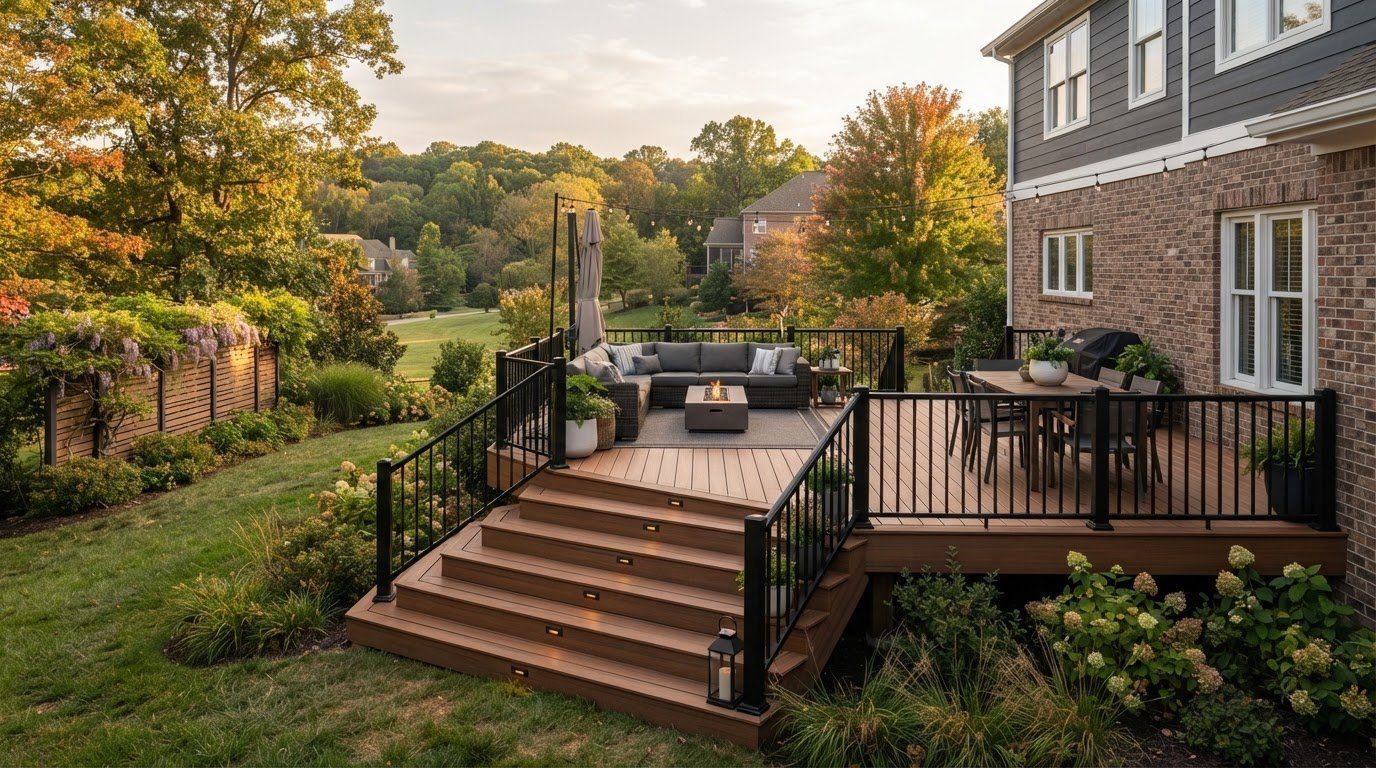
Expert Deck Builders in Louisville KY : Build Your Dream Deck

Pat McIntyre • August 20, 2026

The most dangerous part of your new deck is the part you'll never see once the boards are down. If a contractor focuses only on the surface aesthetics, you're likely looking at a structure that will fail long before its time. When you hire professional Deck Builders, you aren't just paying for a place to grill; you're investing in a foundation that must withstand the heavy humidity and harsh freeze-thaw cycles of the Ohio Valley. A deck's longevity depends entirely on the precision of the sub-structure and the integrity of the people building it.

It's natural to feel anxious about an investment of this scale, especially with the common fear of wood rot or contractors who disappear after the deposit is paid. We believe homeowners in Louisville, Crestwood, and Southern Indiana deserve a beautiful outdoor space that remains safe and sturdy for decades, not just a few seasons. This guide will teach you how to identify elite craftsmanship and the specific structural protection techniques required to ensure your deck lasts in our Kentucky climate. We'll preview the necessity of following the 2018 Kentucky Residential Code, the benefits of high-performance composite materials, and the critical importance of joist flashing to prevent premature decay.

Key Takeaways

  • Choosing elite Deck Builders ensures your structure is built to handle Louisville’s high humidity rather than rotting from the inside out within a decade.
  • Discover why advanced PVC and composite decking offer superior resistance to moisture and fading compared to traditional pressure-treated wood.
  • Learn how to protect your deck’s sub-structure using specialized joist tape to prevent water penetration at the most vulnerable connection points.
  • Navigate the specific building permit requirements and local regulations for Anchorage and Prospect to ensure your project is fully compliant.
  • Understand the value of a 10-year craftsmanship warranty as a shield against common industry pitfalls like poor workmanship or contractor abandonment.

Selecting Professional Deck Builders: More Than Just a Handyman

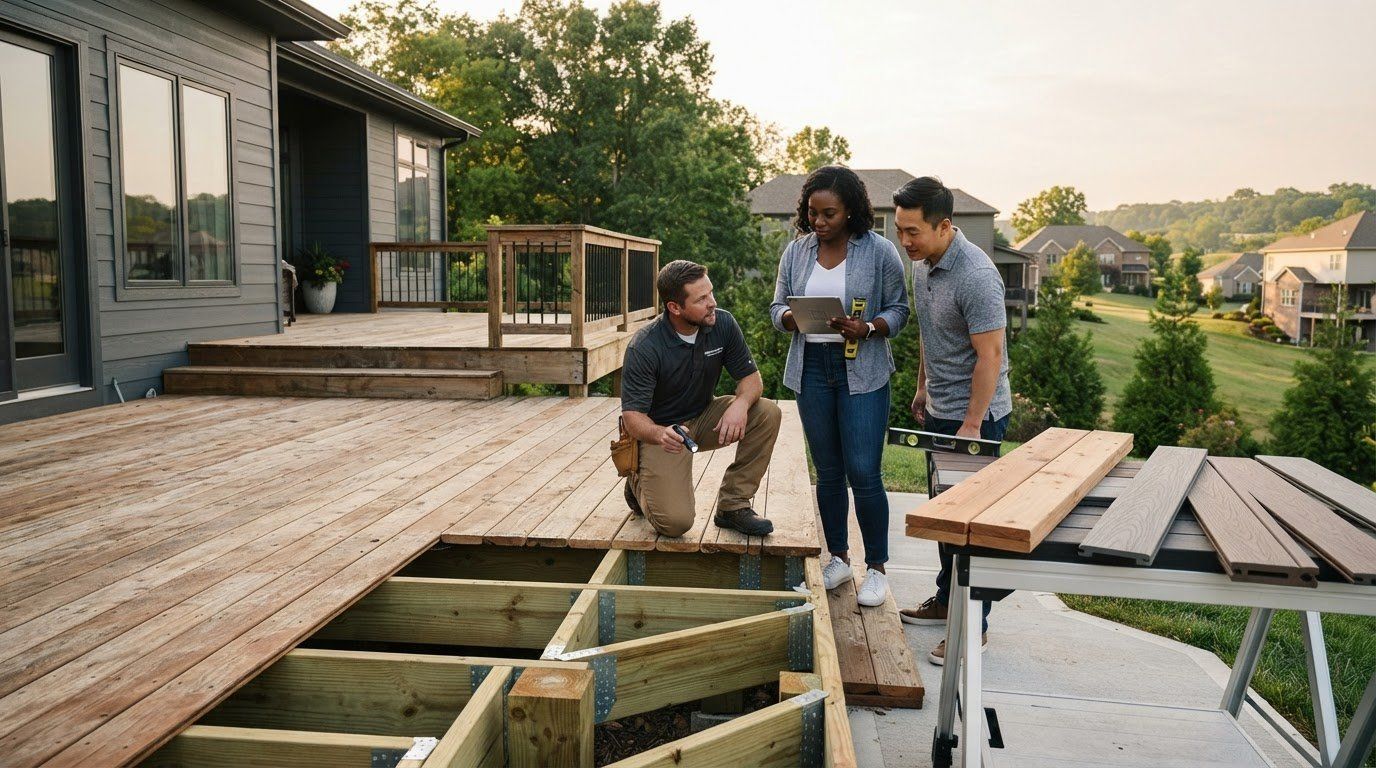
Many homeowners mistake a deck for a simple DIY weekend project or a task for a general handyman. In reality, modern deck construction is a specialized field of structural engineering. While a handyman might be excellent at fixing a leaky faucet or painting a room, they often lack the specialized equipment and knowledge required to manage the complex load-bearing requirements of an elevated outdoor living space. If you choose a specialized contractor over a generalist, you ensure that every joist and beam is calculated for maximum safety and long-term performance.

Professional Deck Builders understand that a deck is a permanent addition to your home's footprint. When built correctly, it significantly boosts your property's resale value and curb appeal. However, if the build is substandard, it becomes a liability that can fail a home inspection during a future sale. Beyond the financial aspect, there is the matter of safety. Elevated structures carry immense weight; hiring uncertified labor to save a few dollars can lead to catastrophic failures that homeowners insurance may not cover. When you invest in professional expertise, you're buying peace of mind alongside a new outdoor space.

The Risks of Substandard Construction

The Louisville climate is particularly unforgiving to poorly built structures. Our high humidity levels and frequent rain create a breeding ground for wood-destroying organisms. One of the most common failure points in amateur builds is the ledger board, the piece that attaches the deck to your house. If this isn't flashed with surgical precision, water will seep behind your siding and rot your home's rim joist. This type of damage is often invisible until the structure becomes unstable. Working with a locally owned contractor in Louisville KY means you're hiring someone who knows exactly how to seal these vulnerable points against our local weather patterns.

Evaluating Contractor Integrity

The home improvement industry is unfortunately filled with transient contractors who blow into town and disappear once the check clears. To protect your investment, you must vet your builder's local history and insurance coverage. Ask for specific examples of projects they've completed in neighborhoods like Anchorage or Prospect. A high standard of accountability is the only way to guarantee long-term stability. This is why a 10-year craftsmanship warranty is the industry gold standard. It serves as a firm promise that the builder stands behind their work. If a contractor won't offer a written guarantee of this length, they likely don't have confidence in their own building methods.

Advanced Material Science: PVC and Composite Performance

The foundation of a long-lasting deck begins with material selection. Expert Deck Builders understand that traditional pressure-treated wood is a ticking clock in the Ohio Valley. While wood looks natural on day one, it begins to warp, splinter, and decay the moment it's exposed to Kentucky's erratic weather. TimberTech Advanced PVC represents a significant leap forward in durability. These materials are engineered to perform within service limits ranging from -70°F to 200°F. This thermal stability ensures your deck won't become brittle in a deep freeze or lose its structural integrity during a record-breaking heatwave.

Why Advanced PVC Wins in Kentucky

Southern Indiana and Louisville summers are defined by oppressive humidity. This moisture is the primary cause of rot and mold in traditional wood decks. According to research in Advanced Material Science, modern polymer-based decking provides a level of moisture resistance that organic materials simply cannot match. Because PVC contains no wood fibers, it's essentially immune to the "sponge effect" that causes boards to swell and buckle. There's also a practical comfort benefit. Advanced PVC is designed to stay cool to the touch. This allows you to walk comfortably in bare feet even during the peak of July, a feat impossible with traditional wood or older composite generations.

Hidden Fasteners for a Clean Finish

The difference between a mediocre build and elite craftsmanship often lies in the fastening system. Traditional screws create "mushrooming" where the material bulges around the screw head, creating an uneven and potentially hazardous surface. When we execute outdoor deck construction in Louisville, we prioritize hidden-fastener systems like Cortex or CONCEALoc. These methods secure the boards from the side or below, leaving the surface perfectly smooth.

Advanced systems such as SIDELoc and FUSIONLoc take this a step further by creating a completely fastener-free visual profile. This isn't just about aesthetics; it's about longevity. By eliminating holes in the top of your boards, you remove the entry points where water typically settles and begins the degradation process. If you're ready to see how these high-performance materials look in a real-world setting, reach out to our team to discuss your custom project design.

The Hidden Enemy: Protecting Your Deck Sub-Structure

The biggest mistake a homeowner can make is assuming that a "lifetime" deck board means a lifetime deck. While modern composite and PVC materials are virtually indestructible, the pressure-treated lumber used for the frame is still organic and vulnerable. Expert Deck Builders know that moisture trapped between the board and the joist is the silent killer of outdoor structures. If water sits on top of a joist for years, it eventually seeps into the screw holes, rotting the frame from the inside out while the surface looks brand new. This mismatch in material lifespan is why many decks fail structurally while the expensive surface boards are still in perfect condition.

The Science of Joist Tape

To combat this internal decay, we utilize TimberTech ProTac Joist Tape on every build. This butyl-based tape creates a waterproof seal around every fastener, preventing moisture from entering the wood grain. Precision matters in this application. We use 1.625 inch tape for single joists and 3.25 inch tape for double beams or rim joists to ensure total coverage. For the adhesive to bond permanently, it must be applied when temperatures are between 20°F and 170°F. If a contractor ignores these technical specifications, the tape may peel, leaving your sub-structure exposed to Kentucky's relentless humidity.

Framing Best Practices

A deck is only as good as its skeleton. Structural integrity requires that joist spacing never exceeds 16 inches on center. If you plan on using a diagonal board pattern or a specific heavy-duty composite brand, that spacing often needs to be tightened to 12 inches to prevent "bouncy" floors. We also insist on edge-to-edge flush blocking every 4 to 6 feet. This prevents joists from twisting or rolling over time, a common issue with lower-quality lumber. According to safety standards from the North American Deck and Railing Association, proper sub-structure maintenance is the most critical factor in preventing structural failure.

When we source materials for our decking services in Louisville, we prioritize kiln-dried, moisture-resistant lumber. This material is significantly more stable than the "wet" lumber typically found at big-box retailers, which often warps or shrinks as it dries in the sun. By combining superior wood with advanced protection like ProTac, we ensure the frame lasts as long as the boards. This level of detail is why we can confidently offer a 10-year craftsmanship warranty. We don't just build for today; we build to protect your home's stability for the next several decades.


Planning Your Build: Louisville Regulations and Design

Designing an outdoor space in neighborhoods like Anchorage or Prospect requires more than a tape measure; it requires a deep understanding of the 2018 Kentucky Residential Code. Professional Deck Builders act as your liaison with the Louisville Construction Review Division to ensure every detail, from footing depth to stair rise, meets legal safety standards. If you attempt to bypass the permitting process, you risk heavy fines or being forced to tear down the structure during a future home inspection. We handle the bureaucracy so you don't have to, ensuring your project is documented and compliant from day one.

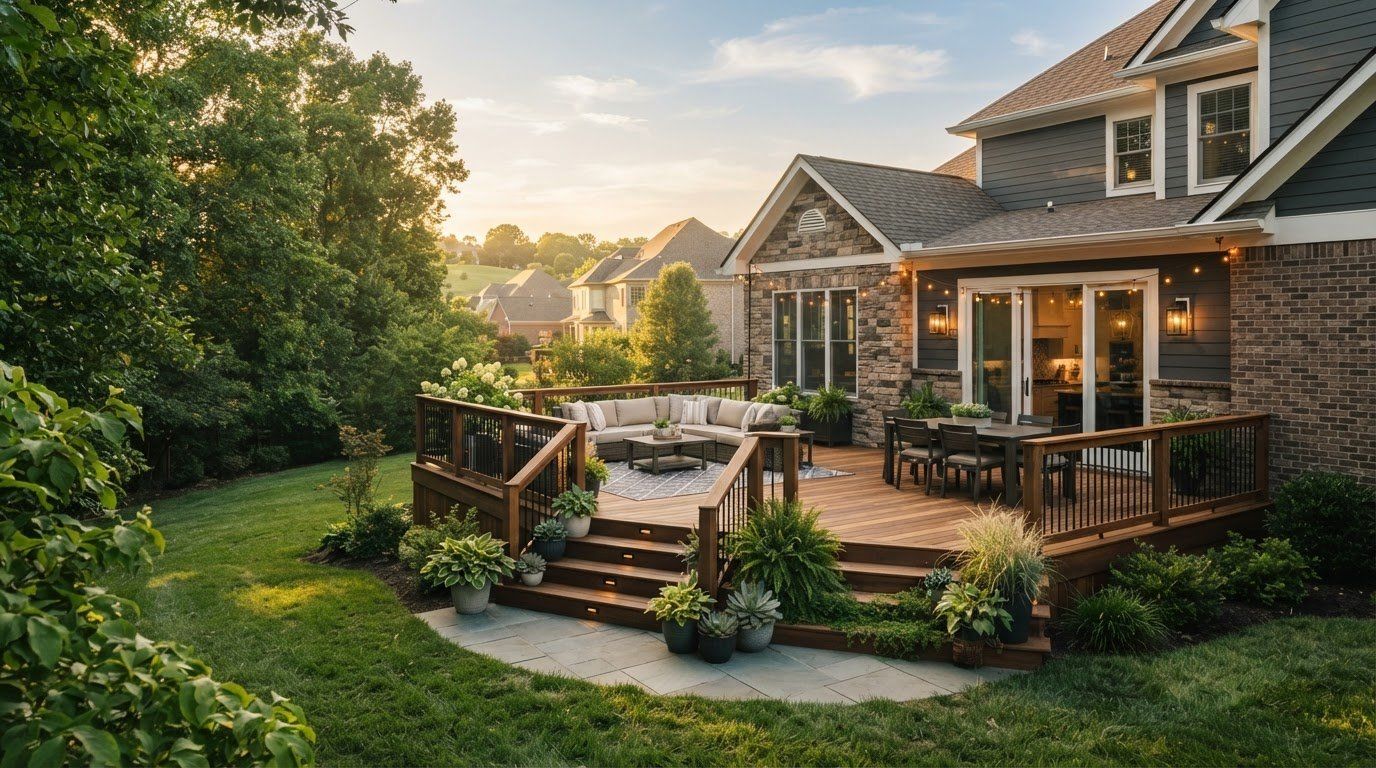
Kentucky's rolling topography often demands creative engineering. Many homes in our region sit on sloped lots, requiring elevated decks with complex stair systems. Code compliance for these structures is non-negotiable. For instance, railings must meet specific height and baluster spacing requirements to prevent accidents. When we adapt a design for a steep grade, we prioritize structural reinforcement that exceeds minimum standards, providing a stable platform regardless of the terrain's challenges.

The Permitting Process in Metro Louisville

In Louisville, a building permit is mandatory for any deck that is attached to your dwelling, exceeds 200 square feet, or sits more than 30 inches above the ground. Navigating local zoning rules for setbacks in Crestwood and Glenview can be particularly complex due to specific lot line restrictions. For multi-story designs or those integrated into difficult landscapes, we often work with licensed engineers to verify that the structural load is distributed safely and that footings extend below the frost line to prevent shifting.

Designing for Curb Appeal and Value

A well-designed deck should look like an original part of the house, not a bolted-on afterthought. We specialize in integrating your new outdoor space with existing LP SmartSide siding to create a seamless transition between the home and the yard. Beyond aesthetics, industry data suggests that a deck addition increases home value in Louisville by providing the high-end outdoor living space that modern buyers demand. Choosing colors that complement local architectural styles, such as deep earth tones or classic grays, ensures your investment remains timeless and attractive to future owners.

Schedule your design consultation today

Why Home Run Improvement is Louisville’s Trusted Partner

Choosing the right Deck Builders is the final piece of the puzzle for your home’s exterior. At Home Run Improvement, we don't just follow a blueprint; we apply a "Protective Expert" philosophy to every square foot. This approach means we anticipate the specific points of failure that plague Louisville homes, from improper drainage to structural sagging. When you partner with us, you're hiring a team that takes personal accountability for the longevity of your outdoor space, treating your property with the same precision we'd use for our own families.

A Legacy of Local Craftsmanship

Local accountability is essential for a large scale investment like a custom deck. Because we're a locally owned company serving Anchorage, Hurstbourne, and Indian Hills, our reputation is built on the quality of the structures we leave behind. We maintain elite manufacturer certifications, including our status as an Owens Corning Preferred Contractor and an LP SmartSide Master Lead. These aren't just titles; they're verified proof of our commitment to high performance standards. You can verify our results by reviewing our portfolio of work in the Louisville area. Every build we complete is backed by a 10-year craftsmanship warranty, providing a level of security that "solar cowboys" or transient contractors simply won't offer.

Your Next Steps to a Dream Deck

We've designed our process to be as steady and methodical as our construction methods. When you request a free estimate, we provide a comprehensive assessment of your property's unique topography and structural needs. We handle the heavy lifting, including navigating the Metro Louisville permitting process and coordinating all necessary inspections. Whether you're in Crestwood or Southern IN, our goal is a seamless transition from your current yard to a custom outdoor living area. Beyond decking, we offer total exterior solutions from roofing to gutters, ensuring your home remains a fortress against the elements. If you're ready to start your project with a team of established local experts, schedule your Louisville deck consultation to begin the design phase.

Secure Your Outdoor Investment for the Future

Building a deck in Louisville is a significant investment that requires a balance of aesthetic vision and structural engineering. If you prioritize advanced materials like PVC and essential protections like joist flashing, you ensure your space remains a safe sanctuary rather than a maintenance burden. Choosing elite Deck Builders who understand the specific humidity challenges of the Ohio Valley is the only way to guarantee a structure that lasts for decades.

As a locally owned contractor and LP SmartSide Master Lead, we stand behind every project with an industry leading 10-year craftsmanship warranty. We take the anxiety out of the process by managing everything from local building permits to the final structural inspection. You deserve an outdoor living area built with precision and integrity.

Get Your Free Deck Estimate in Louisville Today

We're ready to help you transform your backyard into a durable masterpiece that your family will enjoy for years to come.

Frequently Asked Questions

Do I need a permit to build a deck in Louisville, KY?

You must secure a building permit in Louisville for any deck attached to a dwelling, larger than 200 square feet, or higher than 30 inches. If your structure serves a required exit door, it's also subject to official approval. Working with the Louisville Construction Review Division ensures your project meets the 2018 Kentucky Residential Code. Professional Deck Builders handle these applications to ensure your home remains fully compliant and safe.

How long does a composite deck typically last compared to wood?

High performance composite and PVC decking typically lasts between 25 and 50 years, while traditional pressure treated wood often fails within 10 to 15 years in our climate. The erratic freeze-thaw cycles in Kentucky cause wood to warp and splinter faster than engineered materials. When you choose TimberTech materials, you're investing in a surface that resists rot, insects, and fading. This longevity makes engineered decking a far more cost effective choice over the total life of your home.

What is joist tape, and is it really necessary for my deck?

Joist tape is a waterproof butyl membrane applied to the top of your deck's wooden frame to prevent internal rot. It's an essential component for any long lasting build because it seals around fastener holes to keep moisture out of the wood grain. Using ProTac Joist Tape can significantly extend the life of your sub-structure. Without this protection, the wooden frame will likely decay long before your composite deck boards ever show signs of wear.

How much does it cost to hire professional deck builders in Louisville?

The cost of hiring professional Deck Builders depends on several factors, including total square footage, material selection, and site complexity. While labor costs in Louisville are approximately 1% above the national average, the long term value of a professional build far outweighs the risks of a DIY project. Factors like elevated structures, custom staircases, and premium PVC materials will influence the final investment. We recommend checking the Kentucky Department of Housing for contractor verification before starting.

Can you build a deck over an existing concrete patio?

You can build a deck over an existing concrete patio by using a specialized sleeper system or low profile brackets. This method allows for proper drainage and airflow between the concrete and the new wooden frame. It's vital to ensure the existing concrete is stable and properly sloped away from your home's foundation. Following established construction standards for patio decks prevents moisture traps that could lead to mold or structural instability.

What is the best time of year to start a deck project in Kentucky?

Late fall and winter are the best times to start a deck project in Kentucky because the lower humidity is ideal for wood stability. Starting during the off season also ensures your outdoor space is ready for use the moment warm weather arrives. While many homeowners wait until May, early planning allows you to avoid the peak season rush. Consult the National Weather Service Louisville for local climate patterns that might impact your specific construction timeline.

Are hidden fasteners worth the extra cost?

Hidden fasteners are worth the investment for homeowners who prioritize a clean, modern aesthetic and increased safety. These systems eliminate protruding screw heads, which can become trip hazards or catch on bare feet as boards shift. By using concealed fastening technology, you also protect the integrity of the board surface. Removing top down screw holes reduces the number of entry points for water, which helps prevent the underlying joists from rotting prematurely in our humid climate.

What maintenance is required for TimberTech Advanced PVC decking?

TimberTech Advanced PVC decking requires very little maintenance beyond an occasional cleaning with mild soap and a stiff brush. Unlike traditional wood, these boards never need to be sanded, stained, or sealed to maintain their appearance. For the best results, follow the manufacturer's cleaning guidelines to remove pollen or debris that can settle on the surface. This low maintenance profile saves you significant time and money compared to the annual upkeep required for wood decks.
By Pat McIntyre August 19, 2026
Louisville homeowners deal with hail more often than most people realize. Across the 12-year record spanning 2014 to 2026, NOAA's Multi-Radar Multi-Sensor system has flagged 164 verified hail days within 10 kilometers of Louisville, Kentucky, every one an occasion when radar-estimated hail reached the National Weather Service severe threshold of one inch or larger. With that kind of track record, a storm hitting your roof is a near certainty over the life of your home, and knowing what actually happens to your shingles the moment hail makes contact can mean the difference between a swift insurance settlement and an expensive, drawn-out ordeal. This guide walks you through the science behind hail damage, how to spot it, what your shingles look like underneath all those granules, and exactly what steps to take before calling your insurer. Key Takeaways Louisville is in active hail territory: 2025 stands out as the single most active year on record for hail near Louisville, concentrating 30 hail days into one season, so your roof is not a question of "if" but "when." Quarter-sized hail is the damage threshold: Hail as small as one inch (quarter-sized) can damage asphalt shingles, and hail reaching 1.5 to 2 inches (golf-ball size) often causes immediate, severe structural damage. If that size fell on your street, get an inspection. Most damage hides from the ground: Hail can damage shingles in ways that reduce their protective ability before an active leak becomes visible, and a roof may still shed water temporarily while the shingles are already compromised. Assume there is damage until a professional says otherwise. The insurance clock starts on the storm date: The timeline starts from the date of loss, not from the date you discovered the damage. File promptly, waiting erodes your claim position. Average hail claims run nearly $15,000: Over 2019 through 2023, about 2.8 percent of insured homes filed a wind or hail claim each year, the largest share of any cause, and the average wind and hail claim came to $14,747, according to the Insurance Information Institute. Knowing that benchmark helps you push back on low adjuster estimates. Quick-Start Prioritization Framework Start here if you are: A first-time Louisville homeowner after a storm: Do the ground-level inspection first, then check your gutters for granules, the fastest low-risk signal of real shingle damage. An owner with an older roof (15+ years): Older asphalt shingles become more brittle over time, making them increasingly susceptible to cracking and splitting from hail impact. Skip the waiting game and book an inspection right away. Weighing repair vs. replacement: Granule loss alone does not always mean replacement is needed, but if more than 50% of granules are missing from a shingle's surface, or if granule loss covers 20% of the roof, replacement is typically necessary. What Hail Actually Does to Your Shingles, Layer by Layer Most Louisville homeowners picture a hail impact as a simple dent. The reality is more complicated, and understanding each layer of damage explains why a roof can look fine from the street yet be failing underneath. The Surface Layer: Granule Loss Over time, the granules on shingles can start to loosen and fall off. Granules are the small, pebble-like bits that make up the top layer of shingles and protect the asphalt beneath from UV rays and weathering. When a hailstone hits, it knocks granules loose instantly. Hail damage can dislodge the protective mineral granules of an asphalt shingle, producing areas of exposed asphalt shingle substrate. The practical consequence: hail damage can significantly accelerate the aging process of roofing shingles, as granule loss and physical damage expose shingles to more sunlight and weathering, reducing their lifespan. Without the protective granule layer, shingles are more susceptible to UV radiation, which can cause the asphalt to dry out, become brittle, and crack. Check your gutters after any storm. Hail can damage shingles in ways granules collecting in gutters or near downspouts, this can be a sign that your shingles were impacted and are losing the protective surface that helps defend against UV and weather exposure. If you find an unusual volume of granules in your gutters, that is your signal to schedule an inspection rather than wait for a leak. The Mat Layer: Bruising and Fractures Beneath the granules sits the fiberglass mat, the structural backbone of your shingle. Soft or spongy areas signal compression beneath the shingle surface after hail impact. Instead of cracking, the mat layer can bruise and lose rigidity, especially on slopes that take direct hits during fast-moving spring storms. These zones often feel unstable underfoot and indicate localized structural weakening rather than surface cracking. Pro tip: Press your palm flat against a shingle after a storm. A healthy shingle feels firm. A bruised one yields slightly, like pressing on a ripe peach. Hail hits that are soft to the touch, like the bruise on an apple, are a classic sign of mat-layer damage that will not show up in a drive-by look. Hail impact on a roof can shatter the shingles' surfacing, causing it to break away from the fiberglass mat underneath. Fractured fiberglass can be slightly harder to detect and usually requires a trained eye. Fractured fiberglass mats can result in tears and cracks from a point of hail impact. The Seal Strip: The Hidden Failure Point High winds and hail can weaken the seal integrity of your shingles. A weakened seal is what causes a shingle to blow off and can leave your roof exposed to the elements. This matters enormously in Louisville, where spring supercells combine hail with gusts that can push 70 mph or more. The wind associated with hail damage makes this particularly destructive. The hail contact loosens the seal, and then the wind starts to put pressure on the damage, ultimately, this is why shingles will fly off. A shingle that survives a hailstorm intact can still fail in the next rainstorm if its seal has been compromised. Hail Size and What It Means for Your Louisville Roof Not all hailstorms are created equal. The size of the stone largely determines whether you are dealing with minor granule loss or a full structural failure. Quarter-Sized Hail (1 inch): The Invisible Threat Hail that is less than an inch wide typically only creates minor roof damage, such as damage to the granules on asphalt tiles. At the one-inch mark, however, damage to standard asphalt shingles begins in earnest. The damage is almost always invisible from the ground, which is precisely what makes it dangerous. While some hail damage may be obvious from the ground, much of it requires a close inspection to detect. That is why many homeowners do not realize the full extent of the problem until leaks or other major issues appear. Golf Ball-Sized Hail (1.75 inches): Structural Risk At this size, you are looking at more than cosmetic damage. Hail can damage shingles in ways off protective granules, crack roof components, and shorten the life of your roofing system. Golf-ball-sized hail or repeated hail impacts can create damage that is not always visible from the ground but can still affect performance over time. The April 2020 hail event, which tracked through East Jefferson County, is a local example of this scale of event. That event was one of the costlier residential insurance events in Kentucky history, affecting tens of thousands of roofs across Middletown, Jeffersontown, and the Hurstbourne corridor. Hen Egg-Sized Hail (2+ inches): Immediate Structural Damage Hail reaching 1.5 to 2 inches (golf ball size) often causes immediate, severe structural damage. Louisville had 7 hail reports within 10 miles of the city center in 2025 alone, and the largest report that year was 2.00 inches (hen egg-sized). At this size, hail exceeding two inches in diameter can create severe cracks in the shingles or knock roof tiles loose. If a storm of this magnitude hit your neighborhood, assume your roof needs professional assessment, not just a visual check from the curb. How to Inspect Your Roof After a Louisville Hailstorm You do not need to climb onto your roof to gather meaningful evidence. A smart ground-level check plus a look at a few key spots can tell you a great deal before any professional arrives. Start on the Ground Move outside to examine the roof's exterior from the ground. Walk around the entire perimeter of your property. Look for shingles that are missing, cracked, curled, or bruised from hail. Check your gutters and downspouts for an accumulation of asphalt granules. Also inspect flashing around chimneys, vents, and skylights for any signs of damage or separation, as these are common failure points. Pro tip: Check your air conditioning unit, metal vents, and aluminum window screens. Clean spots, also called "spatter marks," occur when hail strikes a weather-stained surface, including wood, metal, shingles, or even concrete. When hail impacts such a surface, it cleans away the discoloration. Dents on your AC fins or window screens confirm hail size and help document your claim without you setting foot on the roof. Document Everything Before Calling Anyone Begin by documenting all of the storm damage meticulously. Take clear photos from multiple angles showing dents in metal, cracked roofing tiles, damaged gutters, broken windows, and any other affected areas. The most useful documentation includes visible exterior impact, scattered debris, damaged screens, dented gutters, displaced materials, and any interior signs of leaking. It is also smart to make a short note with the time of the storm, when you first noticed the issue, and which part of the house seemed affected first. Know the Difference Between Hail Damage and Normal Wear There are many other types of damage to shingles that can be mistaken for hail damage. Exposure to inclement weather and sunlight makes shingles brittle and gives them an aged appearance. This type of damage is normal wear and tear, which is sometimes misidentified as hail damage. A key tell: genuine hail impact leaves random damage with no discernible pattern, a split in the shingle that is brown or orange in color, and splits with sharp corners and edges. Wear and tear tends to be uniform and progressive. A roofing contractor's walkthrough of post-hailstorm inspections shows exactly what damage patterns to look for and how professionals document findings for insurance purposes. Navigating the Insurance Claim Process in Kentucky Filing a hail damage claim in Kentucky follows a specific process, and the timing of each step has real financial consequences. File Fast, The Clock Starts at the Date of Loss While timelines vary by provider most homeowners insurance policies give you between 6 months and 1 year to file a hail damage claim. Some policies may even have shorter windows, especially in high-risk regions. Missing that window may mean you lose your right to file at all. In Kentucky specifically, many insurance policies have strict deadlines for reporting claims, and you typically have one year to file, but reporting promptly is always better for your roof insurance claims. Pro tip: The sooner you act after spotting damage, the stronger your claim position becomes. Delays give insurers room to question whether the damage is recent or pre-existing, and they can weaken your case for full coverage. Call your insurer the same week as the storm, even if you have not completed your full inspection yet. Watch Out for Storm-Chasing Contractors After a big Louisville hailstorm, crews from outside the region often saturate neighborhoods with door-to-door offers. Storm-chasing contractors target stressed homeowners fast. Walk away from anyone who shows up unsolicited, demands a large cash deposit, offers to waive your deductible, or cannot produce a local license and proof of insurance. Kentucky law takes this seriously: Kentucky passed a law stating roofing contractors who offer to waive a homeowner's deductible on their property insurance claim could face serious punishment. This law requires homeowners to pay the deductible under their property insurance policy, and it is unlawful for a roofing contractor to cover, forego, absorb, rebate, mitigate, or otherwise make deals with an insurance deductible. Understand Replacement Cost vs. Actual Cash Value Even if your policy technically gives you a year, waiting too long can reduce how much you receive. If you have Replacement Cost Value (RCV) coverage, your insurer typically pays the depreciated value first, then reimburses the difference after repairs. But if you delay and do not meet the timeline for completing repairs or submitting documentation, that second payment, the recoverable depreciation, can be forfeited. You could lose out on thousands of dollars and end up covering the gap out-of-pocket. Future-Proofing Your Louisville Roof After a Hail Event Repairing hail damage is an opportunity to make a smarter investment, not just a like-for-like replacement. Consider Class 4 Impact-Resistant Shingles Class 4 asphalt shingles are designed to be impact-resistant and withstand hail. While they are usually more expensive than standard shingles, they may save you money in the long run if you live in an area prone to hail. In Kentucky, the financial case is compelling. Homeowners in Kentucky and Ohio can see insurance premium discounts of 10% to 35% after installing certified Class 4 materials. If you use certain impact resistant roofing products, like hail resistant shingles or Class 4 shingles, you may be eligible for a discount on your home insurance premiums. Kentucky is explicitly listed as a qualifying state by State Farm for that discount. Homeowners in Kentucky and Ohio cost 10% to 25% more than standard shingles, they often pay for themselves within 5 to 7 years through insurance premium savings and by avoiding the $1,000 to $5,000 deductibles associated with storm claims. If you are already replacing your roof after hail damage, the incremental cost of going Class 4 is one of the highest-return upgrades available to a Louisville homeowner. When you are ready to explore your options, the team at Home Run Improvement can walk you through material choices suited to Louisville's specific hail patterns and help you document damage properly for your insurance claim. Common Mistakes Louisville Homeowners Make After a Hailstorm In my experience, the errors that cost homeowners the most money are rarely dramatic; they are small, avoidable delays and misunderstandings. Waiting to see if a leak appears. When hail strikes, time is of the essence. Small "bruises" on your shingles today become major leaks tomorrow. By the time a leak shows up on your ceiling, water has already been working through your roof deck, insulation, and framing. Trusting a visual check from the street. Wind, hail, and storm damage on Louisville, KY roofs often appear as missing or lifted shingles, dark impact marks from hail, exposed underlayment, dented flashing, or interior water stains, but many of these signs require getting close to the surface to spot. Signing a contract before talking to your insurer. Always verify a contractor's license and reputation. Before signing any repair contract, consult your insurer. They can confirm coverage, assess damage, and may offer programs or discounts to ease your recovery. Once you sign a contract, your insurer's ability to assist may be limited. Ignoring the age of your shingles. Understanding your roof's age material, and condition helps determine how it will hold up and what your insurance will cover. A 30-year-old roof is less resilient and may have lower replacement value than a newer one. Frequently Asked Questions How do I know if my Louisville roof has hail damage if there are no visible holes? Hail damage on asphalt shingles appears as circular dents, granule loss creating dark or shiny spots, and small cracks. This level of damage compromises the shingle's integrity and creates potential entry points for moisture. Check your gutters for granule accumulation and inspect soft metal surfaces like AC fins or flashing for fresh dents, both are reliable proxies for roof damage even when the shingles look intact from the ground. How much does a hail-damaged roof cost to repair or replace in Louisville? A comparative breakdown shows that moderate hail damage inspections typically run $250 to $400, with repair costs ranging from $3,000 to $7,000, and full replacement costs from $12,000 to $18,000, with a 14 to 21 day resolution time. The national average claim payout is around $14,747, per the Insurance Information Institute, but your specific outcome depends heavily on your deductible type, your roof's age, and how quickly you document and file. How long do I have to file a hail claim in Kentucky? Kentucky insurance law requires claims to be filed within one year of the damage date, though some policies have shorter windows. Missing these deadlines can result in claim denial. Read your specific policy and confirm the deadline with your carrier directly, some run as short as 180 days. Will filing a hail damage claim raise my homeowners insurance premiums? Weather-related roof insurance claims typically do not increase rates as much as other types of claims made to insurance companies. However, multiple claims over several years may impact your premiums or coverage availability. Filing one storm claim after a documented Louisville hailstorm is rarely a significant premium risk. What is a Class 4 shingle and is it worth it in Louisville? Class 4 shingles carry the UL 2218 impact-resistance rating, the highest available. To earn a Class 4 rating, shingles must withstand two direct hits from a 2-inch steel ball dropped from 20 feet without cracking, splitting, or showing visible damage. Given that Louisville recorded 30 hail days in 2025 alone, the math on Class 4 is straightforward: a 10 to 35% insurance discount plus far fewer future claims is a strong return on a modest upfront premium over standard architectural shingles. Conclusion A Louisville hailstorm is a brief, violent event, but what happens to your shingles in those few minutes can quietly unfold into leaks, mold, and structural repairs over months or years. The good news is that understanding the damage, acting quickly, and documenting everything puts you in control. Whether you are dealing with minor granule loss or a full structural assessment, every step you take in the first 48 hours shapes the outcome of your claim and the long-term health of your home. If you are unsure where to start, the team at Home Run Improvement helps Louisville homeowners navigate post-hail inspections, insurance documentation, and material upgrades designed for Kentucky's demanding storm season. Sources NOAA/ExoVZN Louisville Hail History 2014-2026 , Verified hail day records from NOAA's MRMS system for Louisville, KY. https://www.exovzn.com/hail-history/ky/louisville Stormer Site, Louisville Hail Reports 2025 , Documented hail events within 10 miles of Louisville. Louisville had 7 hail reports Travelers Insurance, Identifying Roof Hail Damage , Guide to hail damage types by roofing material. https://www.travelers.com/resources/weather/hail/identifying-hail-damage-to-your-roof Progressive Insurance, Signs of Hail Damage to Your Roof , Overview of impact-resistant shingle classes. https://www.progressive.com/answers/hail-damage-on-roof/ Insurance Information Institute / Clayem Hail Claim Data , Average hail claim payouts 2019-2023. Over 2019 through 2023, about 2.8 State Farm, Homeowner Insurance Discounts (Class 4 Shingles) , State-by-state eligibility for impact-resistant roofing discounts. If you use certain impact RoofPredict, Hail Insurance Claims Louisville KY , Cost breakdowns and timeline data for Louisville claims. https://roofpredict.com/blog/how-to-file-a-storm-damage-roof-claim-in-louisville-ky Certainty Home Inspections, Roof Storm Damage Guide Louisville KY , Local inspection findings after Louisville storms. https://www.certaintyhomeinspections.com/roof-storm-damage-guide-louisville-ky/ Alpine Intel, Identifying Hail Damage to Asphalt Shingle Roofs , Industry methodology for hail damage assessment. https://alpineintel.com/resource/identifying-hail-damage-to-asphalt-shingle-roofs/ Advanced Exteriors, Hail Damage Insurance Claim Timelines , Policy deadline guidance. https://advancedexteriors.com/what-to-know-about-hail-damage-insurance-claim-timelines/ Frontline Adjusters, How Hail Damage Affects Roofing Shingles Over Time , Long-term shingle degradation from hail. hail damage can significantly NRCIA, How to Write a Roof Damage Report for Insurance , Documentation best practices. https://www.nrcia.org/roof-damage-report-insurance/ CMS Roofing, Kentucky Insurance Claim Help , Kentucky-specific deductible law and claim deadlines. https://www.cmsroofing.com/insurance-claims Insurify, Hailstorms and Home Insurance Costs 2025-2026 , National hail exposure and claim cost data. https://insurify.com/homeowners-insurance/insights/hailstorms-next-insurance-crisis/ State Farm Newsroom, Hail Claims 2025 , $5.6 billion in hail payouts nationally in 2025. https://newsroom.statefarm.com/state-farm-paid-over-56-billion-in-hail-claims-in-2025/
By Pat McIntyre August 19, 2026
Most Louisville homeowners assume a deck's lifespan is determined by the boards they walk on; however, the reality is that Kentucky’s high summer humidity destroys an outdoor structure from the joists up long before the surface ever fades. When you search for a "Deck Contractor Near Me," you aren't just looking for someone to nail boards together. You're looking for a professional who understands that structural integrity is non-negotiable in our local climate. It's stressful to navigate the confusing price gaps between pressure-treated wood and composite while wondering if your builder will even show up on Monday morning. We believe you shouldn't have to choose between a beautiful aesthetic and long-term security. This article will help you find a local builder who prioritizes premium materials like TimberTech Advanced PVC and provides a warranty that actually protects your investment. We'll explore the specifics of the 2018 Kentucky Residential Code, explain why certain materials fail in Louisville's heat, and outline exactly what to look for in a 10-year craftsmanship warranty so your new outdoor space remains a safe, low-maintenance sanctuary for years to come. Key Takeaways Learn why choosing a specialized builder over a general handyman is the only way to ensure your project meets the Kentucky Building Code standards for long-term safety. Discover why TimberTech Advanced PVC is the superior choice for Louisville’s humid summers, outlasting traditional wood and resisting rot. Understand the critical structural requirements, such as 16-inch joist spacing, that prevent deck sagging and protect your home’s resale value. Identify the specific steps for navigating the Louisville Metro permitting process to avoid costly delays or HOA fines in communities like Prospect or Anchorage. Find out how a professional Deck Contractor Near Me provides ultimate peace of mind with a 10-year craftsmanship warranty that guarantees accountability. Vetting a Deck Contractor in Louisville: More Than a Google Search Choosing a deck contractor in Louisville is a high-stakes decision because our local climate is unforgiving. If you search for a "Deck Contractor Near Me," you'll find hundreds of results, but true accountability comes from deep local roots. A contractor with a physical presence in Louisville and Southern Indiana isn't just a business; they're a fixture in your community. They can't afford to do poor work because their reputation depends on neighborly referrals and long-term stability. If a builder lacks a local track record, they lack the incentive to ensure your deck survives a decade of Kentucky winters. There's a massive difference between a general handyman and a specialized deck builder. While a handyman might be competent at minor home repairs, deck building requires a deep understanding of deck construction standards to ensure structural safety and code compliance. Specialized contractors invest in specific certifications and understand the nuances of load-bearing structures that a generalist might overlook. Before you hire anyone, use this verification checklist: Insurance: Verify both general liability and workers' compensation coverage. Local Licensing: Ensure they are registered with the Louisville Metro Government. Specialized Certifications: Look for manufacturer-specific training, such as Master Lead status. Aged Portfolio: Ask to see projects built at least five years ago. If the structure is sagging or the boards are warping after five years, their "expert" status is a myth. Essential Questions for Your Louisville Builder You must verify a builder's technical expertise before signing a contract. Ask specifically how they mitigate Kentucky's expansive clay soil and high moisture levels during the foundation phase. Inquire about their crew's familiarity with hidden-fastener systems, which provide a cleaner look while preventing water from pooling in screw holes. Finally, confirm they handle the permit process with local offices in Prospect or Anchorage . A professional contractor never asks the homeowner to pull the permits; they take full responsibility for the legal requirements of the build. The Red Flags of 'Low-Ball' Quotes A price that seems too good to be true usually indicates a compromise in safety or material quality. Be wary of contractors who demand 100% payment upfront or refuse to provide a detailed written contract. Another common trap is the "labor-only" quote, which leaves you responsible for material procurement and delivery logistics. Most importantly, low-ball quotes often omit a 10-year craftsmanship warranty . If a builder isn't willing to stand behind their work for a decade, they're likely cutting corners on the structural components you cannot see. High-Performance Materials: TimberTech Advanced PVC vs. Traditional Wood Choosing the right material for your deck is a decision that dictates your home's maintenance schedule for the next two decades. While traditional pressure-treated wood remains a common choice, it often fails within 10 to 15 years in our region. This failure isn't just about appearance; it's about the decay that eventually compromises Structural Integrity . Wood is an organic material that naturally absorbs moisture, leading to splinters, warping, and rot. If you want a deck that lasts, you need a material that doesn't fight against the Kentucky climate. When you search for a "Deck Contractor Near Me," you'll likely see options for both wood and various synthetics. Advanced PVC decking has emerged as the gold standard for homeowners who prioritize longevity. Unlike wood or even some early-generation composites, Advanced PVC contains no wood fillers. This means it's entirely resistant to moisture and wood-boring insects. You won't spend your springs sanding or staining. Instead, a simple soap-and-water cleaning is all you'll need to maintain a pristine finish year after year. Why Advanced PVC Wins in the Kentucky Climate The Ohio River Valley presents a unique challenge for outdoor structures. Our humidity levels stay high, and our temperatures swing nearly 100 degrees throughout the year. TimberTech Advanced PVC is engineered with a service range of -70°F to 200°F. It remains stable through January freezes and July heatwaves. The SunComfortable™ technology is essential for Louisville families. It keeps the surface up to 30% cooler than competitive products. This ensures you can actually walk on your deck during the peak of summer without discomfort or burnt feet. Hidden Fasteners for a Clean, Modern Look A high-end deck should look like a piece of custom furniture, not a construction site. Traditional face-screwing methods leave hundreds of visible holes that catch water and eventually lead to board failure. Using hidden-fastener systems like Cortex® or CONCEALoc® provides a seamless, fastener-free surface that's safer for bare feet and pets. For advanced installations, systems like SIDELoc® allow for the natural expansion and contraction of the boards without creating gaps. You can find more technical specifications and installation guides on TimberTech’s resource page . If you're ready to stop maintaining your deck and start enjoying it, start a conversation with us about your project today. Structural Integrity: What Your Contractor Might Be Skipping A deck’s beauty is only skin deep, but its safety is rooted in the "hidden" deck. While many homeowners focus on the color of their boards, the sub-structure is the most critical part of the build. If you search for a "Deck Contractor Near Me," you must find a builder who understands that a deck is a load-bearing structure, not just a floor. Poor framing leads to sagging, bouncy surfaces, and eventually, catastrophic failure. We treat the skeleton of your deck with the same precision as the finish work because a 20-year board is useless if the joists rot in ten. Rigidity starts with proper joist spacing. We never exceed 16 inches on center for standard layouts; however, for certain diagonal patterns, we tighten that spacing even further to ensure a rock-solid feel. To prevent joist twisting and lateral movement, we install solid blocking every 4 to 6 feet. This extra step is frequently skipped by builders looking to save time, but it’s essential for long-term stability. Home Run Improvement exclusively uses kiln-dried, moisture-resistant lumber for our framing. This material is more stable than standard green lumber, which often warps or shrinks as it dries in the Kentucky sun. Protecting the Frame with Joist Tape Water is the primary enemy of any wooden frame. When screws penetrate the joists, they create pathways for moisture to seep into the wood grain. We use TimberTech ProTac Joist Tape to seal these entry points and prevent rot before it starts. We apply 1.625-inch tape for single joists and 3.25-inch tape for larger beams to ensure total coverage. This small investment in material significantly increases the total ROI of your project by doubling the lifespan of the wooden sub-structure. Protecting the frame is a core requirement of our 10-year craftsmanship warranty . Code Compliance and Structural Safety Safety is never optional. We ensure every joist plane is perfectly level before the first deck board is laid, preventing the "wave" effect seen on amateur builds. We also insist on using specialized hardware, including galvanized or stainless-steel fasteners, to prevent corrosion from the chemicals in treated lumber. Every project we undertake strictly adheres to the Louisville Metro Building Codes. If your contractor suggests skipping the permit or ignores local structural requirements, they are compromising your family's safety and your home's future resale value. True expertise means doing the job right where nobody can see it. Navigating Permits and Planning in the Louisville Metro Permitting is often the most frustrating phase of any home improvement project. In Jefferson County, a building permit is mandatory for any deck attached to a dwelling or exceeding 30 inches above grade. Submitting an application through the Louisville Metro Business Portal requires detailed construction drawings and a precise site plan. If you search for a "Deck Contractor Near Me," you need a partner who views this bureaucracy as their responsibility, not yours. We handle the entire plan review process to ensure your project meets the 2018 Kentucky Residential Code without unnecessary delays. If a builder asks you to pull the permit yourself, they are likely trying to avoid the legal accountability that comes with a professional inspection. Homeowners in communities like Glenview or Indian Hills face an additional layer of complexity: the Homeowners Association (HOA). These boards often have strict guidelines regarding material colors, railing styles, and even the footprint of the structure. Finding an expert Deck Contractor Near Me who understands these nuances is the first step toward a successful build. A professional contractor doesn't just build; they provide the technical documentation and renderings necessary for HOA approval. For a project starting in 2026, you should expect a timeline of 4 to 8 weeks from the initial design phase to the final inspection. This duration accounts for the thorough vetting performed by local building officials to guarantee your structure is safe for occupancy. Local Service Area Considerations Every neighborhood in the metro area presents specific challenges. Projects in Anchorage and Prospect often require adherence to unique local building requirements that exceed standard county codes. In Crestwood and Hurstbourne , we pay close attention to soil stability. The expansive clay common in these areas requires deeper, more robust footings to prevent frost heave and structural shifting. If your property is across the river in Clarksville , we pivot to Southern Indiana building codes to ensure full compliance and long-term peace of mind. Designing for Functionality and Curb Appeal A deck shouldn't look like an afterthought. We focus on integrating your new outdoor space with your existing siding to create a cohesive architectural statement. Whether you have vinyl or LP SmartSide, the transition between the house and the deck must be flashed correctly to prevent water damage to your home’s envelope. By choosing railing systems and integrated LED lighting that complement your home's style, you maximize your outdoor living space for Louisville's beautiful spring and fall seasons. Schedule your Louisville deck consultation today Why Home Run Improvement is Louisville’s Trusted Deck Partner When you finalize your search for a Deck Contractor Near Me, you aren't just hiring a construction crew; you're selecting a partner who is responsible for your property's safety and value for the next decade. Home Run Improvement is locally owned and operated right here in Louisville. We maintain high-level industry credentials, including LP SmartSide Master Lead status and Owens Corning Preferred Contractor status. These aren't just badges to us. They represent a commitment to technical precision and a level of accountability that national franchises simply cannot match. If you choose a builder based solely on the lowest bid, you often inherit the risk of future structural failure. When you choose us, you're choosing a neighbor who is invested in the long-term stability of our community. The 10-Year Craftsmanship Warranty Most contractors in the industry offer a standard one-year warranty, which often expires just as the first signs of structural shifting or material fatigue appear. We believe that is unacceptable for a major home investment. We provide a 10-year craftsmanship warranty on every deck we build. This warranty covers the integrity of the installation itself, ensuring that your joists remain level, your fasteners stay secure, and your frame resists the warping common in Kentucky's humid environment. Adhering to the professional standards set by organizations like the National Association of the Remodeling Industry is just our baseline. Our real goal is providing you with the peace of mind that comes from knowing your builder isn't going anywhere. Our expertise isn't limited to what's under your feet. Because we are also specialists in roofing and siding , we understand how a deck interacts with your home's entire exterior envelope. We ensure that ledger boards are flashed with surgical precision to prevent water from ever reaching your home's framing. This holistic approach protects your whole home from rot and moisture damage, a critical consideration that many specialized-only builders overlook. Get Started on Your Dream Deck We've streamlined our project management process to be as transparent and stress-free as possible. It begins with a professional consultation where we provide a free estimate and help you visualize your project using our expert design team. We'll walk you through material selections, from TimberTech Advanced PVC colors to railing configurations, ensuring the final result matches your home's architecture perfectly. From the initial design to the final walkthrough, we handle every detail so you don't have to. If you are ready to transform your backyard into a safe, low-maintenance sanctuary, contact Home Run Improvement today to schedule your consultation. Secure Your Home’s Value with Expert Craftsmanship Building a deck in the Ohio River Valley requires more than basic carpentry; it demands an understanding of the Kentucky Residential Code and the foresight to choose materials that withstand our humidity. By prioritizing structural integrity and high-performance synthetics, you ensure your outdoor space remains a safe, low-maintenance asset for decades. You've learned that a professional builder manages the "hidden" details, from joist tape to permit logistics, providing a level of security that a general handyman cannot offer. Home Run Improvement is a locally owned and operated company with Master Lead LP SmartSide Installer and Owens Corning Preferred Contractor status. We don't just build decks; we protect your home’s entire exterior envelope. If you're searching for a reliable Deck Contractor Near Me, choose the partner that offers an industry-leading 10-year craftsmanship warranty. We're ready to help you navigate the planning process and turn your backyard vision into a durable reality. Schedule Your Free Deck Estimate in Louisville We look forward to building a beautiful, stable space that your family will enjoy for many seasons to come. Frequently Asked Questions Do I need a permit to build a deck in Louisville, KY? In Louisville, a building permit is mandatory for any deck attached to a dwelling or more than 30 inches above grade. If your project exceeds 200 square feet or serves as a required exit, you must obtain approval through the Louisville Metro Construction Review Division. We handle this entire process because skipping permits can lead to legal issues and safety hazards. A professional contractor ensures every detail meets the 2018 Kentucky Residential Code. How long does a typical deck installation take? A typical project timeline spans four to eight weeks from the initial design phase to the final inspection. While the actual physical construction might take one to two weeks, the planning and permitting phases are critical for long-term safety. If you are searching for a Deck Contractor Near Me, ensure they account for Jefferson County’s permit lead times. We prioritize a methodical approach to ensure your structure is built to last without rushing structural essentials. Is TimberTech PVC decking better than composite for Kentucky weather? Advanced PVC is superior to traditional composite for the Kentucky climate because it contains zero organic wood fillers. While composites are durable, they can still absorb moisture in the Ohio River Valley’s high humidity. TimberTech Advanced PVC resists rot and mold entirely. Additionally, its SunComfortable technology keeps the surface significantly cooler during Louisville’s humid July heatwaves. If you want a deck that remains stable through 100-degree temperature swings, PVC is the professional choice. What is the difference between joist tape and flashing? These components serve distinct but equally vital roles in moisture protection. Joist tape, such as TimberTech ProTac, seals the top of your deck’s framing to prevent water from entering screw holes and rotting the wood from within. Flashing is used specifically at the ledger board where the deck attaches to your home. If the flashing is installed incorrectly, water can penetrate your home’s envelope, leading to severe structural damage to your siding and foundation. Does a new deck increase my home value in Louisville? A professionally built deck is a high-yield investment that significantly increases your home's resale value and curb appeal. In Louisville, outdoor living spaces are highly sought after by buyers looking for an extension of the primary residence. If you choose premium materials and secure a 10-year craftsmanship warranty from a Deck Contractor Near Me, you provide tangible proof of quality to future owners. A sturdy, low-maintenance deck acts as a permanent upgrade rather than a temporary addition. Can you build a deck over an existing concrete patio? It is possible to build a deck over an existing concrete patio, provided the concrete is structurally sound and has proper drainage. We utilize specialized post mounts or sleeper systems to ensure the new framing remains level and protected from moisture. If the concrete is crumbling or sinking, we recommend a full removal to establish a stable foundation. A professional assessment is required to determine the best engineering path for your specific property and deck construction standards . What kind of maintenance does a TimberTech deck require? TimberTech Advanced PVC requires minimal effort compared to the annual staining and sealing needed for pressure-treated wood. You only need to perform a simple cleaning with soap and water once or twice a year to remove pollen or debris. Because the material is resistant to moisture and wood-boring insects, you don't have to worry about splinters or rot. This low-maintenance profile ensures you spend your weekends enjoying your outdoor space rather than working on it. Why is joist spacing so important for my deck's stability? Joist spacing determines the rigidity and load-bearing capacity of your deck surface. We never exceed 16 inches on center; however, we often tighten that spacing to 12 inches for certain diagonal patterns or heavy-load areas. If the joists are spaced too far apart, the boards will sag and the entire structure will feel bouncy and unsafe. Precision in framing is the foundation of structural integrity and is a core part of our professional building standards. 
By Pat McIntyre August 18, 2026
A new deck is one of the most rewarding home improvement projects you can take on. According to the Cost vs . Value report, installing a deck on your home brings a 68.2% to 82.9% ROI, depending on the material. That is real money left on the table, or added to your equity, depending entirely on who you hire and what you ask them before the first board is nailed down. In my experience working with Louisville homeowners on outdoor living projects, the difference between a smooth build and a costly nightmare almost always traces back to the pre-hire conversation. The questions you ask a deck contractor before signing anything are the single most powerful tool you have. This guide gives you every question you need, in the right order, so you can hire with confidence. Key Takeaways Licensing in Louisville is local, not statewide: Kentucky does not issue state-level licensing for general contractors, but in Louisville-Jefferson County, contractors are required to obtain a license from the Louisville Metro Department of Codes and Regulations. Always ask for proof of this local license, a state license number simply does not exist here. A permit is almost always required: If you are building a deck or porch that is attached to your home, you need a building permit because it is part of the main structure. You also need a permit for freestanding decks if they are larger than 200 square feet, if any part is more than 30 inches off the ground, or if the deck connects to the house near the front door. If a contractor tells you to skip the permit, walk away. Written contracts protect everyone: A detailed written contract should outline the scope of work, materials to be used, payment schedule, project timeline, and warranty information. Verbal agreements are unenforceable and a leading cause of disputes. Contractor fraud costs homeowners billions: Contractor fraud costs American homeowners an estimated $3 billion every year, and the Federal Trade Commission receives hundreds of thousands of related complaints annually. Asking hard questions before signing is your best defense, therefore, treat every contractor interview as due diligence, not a formality. Materials shape your total cost of ownership: Over 25 years, a composite deck costs roughly half of what a wood deck costs. The break-even point typically occurs around year 5 to 7, after which the composite becomes the cheaper option every year. Get clarity on materials before you fall in love with a low initial bid. Quick-Start Prioritization Framework Start here if you're: A first-time homeowner in Louisville: Ask about local licensing and permits first, the rules here are different from most states and catching an unlicensed operator early saves everything. Planning a large or multi-level deck: Prioritize the contract, materials, and footing depth questions. The bigger the project, the higher the stakes if something goes wrong structurally. On a tight timeline (summer entertaining, home sale): Ask about the project timeline and subcontractor use upfront so you know exactly who shows up and when. 1. Are You Licensed and Insured to Work in Louisville? This is the first question to ask, and if the answer is vague, it tells you everything. Understanding Louisville's Licensing System Since Kentucky has no statewide general contractor license, you must check the specific requirements of every city and county where you plan to work. Louisville Metro's Division of Construction Review administers local contractor licensing. This means a contractor who worked perfectly legally in, say, Bowling Green may not be properly registered to work in your Louisville backyard. In Louisville, there are two license classifications: Type A, for multiple permitted projects in a calendar year, and Type B, for just one building permit project in a calendar year. Ask which license your contractor holds and verify it directly with the Louisville Metro Department of Codes and Regulations before proceeding. What Insurance You Need to See Required coverage includes commercial general liability insurance at $250,000 per person and $500,000 aggregate, including products and completed operations coverage, as well as workers' compensation and unemployment insurance. Request current certificates, not copies from three years ago. When evaluating deck builders in Louisville, ask to see certificates: not expired ones from three years ago, current ones. Pro tip: Ask to be named as an additional insured on the contractor's general liability policy. This small request costs the contractor nothing and extends meaningful protection to you if a worker is injured on your property. If a contractor balks at producing a current Certificate of Insurance, that is a hard stop. A contractor who declines to produce a current Certificate of Insurance, a standard, free document from their insurer, is operating outside normal professional practice. 2. Will You Pull the Permits, and Do You Know Louisville's Code? Permits are not optional paperwork. They are the mechanism that ensures your deck is structurally safe and legally part of your home when you go to sell it. Louisville Permit Rules You Need to Know According to the Louisville KY Building Department, you need a permit for decks that are attached to the house, or are larger or taller than the exemption, or serve as a required exit. The very small exemption covers only detached freestanding decks that are under 200 square feet, under 30 inches above grade, and not near a required exit door. In Louisville, a building permit will cost $0.105 per square foot of the project for a one- to two-family residence. On a 300-square-foot deck, that works out to roughly $32 in permit fees, a trivial cost compared to the consequences of skipping it. Building without a required permit in Kentucky carries real consequences. Violations of the state building code are subject to penalties, and local building departments can issue stop-work orders on unpermitted construction. Who Should Pull the Permit? This is where many homeowners get into trouble. If a contractor suggests that you the homeowner, should pull the permits, it may mean the contractor is not licensed to pull permits in your jurisdiction, which is a meaningful red flag on its own; it shifts the legal responsibility for code compliance from the contractor to you, and it may indicate the contractor plans to walk away without ensuring the permit is properly closed out. The contractor should handle permitting as part of their professional responsibility. Ask About Footings Specifically Louisville sits in a zone where frost depth matters. In states such as Virginia Kentucky, Missouri, and Kansas, frost depths typically range from 24 to 36 inches. The Kentucky Residential Code requires deck footings to be at least 30 inches below grade. This depth places the footing below the frost line in most parts of the state. Ask your contractor what footing depth they plan to use and make sure the answer aligns with local code. A knowledgeable contractor should know that frost line depth in the Louisville area is 18 to 36 inches, which directly affects footing requirements. If a contractor quotes shallow footings to save money, walk away. 3. What Materials Do You Recommend, and Why? A contractor who hands you only one material option without explaining the trade-offs is either uninformed or steering you toward a higher margin product. Push for a real comparison. Wood vs. Composite: The Louisville Context Different materials can significantly impact the durability, appearance, and cost of your deck. Ask your contractor about the materials they recommend and why. They should be able to explain the pros and cons of options like wood, composite, or vinyl, and how each aligns with your budget and maintenance expectations. Pressure-treated wood: Lower upfront cost Familiar look that can be stained or painted Requires annual or biannual sealing and staining Susceptible to warping, splintering, and rot in Louisville's humid summers Composite decking: Higher upfront cost, lower lifetime cost 25 to 50 years of solid performance, with warranties from brands like Trex to back it up Minimal maintenance, soap and water is typically all that is required While composite decking is more expensive than some wood options upfront, it often saves money over time due to its low maintenance and long lifespan, which is why it has become one of the most popular and fastest-growing decking materials on the market The key financial insight, courtesy of Over 25 years, a composite deck : wood wins on upfront price, composite wins on total cost of ownership. If you plan to stay in your Louisville home for more than five years, run the 20-year math before defaulting to wood. Pro tip: Ask to see the manufacturer's warranty documents, in writing, before you agree on a material. Composite decking brands often lead the pack here, with warranties that can last 25 years or more, covering things like staining and fading. A workmanship warranty from the contractor (typically one to five years) should accompany it. 4. What Does the Written Quote and Contract Include? A professional deck contractor in Louisville should hand you a written, itemized quote, not a number on a napkin. If the estimate does not break out materials, labor, permits, and cleanup, it is not a real estimate. What an Itemized Quote Should Cover Always insist on a written quote that breaks down all costs. The estimate should spell out the price of materials, labor, permits, and cleanup. This transparency helps you avoid surprise charges later. Transparency helps you avoid surprise charges later. According to Louisville deck building costs, most Louisville-area homeowners should budget between $3,000 and $12,000 for typical deck projects, with costs ranging from $15 to $35 per square foot depending on materials and complexity. The Contract Must Include These Elements The contract should include complete dimensions and layout of the deck, with a drawing or plan attachment, as well as specific materials such as decking type, railing style, stair configuration, fasteners, and any built-ins. Beyond those basics, insist on: A clear start date and estimated completion window A change order process requiring written approval before any additional work begins Warranty coverage for both workmanship and materials Cleanup and debris removal responsibilities Details of post-construction work such as clean-up, yard repair, and trash removal The contract should include signed change orders before any additional work begins. The change order should detail the changed scope, adjusted price, and any schedule impact. Verbal agreements are hard to enforce; a written paper trail keeps everyone accountable. 5. How Do You Structure Payments? How you pay your contractor is one of the most important homeowner contractor tips in Louisville, or anywhere else. Payment structure is where most projects go wrong. The Right Payment Framework Never pay more than 10 to 15% upfront to a contractor. Milestone-based payments offer the strongest protection for property owners, release funds only when field-verifiable work stages are completed and documented. A reasonable deck payment schedule might look like this: a small deposit at signing to cover materials and permit fees, a mid-project payment when framing and footings are inspected, and a final payment only after you have walked the finished deck and signed off. A sound payment schedule in any format holds back a meaningful portion of the contract price, typically 5 to 10 percent, until final completion and the homeowner's acceptance of the finished work. This retention is one of the most effective consumer-protection mechanisms available, since it gives contractors a financial incentive to address punch-list deficiencies before the project is considered closed. Pro tip: The most common red flags when hiring a contractor include demanding a large upfront deposit of more than 25 to 33% of the total project cost. If a contractor demands 50% or more upfront, treat it as a hard red flag and get other bids. Ask About Who Is Doing the Work Clarify who will actually build your deck. Will it be the owner's crew or subcontractors? Some companies hire outside subcontractors, while others use their own team. Both are acceptable, but you deserve to know, and subcontractors should be disclosed in your contract. 6. Can You Provide References from Local Louisville Projects? References are not a courtesy request. They are a professional obligation for any contractor worth hiring. How to Actually Use References The most reliable way to validate a contractor's claims is through reviews and testimonials from past clients. This gives you a realistic picture of their track record in meeting commitments. You should also ask for examples of previous projects that are similar to yours. When you call a reference, ask these specific questions: Did the project come in on budget and on time? Were there surprises, and how did the contractor handle them? Would you hire them again for a larger project? Did the deck pass final inspection without issues? Ask to see before-and-after photos or visit recently completed decks. A good builder should be proud to show off their work, and seeing actual project photos lets you verify quality and style. This also helps you ensure the contractor has experience with the features you want, like custom railings or pergolas. In my experience, a contractor with strong Louisville roots and a portfolio of local work is almost always the safer choice over a company that has recently moved into the market. Local contractors understand Louisville Metro's permitting process, know the inspectors, and have a community reputation to protect. Teams like Home Run Improvement focus on exactly this kind of relationship-first, locally rooted approach to exterior home improvement projects. Common Red Flags to Watch For Even great interviews can hide bad actors. Here are the warning patterns that should make any Louisville homeowner pause. Hard Red Flags, Stop the Process No proof of local Louisville contractor registration Requests for cash payment only Pressure to skip the permit ("it'll save time and money") Demands more than 33% of total project cost upfront Refuses to provide a written, itemized contract Softer Signals to Monitor Vague or verbal scope of work with no drawings Vague scope descriptions, pressure tactics, or unusually low bids that seem too good to be true Reluctance to name subcontractors or confirm who is on the crew No references from Louisville-area projects in the last two years Red flags do not always confirm bad intent, a single indicator may have an innocent explanation, but clusters of two or more indicators from different categories significantly increase the probability of a problematic outcome. The more boxes you check off this list, the faster you should move on to the next contractor. Frequently Asked Questions Do I need a permit to build a deck in Louisville, KY? If you are building a deck or porch that is attached to your home, you need a building permit because it is part of the main structure. You also need a permit for freestanding decks if they are larger than 200 square feet, if any part is more than 30 inches off the ground, or if the deck connects to the house near the front door. Your contractor should pull this permit for you, never agree to pull it yourself on their behalf. Does Kentucky require a state contractor license for deck work? The state of Kentucky does not issue state-level licensing for general contractors. This means you cannot verify a deck contractor through a state license database the way you might in other states. Instead, confirm that your contractor is registered with the Louisville Metro Department of Codes and Regulations , carries current general liability and workers' compensation insurance, and has an active occupational license from the Louisville-Jefferson County Revenue Commission. How much should I expect to pay for a deck in the Louisville area? Building a new deck costs between $4,380 and $12,650 on average, with most homeowners paying around $8,250 for a standard project. On a per-square-foot basis, you can expect to pay between $30 and $60 for professional installation, including materials and labor. Louisville pricing is competitive compared to coastal cities, but material and labor costs have risen in recent years. Get at least three itemized quotes before committing. What is a reasonable payment schedule for a deck project? A solid framework is 10 to 15% upfront, milestone payments tied to verified completed work, and 10% retainage until punch list sign-off. The governing principle of contractor payments is simple: your payment should trail the work completed, not lead it. Always pay by check or credit card, never cash, so you have a paper trail if a dispute arises. How does a deck affect my Louisville home's resale value? According to Remodeling Magazine's 2025 Cost vs Value Report, a wood deck addition recoups approximately 66% of its cost at resale, while a composite deck addition recoups approximately 63% of its cost at resale. Beyond raw ROI, the National Association of Realtors gives deck additions a joy score of 9.8 out of 10, the highest of any renovation category tracked. A well-built deck improves daily life while keeping your home competitive in Louisville's active real estate market. The Bottom Line Hiring a deck contractor in Louisville takes more preparation than most homeowners expect, because Kentucky's licensing structure puts the verification burden squarely on you. Ask about local registration, pull the permit records, demand a written and itemized contract, structure payments around milestones, and insist on local references. Whether you are working with a specialized deck builder or a full-service home improvement company like Home Run Improvement , these questions work the same way every time. The homeowners who regret their deck builds almost always had the warning signs in front of them and explained them away. The homeowners who love their decks asked the hard questions first. Hearing directly from Louisville homeowners who went through this process can help you understand what a smooth contractor experience actually looks like from start to finish. Sources Louisville Metro Department of Codes and Regulations, Decks , Louisville KY Government. Official permit requirements for residential decks. https://louisvilleky.gov/government/construction-review/decks Kentucky Contractor License Requirements (2026) , Adapt Digital Solutions. Two-tier licensing system explained including Louisville local rules. https://adaptdigitalsolutions.com/articles/kentucky-contractor-license-requirements/ Do I Need a Permit to Build a Deck in Kentucky? (2026 Guide) , PermitsGuide. Footing depth requirements and Louisville permit fee structure. https://permitsguide.com/deck/kentucky Louisville Building and Trade Permit Guide , PermitFlow. When a building permit is required in Louisville Metro. https://www.permitflow.com/blog/louisville-building-permit How Much Does It Cost to Build a Deck in 2025? , HomeAdvisor. National deck cost data including labor and material ranges. Louisville deck building costs How Much to Build a Deck? 2025 Cost Guide , Pro-Mapper. Per-square-foot cost breakdown for professionally installed decks. https://www.pro-mapper.com/decking/how-much-does-it-cost-to-build-a-deck/ Contractor Payment Schedules: Best Practices for Consumers , Consumer Contractor Authority. Retainage, milestones, and payment protection for homeowners. https://consumercontractorauthority.com/contractor-payment-schedules-best-practices/ Contractor Payment Schedule , BlueprintKit. Upfront payment limits and lien waiver guidance. https://www.blueprintkit.co/blog/contractor-payment-schedule Red Flags When Hiring a Contractor , Don's Electric and Plumbing. FTC complaint data and contractor fraud statistics. https://donselectricandplumbing.com/10-red-flags-when-hiring-a-contractor/ Home Contractor Red Flags , Home Contractor Authority. Hard vs. soft red flag categories for homeowners. https://homecontractorauthority.com/home-contractor-red-flags/ Red Flags When Hiring Home Service Contractors , National Home Services Authority. Structured pre-hire checklist framework. https://nationalhomeservicesauthority.com/red-flags-when-hiring-home-service-contractors.html What a Fair Deck Construction Contract Should Include , Daedalus Decks. Change order language and contract essentials. The contract should include Composite Decking vs. Wood: Which Should You Choose? , CooWin Group. 25-year total cost of ownership comparison, 2025 data. Over 25 years, a composite deck Deck Increase Home Value: 5 Key Insights , Deck Builder Outlet. NAR joy score and resale data for deck additions. https://deckbuilderoutlet.com/does-a-deck-increase-home-value/ Deck Building Cost: How Much Does It Cost to Build a Deck in 2026? , Hakaru. Remodeling Magazine 2025 Cost vs Value ROI figures for wood and composite decks. https://hakaru.io/guides/deck-cost-guide What Adds the Most Value to Your Home in a Remodel , Great Day Improvements. Cost vs. Value deck ROI percentages. https://www.greatdayimprovements.com/home-advice/blogs/what-adds-the-most-value-to-your-home-in-a-remodel/ Understanding Frost Depth Requirements for Deck Footings , RediFooting. State-by-state frost depth data including Kentucky. https://redifooting.com/understanding-frost-depth-requirements-for-deck-footings-across-the-united-states