
Best Deck Builders in Louisville, KY & Southern IN

Pat McIntyre • August 21, 2026

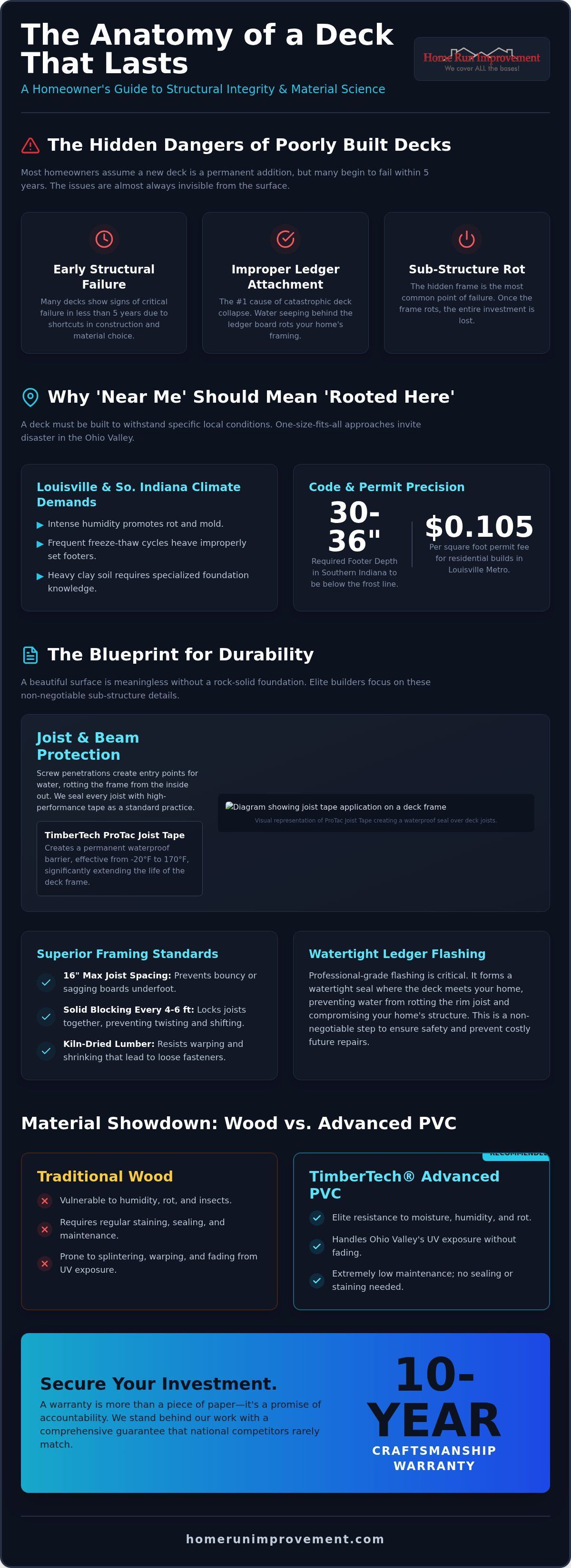
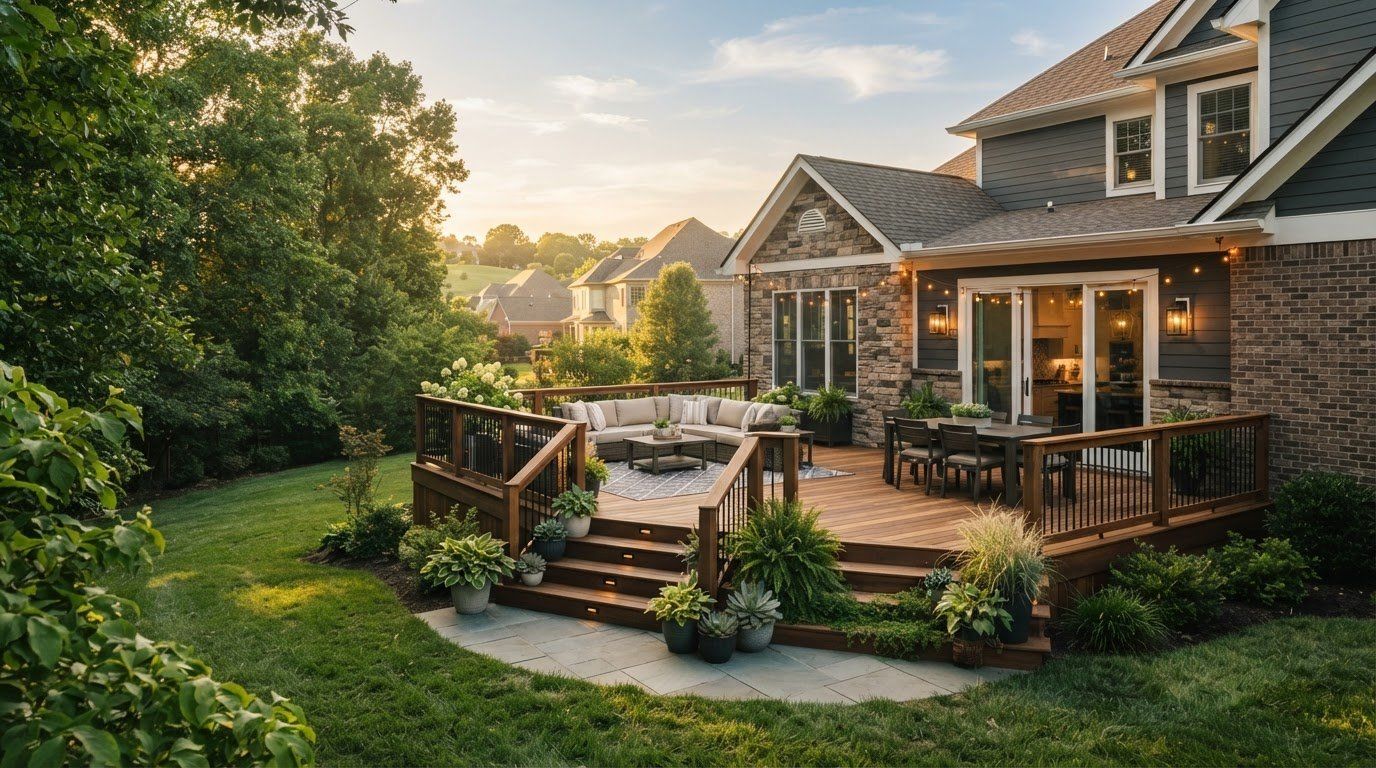
Most homeowners in Anchorage or Prospect assume a new deck is a permanent addition, yet many structures begin to fail within five years due to hidden rot and poor ledger board attachment. When you search for "Deck Builders Near Me," you aren't just looking for someone to nail boards together. You're looking for a professional partner to protect your home's value and your family's safety. It's natural to feel overwhelmed by technical choices between TimberTech Advanced PVC and traditional wood while worrying if your contractor understands Louisville building codes or Southern Indiana frost line requirements.

If you prioritize structural integrity, then you need a builder who treats your property with the same care as their own. You deserve the peace of mind that comes from elite moisture resistance and a 10-year craftsmanship warranty that provides real accountability. We'll show you how to identify elite deck builders who utilize advanced materials to prevent structural failure. You'll discover how to navigate local permit fees and material lifespans to ensure your outdoor living space remains a durable, high-performing asset for years to come.

Key Takeaways

  • Learn why local expertise in Louisville building codes and Southern Indiana frost lines is non-negotiable for a safe, permit-ready structure.
  • Discover how to filter through "Deck Builders Near Me" to find experts who prioritize the sub-structure details that prevent bouncy or sagging boards.
  • Compare the resilience of traditional wood against TimberTech Advanced PVC to see which material best handles the Ohio Valley’s humidity and UV exposure.
  • Secure your home investment with a 10-year craftsmanship warranty that provides long-term accountability against structural failure.
  • Explore how a unified design approach integrates your new deck with high-performance exterior siding and roofing for maximum curb appeal.

Choosing Local Deck Builders in Louisville and Southern Indiana

Louisville's climate isn't just a backdrop; it's a relentless stress test for outdoor structures. The Ohio Valley's intense humidity and frequent freeze-thaw cycles can destroy a poorly constructed deck in less than five years. If you hire a builder who treats every region with a one-size-fits-all approach, you're inviting rot and instability. Your search for Deck Builders Near Me must prioritize contractors who act as protective experts, identifying local risks before they become expensive repairs. This expertise is vital when navigating the specific permitting processes in Anchorage or Prospect. In Louisville Metro, residential building permits are calculated at $0.105 per square foot, a detail a local professional will handle with precision to ensure your project remains compliant.

Serving the Louisville Metro and Southern Indiana

Our service footprint covers the unique architectural landscapes of Indian Hills and the established neighborhoods of Hurstbourne. Homeowners in Clarksville and New Albany require a contractor who understands Indiana’s specific building codes. For instance, Southern Indiana footers must extend 30 to 36 inches deep to sit below the local frost line. If a deck isn't anchored correctly in our region’s heavy clay soil, it will shift and sag as the seasons change. We maintain licensing and specialized knowledge for both sides of the river to ensure every foundation is rock-solid and safe for your family.

Why 'Near Me' Should Mean 'Rooted Here'

A national franchise often lacks the accountability that a local business provides. When you evaluate Deck Builders Near Me, look for a team with deep local roots and verified testimonials from your neighbors. We prioritize our reputation in the Louisville community over high project turnover. This commitment is why we offer a 10-year craftsmanship warranty on every project. It provides you with a layer of security that national competitors rarely match. Working with a locally owned and operated contractor means you have a direct line to the experts who built your deck. If you need support or have questions after the project is complete, our local office is ready to help, treating your property with the same care we would our own.

Structural Integrity: What Most Deck Builders Skip

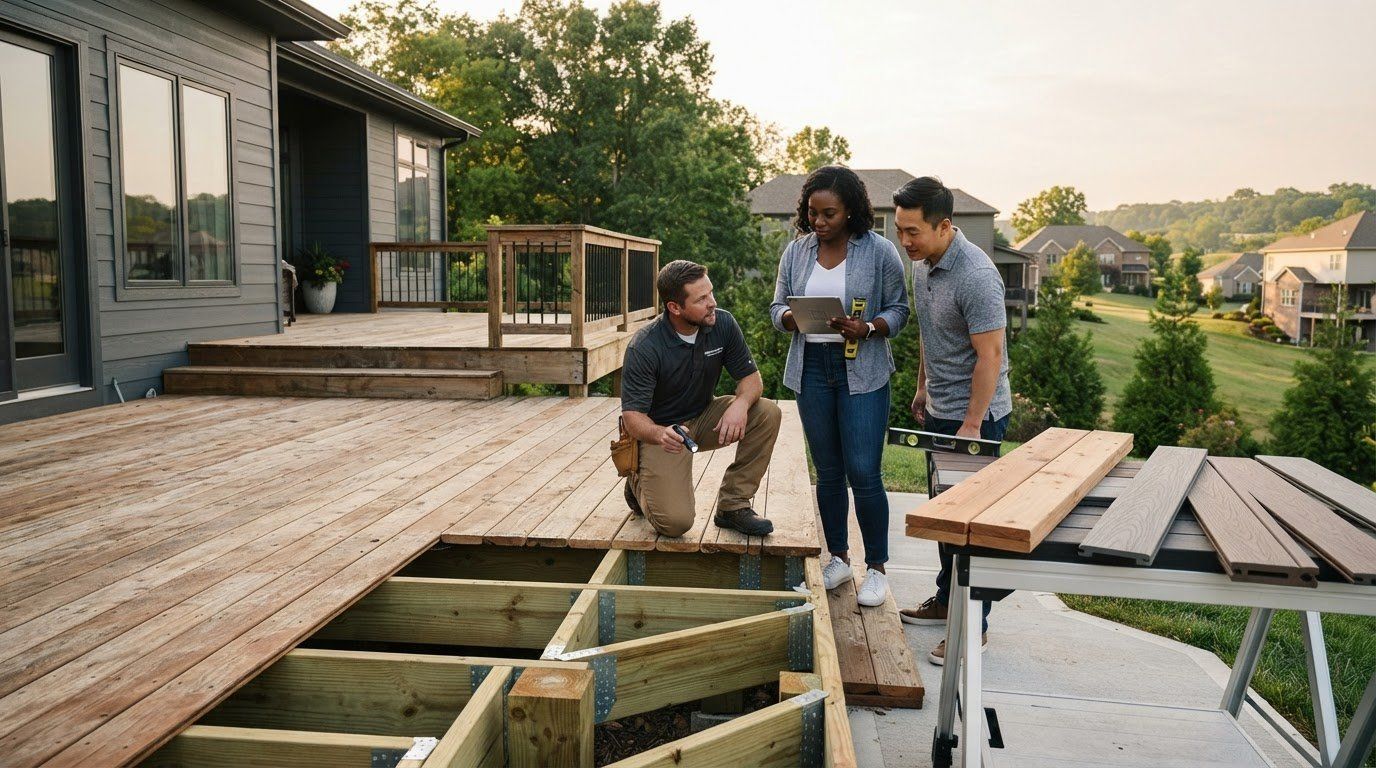
Visual appeal is often a dangerous distraction from the structural reality of a deck. While many Deck Builders Near Me highlight beautiful finishes, they frequently ignore the sub-structure. This hidden skeleton is the most common point of failure for homes in the Ohio Valley. If the frame rots, your entire investment is lost. High-quality construction requires kiln-dried, moisture-resistant lumber for all framing components. This material resists the warping and shrinking that lead to loose fasteners over time. You must also insist on professional-grade flashing. When water seeps behind the ledger board, it rots your home's rim joist and creates a massive safety hazard. A protective expert ensures this connection is watertight before the first deck board is even laid.

Advanced Protection with ProTac Joist Tape

Protecting the top of your joists is a non-negotiable best practice for any professional build. When screws penetrate the wood, they create pathways for water to settle and rot the core of the beam. Most Deck Builders Near Me skip this step to save on labor costs, but we utilize TimberTech ProTac Joist Tape to seal these vulnerable points. This high-performance tape is engineered for long-term durability, remaining effective in extreme temperatures ranging from 20°F to 170°F. By applying 1.625-inch tape on single joists or 2.5-inch tape on double joists, we create a permanent waterproof barrier. This simple addition significantly extends the life of your frame and prevents structural failure.

Framing Standards for 2026 and Beyond

A stable deck should never feel bouncy or fragile underfoot. To achieve lateral stability, joist spacing must never exceed 16 inches on center for standard residential projects. If you choose a composite or PVC surface, tighter spacing is often required to prevent unsightly sagging between the boards. We also install solid blocking every 4 to 6 feet. This technique locks the joists together, preventing them from twisting under heavy loads or shifting during temperature swings. Our team maintains strict adherence to the safety standards set by building officials and the International Residential Code. If you want a deck built to survive decades of use, then you need a contractor who prioritizes these invisible details. You can reach out to our structural experts to discuss your project's specific framing requirements and ensure your outdoor space is built to last.

Material Selection: Advanced PVC vs. Traditional Wood

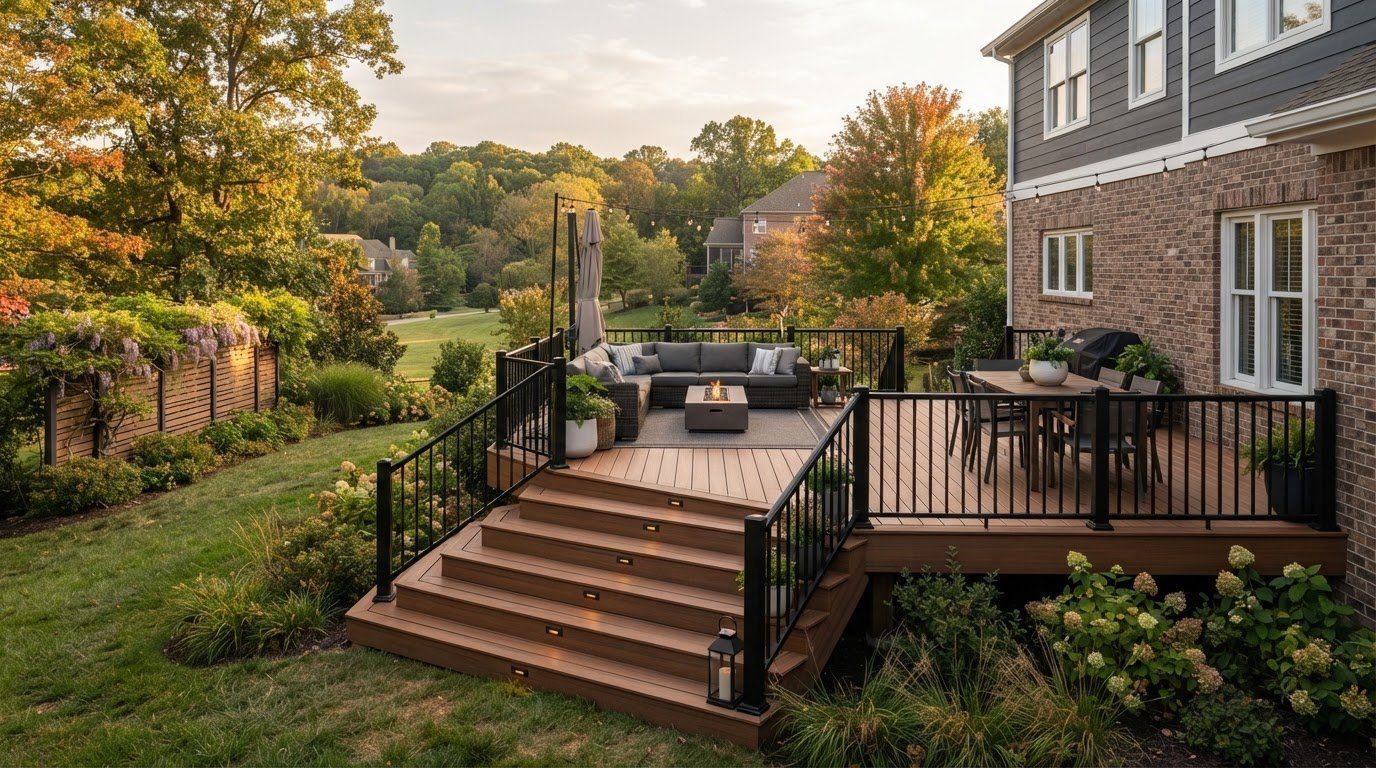
The evolution of decking materials has moved from simple pressure-treated lumber to high-performance polymers. While wood was once the only choice, it often fails under the weight of Kentucky's high humidity and volatile weather. If you're scanning results for Deck Builders Near Me, you'll find that the most durable projects now utilize synthetic solutions. TimberTech Advanced PVC represents the current pinnacle of this evolution. It offers a technical service range of -70°F to 200°F, ensuring the boards don't crack in a deep freeze or warp during a record-breaking July heatwave.

Maintenance is where the contrast becomes undeniable. Traditional wood requires power washing, sanding, and staining every two to three years to prevent rot. If you ignore this cycle, the wood splits and decays. In contrast, Advanced PVC only requires occasional cleaning with mild soap and water. This shift in maintenance significantly impacts your long-term return on investment. According to the 2024 Cost vs. Value Report, high-quality deck additions remain a top choice for recouping investment, but synthetic boards preserve that value far longer than wood by resisting the elements.

The Benefits of TimberTech Advanced PVC

Kentucky summers are notoriously humid, creating the perfect breeding ground for mold and wood-destroying fungi. TimberTech Advanced PVC is engineered with zero organic wood fibers in its core or cap, making it completely resistant to moisture and rot. This material is also a leader in sustainable home improvement. These products are LEED compatible and utilize recycled polymers to reduce environmental impact. When you choose this material, you're investing in a surface that stays cooler underfoot and remains structurally sound regardless of the weather.

Hidden Fastener Systems for a Clean Look

A premium deck shouldn't be marred by hundreds of visible screw heads. We utilize advanced systems like Cortex® or CONCEALoc® to create a seamless, fastener-free surface. These hidden fasteners provide a significant safety benefit for families with small children or pets, as there are no protruding nails or splintered screw holes to worry about. Beyond safety, a clean surface drastically improves the curb appeal of your property. When you evaluate Deck Builders Near Me, prioritize those who understand how these advanced fastening systems protect both your feet and your home's value.


Vetting Your Contractor: Beyond the Free Estimate

Most homeowners start their search for Deck Builders Near Me by comparing price tags on free estimates. This is a dangerous starting point. A low bid often masks a lack of professional insurance or a contractor who lacks a permanent local address. If you prioritize the lowest price over verified credentials, then you risk inheriting the cost of their shortcuts. A "free estimate" is merely an invitation to a conversation; it's not a guarantee of quality or structural safety. You must vet your contractor based on their local reputation and their willingness to provide a detailed project scope that protects your home from common industry pitfalls.

When you examine a contract, look for specific material callouts rather than generic terms. A professional agreement should specify TimberTech Advanced PVC and high-grade framing lumber to prevent unapproved material substitutions. Red flags include contractors who demand a signature today or those who cannot provide Better Business Bureau references within the Louisville metro area. If a builder lacks deep roots in our community, they lack the accountability required to stand by their work when the Ohio Valley weather tests your deck's limits.

The 10-Year Craftsmanship Warranty

There is a critical difference between a manufacturer's material warranty and a craftsmanship warranty. While a manufacturer covers board defects, they won't help you if your deck begins to sag due to poor joist spacing. Our 10-year guarantee is a local industry benchmark because it covers the integrity of the installation itself. This provides you with the security that we take personal responsibility for every bolt and fastener. When you choose a builder who offers this level of long-term protection, you're investing in peace of mind that national franchises rarely provide.

Certifications and Industry Standing

A general laborer follows basic instructions, but a certified Master Lead or Preferred Contractor follows manufacturer-approved installation methods to the letter. Our status as an LP SmartSide Master Lead and Owens Corning Preferred Contractor isn't just a badge of honor; it's proof of our commitment to specialized knowledge. These certifications often grant homeowners access to extended warranties that uncertified Deck Builders Near Me cannot offer. We maintain these high standards through the National Association of the Remodeling Industry to ensure every project exceeds local building codes and performance expectations.

Schedule your professional consultation with a certified expert

Designing Your Outdoor Living Space with Home Run Improvement

Designing a deck requires more than just picking a board color. If your new addition doesn't align with your home’s existing siding or roofing, the result looks like an afterthought rather than a professional renovation. When you search for Deck Builders Near Me, you need a partner who understands the total home aesthetic. We design your custom deck to complement your home's internal flow. If your kitchen features a specific traffic pattern, then your deck layout should mirror that ease of movement. For homes with walk-out basements, we utilize multi-level designs that provide shade for lower patios while expanding upper-level square footage.

A professional deck addition is one of the most effective ways to increase home value in the Louisville market. By utilizing Advanced PVC and structurally sound framing, you ensure the value doesn't depreciate due to rot or sagging. If you choose materials that fail in five years, then your investment is wasted. When you choose a high-performance build, you secure your home’s resale potential and your family’s enjoyment. Our role as a protective expert is to guide you toward choices that offer long-term stability and timeless appeal.

Comprehensive Home Exterior Solutions

Homeowners in Crestwood and Glenview often choose us for full-scale exterior remodels because we provide a unified solution. If you install a new deck without considering gutter installation, you risk water runoff damaging your new sub-structure. We ensure your water management system protects your deck from the start. The visual cohesion between LP SmartSide siding and TimberTech decking creates a durable, high-performance exterior that stands out in your neighborhood. This integrated approach prevents the common industry pitfall of mismatched materials and failed drainage systems that plague lesser builds.

From Consultation to Completion

Your project begins with a methodical approach. During your first professional estimate in Jeffersontown, we evaluate your property's specific topography and soil stability. Our communication rhythm is steady and organized. We move logically from the initial structural framing to the final walkthrough, ensuring that you are informed rather than overwhelmed. Once the project is complete, we activate your 10-year craftsmanship warranty. This formal step confirms that we stand by our work and treat your property with the highest level of care. If you are ready to stop searching for Deck Builders Near Me and start building a legacy, then scheduling your consultation is the next logical step toward a safer, more beautiful home.

Secure Your Outdoor Investment with a Local Expert

Your outdoor living space should be a source of pride and security, not a recurring maintenance burden. By prioritizing the sub-structure and choosing high-performance materials like TimberTech Advanced PVC, you protect your home from the moisture and temperature swings typical of the Ohio Valley. When you evaluate Deck Builders Near Me, look for a partner who offers more than just a visual finish. You deserve a builder who takes accountability through a 10-year craftsmanship warranty.

As an LP SmartSide Master Lead and Owens Corning Preferred Contractor, we maintain the highest standards of industry literacy. We follow strict guidelines established by organizations like the National Association of the Remodeling Industry to ensure every project meets local Louisville building codes. You don't have to navigate these complex decisions alone.

Schedule Your Free Estimate with Home Run Improvement

Take the first step toward a durable, beautiful deck that your family will enjoy for decades. We are ready to bring professional precision to your property.

Frequently Asked Questions

How do I find reputable deck builders near me in Louisville?

Start by verifying local licensing through the Louisville Metro Department of Codes and Regulations. Reputable builders prioritize structural integrity over the lowest bid. When you search for Deck Builders Near Me, look for contractors who possess industry-specific certifications, such as being a Master Lead or Preferred Contractor. You should also demand a clear craftsmanship warranty and local references from neighborhoods like Anchorage or Prospect to ensure they understand regional building nuances.

What is the difference between composite and PVC decking?

Composite decking combines wood fibers with plastic, whereas PVC is entirely synthetic. While both are low-maintenance, TimberTech Advanced PVC offers superior heat dissipation and moisture resistance. This is a critical distinction in the Ohio Valley’s high humidity. PVC lacks organic material, which means it cannot rot or support mold growth. If you choose PVC, then you are investing in a surface that stays cooler and lasts longer than traditional composite alternatives.

Do I need a permit for a new deck in Jefferson County?

Yes, a building permit is mandatory for any deck attached to a home in Louisville. Freestanding decks also require permits if they exceed 200 square feet or sit more than 30 inches above the ground. The current fee for residential projects is $0.105 per square foot. Navigating local permit requirements ensures your project complies with safety codes and avoids costly legal issues during a future home resale.

How long does a typical deck installation take?

Most standard residential deck projects require two to three weeks from the start of framing to the final walkthrough. This timeline accounts for the methodical installation of footings, sub-structures, and high-performance surfaces. Factors such as complex multi-level designs or the integration of custom drainage systems may extend the duration. A professional builder maintains a steady rhythm to ensure every detail, from joist spacing to hidden fasteners, meets elite safety standards.

Is joist tape really necessary for a new deck?

Joist tape is a non-negotiable requirement for protecting the longevity of your deck’s frame. When you search for Deck Builders Near Me, ensure they utilize high-performance products like TimberTech ProTac Joist Tape. This waterproof barrier prevents rot by sealing fastener holes against moisture. If you skip this step, then water will settle in the wood and cause structural failure long before the surface boards ever show signs of wear.

What should be included in a deck builder's warranty?

A comprehensive warranty must separate material defects from installation errors. While manufacturers cover the boards, a professional contractor should provide a dedicated craftsmanship warranty. We offer a 10-year craftsmanship warranty to provide long-term accountability for our labor. This guarantee ensures that if structural issues arise due to installation methods, then the builder is responsible for the remedy. Always verify that the warranty is backed by a locally rooted company.

Can you build a deck over an existing concrete patio?

You can build a deck over concrete, provided the existing slab is stable and has proper drainage. This "sleeper system" approach requires careful planning to maintain airflow and prevent moisture traps. If the concrete is cracked or sinking, then it must be removed to install proper footers that extend below the frost line. Consulting with a certified remodeling professional ensures the new structure remains level and safe for decades.

How much value does a new deck add to a Louisville home?

A high-quality deck addition is a premier investment for increasing property value. Industry data indicates that wood decks can recoup up to 95% of their cost, while composite or PVC systems typically recoup between 60% and 89%. In the Louisville market, the long-term ROI is even higher when you choose durable materials that resist the local climate. A well-designed outdoor space significantly improves your home’s aesthetic and marketability to future buyers.
By Pat McIntyre August 21, 2026
If there is one home improvement project that Louisville homeowners tend to dread, it is the roof. The price tag feels unpredictable, the timing is often forced by storm damage, and the contractor landscape can feel like a minefield. The good news is that Louisville sits in a market where labor costs run below the national average, and getting accurate numbers before you talk to a single contractor puts you in a far stronger position. This guide breaks down exactly what a roof replacement costs in Louisville in 2026, what drives prices up or down, and how to plan your budget with confidence. The average cost to replace a roof in Louisville, Kentucky is $5,938 on the lower end of the scale, while for a standard, single-family home in Louisville with a walkable pitch and asphalt shingles, a quality roof replacement in 2026 can typically run between $8,500 and $14,000. The wide spread is real and worth understanding before you open your first quote. Key Takeaways Budget $8,500 to $14,000 for most Louisville homes: For a typical single-family home in Louisville, expect to pay between $8,500 and $18,000 for a full roof replacement. If your quote falls well outside that range on either end, ask the contractor to walk you through every line item. Asphalt shingles dominate, and for good reason: Asphalt shingles dominate the Louisville market because they balance cost and performance well for the region's climate. They are your most cost-effective starting point. Labor costs here favor homeowners: In Kentucky, roofers earn a mean wage of $24.37/hr, which is 13% below the national average, according to 2025 U.S. Bureau of Labor Statistics OEWS data . That wage gap translates directly to lower installed costs than you would pay in Ohio or Indiana. Class 4 shingles can pay for themselves: Many insurance providers offer premium discounts ranging from 10% to 35% when you install Class 4 shingles, per FoxHaven Roofing's 2026 impact-resistant shingles guide . In Louisville's hail-prone climate, that discount can offset the upgrade cost in a few years. ROI is real but partial: An asphalt shingle roof replacement costs a national average of $31,871 and adds $21,501 in resale value for a 68% cost recouped, per the 2025 Zonda Cost vs. Value Report . Plan for the investment to protect your home first and recover costs at sale second. Quick-Start Prioritization Framework Start here if you are: A first-time Louisville homeowner: Get a professional inspection first. Many contractors offer free assessments. Understand whether you need a repair or a full replacement before comparing quotes. Dealing with storm damage: After any significant storm request a professional roof inspection within 24-48 hours. Document everything before calling your insurer. Planning a long-term stay (10+ years): Factor Class 4 or metal into your comparison. The upfront premium can be offset by insurance discounts and a longer replacement cycle. What Drives Roofing Costs in Louisville Understanding price variables helps you evaluate quotes with a clear head rather than guessing whether a number is fair. Roof Size and Pitch Roofing professionals typically price roof replacements by the square foot of roof surface, not just by the size of the home. A "square" in roofing terms equals 100 square feet. The average roof size in Louisville, with pitch factored in, is approximately 1,951 square feet, or 19.67 squares. A steeper roof adds labor time and safety equipment costs. Steep pitches of 8/12 and above require safety equipment and slow installation, adding 15 to 30 percent to labor. If your home sits in Louisville's Highlands neighborhood or has a complex roofline with dormers and multiple valleys, budget toward the higher end. Material Choice Material selection is the single biggest lever you have over total project cost. There is a meaningful price difference within the asphalt category: 3-tab shingles cost $4.50 to $6.00 per square foot installed and are the least expensive option with a shorter warranty, while architectural (dimensional) shingles run $6.00 to $9.00 per square foot installed, offering better wind resistance and more curb appeal as the standard choice for most replacements. For homeowners who want premium storm protection, impact-resistant Class 4 shingles run $8.00 to $12.00 per square foot installed, with a premium upfront cost, but some Kentucky insurance carriers offer discounts of 20 to 30 percent on premiums. Labor Rates in the Louisville Metro In Louisville, the cost of roofing labor generally lands in the $150 to $275 per-square range or $45 to $85 per hour, which tends to run below Cincinnati and Indianapolis and essentially matches Lexington's pricing, per Instant Roofer's August 2026 Louisville cost data. That favorable labor market means your dollars go further in Louisville than in many comparable Midwest cities. Tear-Off and Deck Condition Old shingles have to come off before new ones go on. That tear-off adds cost, and so does any rotted or damaged decking discovered underneath. According to This Old House's 2026 Roofing Survey, about 14% of homeowners reported their final roof replacement cost came in higher than expected, and hidden or unexpected roof damage was the most commonly cited factor, reported by roughly 26% of respondents. Ask every contractor how they price decking repairs, ideally per sheet of plywood rather than as a vague allowance. Material-by-Material Cost Breakdown for Louisville Asphalt Shingles: The Louisville Default Most Louisville roof replacements cost $9,000 to $18,000, with architectural asphalt shingles remaining the best balance of cost, durability, and performance for most homeowners, and installed costs averaging $3.75 to $6.75 per square foot. For a standard 1,700 to 2,000 square foot home, that math puts most asphalt projects between $8,500 and $14,000, with higher complexity pushing toward $18,000. In Kentucky's storm-prone climate a properly installed asphalt shingle roof typically lasts 25 to 30 years. Pro Tip: Architectural shingles have largely replaced 3-tab as the market standard in Louisville. They are thicker, more impact-resistant, and considerably better-looking, and the price gap between the two has narrowed enough that most roofing contractors now recommend architectural as the starting point for any quality replacement. If a contractor quotes you 3-tab without explanation, ask why. Metal Roofing: The Long-Term Play Metal is gaining traction among Louisville homeowners who plan to stay put. Shingles cost less upfront and last about 15 to 30 years, while metal costs more but lasts 40 to 70 years, handles high winds, and reflects summer heat. In Louisville specifically, the math on metal roofing changes depending on how long you plan to stay in the home, and for homeowners with a long horizon, the higher upfront cost can look quite reasonable spread across a 40 to 70-year lifespan with minimal maintenance requirements. For budgeting purposes, Kentucky cost guide puts statewide metal roofing at $8 to $17 per square foot installed. Metal roofs typically cost $5,400 to $24,000 for installation on a 2,000 square foot home, while asphalt shingles cost $4,000 to $7,000. However, metal roofs last 40 to 70 years compared to shingles' 15 to 30 years, making metal more cost-effective long-term, per FoxHaven Roofing's 2026 price comparison . Premium Options: Slate, Tile, and Wood Shake For Louisville's historic neighborhoods and custom builds, premium materials are available. Wood shakes run $7 to $14 per square foot, and slate tiles can reach $14 to $30 or more per square foot, pushing complete roof replacements beyond $20,000 for larger homes. These materials require specialized installation and, in some cases, structural reinforcement. They are the right choice for specific homes and budgets, but the majority of Louisville homeowners will find architectural asphalt or metal to be the better long-term value. The Louisville Weather Factor: Why Your Roof Works Harder Here Louisville roofs face more punishment than those in many comparable cities, and that affects both your material choice and your insurance picture. Jefferson County sits at a geographic crossroads where Gulf moisture, Great Plains storm tracks, and Appalachian terrain influences collide. The Louisville area averages roughly 50 severe thunderstorm events per year, with hail-producing storms hitting the metro multiple times annually. Louisville has recorded 120 hail reports within 10 miles of the city center since 2004, with the largest hail reaching 4.25 inches, according to Louisville has recorded 120 hail . Pro Tip: Annual hail frequency around Louisville varies year to year, with most hail days concentrated in April through July. If your roof is aging, schedule your inspection and get your quotes in winter or early spring, before storm season hits and contractor backlogs pile up. Summer is peak roofing season replacement in this climate, with contractors booking about 6.5 weeks out and rates running about 20 percent above the year-round average. That weather reality also has an insurance dimension worth knowing. The Insurance Information Institute reports that 70% of Kentucky storm claims involve wind or hail, with wind accounting for 45% and hail 25%, per RoofPredict's Louisville storm damage claims guide . Kentucky homeowners should know that wind damage from storms is typically covered under dwelling coverage, though some policies impose age-based limitations on roof replacement payments if your roof is older than 15 to 20 years. This is where Class 4 impact-resistant shingles become a smart financial move, not just a premium upgrade. If you use certain impact-resistant roofing products, like hail-resistant shingles or Class 4 shingles, you may be eligible for a discount on your home insurance premiums, and If you use certain among the states where that discount applies. While Class 4 shingles cost 20 to 40 percent more upfront, they offer a longer lifespan, insurance savings, fewer repairs, and increased home value. When you calculate the cost per year of protection and factor in insurance discounts, Class 4 shingles often prove more economical than standard options over the roof's lifetime, according to FoxHaven Roofing's Class 4 guide . Repair vs. Replacement: How to Know Which One You Actually Need In my experience, this is the question Louisville homeowners get wrong most often. They either patch a roof that genuinely needs replacement, or they get sold a full replacement when a targeted Many Kentucky homeowners debate whether to repair or fully replace an aging roof. Repairs are often the right choice for minor leaks or isolated shingle damage, especially if the roof is under ten years old and otherwise sound. However, once a roof reaches the end of its life expectancy or has needed repeated patchwork, the costs of frequent repairs start to add up. Two practical rules help simplify the decision: The 30% Cost Rule: If a repair costs more than 30% of a new roof, replacement is the better financial move. The 25% Damage Rule: Many local building codes require a full replacement if more than 25% of the roof is damaged. In Kentucky, this is reinforced by the Kentucky Matching Law, which means if your shingles are discontinued, a full replacement is usually the only code-compliant option. Pro Tip: Nearly 60% of homeowners in This Old House's 2026 Roofing Survey described their replacement project as urgent or an emergency, according to This Old House's Kentucky roofing cost guide . That means most homeowners are not planning ahead, they are reacting to a crisis. Getting an annual inspection puts you on offense rather than defense, and usually saves money. Seeing the full replacement process on a comparable structure can help you gauge whether your situation calls for a repair or a full tear-off. https://www.youtube.com/embed/GWT5ron81xw Permits and Contractor Standards in Jefferson County I've found that the permit question is where Louisville homeowners get tripped up most often. Skipping permits feels like a shortcut, but it creates real problems at resale and during insurance claims. Roofing contractors should anticipate needing a building permit for significant work, such as full roof replacements, changes to roof structure, or the installation of new materials, per contractor requirements guide for Kentucky in 2026 . In Louisville specifically, permits are governed by the Louisville Metro Department of Codes and Regulations. The applicable building code is the 2018 Kentucky Building Code and Kentucky Residential Code as locally enforced in Jefferson County. If a contractor suggests skipping the permit to save time or money, that is a major red flag. It means no inspection, no code verification, and potential complications when you sell the home, as Home Run Improvement's roofing contractor guide explains. That one shortcut can trigger disclosure issues at closing or void a homeowner's insurance claim after a storm. On the contractor licensing side, to receive a building contractor' license in Louisville, applicants must show proof of general liability insurance, workers' compensation insurance, unemployment insurance, an occupational license number from the Revenue Commission of Jefferson County, and submit a contractor's license application, per Kentucky roofing licensing guide. What a Fair Roofing Quote Looks Like, and Red Flags to Watch For Getting three quotes is the standard advice, and it remains correct. But knowing what those quotes should contain is what separates an informed homeowner from one who gets surprised mid-project. What a Good Written Estimate Includes Every detail should be documented scope of work, materials by brand and model, timeline, payment schedule, warranty terms, and cleanup obligations. A quote that lists only "shingles and labor" with a total number at the bottom is missing critical information. Decking repair allowances, underlayment type, ice-and-water shield coverage, and flashing work should all be spelled out. Pro Tip: Get at least three written itemized estimates with brand, model, color, mil thickness, underlayment, and labor broken out separately. Vague estimates are red flags. If you cannot compare two quotes side by side because they list different things, you cannot make a fair price comparison. Contractor Red Flags in the Louisville Market Starting work immediately or requesting full payment upfront is a red flag. Established contractors follow a professional timeline: inspection, written proposal, scheduling, and payment terms tied to project milestones. Someone pressuring you to hand over cash before work begins is signaling financial instability or worse. Be wary of any extremely low estimates, as they may be making up for their bare-bones overhead expenses with lower-quality materials and inadequate installation techniques. The roof estimate should be in line with other reputable roofers' estimates, per contractor red flags guide. Watch for out-of-town "storm chasers" who show up after a hail event and cannot provide a local Jefferson County business address or verifiable references. Most roof failures stem from installation mistakes rather than shingle defects. While a manufacturer's warranty covers the materials, it will not pay for repairs if a leak is caused by poor workmanship. Look for contractors who offer a separate labor or craftsmanship warranty in addition to the manufacturer's product warranty. The ROI of a New Roof: What Louisville Homeowners Actually Get Back A roof replacement is not purely a cost; it is an investment with measurable returns, both financial and practical. At Resale According to the Remodeling Magazine Cost vs. Value Report, roofing replacement is consistently ranked among the top exterior home improvements for return on investment. Nationally, a new asphalt shingle roof adds an average of $15,247 to resale value, and sellers who invest in a replacement before listing can typically command 1 to 3 percent more for their home, per Opendoor's roof value analysis . With an ROI score of 67/100, a roofing replacement in Louisville recoups an estimated $7,544 at resale. That figure is local to the Louisville market and should anchor your expectations, the investment is worthwhile, but it is not a dollar-for-dollar return. Beyond the Sale Price The financial case extends well past resale. A failed roof costs $5,000 to $15,000 or more in interior damage repair, including drywall, insulation, mold remediation, and related work, per HomeworthHQ's 2026 ROI analysis . A proactive replacement eliminates that exposure entirely. Energy efficiency is another factor: metal roofs and certain reflective asphalt products can reduce summer cooling loads, and some Class 4 shingles come with reflective granules that help reduce cooling costs. For homeowners using Home Run Improvement for their Louisville roofing project, that conversation about material choice, balancing upfront cost, insurance discounts, energy efficiency, and long-term replacement cycles, is exactly the kind of planning support a local contractor should be providing before a single contract is signed. Common Mistakes Louisville Homeowners Make When Budgeting for a Roof Not Accounting for Decking Repairs About 14% of homeowners reported their final roof replacement cost came in higher than expected, with hidden or unexpected roof damage being the most commonly cited factor, according to This Old House's 2026 Roofing Survey . Set aside a contingency of $500 to $1,500 for decking repairs in your budget. It is better to have it and not need it than to be surprised mid-project. Choosing the Cheapest Quote Without Understanding Why It Is Cheap In my experience, a quote that is significantly lower than two others almost always reflects a difference in materials, underlayment quality, or labor standards rather than simply a more efficient operation. Ask the contractor to explain every line item that differs from the other quotes you received. Waiting Until the Roof Fails Completely Once a roof reaches the end of its life expectancy or has needed repeated patchwork, the costs of frequent repairs start to add up. A roof replacement can feel like a big step, but it often pays off in the long run; you will spend less on ongoing repairs, boost your home's efficiency, and know your roof is ready for whatever Kentucky weather brings. Missing the Insurance Discount Opportunity Many Louisville homeowners replace their roof with a standard architectural shingle and never ask their insurance company about Class 4 discounts. Your insurance carrier will not call you up and offer the discount. You have to ask them in writing whether they offer it, install Class 4 shingles, and submit the manufacturer's certificate of installation. That three-step process, as outlined in the discount guide, is entirely in the homeowner's hands. Pro Tip: Before signing any roofing contract, call your insurance carrier and ask two questions: does the current roof age affect my coverage, and does installing Class 4 shingles qualify me for a discount? Those two answers can meaningfully change the financial calculus of your material decision. Frequently Asked Questions How much does a typical roof replacement cost in Louisville in 2026? For a standard, single-family home in Louisville with a walkable pitch and asphalt shingles, a quality roof replacement in 2026 can typically run between $8,500 and $14,000. Larger homes, complex rooflines, or premium materials can push that figure toward $18,000 to $25,000. Get at least three itemized written quotes to establish a fair market range for your specific home. How long does a new asphalt shingle roof last in Louisville? In Kentucky's storm-prone climate a properly installed asphalt shingle roof typically lasts 25 to 30 years. Architectural shingles toward the upper end of that range, 3-tab shingles toward the lower end. Metal roofing extends to 40 to 70 years. Your actual lifespan depends heavily on installation quality and how often your roof takes significant hail or wind hits. Does my homeowner's insurance cover a roof replacement in Louisville? Most standard homeowners policies cover sudden, accidental damage from wind and hail but may exclude damage from flooding unless you have a separate flood insurance rider. Some policies impose age-based limitations on roof replacement payments if your roof is older than 15 to 20 years. Review your declarations page before storm season, and document your roof's condition with photos and timestamps each spring. When is the best time to get a roof replacement in Louisville? Summer is peak roofing season replacement in Louisville's climate, with contractors booking about 6.5 weeks out and rates running about 20 percent above the year-round average. Late fall and winter typically offer shorter wait times and more price flexibility from contractors managing their workloads. If your roof is not urgently damaged, planning a winter or early spring replacement is the smarter financial move. Do I need a permit for a roof replacement in Louisville? Yes, for a full replacement. Roofing contractors should anticipate needing a building permit for significant work, such as full roof replacements, changes to roof structure, or the installation of new materials. Permits are processed through Louisville Metro's Department of Codes and Regulations. Confirm your contractor pulls the permit in their name, not yours, and that they include the permit cost in their written estimate. How do I know if I need a repair or a full replacement? If a repair costs more than 30% of a new roof, replacement is the better financial move. Many local building codes also require a full replacement if more than 25% of the roof is damaged. For roofs under 10 years old with isolated issues, a targeted repair is often the right call. For roofs over 20 years old with recurring problems, replacement almost always wins on total cost of ownership. A professional inspection, which many Louisville contractors offer at no charge, is the best way to get a definitive answer. A Final Word on Getting Started Bottom line: the best time to think about your Louisville roof is before you have a problem. Get an annual inspection, understand what your insurance policy actually covers, and keep a replacement fund building if your shingles are approaching 15 years old. When the time comes, the homeowner who walks into a contractor conversation with a clear budget range, an understanding of material options, and a written checklist of what a fair quote includes will always get a better outcome than one who is reacting to an emergency. If you are ready to get an accurate local assessment, Home Run Improvement serves Louisville homeowners with transparent estimates and no-pressure consultations. The right contractor makes the process far less stressful than the headlines suggest. Sources Kentucky Roof Replacement Cost in 2026 , The Pinnacle List. Statewide material cost ranges and labor benchmarks. https://www.thepinnaclelist.com/articles/kentucky-roof-replacement-cost-in-2026-what-homeowners-should-expect/ How Much Does a Roof Replacement Cost in Kentucky? , This Old House. 2026 Roofing Survey findings and statewide cost data. https://www.thisoldhouse.com/roofing/roof-replacement-cost-kentucky Kentucky Roofing Calculator 2026 , CostFlowAI. BLS OEWS labor wage data for Kentucky roofers. https://costflowai.com/calculators/roofing/kentucky/ Louisville Roof Replacement Cost (40208) , SquareDash. Zip-code-level pricing data for Louisville. https://www.squaredash.com/zip/40208/ Roofing Replacement Cost in Louisville, KY (40210): 2026 Estimate , RemodelFinder. Seasonal pricing factors and ROI estimates for Jefferson County. Summer is peak roofing season Kentucky Roofer License Requirements and Regulations (2026) , ContractorRequirements.com. Permitting and licensing rules for Kentucky and Louisville. https://contractorrequirements.com/roofer/kentucky/ Jefferson County, KY 2026 Building Permit Guide , Jaspector. Jefferson County permit portal and code enforcement details. https://www.jaspector.com/permits/kentucky/jefferson/unincorporated/ Hail Activity in Louisville, Kentucky: 2025 Events and Risk Assessment , Ask.com. Louisville hail frequency and seasonal patterns. Louisville hail frequency and seasonal patterns All Hail Reports Near Louisville, Kentucky , Stormersite. Historical hail reports and event data since 2004. Louisville has recorded 120 hail How to File a Storm Damage Roof Claim in Louisville KY , RoofPredict. Insurance Information Institute storm claims data for Kentucky. https://roofpredict.com/blog/how-to-file-a-storm-damage-roof-claim-in-louisville-ky Roof Replacement ROI and Resale Value Report 2026 , The Roofing Brief. Zonda 2025 Cost vs. Value Report data on asphalt ROI. https://theroofingbrief.com/roof-replacement-roi-resale-value-report/ Does a New Roof Increase Home Value? , Opendoor. Remodeling Magazine Cost vs. Value Report analysis and resale data. https://www.opendoor.com/articles/does-a-new-roof-increase-home-value-roi-costs-and-what-sellers-need-to-know Is a New Roof Worth It in 2026? , HomeworthHQ. Interior damage cost data and total-return analysis. https://homeworthhq.com/roofing/is-a-new-roof-worth-it/ Class 4 Impact-Resistant Shingles: Benefits, Costs and Guide 2026 , FoxHaven Roofing. Insurance discount ranges and Class 4 cost-benefit analysis. https://foxhavenroof.com/class-4-impact-resistant-shingles-benefits-costs-guide-2026/ Metal Roof vs. Shingles Cost: Complete 2026 Price Comparison , FoxHaven Roofing. Material cost comparison and lifespan data. https://foxhavenroof.com/metal-roof-vs-shingles-cost-complete-2026-price-comparison/ Homeowner Insurance Discounts , State Farm. Kentucky-specific impact-resistant roof discount eligibility. If you use certain Roof Repair vs. Replacement Decision Guide , MrRemodel. The 30% Cost Rule and 25% Damage Rule explained. https://www.mrremodel.com/Learning-Center/Roofing/Roof-Repair-vs-Replacement-Cost-Lifespan-Decision-Guide How to Choose a Roofing Contractor: 15-Point Checklist , The Roofing Brief. Itemized estimate standards and contractor vetting. https://theroofingbrief.com/how-to-choose-a-roofing-contractor/ How to Choose a Roofing Contractor Louisville KY Homeowners Can Trust , Home Run Improvement. Local Louisville contractor vetting guide for 2026. https://www.homerunimprovement.com/how-to-choose-a-roofing-contractor-louisville-ky-homeowners-can-trust-2026-guide Roofing Contractor Louisville KY: Expert Protection for Your Home , Home Run Improvement. Permit red flags and contractor credential standards for Louisville. https://www.homerunimprovement.com/roofing-contractor-louisville-ky-expert-protection-for-your-home
By Pat McIntyre August 20, 2026
The most dangerous part of your new deck is the part you'll never see once the boards are down. If a contractor focuses only on the surface aesthetics, you're likely looking at a structure that will fail long before its time. When you hire professional Deck Builders , you aren't just paying for a place to grill; you're investing in a foundation that must withstand the heavy humidity and harsh freeze-thaw cycles of the Ohio Valley. A deck's longevity depends entirely on the precision of the sub-structure and the integrity of the people building it. It's natural to feel anxious about an investment of this scale, especially with the common fear of wood rot or contractors who disappear after the deposit is paid. We believe homeowners in Louisville, Crestwood, and Southern Indiana deserve a beautiful outdoor space that remains safe and sturdy for decades, not just a few seasons. This guide will teach you how to identify elite craftsmanship and the specific structural protection techniques required to ensure your deck lasts in our Kentucky climate. We'll preview the necessity of following the 2018 Kentucky Residential Code, the benefits of high-performance composite materials , and the critical importance of joist flashing to prevent premature decay. Key Takeaways Choosing elite Deck Builders ensures your structure is built to handle Louisville’s high humidity rather than rotting from the inside out within a decade. Discover why advanced PVC and composite decking offer superior resistance to moisture and fading compared to traditional pressure-treated wood. Learn how to protect your deck’s sub-structure using specialized joist tape to prevent water penetration at the most vulnerable connection points. Navigate the specific building permit requirements and local regulations for Anchorage and Prospect to ensure your project is fully compliant. Understand the value of a 10-year craftsmanship warranty as a shield against common industry pitfalls like poor workmanship or contractor abandonment. Selecting Professional Deck Builders: More Than Just a Handyman Many homeowners mistake a deck for a simple DIY weekend project or a task for a general handyman. In reality, modern deck construction is a specialized field of structural engineering. While a handyman might be excellent at fixing a leaky faucet or painting a room, they often lack the specialized equipment and knowledge required to manage the complex load-bearing requirements of an elevated outdoor living space. If you choose a specialized contractor over a generalist, you ensure that every joist and beam is calculated for maximum safety and long-term performance. Professional Deck Builders understand that a deck is a permanent addition to your home's footprint. When built correctly, it significantly boosts your property's resale value and curb appeal. However, if the build is substandard, it becomes a liability that can fail a home inspection during a future sale. Beyond the financial aspect, there is the matter of safety. Elevated structures carry immense weight; hiring uncertified labor to save a few dollars can lead to catastrophic failures that homeowners insurance may not cover. When you invest in professional expertise, you're buying peace of mind alongside a new outdoor space. The Risks of Substandard Construction The Louisville climate is particularly unforgiving to poorly built structures. Our high humidity levels and frequent rain create a breeding ground for wood-destroying organisms. One of the most common failure points in amateur builds is the ledger board, the piece that attaches the deck to your house. If this isn't flashed with surgical precision, water will seep behind your siding and rot your home's rim joist. This type of damage is often invisible until the structure becomes unstable. Working with a locally owned contractor in Louisville KY means you're hiring someone who knows exactly how to seal these vulnerable points against our local weather patterns. Evaluating Contractor Integrity The home improvement industry is unfortunately filled with transient contractors who blow into town and disappear once the check clears. To protect your investment, you must vet your builder's local history and insurance coverage. Ask for specific examples of projects they've completed in neighborhoods like Anchorage or Prospect. A high standard of accountability is the only way to guarantee long-term stability. This is why a 10-year craftsmanship warranty is the industry gold standard. It serves as a firm promise that the builder stands behind their work. If a contractor won't offer a written guarantee of this length, they likely don't have confidence in their own building methods. Advanced Material Science: PVC and Composite Performance The foundation of a long-lasting deck begins with material selection. Expert Deck Builders understand that traditional pressure-treated wood is a ticking clock in the Ohio Valley. While wood looks natural on day one, it begins to warp, splinter, and decay the moment it's exposed to Kentucky's erratic weather. TimberTech Advanced PVC represents a significant leap forward in durability. These materials are engineered to perform within service limits ranging from -70°F to 200°F. This thermal stability ensures your deck won't become brittle in a deep freeze or lose its structural integrity during a record-breaking heatwave. Why Advanced PVC Wins in Kentucky Southern Indiana and Louisville summers are defined by oppressive humidity. This moisture is the primary cause of rot and mold in traditional wood decks. According to research in Advanced Material Science , modern polymer-based decking provides a level of moisture resistance that organic materials simply cannot match. Because PVC contains no wood fibers, it's essentially immune to the "sponge effect" that causes boards to swell and buckle. There's also a practical comfort benefit. Advanced PVC is designed to stay cool to the touch. This allows you to walk comfortably in bare feet even during the peak of July, a feat impossible with traditional wood or older composite generations. Hidden Fasteners for a Clean Finish The difference between a mediocre build and elite craftsmanship often lies in the fastening system. Traditional screws create "mushrooming" where the material bulges around the screw head, creating an uneven and potentially hazardous surface. When we execute outdoor deck construction in Louisville , we prioritize hidden-fastener systems like Cortex or CONCEALoc. These methods secure the boards from the side or below, leaving the surface perfectly smooth. Advanced systems such as SIDELoc and FUSIONLoc take this a step further by creating a completely fastener-free visual profile. This isn't just about aesthetics; it's about longevity. By eliminating holes in the top of your boards, you remove the entry points where water typically settles and begins the degradation process. If you're ready to see how these high-performance materials look in a real-world setting, reach out to our team to discuss your custom project design. The Hidden Enemy: Protecting Your Deck Sub-Structure The biggest mistake a homeowner can make is assuming that a "lifetime" deck board means a lifetime deck. While modern composite and PVC materials are virtually indestructible, the pressure-treated lumber used for the frame is still organic and vulnerable. Expert Deck Builders know that moisture trapped between the board and the joist is the silent killer of outdoor structures. If water sits on top of a joist for years, it eventually seeps into the screw holes, rotting the frame from the inside out while the surface looks brand new. This mismatch in material lifespan is why many decks fail structurally while the expensive surface boards are still in perfect condition. The Science of Joist Tape To combat this internal decay, we utilize TimberTech ProTac Joist Tape on every build. This butyl-based tape creates a waterproof seal around every fastener, preventing moisture from entering the wood grain. Precision matters in this application. We use 1.625 inch tape for single joists and 3.25 inch tape for double beams or rim joists to ensure total coverage. For the adhesive to bond permanently, it must be applied when temperatures are between 20°F and 170°F. If a contractor ignores these technical specifications, the tape may peel, leaving your sub-structure exposed to Kentucky's relentless humidity. Framing Best Practices A deck is only as good as its skeleton. Structural integrity requires that joist spacing never exceeds 16 inches on center. If you plan on using a diagonal board pattern or a specific heavy-duty composite brand, that spacing often needs to be tightened to 12 inches to prevent "bouncy" floors. We also insist on edge-to-edge flush blocking every 4 to 6 feet. This prevents joists from twisting or rolling over time, a common issue with lower-quality lumber. According to safety standards from the North American Deck and Railing Association, proper sub-structure maintenance is the most critical factor in preventing structural failure. When we source materials for our decking services in Louisville , we prioritize kiln-dried, moisture-resistant lumber. This material is significantly more stable than the "wet" lumber typically found at big-box retailers, which often warps or shrinks as it dries in the sun. By combining superior wood with advanced protection like ProTac, we ensure the frame lasts as long as the boards. This level of detail is why we can confidently offer a 10-year craftsmanship warranty . We don't just build for today; we build to protect your home's stability for the next several decades. Planning Your Build: Louisville Regulations and Design Designing an outdoor space in neighborhoods like Anchorage or Prospect requires more than a tape measure; it requires a deep understanding of the 2018 Kentucky Residential Code. Professional Deck Builders act as your liaison with the Louisville Construction Review Division to ensure every detail, from footing depth to stair rise, meets legal safety standards. If you attempt to bypass the permitting process, you risk heavy fines or being forced to tear down the structure during a future home inspection. We handle the bureaucracy so you don't have to, ensuring your project is documented and compliant from day one. Kentucky's rolling topography often demands creative engineering. Many homes in our region sit on sloped lots, requiring elevated decks with complex stair systems. Code compliance for these structures is non-negotiable. For instance, railings must meet specific height and baluster spacing requirements to prevent accidents. When we adapt a design for a steep grade, we prioritize structural reinforcement that exceeds minimum standards, providing a stable platform regardless of the terrain's challenges. The Permitting Process in Metro Louisville In Louisville, a building permit is mandatory for any deck that is attached to your dwelling, exceeds 200 square feet, or sits more than 30 inches above the ground. Navigating local zoning rules for setbacks in Crestwood and Glenview can be particularly complex due to specific lot line restrictions. For multi-story designs or those integrated into difficult landscapes, we often work with licensed engineers to verify that the structural load is distributed safely and that footings extend below the frost line to prevent shifting. Designing for Curb Appeal and Value A well-designed deck should look like an original part of the house, not a bolted-on afterthought. We specialize in integrating your new outdoor space with existing LP SmartSide siding to create a seamless transition between the home and the yard. Beyond aesthetics, industry data suggests that a deck addition increases home value in Louisville by providing the high-end outdoor living space that modern buyers demand. Choosing colors that complement local architectural styles, such as deep earth tones or classic grays, ensures your investment remains timeless and attractive to future owners. Schedule your design consultation today Why Home Run Improvement is Louisville’s Trusted Partner Choosing the right Deck Builders is the final piece of the puzzle for your home’s exterior. At Home Run Improvement, we don't just follow a blueprint; we apply a "Protective Expert" philosophy to every square foot. This approach means we anticipate the specific points of failure that plague Louisville homes, from improper drainage to structural sagging. When you partner with us, you're hiring a team that takes personal accountability for the longevity of your outdoor space, treating your property with the same precision we'd use for our own families. A Legacy of Local Craftsmanship Local accountability is essential for a large scale investment like a custom deck. Because we're a locally owned company serving Anchorage, Hurstbourne, and Indian Hills, our reputation is built on the quality of the structures we leave behind. We maintain elite manufacturer certifications, including our status as an Owens Corning Preferred Contractor and an LP SmartSide Master Lead. These aren't just titles; they're verified proof of our commitment to high performance standards. You can verify our results by reviewing our portfolio of work in the Louisville area . Every build we complete is backed by a 10-year craftsmanship warranty, providing a level of security that "solar cowboys" or transient contractors simply won't offer. Your Next Steps to a Dream Deck We've designed our process to be as steady and methodical as our construction methods. When you request a free estimate, we provide a comprehensive assessment of your property's unique topography and structural needs. We handle the heavy lifting, including navigating the Metro Louisville permitting process and coordinating all necessary inspections. Whether you're in Crestwood or Southern IN, our goal is a seamless transition from your current yard to a custom outdoor living area. Beyond decking, we offer total exterior solutions from roofing to gutters, ensuring your home remains a fortress against the elements. If you're ready to start your project with a team of established local experts, schedule your Louisville deck consultation to begin the design phase. Secure Your Outdoor Investment for the Future Building a deck in Louisville is a significant investment that requires a balance of aesthetic vision and structural engineering. If you prioritize advanced materials like PVC and essential protections like joist flashing, you ensure your space remains a safe sanctuary rather than a maintenance burden. Choosing elite Deck Builders who understand the specific humidity challenges of the Ohio Valley is the only way to guarantee a structure that lasts for decades. As a locally owned contractor and LP SmartSide Master Lead, we stand behind every project with an industry leading 10-year craftsmanship warranty. We take the anxiety out of the process by managing everything from local building permits to the final structural inspection. You deserve an outdoor living area built with precision and integrity. Get Your Free Deck Estimate in Louisville Today We're ready to help you transform your backyard into a durable masterpiece that your family will enjoy for years to come. Frequently Asked Questions Do I need a permit to build a deck in Louisville, KY? You must secure a building permit in Louisville for any deck attached to a dwelling, larger than 200 square feet, or higher than 30 inches. If your structure serves a required exit door, it's also subject to official approval. Working with the Louisville Construction Review Division ensures your project meets the 2018 Kentucky Residential Code. Professional Deck Builders handle these applications to ensure your home remains fully compliant and safe. How long does a composite deck typically last compared to wood? High performance composite and PVC decking typically lasts between 25 and 50 years, while traditional pressure treated wood often fails within 10 to 15 years in our climate. The erratic freeze-thaw cycles in Kentucky cause wood to warp and splinter faster than engineered materials. When you choose TimberTech materials, you're investing in a surface that resists rot, insects, and fading. This longevity makes engineered decking a far more cost effective choice over the total life of your home. What is joist tape, and is it really necessary for my deck? Joist tape is a waterproof butyl membrane applied to the top of your deck's wooden frame to prevent internal rot. It's an essential component for any long lasting build because it seals around fastener holes to keep moisture out of the wood grain. Using ProTac Joist Tape can significantly extend the life of your sub-structure. Without this protection, the wooden frame will likely decay long before your composite deck boards ever show signs of wear. How much does it cost to hire professional deck builders in Louisville? The cost of hiring professional Deck Builders depends on several factors, including total square footage, material selection, and site complexity. While labor costs in Louisville are approximately 1% above the national average, the long term value of a professional build far outweighs the risks of a DIY project. Factors like elevated structures, custom staircases, and premium PVC materials will influence the final investment. We recommend checking the Kentucky Department of Housing for contractor verification before starting. Can you build a deck over an existing concrete patio? You can build a deck over an existing concrete patio by using a specialized sleeper system or low profile brackets. This method allows for proper drainage and airflow between the concrete and the new wooden frame. It's vital to ensure the existing concrete is stable and properly sloped away from your home's foundation. Following established construction standards for patio decks prevents moisture traps that could lead to mold or structural instability. What is the best time of year to start a deck project in Kentucky? Late fall and winter are the best times to start a deck project in Kentucky because the lower humidity is ideal for wood stability. Starting during the off season also ensures your outdoor space is ready for use the moment warm weather arrives. While many homeowners wait until May, early planning allows you to avoid the peak season rush. Consult the National Weather Service Louisville for local climate patterns that might impact your specific construction timeline. Are hidden fasteners worth the extra cost? Hidden fasteners are worth the investment for homeowners who prioritize a clean, modern aesthetic and increased safety. These systems eliminate protruding screw heads, which can become trip hazards or catch on bare feet as boards shift. By using concealed fastening technology , you also protect the integrity of the board surface. Removing top down screw holes reduces the number of entry points for water, which helps prevent the underlying joists from rotting prematurely in our humid climate. What maintenance is required for TimberTech Advanced PVC decking? TimberTech Advanced PVC decking requires very little maintenance beyond an occasional cleaning with mild soap and a stiff brush. Unlike traditional wood, these boards never need to be sanded, stained, or sealed to maintain their appearance. For the best results, follow the manufacturer's cleaning guidelines to remove pollen or debris that can settle on the surface. This low maintenance profile saves you significant time and money compared to the annual upkeep required for wood decks.
By Pat McIntyre August 19, 2026
Louisville homeowners deal with hail more often than most people realize. Across the 12-year record spanning 2014 to 2026, NOAA's Multi-Radar Multi-Sensor system has flagged 164 verified hail days within 10 kilometers of Louisville, Kentucky, every one an occasion when radar-estimated hail reached the National Weather Service severe threshold of one inch or larger. With that kind of track record, a storm hitting your roof is a near certainty over the life of your home, and knowing what actually happens to your shingles the moment hail makes contact can mean the difference between a swift insurance settlement and an expensive, drawn-out ordeal. This guide walks you through the science behind hail damage, how to spot it, what your shingles look like underneath all those granules, and exactly what steps to take before calling your insurer. Key Takeaways Louisville is in active hail territory: 2025 stands out as the single most active year on record for hail near Louisville, concentrating 30 hail days into one season, so your roof is not a question of "if" but "when." Quarter-sized hail is the damage threshold: Hail as small as one inch (quarter-sized) can damage asphalt shingles, and hail reaching 1.5 to 2 inches (golf-ball size) often causes immediate, severe structural damage. If that size fell on your street, get an inspection. Most damage hides from the ground: Hail can damage shingles in ways that reduce their protective ability before an active leak becomes visible, and a roof may still shed water temporarily while the shingles are already compromised. Assume there is damage until a professional says otherwise. The insurance clock starts on the storm date: The timeline starts from the date of loss, not from the date you discovered the damage. File promptly, waiting erodes your claim position. Average hail claims run nearly $15,000: Over 2019 through 2023, about 2.8 percent of insured homes filed a wind or hail claim each year, the largest share of any cause, and the average wind and hail claim came to $14,747, according to the Insurance Information Institute. Knowing that benchmark helps you push back on low adjuster estimates. Quick-Start Prioritization Framework Start here if you are: A first-time Louisville homeowner after a storm: Do the ground-level inspection first, then check your gutters for granules, the fastest low-risk signal of real shingle damage. An owner with an older roof (15+ years): Older asphalt shingles become more brittle over time, making them increasingly susceptible to cracking and splitting from hail impact. Skip the waiting game and book an inspection right away. Weighing repair vs. replacement: Granule loss alone does not always mean replacement is needed, but if more than 50% of granules are missing from a shingle's surface, or if granule loss covers 20% of the roof, replacement is typically necessary. What Hail Actually Does to Your Shingles, Layer by Layer Most Louisville homeowners picture a hail impact as a simple dent. The reality is more complicated, and understanding each layer of damage explains why a roof can look fine from the street yet be failing underneath. The Surface Layer: Granule Loss Over time, the granules on shingles can start to loosen and fall off. Granules are the small, pebble-like bits that make up the top layer of shingles and protect the asphalt beneath from UV rays and weathering. When a hailstone hits, it knocks granules loose instantly. Hail damage can dislodge the protective mineral granules of an asphalt shingle, producing areas of exposed asphalt shingle substrate. The practical consequence: hail damage can significantly accelerate the aging process of roofing shingles, as granule loss and physical damage expose shingles to more sunlight and weathering, reducing their lifespan. Without the protective granule layer, shingles are more susceptible to UV radiation, which can cause the asphalt to dry out, become brittle, and crack. Check your gutters after any storm. Hail can damage shingles in ways granules collecting in gutters or near downspouts, this can be a sign that your shingles were impacted and are losing the protective surface that helps defend against UV and weather exposure. If you find an unusual volume of granules in your gutters, that is your signal to schedule an inspection rather than wait for a leak. The Mat Layer: Bruising and Fractures Beneath the granules sits the fiberglass mat, the structural backbone of your shingle. Soft or spongy areas signal compression beneath the shingle surface after hail impact. Instead of cracking, the mat layer can bruise and lose rigidity, especially on slopes that take direct hits during fast-moving spring storms. These zones often feel unstable underfoot and indicate localized structural weakening rather than surface cracking. Pro tip: Press your palm flat against a shingle after a storm. A healthy shingle feels firm. A bruised one yields slightly, like pressing on a ripe peach. Hail hits that are soft to the touch, like the bruise on an apple, are a classic sign of mat-layer damage that will not show up in a drive-by look. Hail impact on a roof can shatter the shingles' surfacing, causing it to break away from the fiberglass mat underneath. Fractured fiberglass can be slightly harder to detect and usually requires a trained eye. Fractured fiberglass mats can result in tears and cracks from a point of hail impact. The Seal Strip: The Hidden Failure Point High winds and hail can weaken the seal integrity of your shingles. A weakened seal is what causes a shingle to blow off and can leave your roof exposed to the elements. This matters enormously in Louisville, where spring supercells combine hail with gusts that can push 70 mph or more. The wind associated with hail damage makes this particularly destructive. The hail contact loosens the seal, and then the wind starts to put pressure on the damage, ultimately, this is why shingles will fly off. A shingle that survives a hailstorm intact can still fail in the next rainstorm if its seal has been compromised. Hail Size and What It Means for Your Louisville Roof Not all hailstorms are created equal. The size of the stone largely determines whether you are dealing with minor granule loss or a full structural failure. Quarter-Sized Hail (1 inch): The Invisible Threat Hail that is less than an inch wide typically only creates minor roof damage, such as damage to the granules on asphalt tiles. At the one-inch mark, however, damage to standard asphalt shingles begins in earnest. The damage is almost always invisible from the ground, which is precisely what makes it dangerous. While some hail damage may be obvious from the ground, much of it requires a close inspection to detect. That is why many homeowners do not realize the full extent of the problem until leaks or other major issues appear. Golf Ball-Sized Hail (1.75 inches): Structural Risk At this size, you are looking at more than cosmetic damage. Hail can damage shingles in ways off protective granules, crack roof components, and shorten the life of your roofing system. Golf-ball-sized hail or repeated hail impacts can create damage that is not always visible from the ground but can still affect performance over time. The April 2020 hail event, which tracked through East Jefferson County, is a local example of this scale of event. That event was one of the costlier residential insurance events in Kentucky history, affecting tens of thousands of roofs across Middletown, Jeffersontown, and the Hurstbourne corridor. Hen Egg-Sized Hail (2+ inches): Immediate Structural Damage Hail reaching 1.5 to 2 inches (golf ball size) often causes immediate, severe structural damage. Louisville had 7 hail reports within 10 miles of the city center in 2025 alone, and the largest report that year was 2.00 inches (hen egg-sized). At this size, hail exceeding two inches in diameter can create severe cracks in the shingles or knock roof tiles loose. If a storm of this magnitude hit your neighborhood, assume your roof needs professional assessment, not just a visual check from the curb. How to Inspect Your Roof After a Louisville Hailstorm You do not need to climb onto your roof to gather meaningful evidence. A smart ground-level check plus a look at a few key spots can tell you a great deal before any professional arrives. Start on the Ground Move outside to examine the roof's exterior from the ground. Walk around the entire perimeter of your property. Look for shingles that are missing, cracked, curled, or bruised from hail. Check your gutters and downspouts for an accumulation of asphalt granules. Also inspect flashing around chimneys, vents, and skylights for any signs of damage or separation, as these are common failure points. Pro tip: Check your air conditioning unit, metal vents, and aluminum window screens. Clean spots, also called "spatter marks," occur when hail strikes a weather-stained surface, including wood, metal, shingles, or even concrete. When hail impacts such a surface, it cleans away the discoloration. Dents on your AC fins or window screens confirm hail size and help document your claim without you setting foot on the roof. Document Everything Before Calling Anyone Begin by documenting all of the storm damage meticulously. Take clear photos from multiple angles showing dents in metal, cracked roofing tiles, damaged gutters, broken windows, and any other affected areas. The most useful documentation includes visible exterior impact, scattered debris, damaged screens, dented gutters, displaced materials, and any interior signs of leaking. It is also smart to make a short note with the time of the storm, when you first noticed the issue, and which part of the house seemed affected first. Know the Difference Between Hail Damage and Normal Wear There are many other types of damage to shingles that can be mistaken for hail damage. Exposure to inclement weather and sunlight makes shingles brittle and gives them an aged appearance. This type of damage is normal wear and tear, which is sometimes misidentified as hail damage. A key tell: genuine hail impact leaves random damage with no discernible pattern, a split in the shingle that is brown or orange in color, and splits with sharp corners and edges. Wear and tear tends to be uniform and progressive. A roofing contractor's walkthrough of post-hailstorm inspections shows exactly what damage patterns to look for and how professionals document findings for insurance purposes. Navigating the Insurance Claim Process in Kentucky Filing a hail damage claim in Kentucky follows a specific process, and the timing of each step has real financial consequences. File Fast, The Clock Starts at the Date of Loss While timelines vary by provider most homeowners insurance policies give you between 6 months and 1 year to file a hail damage claim. Some policies may even have shorter windows, especially in high-risk regions. Missing that window may mean you lose your right to file at all. In Kentucky specifically, many insurance policies have strict deadlines for reporting claims, and you typically have one year to file, but reporting promptly is always better for your roof insurance claims. Pro tip: The sooner you act after spotting damage, the stronger your claim position becomes. Delays give insurers room to question whether the damage is recent or pre-existing, and they can weaken your case for full coverage. Call your insurer the same week as the storm, even if you have not completed your full inspection yet. Watch Out for Storm-Chasing Contractors After a big Louisville hailstorm, crews from outside the region often saturate neighborhoods with door-to-door offers. Storm-chasing contractors target stressed homeowners fast. Walk away from anyone who shows up unsolicited, demands a large cash deposit, offers to waive your deductible, or cannot produce a local license and proof of insurance. Kentucky law takes this seriously: Kentucky passed a law stating roofing contractors who offer to waive a homeowner's deductible on their property insurance claim could face serious punishment. This law requires homeowners to pay the deductible under their property insurance policy, and it is unlawful for a roofing contractor to cover, forego, absorb, rebate, mitigate, or otherwise make deals with an insurance deductible. Understand Replacement Cost vs. Actual Cash Value Even if your policy technically gives you a year, waiting too long can reduce how much you receive. If you have Replacement Cost Value (RCV) coverage, your insurer typically pays the depreciated value first, then reimburses the difference after repairs. But if you delay and do not meet the timeline for completing repairs or submitting documentation, that second payment, the recoverable depreciation, can be forfeited. You could lose out on thousands of dollars and end up covering the gap out-of-pocket. Future-Proofing Your Louisville Roof After a Hail Event Repairing hail damage is an opportunity to make a smarter investment, not just a like-for-like replacement. Consider Class 4 Impact-Resistant Shingles Class 4 asphalt shingles are designed to be impact-resistant and withstand hail. While they are usually more expensive than standard shingles, they may save you money in the long run if you live in an area prone to hail. In Kentucky, the financial case is compelling. Homeowners in Kentucky and Ohio can see insurance premium discounts of 10% to 35% after installing certified Class 4 materials. If you use certain impact resistant roofing products, like hail resistant shingles or Class 4 shingles, you may be eligible for a discount on your home insurance premiums. Kentucky is explicitly listed as a qualifying state by State Farm for that discount. Homeowners in Kentucky and Ohio cost 10% to 25% more than standard shingles, they often pay for themselves within 5 to 7 years through insurance premium savings and by avoiding the $1,000 to $5,000 deductibles associated with storm claims. If you are already replacing your roof after hail damage, the incremental cost of going Class 4 is one of the highest-return upgrades available to a Louisville homeowner. When you are ready to explore your options, the team at Home Run Improvement can walk you through material choices suited to Louisville's specific hail patterns and help you document damage properly for your insurance claim. Common Mistakes Louisville Homeowners Make After a Hailstorm In my experience, the errors that cost homeowners the most money are rarely dramatic; they are small, avoidable delays and misunderstandings. Waiting to see if a leak appears. When hail strikes, time is of the essence. Small "bruises" on your shingles today become major leaks tomorrow. By the time a leak shows up on your ceiling, water has already been working through your roof deck, insulation, and framing. Trusting a visual check from the street. Wind, hail, and storm damage on Louisville, KY roofs often appear as missing or lifted shingles, dark impact marks from hail, exposed underlayment, dented flashing, or interior water stains, but many of these signs require getting close to the surface to spot. Signing a contract before talking to your insurer. Always verify a contractor's license and reputation. Before signing any repair contract, consult your insurer. They can confirm coverage, assess damage, and may offer programs or discounts to ease your recovery. Once you sign a contract, your insurer's ability to assist may be limited. Ignoring the age of your shingles. Understanding your roof's age material, and condition helps determine how it will hold up and what your insurance will cover. A 30-year-old roof is less resilient and may have lower replacement value than a newer one. Frequently Asked Questions How do I know if my Louisville roof has hail damage if there are no visible holes? Hail damage on asphalt shingles appears as circular dents, granule loss creating dark or shiny spots, and small cracks. This level of damage compromises the shingle's integrity and creates potential entry points for moisture. Check your gutters for granule accumulation and inspect soft metal surfaces like AC fins or flashing for fresh dents, both are reliable proxies for roof damage even when the shingles look intact from the ground. How much does a hail-damaged roof cost to repair or replace in Louisville? A comparative breakdown shows that moderate hail damage inspections typically run $250 to $400, with repair costs ranging from $3,000 to $7,000, and full replacement costs from $12,000 to $18,000, with a 14 to 21 day resolution time. The national average claim payout is around $14,747, per the Insurance Information Institute, but your specific outcome depends heavily on your deductible type, your roof's age, and how quickly you document and file. How long do I have to file a hail claim in Kentucky? Kentucky insurance law requires claims to be filed within one year of the damage date, though some policies have shorter windows. Missing these deadlines can result in claim denial. Read your specific policy and confirm the deadline with your carrier directly, some run as short as 180 days. Will filing a hail damage claim raise my homeowners insurance premiums? Weather-related roof insurance claims typically do not increase rates as much as other types of claims made to insurance companies. However, multiple claims over several years may impact your premiums or coverage availability. Filing one storm claim after a documented Louisville hailstorm is rarely a significant premium risk. What is a Class 4 shingle and is it worth it in Louisville? Class 4 shingles carry the UL 2218 impact-resistance rating, the highest available. To earn a Class 4 rating, shingles must withstand two direct hits from a 2-inch steel ball dropped from 20 feet without cracking, splitting, or showing visible damage. Given that Louisville recorded 30 hail days in 2025 alone, the math on Class 4 is straightforward: a 10 to 35% insurance discount plus far fewer future claims is a strong return on a modest upfront premium over standard architectural shingles. Conclusion A Louisville hailstorm is a brief, violent event, but what happens to your shingles in those few minutes can quietly unfold into leaks, mold, and structural repairs over months or years. The good news is that understanding the damage, acting quickly, and documenting everything puts you in control. Whether you are dealing with minor granule loss or a full structural assessment, every step you take in the first 48 hours shapes the outcome of your claim and the long-term health of your home. If you are unsure where to start, the team at Home Run Improvement helps Louisville homeowners navigate post-hail inspections, insurance documentation, and material upgrades designed for Kentucky's demanding storm season. Sources NOAA/ExoVZN Louisville Hail History 2014-2026 , Verified hail day records from NOAA's MRMS system for Louisville, KY. https://www.exovzn.com/hail-history/ky/louisville Stormer Site, Louisville Hail Reports 2025 , Documented hail events within 10 miles of Louisville. Louisville had 7 hail reports Travelers Insurance, Identifying Roof Hail Damage , Guide to hail damage types by roofing material. https://www.travelers.com/resources/weather/hail/identifying-hail-damage-to-your-roof Progressive Insurance, Signs of Hail Damage to Your Roof , Overview of impact-resistant shingle classes. https://www.progressive.com/answers/hail-damage-on-roof/ Insurance Information Institute / Clayem Hail Claim Data , Average hail claim payouts 2019-2023. Over 2019 through 2023, about 2.8 State Farm, Homeowner Insurance Discounts (Class 4 Shingles) , State-by-state eligibility for impact-resistant roofing discounts. If you use certain impact RoofPredict, Hail Insurance Claims Louisville KY , Cost breakdowns and timeline data for Louisville claims. https://roofpredict.com/blog/how-to-file-a-storm-damage-roof-claim-in-louisville-ky Certainty Home Inspections, Roof Storm Damage Guide Louisville KY , Local inspection findings after Louisville storms. https://www.certaintyhomeinspections.com/roof-storm-damage-guide-louisville-ky/ Alpine Intel, Identifying Hail Damage to Asphalt Shingle Roofs , Industry methodology for hail damage assessment. https://alpineintel.com/resource/identifying-hail-damage-to-asphalt-shingle-roofs/ Advanced Exteriors, Hail Damage Insurance Claim Timelines , Policy deadline guidance. https://advancedexteriors.com/what-to-know-about-hail-damage-insurance-claim-timelines/ Frontline Adjusters, How Hail Damage Affects Roofing Shingles Over Time , Long-term shingle degradation from hail. hail damage can significantly NRCIA, How to Write a Roof Damage Report for Insurance , Documentation best practices. https://www.nrcia.org/roof-damage-report-insurance/ CMS Roofing, Kentucky Insurance Claim Help , Kentucky-specific deductible law and claim deadlines. https://www.cmsroofing.com/insurance-claims Insurify, Hailstorms and Home Insurance Costs 2025-2026 , National hail exposure and claim cost data. https://insurify.com/homeowners-insurance/insights/hailstorms-next-insurance-crisis/ State Farm Newsroom, Hail Claims 2025 , $5.6 billion in hail payouts nationally in 2025. https://newsroom.statefarm.com/state-farm-paid-over-56-billion-in-hail-claims-in-2025/