
Top Deck Contractor in Louisville KY: Expert Local Builders

Pat McIntyre • August 19, 2026

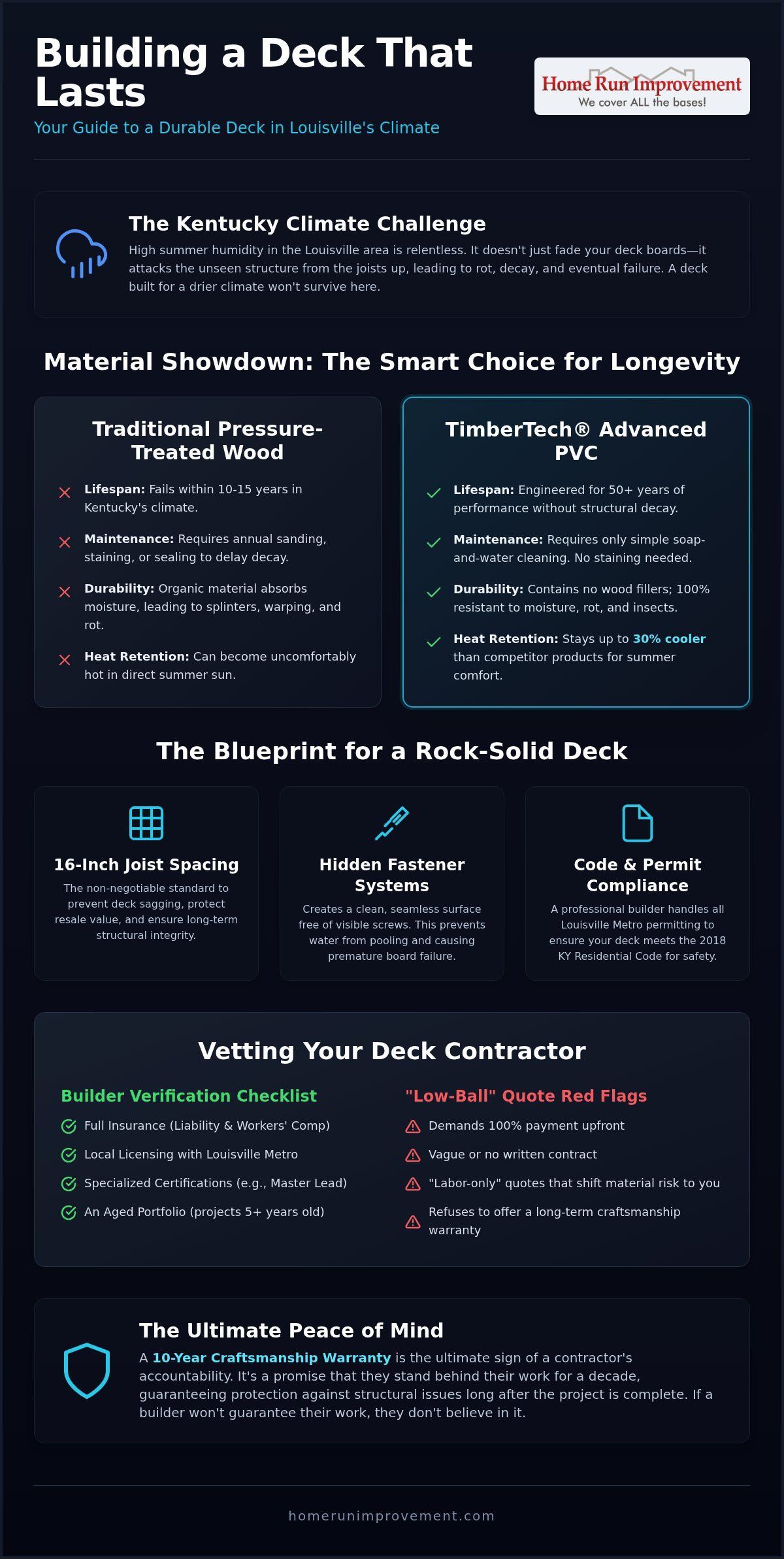
Most Louisville homeowners assume a deck's lifespan is determined by the boards they walk on; however, the reality is that Kentucky’s high summer humidity destroys an outdoor structure from the joists up long before the surface ever fades. When you search for a "Deck Contractor Near Me," you aren't just looking for someone to nail boards together. You're looking for a professional who understands that structural integrity is non-negotiable in our local climate. It's stressful to navigate the confusing price gaps between pressure-treated wood and composite while wondering if your builder will even show up on Monday morning.

We believe you shouldn't have to choose between a beautiful aesthetic and long-term security. This article will help you find a local builder who prioritizes premium materials like TimberTech Advanced PVC and provides a warranty that actually protects your investment. We'll explore the specifics of the 2018 Kentucky Residential Code, explain why certain materials fail in Louisville's heat, and outline exactly what to look for in a 10-year craftsmanship warranty so your new outdoor space remains a safe, low-maintenance sanctuary for years to come.

Key Takeaways

  • Learn why choosing a specialized builder over a general handyman is the only way to ensure your project meets the Kentucky Building Code standards for long-term safety.
  • Discover why TimberTech Advanced PVC is the superior choice for Louisville’s humid summers, outlasting traditional wood and resisting rot.
  • Understand the critical structural requirements, such as 16-inch joist spacing, that prevent deck sagging and protect your home’s resale value.
  • Identify the specific steps for navigating the Louisville Metro permitting process to avoid costly delays or HOA fines in communities like Prospect or Anchorage.
  • Find out how a professional Deck Contractor Near Me provides ultimate peace of mind with a 10-year craftsmanship warranty that guarantees accountability.

Vetting a Deck Contractor in Louisville: More Than a Google Search

Choosing a deck contractor in Louisville is a high-stakes decision because our local climate is unforgiving. If you search for a "Deck Contractor Near Me," you'll find hundreds of results, but true accountability comes from deep local roots. A contractor with a physical presence in Louisville and Southern Indiana isn't just a business; they're a fixture in your community. They can't afford to do poor work because their reputation depends on neighborly referrals and long-term stability. If a builder lacks a local track record, they lack the incentive to ensure your deck survives a decade of Kentucky winters.

There's a massive difference between a general handyman and a specialized deck builder. While a handyman might be competent at minor home repairs, deck building requires a deep understanding of deck construction standards to ensure structural safety and code compliance. Specialized contractors invest in specific certifications and understand the nuances of load-bearing structures that a generalist might overlook. Before you hire anyone, use this verification checklist:

  • Insurance: Verify both general liability and workers' compensation coverage.
  • Local Licensing: Ensure they are registered with the Louisville Metro Government.
  • Specialized Certifications: Look for manufacturer-specific training, such as Master Lead status.
  • Aged Portfolio: Ask to see projects built at least five years ago. If the structure is sagging or the boards are warping after five years, their "expert" status is a myth.

Essential Questions for Your Louisville Builder

You must verify a builder's technical expertise before signing a contract. Ask specifically how they mitigate Kentucky's expansive clay soil and high moisture levels during the foundation phase. Inquire about their crew's familiarity with hidden-fastener systems, which provide a cleaner look while preventing water from pooling in screw holes. Finally, confirm they handle the permit process with local offices in Prospect or Anchorage. A professional contractor never asks the homeowner to pull the permits; they take full responsibility for the legal requirements of the build.

The Red Flags of 'Low-Ball' Quotes

A price that seems too good to be true usually indicates a compromise in safety or material quality. Be wary of contractors who demand 100% payment upfront or refuse to provide a detailed written contract. Another common trap is the "labor-only" quote, which leaves you responsible for material procurement and delivery logistics. Most importantly, low-ball quotes often omit a 10-year craftsmanship warranty. If a builder isn't willing to stand behind their work for a decade, they're likely cutting corners on the structural components you cannot see.

High-Performance Materials: TimberTech Advanced PVC vs. Traditional Wood

Choosing the right material for your deck is a decision that dictates your home's maintenance schedule for the next two decades. While traditional pressure-treated wood remains a common choice, it often fails within 10 to 15 years in our region. This failure isn't just about appearance; it's about the decay that eventually compromises Structural Integrity. Wood is an organic material that naturally absorbs moisture, leading to splinters, warping, and rot. If you want a deck that lasts, you need a material that doesn't fight against the Kentucky climate.

When you search for a "Deck Contractor Near Me," you'll likely see options for both wood and various synthetics. Advanced PVC decking has emerged as the gold standard for homeowners who prioritize longevity. Unlike wood or even some early-generation composites, Advanced PVC contains no wood fillers. This means it's entirely resistant to moisture and wood-boring insects. You won't spend your springs sanding or staining. Instead, a simple soap-and-water cleaning is all you'll need to maintain a pristine finish year after year.

Why Advanced PVC Wins in the Kentucky Climate

The Ohio River Valley presents a unique challenge for outdoor structures. Our humidity levels stay high, and our temperatures swing nearly 100 degrees throughout the year. TimberTech Advanced PVC is engineered with a service range of -70°F to 200°F. It remains stable through January freezes and July heatwaves. The SunComfortable™ technology is essential for Louisville families. It keeps the surface up to 30% cooler than competitive products. This ensures you can actually walk on your deck during the peak of summer without discomfort or burnt feet.

Hidden Fasteners for a Clean, Modern Look

A high-end deck should look like a piece of custom furniture, not a construction site. Traditional face-screwing methods leave hundreds of visible holes that catch water and eventually lead to board failure. Using hidden-fastener systems like Cortex® or CONCEALoc® provides a seamless, fastener-free surface that's safer for bare feet and pets. For advanced installations, systems like SIDELoc® allow for the natural expansion and contraction of the boards without creating gaps. You can find more technical specifications and installation guides on TimberTech’s resource page. If you're ready to stop maintaining your deck and start enjoying it, start a conversation with us about your project today.

Structural Integrity: What Your Contractor Might Be Skipping

A deck’s beauty is only skin deep, but its safety is rooted in the "hidden" deck. While many homeowners focus on the color of their boards, the sub-structure is the most critical part of the build. If you search for a "Deck Contractor Near Me," you must find a builder who understands that a deck is a load-bearing structure, not just a floor. Poor framing leads to sagging, bouncy surfaces, and eventually, catastrophic failure. We treat the skeleton of your deck with the same precision as the finish work because a 20-year board is useless if the joists rot in ten.

Rigidity starts with proper joist spacing. We never exceed 16 inches on center for standard layouts; however, for certain diagonal patterns, we tighten that spacing even further to ensure a rock-solid feel. To prevent joist twisting and lateral movement, we install solid blocking every 4 to 6 feet. This extra step is frequently skipped by builders looking to save time, but it’s essential for long-term stability. Home Run Improvement exclusively uses kiln-dried, moisture-resistant lumber for our framing. This material is more stable than standard green lumber, which often warps or shrinks as it dries in the Kentucky sun.

Protecting the Frame with Joist Tape

Water is the primary enemy of any wooden frame. When screws penetrate the joists, they create pathways for moisture to seep into the wood grain. We use TimberTech ProTac Joist Tape to seal these entry points and prevent rot before it starts. We apply 1.625-inch tape for single joists and 3.25-inch tape for larger beams to ensure total coverage. This small investment in material significantly increases the total ROI of your project by doubling the lifespan of the wooden sub-structure. Protecting the frame is a core requirement of our 10-year craftsmanship warranty.

Code Compliance and Structural Safety

Safety is never optional. We ensure every joist plane is perfectly level before the first deck board is laid, preventing the "wave" effect seen on amateur builds. We also insist on using specialized hardware, including galvanized or stainless-steel fasteners, to prevent corrosion from the chemicals in treated lumber. Every project we undertake strictly adheres to the Louisville Metro Building Codes. If your contractor suggests skipping the permit or ignores local structural requirements, they are compromising your family's safety and your home's future resale value. True expertise means doing the job right where nobody can see it.


Navigating Permits and Planning in the Louisville Metro

Permitting is often the most frustrating phase of any home improvement project. In Jefferson County, a building permit is mandatory for any deck attached to a dwelling or exceeding 30 inches above grade. Submitting an application through the Louisville Metro Business Portal requires detailed construction drawings and a precise site plan. If you search for a "Deck Contractor Near Me," you need a partner who views this bureaucracy as their responsibility, not yours. We handle the entire plan review process to ensure your project meets the 2018 Kentucky Residential Code without unnecessary delays. If a builder asks you to pull the permit yourself, they are likely trying to avoid the legal accountability that comes with a professional inspection.

Homeowners in communities like Glenview or Indian Hills face an additional layer of complexity: the Homeowners Association (HOA). These boards often have strict guidelines regarding material colors, railing styles, and even the footprint of the structure. Finding an expert Deck Contractor Near Me who understands these nuances is the first step toward a successful build. A professional contractor doesn't just build; they provide the technical documentation and renderings necessary for HOA approval. For a project starting in 2026, you should expect a timeline of 4 to 8 weeks from the initial design phase to the final inspection. This duration accounts for the thorough vetting performed by local building officials to guarantee your structure is safe for occupancy.

Local Service Area Considerations

Every neighborhood in the metro area presents specific challenges. Projects in Anchorage and Prospect often require adherence to unique local building requirements that exceed standard county codes. In Crestwood and Hurstbourne, we pay close attention to soil stability. The expansive clay common in these areas requires deeper, more robust footings to prevent frost heave and structural shifting. If your property is across the river in Clarksville, we pivot to Southern Indiana building codes to ensure full compliance and long-term peace of mind.

Designing for Functionality and Curb Appeal

A deck shouldn't look like an afterthought. We focus on integrating your new outdoor space with your existing siding to create a cohesive architectural statement. Whether you have vinyl or LP SmartSide, the transition between the house and the deck must be flashed correctly to prevent water damage to your home’s envelope. By choosing railing systems and integrated LED lighting that complement your home's style, you maximize your outdoor living space for Louisville's beautiful spring and fall seasons.

Schedule your Louisville deck consultation today

Why Home Run Improvement is Louisville’s Trusted Deck Partner

When you finalize your search for a Deck Contractor Near Me, you aren't just hiring a construction crew; you're selecting a partner who is responsible for your property's safety and value for the next decade. Home Run Improvement is locally owned and operated right here in Louisville. We maintain high-level industry credentials, including LP SmartSide Master Lead status and Owens Corning Preferred Contractor status. These aren't just badges to us. They represent a commitment to technical precision and a level of accountability that national franchises simply cannot match. If you choose a builder based solely on the lowest bid, you often inherit the risk of future structural failure. When you choose us, you're choosing a neighbor who is invested in the long-term stability of our community.

The 10-Year Craftsmanship Warranty

Most contractors in the industry offer a standard one-year warranty, which often expires just as the first signs of structural shifting or material fatigue appear. We believe that is unacceptable for a major home investment. We provide a 10-year craftsmanship warranty on every deck we build. This warranty covers the integrity of the installation itself, ensuring that your joists remain level, your fasteners stay secure, and your frame resists the warping common in Kentucky's humid environment. Adhering to the professional standards set by organizations like the National Association of the Remodeling Industry is just our baseline. Our real goal is providing you with the peace of mind that comes from knowing your builder isn't going anywhere.

Our expertise isn't limited to what's under your feet. Because we are also specialists in roofing and siding, we understand how a deck interacts with your home's entire exterior envelope. We ensure that ledger boards are flashed with surgical precision to prevent water from ever reaching your home's framing. This holistic approach protects your whole home from rot and moisture damage, a critical consideration that many specialized-only builders overlook.

Get Started on Your Dream Deck

We've streamlined our project management process to be as transparent and stress-free as possible. It begins with a professional consultation where we provide a free estimate and help you visualize your project using our expert design team. We'll walk you through material selections, from TimberTech Advanced PVC colors to railing configurations, ensuring the final result matches your home's architecture perfectly. From the initial design to the final walkthrough, we handle every detail so you don't have to. If you are ready to transform your backyard into a safe, low-maintenance sanctuary, contact Home Run Improvement today to schedule your consultation.

Secure Your Home’s Value with Expert Craftsmanship

Building a deck in the Ohio River Valley requires more than basic carpentry; it demands an understanding of the Kentucky Residential Code and the foresight to choose materials that withstand our humidity. By prioritizing structural integrity and high-performance synthetics, you ensure your outdoor space remains a safe, low-maintenance asset for decades. You've learned that a professional builder manages the "hidden" details, from joist tape to permit logistics, providing a level of security that a general handyman cannot offer.

Home Run Improvement is a locally owned and operated company with Master Lead LP SmartSide Installer and Owens Corning Preferred Contractor status. We don't just build decks; we protect your home’s entire exterior envelope. If you're searching for a reliable Deck Contractor Near Me, choose the partner that offers an industry-leading 10-year craftsmanship warranty. We're ready to help you navigate the planning process and turn your backyard vision into a durable reality.

Schedule Your Free Deck Estimate in Louisville

We look forward to building a beautiful, stable space that your family will enjoy for many seasons to come.

Frequently Asked Questions

Do I need a permit to build a deck in Louisville, KY?

In Louisville, a building permit is mandatory for any deck attached to a dwelling or more than 30 inches above grade. If your project exceeds 200 square feet or serves as a required exit, you must obtain approval through the Louisville Metro Construction Review Division. We handle this entire process because skipping permits can lead to legal issues and safety hazards. A professional contractor ensures every detail meets the 2018 Kentucky Residential Code.

How long does a typical deck installation take?

A typical project timeline spans four to eight weeks from the initial design phase to the final inspection. While the actual physical construction might take one to two weeks, the planning and permitting phases are critical for long-term safety. If you are searching for a Deck Contractor Near Me, ensure they account for Jefferson County’s permit lead times. We prioritize a methodical approach to ensure your structure is built to last without rushing structural essentials.

Is TimberTech PVC decking better than composite for Kentucky weather?

Advanced PVC is superior to traditional composite for the Kentucky climate because it contains zero organic wood fillers. While composites are durable, they can still absorb moisture in the Ohio River Valley’s high humidity. TimberTech Advanced PVC resists rot and mold entirely. Additionally, its SunComfortable technology keeps the surface significantly cooler during Louisville’s humid July heatwaves. If you want a deck that remains stable through 100-degree temperature swings, PVC is the professional choice.

What is the difference between joist tape and flashing?

These components serve distinct but equally vital roles in moisture protection. Joist tape, such as TimberTech ProTac, seals the top of your deck’s framing to prevent water from entering screw holes and rotting the wood from within. Flashing is used specifically at the ledger board where the deck attaches to your home. If the flashing is installed incorrectly, water can penetrate your home’s envelope, leading to severe structural damage to your siding and foundation.

Does a new deck increase my home value in Louisville?

A professionally built deck is a high-yield investment that significantly increases your home's resale value and curb appeal. In Louisville, outdoor living spaces are highly sought after by buyers looking for an extension of the primary residence. If you choose premium materials and secure a 10-year craftsmanship warranty from a Deck Contractor Near Me, you provide tangible proof of quality to future owners. A sturdy, low-maintenance deck acts as a permanent upgrade rather than a temporary addition.

Can you build a deck over an existing concrete patio?

It is possible to build a deck over an existing concrete patio, provided the concrete is structurally sound and has proper drainage. We utilize specialized post mounts or sleeper systems to ensure the new framing remains level and protected from moisture. If the concrete is crumbling or sinking, we recommend a full removal to establish a stable foundation. A professional assessment is required to determine the best engineering path for your specific property and deck construction standards.

What kind of maintenance does a TimberTech deck require?

TimberTech Advanced PVC requires minimal effort compared to the annual staining and sealing needed for pressure-treated wood. You only need to perform a simple cleaning with soap and water once or twice a year to remove pollen or debris. Because the material is resistant to moisture and wood-boring insects, you don't have to worry about splinters or rot. This low-maintenance profile ensures you spend your weekends enjoying your outdoor space rather than working on it.

Why is joist spacing so important for my deck's stability?

Joist spacing determines the rigidity and load-bearing capacity of your deck surface. We never exceed 16 inches on center; however, we often tighten that spacing to 12 inches for certain diagonal patterns or heavy-load areas. If the joists are spaced too far apart, the boards will sag and the entire structure will feel bouncy and unsafe. Precision in framing is the foundation of structural integrity and is a core part of our professional building standards.
By Pat McIntyre • October 1, 2026
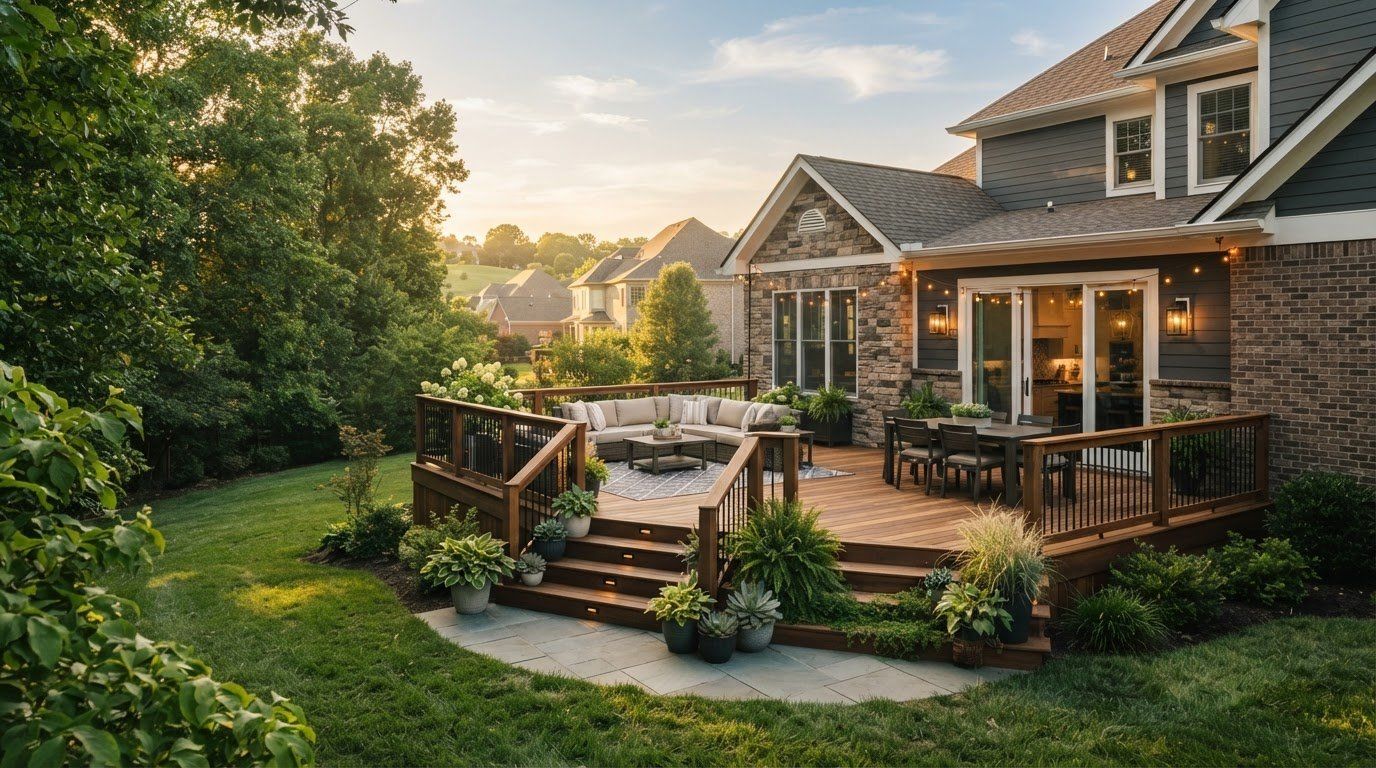
Does a new deck add value to a home in KY? It can, but resale appeal depends on more than the project itself. A deck that suits the house, makes practical use of the yard, and is thoughtfully built is more likely to feel like a meaningful upgrade than one that’s oversized, awkwardly placed, or showing signs of poor workmanship. It’s reasonable to want a clear return before investing, especially because material choices and project scope affect the total cost. But a deck’s value isn’t limited to resale: it can also create usable outdoor space and make a home more enjoyable while you live there. This article explains what can shape a new deck’s appeal to Kentucky buyers, how to weigh financial and lifestyle value, and what to consider before building. You’ll also find questions to ask a contractor about design, materials, scope, and construction quality, so you can decide whether a deck fits your home, yard, and local market. Key Takeaways A new deck can improve usability and buyer appeal, but resale value isn’t guaranteed. Consider everyday enjoyment and how the home presents alongside potential resale contribution. To judge whether does a new deck add value to a home in KY, compare the proposed deck with your home’s layout, yard, and nearby properties. Compare materials by appearance, care needs, durability, and what matters most to your household. Confirm details for the products being proposed. Set your goals before choosing a design, then use comparable homes and local insight to put resale expectations in context. Ask a Louisville-area contractor how the proposed scope, materials, and workmanship suit your property, and review relevant completed projects. Does a New Deck Add Value to a Home in Kentucky? Understand the Types of Value Yes, a new deck can improve a home’s usability and appeal to buyers, but it won’t guarantee a higher sale price or full recoupment. The answer to “does a new deck add value to a home in KY” depends on how well the deck fits the property, its condition and design, and what local buyers are looking for. A deck may add everyday enjoyment and create a more inviting presentation, even if the eventual sale price doesn’t reflect the full project cost. Keep four outcomes distinct: a deck’s estimated contribution to resale value, the interest it may generate among buyers, the enjoyment it provides while you live there, and the way it presents the home and yard. These outcomes can influence one another, but they aren’t interchangeable. A comfortable outdoor space may make a listing more compelling without guaranteeing a specific appraised value. For a general overview of a deck’s purpose and common forms, see Deck . To explore the resale question, watch this video:  https://www.youtube.com/watch?v=_i-1CY2ks-0 What does “adding value” mean when you sell a home? An appraisal is a professional opinion of a property’s value. Buyer perception is how prospective purchasers respond to its condition, features, and fit for their needs. The final sale price is what a buyer agrees to pay under current market conditions. A well-planned deck may improve marketability by making outdoor space more functional, but that doesn’t mean its cost will be added dollar for dollar to the home’s value. Instead of relying on a national average or one return estimate, compare similar nearby homes and recent local sales. Look for properties with comparable layouts, yards, and outdoor features. These comparisons offer useful context, but they can’t promise a particular result for your home. Why can the answer vary across Kentucky homes? Kentucky isn’t one uniform market. Location, home type, yard usability, deck condition, and competing listings can all affect whether a deck feels like an advantage. One that connects naturally to the home and makes a difficult-to-use yard more functional may appeal differently from a deck that overwhelms a smaller property or needs visible repairs. Observations from Louisville may not reflect buyer expectations in another Kentucky community or Southern Indiana. Ask a local real estate professional to interpret comparable sales and current competition in your area. That perspective can help you weigh potential buyer interest without treating resale as guaranteed. It also gives you a sounder basis for deciding how much the deck’s everyday usefulness matters to your household. Which Kentucky Home and Yard Factors Shape a Deck’s Value? A deck’s contribution depends partly on how well it works with the property around it. If it’s easy to reach, proportionate to the house, and leaves room to use the rest of the yard, it can feel like a natural extension of the home. If it blocks a useful route or takes up most of a small yard, the same addition may be less practical. To assess whether does a new deck add value to a home in KY, start with the site, not a standard design or assumed buyer preference. Does the deck fit the home and available yard? Consider where people will enter the deck, how they’ll move between it and the house, and whether nearby doors and windows provide convenient access. Think through likely activities, such as dining, relaxing, or gathering, and plan enough usable area for those purposes without crowding the yard. The deck should complement the home’s scale and exterior, not dominate them. Walk the yard before settling on a layout. Check how the proposed footprint affects paths, planting areas, privacy, and access to other outdoor spaces. Marking the rough footprint on the ground can help you picture how much yard remains and whether the route between the home and deck feels practical. A design that preserves circulation may serve the household better than simply maximizing deck size. Property-fit checklist: Connection: Does the deck offer convenient access from the rooms and doors people use? Proportion: Does its size suit the home’s scale and leave enough usable yard? Function: Is there practical space for the activities you expect to use it for? Privacy and views: Does the layout support comfortable use without creating unwanted sightline issues? Condition and upkeep: Will the chosen design and materials be manageable for your household, and will the finished work look cohesive with the home? How should Louisville-area homeowners assess local buyer appeal? Don’t assume every buyer wants the same outdoor feature. Review current listings and recent sales in your neighborhood and price range. Note how similar homes use their yards, whether decks are present, and how outdoor areas are shown. These are clues to investigate, not proof of a resale premium. Ask a local real estate professional which outdoor features seem relevant to nearby buyers and how comparable properties differ. The 2023 Remodeling Impact Report: Outdoor Features offers broader context on outdoor projects, but local comparisons are more useful for understanding your specific market. Don’t apply observations from Louisville automatically to other communities. If you’d like help evaluating how a deck could fit your property, you can discuss your deck project with a Louisville-area contractor. Deck Materials, Design, and Workmanship: What Matters for Long-Term Appeal? Material, layout, and construction quality shape how a deck looks, functions, and feels to maintain. These choices also affect buyer confidence: a finished space that suits the home and appears thoughtfully built is easier to appreciate than one with awkward proportions or unclear care needs. There’s no universally best material. The right choice depends on your priorities, intended use, and the specific products and installation details in the proposal. How should homeowners compare decking material options? Start with broad categories, then ask for details about the actual products being proposed. Natural wood, composite, and PVC can differ in appearance and care requirements, so consider how their specific characteristics fit your household. Ask for product care instructions and confirm product claims with the contractor rather than relying on assumptions about an entire category. Material categoryWhat to considerWoodWhether you prefer its natural appearance and are prepared to follow the specified care routine.CompositeHow its look, maintenance guidance, and confirmed product details match your priorities.PVCWhether the proposed product’s appearance, care instructions, and project scope suit your needs. Compare the full project scope, not just the visible decking surface. Ask what materials and related work are included, how the finished design will connect to the home, and what care the selected product requires. The 2024 Cost vs. Value Report offers a broad remodeling benchmark, but it can’t determine which material or design is right for your property or predict a specific resale result. Why do design and construction quality affect buyer confidence? Good design makes the deck feel intentional. Consistent proportions, practical transitions, clear access, and details that coordinate with the home help create a space people can picture using. Structural planning matters too. If the scope or construction details are vague, it’s harder to understand what the work involves or what future care may require. A polished surface is no substitute for sound planning and workmanship. Before approving a project, ask for written details about the design, materials, structural work, installation scope, and workmanship expectations. Confirm which product claims apply to the specific materials proposed, along with any applicable project warranty. Those answers help you compare proposals on more than appearance and assess whether the plan fits your goals. If you’re exploring professional options, review Home Run Improvement’s Louisville decking services . When considering whether does a new deck add value to a home in KY, prioritize a design that fits the property and workmanship that supports a complete, usable result. How to Decide Whether a New Deck Makes Sense for Your Kentucky Home Start with what you want the deck to do, not a resale figure. If you’ll use it regularly and the layout fits your home and yard, the project may make sense even if its eventual resale contribution is uncertain. If your main goal is resale, treat that as one factor to investigate, not a guaranteed return. The answer to “does a new deck add value to a home in KY” depends on your property, project scope, and local market. What questions should you answer before requesting an estimate? Identify who will use the deck and what they’ll do there. Consider access from the home, the connection to existing outdoor space, and how much usable area you need. Then rank priorities such as appearance, maintenance, materials, and flexibility. Before meeting with a contractor, gather photos, rough measurements, and questions about site conditions. This preparation helps clarify what should be included in the proposed scope. Use this short checklist to separate essential needs from optional additions: Must-haves: A layout that supports your intended activities, practical access, a suitable footprint, and clearly specified materials and work. Optional upgrades: Design details or added features that would be welcome but aren’t necessary for the deck to serve its main purpose. Market check: Compare similar homes in your neighborhood and price range, then ask a qualified local real estate professional how current listings and recent sales inform your expectations. A broad benchmark, such as Zonda’s 2024 Cost vs. Value Report , can provide context, but it can’t predict what a specific project will recoup in your community. Use local comparisons to frame the resale question, and evaluate the estimate against your goals, care preferences, and confirmed project details. When might a deck be a weaker resale investment? Pause if the proposed footprint would take up too much usable yard, feel out of scale with the house, or fail to serve a clear purpose. Reconsider timing if other necessary property repairs or priorities remain unaddressed. These factors may weaken the case for building primarily to sell, but they don’t automatically make a deck a poor choice if you expect to use and enjoy it. Before deciding, ask the contractor to explain how the proposed scope fits the property and which items are essential versus optional. A site-specific estimate can help you make that distinction and avoid committing to features that don’t support your goals. Discuss your deck project with Home Run Improvement Plan a Deck Project with a Louisville-Area Contractor A site-specific estimate can turn general ideas into a clear project plan. It should explain how the proposed design fits your home and yard, what work is included, which materials are being considered, and what questions still need answers. That clarity matters whether your priority is everyday use, appearance, or stronger buyer appeal. No estimate can guarantee resale results, but a defined scope helps you make an informed decision. What should you ask a deck contractor before hiring? Ask who will perform the work and request a written description of the project. The proposal should make it easier to understand the planned design, materials, scope, and how changes will be discussed and documented. If a detail is unclear, resolve it before work begins. What work is included, and what is outside the proposed scope? Who will perform the work, and how will you be updated if the plan changes? Which specific materials are proposed, and what care do they require? How will access, site conditions, and the home’s existing structure affect the design? What warranty terms apply to this project, and where are they documented? Confirm warranty coverage and project terms directly rather than relying on assumptions or a general warranty statement. A clear estimate should give you enough detail to compare the plan with your priorities and ask informed follow-up questions. What are practical next steps for homeowners near Louisville? Before arranging an estimate, gather photos of the area, rough measurements, notes on how you expect to use the deck, and a short list of questions. This gives the contractor useful context for discussing layout and scope. During the conversation, ask why the proposed design suits your property, how it will connect to the home, and which choices are essential versus optional. Review examples of completed projects to get a sense of workmanship, then use the decking services page to learn more about Home Run Improvement’s work. The company is locally owned in the Louisville area and provides free estimates. Homeowners in Louisville, Southern Indiana, Anchorage, Crestwood, Glenview, Hurstbourne, Indian Hills, Jeffersontown, Prospect, Clarksville, Bardstown, and Mt. Washington can ask about project details and availability for their location. As you compare options, request the proposed materials, scope, and warranty details in writing. For homeowners considering whether does a new deck add value to a home in KY, a clear plan is a practical next step. It lets you assess the design and workmanship against your goals before committing. Request a free deck estimate Make a Deck Decision That Fits Your Home So, does a new deck add value to a home in KY? It can improve buyer appeal and make outdoor space more useful, but resale value isn’t guaranteed. Start with a design that suits your home and yard, supports the way you’ll use it, and reflects clear choices about materials, maintenance, and workmanship. Before moving forward, compare similar nearby homes and discuss local market context with a real estate professional. Then review a site-specific estimate carefully. A clear scope helps you understand what’s included and how the proposed design aligns with your priorities, rather than relying on a promised return. Home Run Improvement is locally owned and operated in the Louisville area and provides professional decking services and free estimates. Confirm availability and project terms directly as you discuss your plans. Request a free deck estimate from Home Run Improvement With thoughtful planning and the right questions, you can make a confident choice that supports both your home and the way you want to enjoy it. Frequently Asked Questions Does a new deck add value to a home in Kentucky? A new deck may add value to a Kentucky home by improving usability and buyer appeal, but no resale increase is guaranteed. The outcome depends on the property’s layout and condition, the deck’s design and workmanship, and local market conditions. A practical, well-integrated deck may help a home show well; an oversized or poorly maintained one may not. Compare nearby homes before treating it as a financial investment. How much value does a new deck add to a house? There’s no universal dollar amount or guaranteed return for a new deck. The result depends on the home, the project, and local buyer interest. Review recent sales of comparable homes and ask a local real estate professional to help interpret them. Also weigh personal enjoyment separately from resale value: a deck may be worthwhile because you’ll use it, even if the sale price doesn’t reflect its full project cost. Does a deck increase home value more in Louisville, KY? There’s no basis to assume a deck earns a higher premium in Louisville than elsewhere. Compare homes in the specific neighborhood and price range, and consider home type, competing listings, and buyer expectations. Market conditions may differ between Louisville, Southern Indiana, Anchorage, Crestwood, Glenview, Hurstbourne, Indian Hills, Jeffersontown, Prospect, Clarksville, Bardstown, and Mt. Washington. A local real estate professional can help assess current comparable sales in your area. Is a wood or composite deck better for resale? Neither wood nor composite is automatically better for resale. Compare their appearance, care requirements, confirmed product details, and fit with the home and likely buyers. A homeowner who prefers a particular look or maintenance routine may make a different choice from someone prioritizing another feature. Ask contractors for documented information about the proposed materials and their care instructions, then compare that information with similar homes in your local market. Can a deck make a home harder to sell? It can be a concern for some buyers if a deck is visibly neglected, awkward to access, poorly suited to the home, or takes up too much usable yard. These factors don’t guarantee a slower sale, since buyer preferences and property conditions vary. Before building or listing, ask a local real estate professional for feedback on how the deck fits your home and how comparable properties present their outdoor spaces. What deck features do home buyers look for? Buyer preferences vary, so don’t assume one feature will appeal to everyone. Practical access, a useful layout, sound condition, and a design that fits the home are sensible factors to evaluate. Consider whether people can move comfortably between the house and deck, and whether the space serves a clear purpose. Review local listings and ask a real estate professional which outdoor features appear relevant to nearby buyers. Should I build a deck before selling my Kentucky home? Build before selling only after weighing the project’s purpose, scope, and fit against local market evidence. Compare nearby homes and recent sales, then discuss the project and timing with a local real estate professional. A new deck may improve presentation or buyer appeal, but it isn’t guaranteed to pay for itself or help a home sell faster. If you’ll enjoy using it and the project suits the property, that value may matter too.
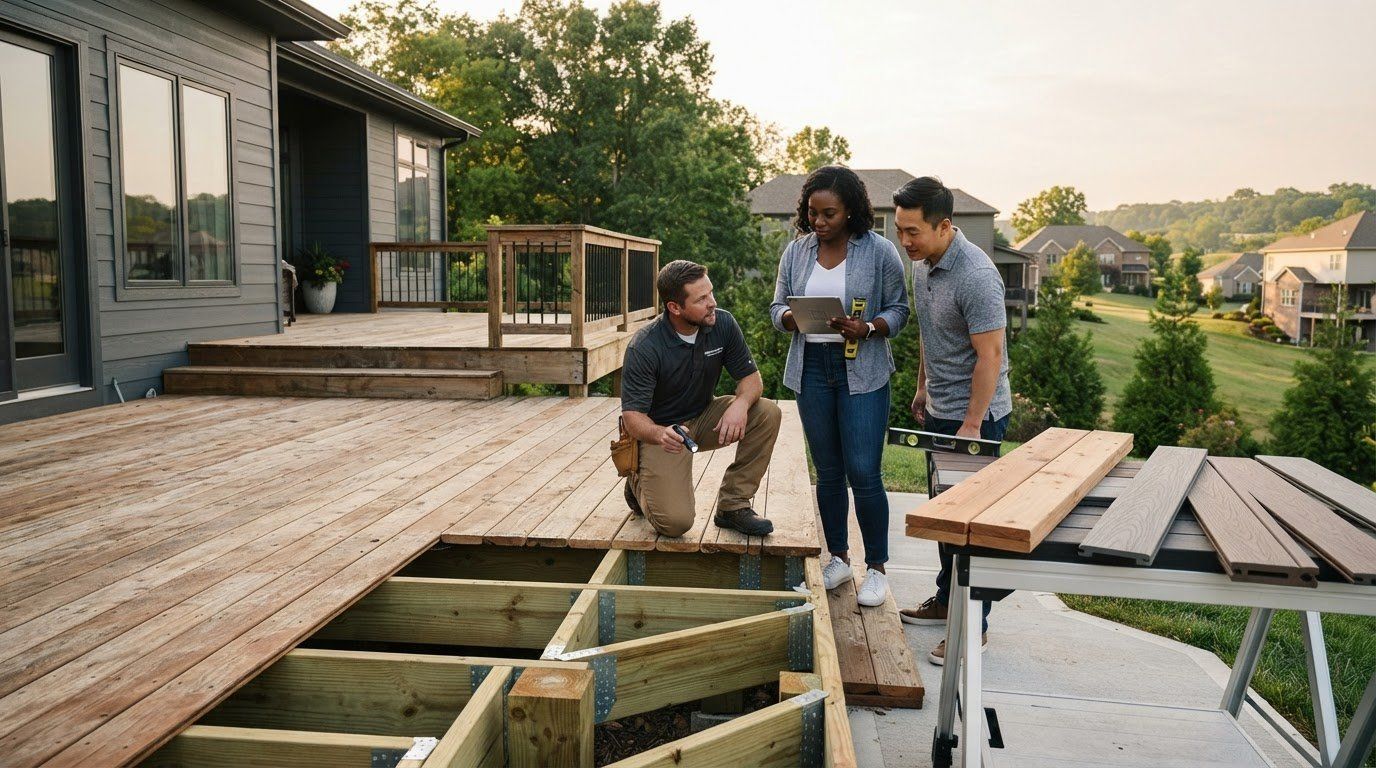
Three people inspect a wooden deck under construction beside a house, with tools and framing exposed.
By Pat McIntyre • September 29, 2026
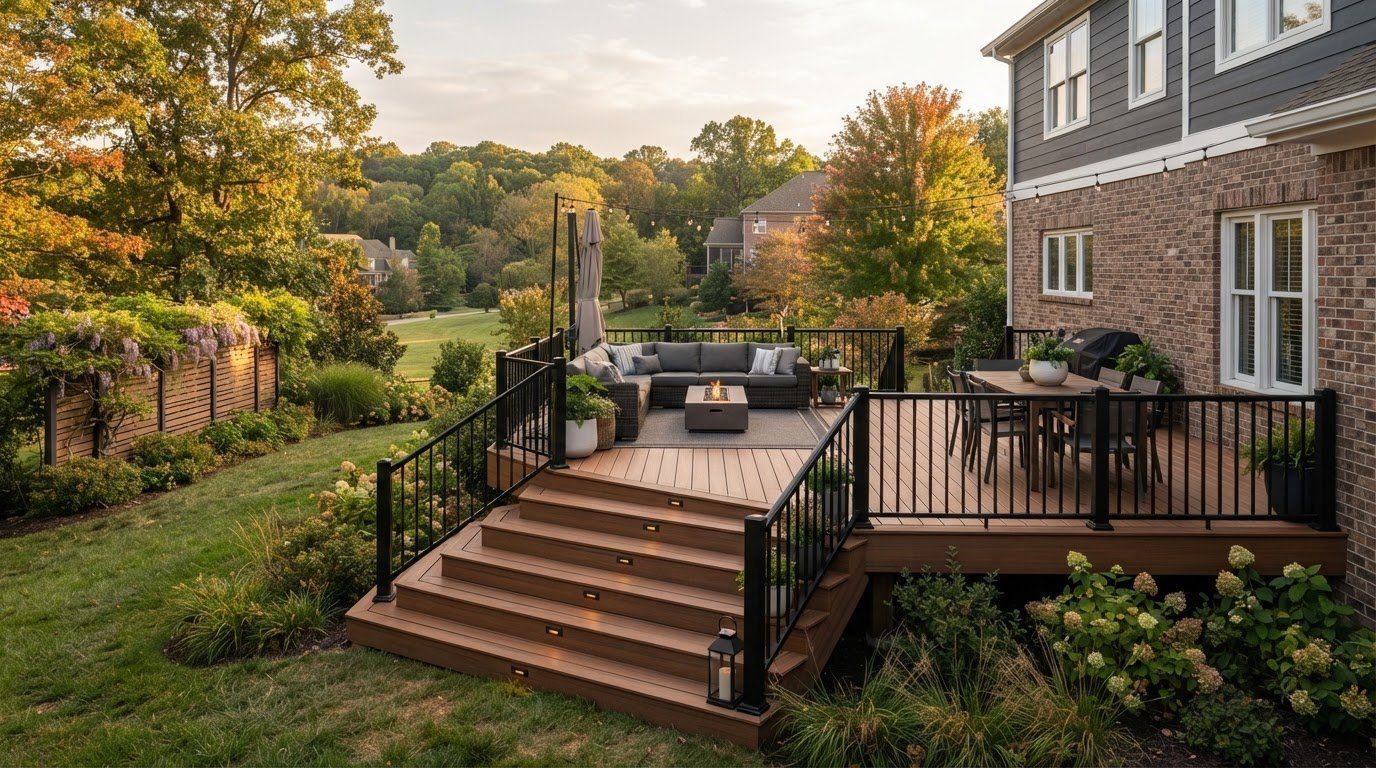
Transform your backyard with a custom deck from Home Run Improvement. Composite decking, premium railings, covered decks and more in Louisville, KY.
By Pat McIntyre • September 28, 2026
What if the best deck for your Louisville home isn’t the biggest one, but the one planned around how you’ll use it? Choosing among Custom Deck Builders Louisville KY | Home Run Improvement starts with more than comparing designs. You need a clear plan, sound construction, and a contractor you can trust with your home. It’s reasonable to have questions before committing: Which materials fit your home and upkeep preferences? What belongs in the project scope? And what permits or structural considerations apply? In Louisville , a building permit is required for a deck attached to a house, regardless of size. The Louisville Metro Construction Review resources can help you understand the local process. This guide will help you shape a deck plan around your outdoor routines, compare material and project-scope decisions, and know what to discuss with a local builder. You’ll also learn why clear communication about permits and structural requirements matters. Home Run Improvement is locally owned in the Louisville area and offers professional decking services, giving you a local option as you move from early ideas toward a considered estimate and build. Key Takeaways Start with how you’ll use the deck, then plan its layout around access, seating, movement, and the space available in your yard. Choose materials by weighing your property’s needs, preferred upkeep, appearance, and reliable product guidance. Compare builder proposals for what’s included, material details, site preparation, construction scope, exclusions, and how questions or changes will be handled. Project steps and local requirements depend on your property and design; check current guidance from Louisville Metro Construction Review. Learn what to discuss with Custom Deck Builders Louisville KY | Home Run Improvement, a locally owned Louisville-area contractor offering residential decking and free estimates. Why Plan a Custom Deck for Your Louisville Home? A useful deck should fit the home, the way your household spends time outdoors, and the space your property actually offers. A layout that works well for dining may feel awkward for relaxing or moving between the house and yard. Planning around your priorities helps coordinate access, seating, circulation, and the connection to the rest of your outdoor space. A custom deck project is a deck designed around a specific property and the ways its owners intend to use it. That means understanding the site and household needs before settling on features or a footprint. For a general overview of deck structures and common considerations, see Deck . If you’re comparing Custom Deck Builders Louisville KY | Home Run Improvement, begin with the needs your design must meet, not a preset list of add-ons. This video offers a visual introduction to deck construction: https://www.youtube.com/watch?v=PkvKO8GchyE Start with how you want to use the deck Decide what the deck needs to do in everyday life. Is the main purpose outdoor dining, a place to relax, room to entertain, or easier access to the yard? Consider household routines, who may visit, and how people will move between indoor and outdoor spaces. A dining area, for example, needs comfortable circulation around the table, while a quiet seating area may call for a more sheltered position. Write down your priorities before speaking with prospective builders. A short list keeps design conversations focused and gives you a practical way to compare ideas: Primary activities, such as dining, relaxing, or entertaining How many people the space should comfortably serve Where you need access between the house and yard Features you consider essential versus optional Account for the home and outdoor space The property should shape the plan. Door locations influence where people enter the deck; existing grade and available space can affect its layout and connection to the yard. Privacy may also matter, especially if neighboring homes or outdoor areas are close by. These details are why a standard footprint shouldn’t be assumed to suit every Louisville property. A site-specific assessment helps identify constraints and opportunities before design decisions become fixed. Bring those observations to a design conversation with a local professional. Home Run Improvement offers residential decking in the Louisville area; its Louisville decking services page provides a starting point for discussing your project. A clear understanding of how you’ll use the deck and what the site allows can make the next design and scope decisions more grounded. How to Shape a Custom Deck Design for Your Louisville Property A strong design brief turns household priorities into decisions a builder can assess: where the deck connects to the house, how people will move through it, and which features matter most. Separate preferences you can define now, such as a dining area or a clear route to the yard, from details that require an on-site assessment, including how the existing structure and grade affect the design. Match the layout to daily use and site conditions Deck size, transitions, stairs, and circulation work together. For example, a route from a frequently used door to the yard should remain clear even if the deck also needs room for seating. Note which access points and activities are priorities, then ask a builder to evaluate how the property can accommodate them. Framing, joist layout, and other structural details aren’t preferences to guess at; they require qualified professional judgment based on the specific project. Before finalizing plans, check applicable requirements with the authority having jurisdiction. Louisville Metro’s Construction Review resources are a useful place to confirm where to direct questions about projects in Louisville. Requirements may differ by location, so verify them for the property rather than relying on assumptions. Compare decking materials without assuming one choice fits everyone Compare material categories against the conditions of the site and the care you’re prepared to provide. Wood and composite decking, for example, can differ in appearance and upkeep expectations, but the specifics depend on the product. Review the manufacturer’s instructions for the material under consideration, including its installation guidance. Don’t assume that details for one product apply to another. Ask prospective builders to explain how the proposed material affects the project scope and construction details. Product-specific guidance should inform the plan, while structural decisions should be reviewed by a qualified professional. For general homeowner resources related to deck safety and the industry, the North American Deck and Railing Association (NADRA) is another source to consult. Turn priorities into a useful design brief Before discussing options with Custom Deck Builders Louisville KY | Home Run Improvement or another prospective builder, organize your ideas into a brief: Use: Identify the main activities and who will use the deck. Access: Note the doors, yard connections, and transitions that matter. Look and upkeep: Describe your appearance preferences and maintenance expectations. Questions: List site, material, structural, and local-requirement items that need professional review. This gives a builder a clearer starting point without treating an early wish list as a finished plan. If you’re ready to discuss how your priorities might translate to a project scope, you can contact Home Run Improvement about your deck project . How to Compare Custom Deck Builders in Louisville, KY A proposal is useful only when you can tell what the builder is agreeing to do. A low headline figure alone doesn’t establish equal scope, workmanship, or value. One estimate may include site preparation or specified materials that another leaves out. Before comparing totals, make sure you understand what each proposal covers and what could remain your responsibility. Compare proposals by scope, materials, site preparation, construction details, responsibilities, stated exclusions, communication, and applicable warranty terms. That checklist can help you spot meaningful differences and ask focused questions before choosing a contractor. Questions to ask before choosing a deck contractor Ask for examples of completed deck work relevant to your project, then clarify exactly what the proposal includes. Who will coordinate the site evaluation and design decisions? Who is your point of contact during construction, and how will questions or requested changes be documented and shared? Clear answers help you understand how the work will be managed, not just what the finished deck might look like. Request written explanations of the materials, site preparation, construction scope, and any exclusions. Ask which responsibilities belong to you and which belong to the contractor. If a warranty is mentioned, request its written terms and confirm that it applies to the proposed decking work. For homeowners considering Custom Deck Builders Louisville KY | Home Run Improvement, the same questions help create a fair, informed basis for comparing proposals. How to assess workmanship and documentation Review relevant project photos and customer feedback for clues about communication, coordination, and the overall client experience. Treat them as one source of information, not proof of structural quality or compliance. Home Run Improvement customer testimonials may help you understand reported customer experiences; confirm that any example you rely on relates to decking. Ask how structural details will be evaluated and who is responsible for confirming that the design and installation guidance suit the property and selected materials. Those decisions should be addressed by qualified professionals, not left vague in the proposal. For Louisville-area projects, confirm applicable permitting and inspection requirements with the authority having jurisdiction, and ask how the proposal accounts for any required reviews. Keep the comparison practical: if a proposal is unclear about a material, exclusion, or responsibility, ask for clarification in writing before moving forward. A careful review makes it easier to distinguish a complete, well-documented scope from one that only looks comparable at first glance. If you’d like to discuss a decking project with Home Run Improvement, you can contact the Louisville team . What to Expect During a Custom Deck Project in Louisville A well-managed deck project moves through clear stages, but the details aren’t identical for every home. The property, proposed design, selected materials, and applicable local requirements all affect the process. Before work begins, make sure you understand what has been assessed, what the agreed scope includes, and who will answer questions as decisions come up. As you work with Custom Deck Builders Louisville KY | Home Run Improvement or another prospective contractor, expect to move through a sequence like this: Discuss goals: Explain how you plan to use the deck and what matters most. Assess the site: Review access, grade, the home, and other conditions that may affect the design. Confirm the scope: Clarify proposed materials, site preparation, construction details, exclusions, and responsibilities. Verify requirements: Check permit and inspection questions with the authority having jurisdiction. Plan construction: Agree on communication and worksite coordination before the build proceeds. The order and exact steps may vary. A straightforward layout and a project with more complex site conditions may call for different planning and review. Site assessment, scope, and approvals A contractor should clarify relevant site conditions and proposed work before the project scope is finalized. Ask what assumptions the plan depends on and whether further review may affect the design. Don’t rely on a general answer about permits or inspections; requirements can depend on the property and jurisdiction. Confirm current guidance directly with Louisville Metro or the appropriate local authority for your address. For Louisville properties, the Louisville Metro Construction Review resources provide an official starting point for permit questions. If the property falls under a different jurisdiction, contact that authority instead. Verify applicable approvals and inspection steps before construction planning is treated as complete. Construction details and homeowner communication Ask who will review structural details, coordinate the worksite, and keep you informed if a question or proposed change arises. The selected product matters, too. Any product-specific spacing, fastening, or other installation requirements should be checked against the current instructions from that product’s manufacturer. Request the applicable documents for the material in your proposal, then ask how they inform the construction plan. Keep written records of the confirmed scope, selected materials, responsibilities, and decisions made during the project. That gives both you and the contractor a shared reference if questions arise and helps prevent assumptions from becoming surprises. Discuss your Louisville deck project with Home Run Improvement Choose Home Run Improvement for Custom Decking in Louisville Choosing a deck contractor means finding a local professional who can discuss your priorities, review the property, and explain the proposed scope clearly. Home Run Improvement is a locally owned Louisville-area contractor offering residential decking. Its Louisville decking service page is a starting point for learning about the service and beginning a project conversation. Home Run Improvement provides free estimates. An estimate is most useful when it reflects the actual property and a clearly described project, rather than assumptions about size, materials, or site conditions. Ask what the estimate covers and request clarification about materials, preparation, construction details, exclusions, and responsibilities. If warranty coverage matters to you, ask whether it applies to the proposed decking work and request the written terms before making a decision. What to bring to an initial deck conversation A little preparation can make an early discussion more productive. Bring photos of the house and outdoor area, a short list of how you hope to use the deck, and questions about layout or material preferences. Point out the doors people use, how you want to reach the yard, and any known site constraints. Be candid about what you know and what remains uncertain. These details help frame the conversation, but they don’t replace a review of the actual property. Recommendations depend on site conditions, the proposed design, selected materials, and the confirmed project scope. Treat an initial idea as a starting point, not a final construction plan. Take the next step with a Louisville deck builder Homeowners searching for Custom Deck Builders Louisville KY | Home Run Improvement can use the first conversation to discuss goals, site conditions, and what information is needed for a project-specific estimate. Bring your priorities, ask how the proposed scope will be clarified, and make sure you understand the estimate before deciding how to proceed. Request a free estimate for your Louisville deck project Move Forward with a Deck Plan That Fits Your Home A successful deck project starts with a clear idea of how you’ll use the space, then turns that idea into a design that accounts for your property, materials, construction details, and local requirements. Compare proposals by what they actually include, and ask questions until the scope and communication plan are clear. If you’re considering Custom Deck Builders Louisville KY | Home Run Improvement, Home Run Improvement is a locally owned Louisville-area contractor offering residential decking. Free estimates are available, giving you a chance to discuss your goals and the details of your project. Confirm the proposed scope and any project-specific terms before moving ahead. Bring your ideas, questions, and knowledge of the property to the conversation. A thoughtful plan can help you take the next step with greater clarity and confidence. Request a free estimate for your Louisville deck project Your yard can become a more useful extension of your home, one considered decision at a time. Frequently Asked Questions How do I choose a custom deck builder in Louisville, KY? Compare written proposals for scope, materials, site preparation, construction details, exclusions, and communication responsibilities. Ask for relevant deck examples, written warranty terms, and clarification about changes before choosing; a low estimate alone doesn’t establish equal value. Home Run Improvement is locally owned in Louisville and serves Louisville, Southern Indiana, Anchorage, Crestwood, Glenview, Hurstbourne, Indian Hills, Jeffersontown, Prospect, Clarksville, Bardstown, and Mt. Washington. What should I consider when planning a custom deck? Start with how you’ll use the deck, such as dining, relaxing, entertaining, or reaching the yard. Then consider the home’s doors, property layout, existing grade, privacy, and available space. Decide what matters most in appearance and upkeep, but leave structural details to qualified professionals after they assess the site. Your design, materials, and project scope should work together rather than being selected as unrelated features. Do I need a permit to build a deck in Louisville? Louisville requires a building permit for a deck attached to a house, regardless of size. A permit is also required for a freestanding deck over 200 square feet or with any portion more than 30 inches above ground. Requirements can vary outside Louisville Metro, so check with the authority for your property. See Louisville Metro Construction Review for current local guidance. How long does it take to build a custom deck? There isn’t one reliable timeline for every custom deck. The schedule can depend on the property, design complexity, selected materials, confirmed project scope, and applicable local requirements. Ask the contractor to explain the expected sequence, including site assessment, scope confirmation, any required approvals, and construction planning. Request updates about schedule changes, too. A project-specific estimate and clear communication are more useful than relying on a generic duration. Which decking material is best for a custom deck? The best material depends on the property, the appearance you prefer, and how much upkeep you’re prepared to handle. Compare material categories such as wood and composite based on those priorities, then review the current manufacturer instructions for the specific product under consideration. Installation requirements and care guidance can differ by product, so don’t assume one material’s instructions apply to another. Ask your builder to explain how the selected material affects the project scope. Does Home Run Improvement offer a warranty on deck projects? Home Run Improvement’s business information states that its craftsmanship is backed by a 10-year warranty, but the available information doesn’t confirm whether or how that warranty applies to decking. Before relying on it, ask the company for the written warranty terms and confirmation of coverage for your specific deck project. Clarify what workmanship or project elements are covered, along with any conditions or exclusions that apply. Can I choose a custom deck design for my Louisville home? Yes, you can discuss a design shaped around your home, yard, and intended use. Homeowners searching for Custom Deck Builders Louisville KY | Home Run Improvement should bring photos, access preferences, material questions, and a short list of priorities to the conversation. The final design depends on a review of the property, structural considerations, selected materials, and applicable local requirements. Home Run Improvement offers residential decking in the Louisville area.