
LP SmartSide Siding Maintenance vs. Vinyl: A Louisville KY Homeowner’s Guide

Pat McIntyre • August 30, 2026

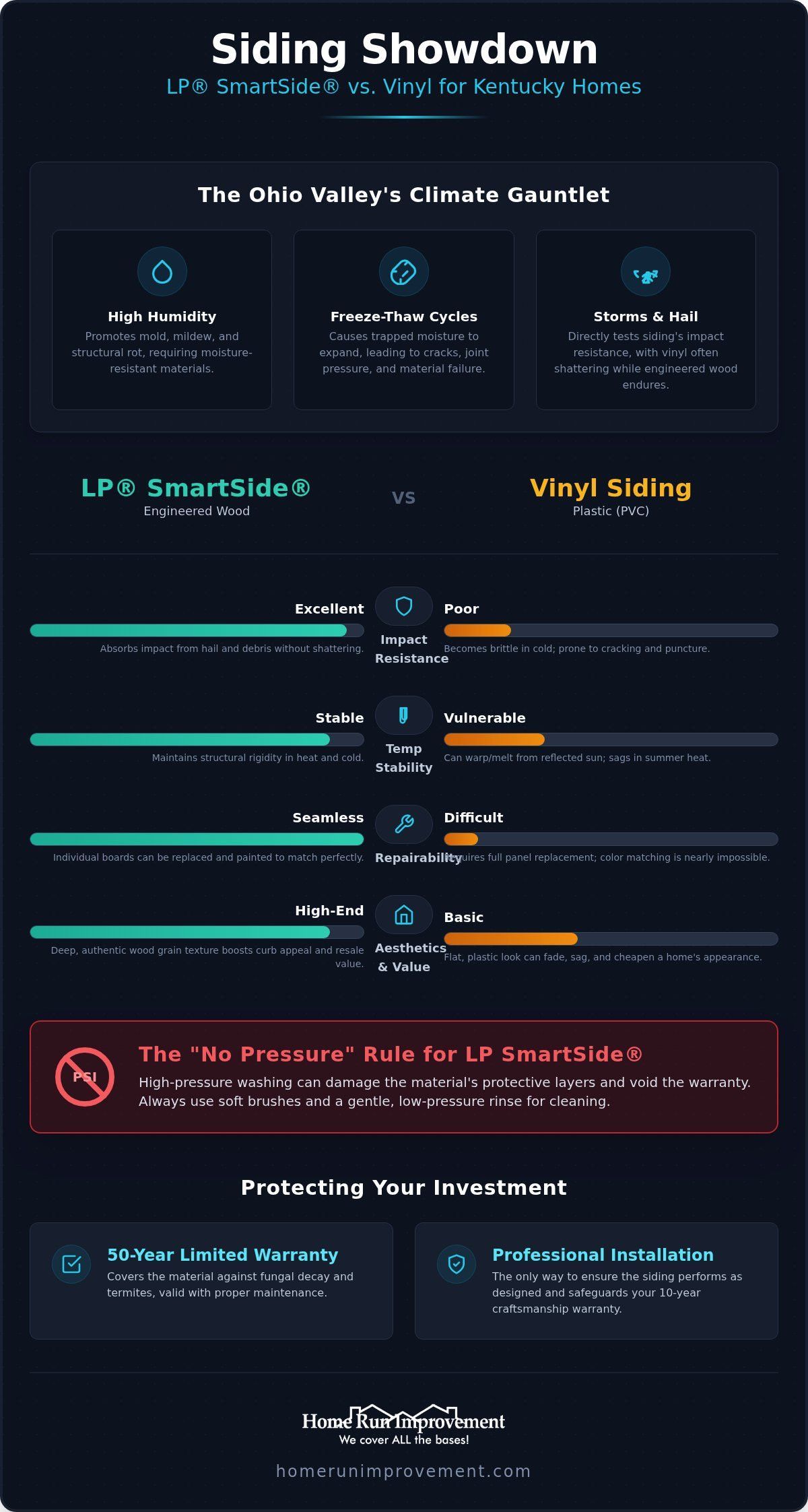
The "maintenance-free" promise of vinyl siding is often the very thing that leads to costly structural failures during a brutal Kentucky winter. While many homeowners choose vinyl to avoid chores, the reality is that freezing temperatures in the Ohio Valley often leave thin plastic panels brittle and prone to cracking. If you want a home that survives local hail storms and resists the relentless humidity of the region, understanding LP SmartSide siding maintenance is the first step toward true peace of mind. This engineered wood alternative offers the high-end aesthetic of natural cedar without the vulnerability to rot or woodpecker damage that plagues traditional materials.

You likely want your property in neighborhoods like Prospect or Anchorage to maintain its prestige without requiring a weekend of scrubbing every month. We agree that your siding should work for you, not the other way around. This guide will show you exactly how LP SmartSide maintenance compares to vinyl and why a proactive approach to your home's exterior can significantly boost your resale value. We'll explore why the 2026 LP SmartSide Color of the Year, Sand Dunes, is trending for its resilience and how proper care ensures your 50 year limited warranty remains fully intact.

Key Takeaways

  • Understand how Louisville’s high humidity and seasonal temperature swings necessitate siding that meets the 2018 Kentucky Residential Code for moisture protection.
  • Learn why the "No Pressure" rule is the most critical component of LP SmartSide siding maintenance to preserve the material's protective zinc borate treatment.
  • Discover the financial advantage of choosing engineered wood, which offers higher impact resistance against Ohio Valley hail than standard vinyl.
  • Recognize why professional installation by a certified expert is the only way to safeguard your investment with a 10-year craftsmanship warranty.

The Reality of Siding Maintenance in Louisville’s Humid Climate

Louisville’s weather isn't just a topic for small talk; it's a direct threat to your home’s structural integrity. According to NOAA climate data for Kentucky, the region’s high humidity and drastic seasonal temperature shifts make moisture-resistant materials a necessity rather than a luxury. Your siding serves as the first line of defense against structural rot and pest infestations that thrive in damp environments. If your exterior fails to repel water, you're inviting costly damage into your wall cavities.

Homeowners in Hurstbourne and Indian Hills are increasingly moving away from traditional wood because it simply cannot withstand local pest pressure and moisture levels. When you evaluate different types of siding, you must prioritize materials that act as a shield. Standard wood rots. Plastic cracks. Engineered wood persists. Consistent LP SmartSide siding maintenance ensures your home remains a fortress against the elements while maintaining the high-end aesthetic these neighborhoods demand.

Moisture and the Ohio Valley Effect

In the peak of summer, the Ohio Valley’s humidity creates an environment where mold and mildew thrive on organic surfaces. If your siding isn't properly treated, these spores won't just sit on the surface; they'll begin to degrade the material itself. The winter brings a different challenge with freeze and thaw cycles. When water enters small gaps in your siding and freezes, it expands. This puts immense pressure on your joints and sealants. Effective LP SmartSide siding maintenance starts with understanding these environmental stressors. If moisture infiltrates your siding, it eventually compromises your home’s insulation, leading to a noticeable drop in energy efficiency and comfort.

Storm Resilience in Kentucky

Louisville frequently experiences severe thunderstorms that bring high winds and damaging hail. These aren't just minor inconveniences. They're direct tests of your home’s impact resistance. While vinyl often cracks under the force of a mid-sized hailstone, engineered wood is designed to absorb the shock without shattering. This resilience is a core part of your long-term maintenance strategy. By choosing a material that doesn't easily fail during a storm, you avoid the cascading costs of emergency repairs. To ensure these protective features are fully realized, you need an expert siding contractor in Louisville KY who understands the specific flashing and sealing requirements of the Kentucky building code. Proper installation is the only way to guarantee your home stays dry when the next storm rolls through the valley.

LP SmartSide vs. Vinyl Siding: Maintenance Myths and Realities

The phrase "maintenance-free" is often a marketing smokescreen used to sell vinyl siding to unsuspecting homeowners. While it’s true you don’t have to paint plastic, you also can’t repair it when things go wrong. If a vinyl panel cracks, sags, or melts, your only option is a full replacement of that section, which often leads to a mismatched, patchy appearance. LP SmartSide siding maintenance, by contrast, involves minor proactive care that preserves the home’s structural integrity for decades.

Engineered wood offers a level of structural rigidity that plastic simply can’t match. While vinyl relies on flexibility to survive installation, that same flexibility makes it prone to rattling in high winds and sagging during hot Kentucky summers. LP SmartSide utilizes the SmartGuard process, where every wood strand is treated with zinc borate and water-resistant waxes. This built-in protection is far superior to the surface-level resistance of vinyl, as it actively repels termites and fungal decay from the inside out.

The Vinyl Siding Maintenance Trap

Kentucky’s climate is particularly harsh on vinyl. During freezing winters, the plastic becomes brittle. A single impact from a stray hailstone or a lawnmower-flung pebble can cause a spiderweb crack that lets moisture behind the facade. There’s also the "melt factor" to consider. Modern high-efficiency windows can reflect sunlight with enough intensity to warp and melt vinyl panels on adjacent walls. Once this thermal distortion happens, the material is permanently compromised. Because vinyl colors are baked in, matching a new panel to a five-year-old faded wall is nearly impossible, ruining your home’s curb appeal.

LP SmartSide: Minimal Effort, Maximum Protection

The primary concern homeowners have with engineered wood is the need for repainting. However, modern factory finishes are designed to last significantly longer than traditional field-applied paint. When you commit to a basic schedule of LP SmartSide siding maintenance, you're investing in a material that maintains its shape and density while plastic alternatives begin to sag. When you do eventually decide to refresh the color, the underlying substrate remains rock-solid. This material is also far easier to repair. If a board is damaged, it can be swapped out and painted to match the rest of the house perfectly. If you're unsure which material is best for your property's exposure, reach out for a professional exterior assessment.

Step-by-Step LP SmartSide Siding Maintenance Guide

Maintaining your home's exterior isn't about constant labor; it's about strategic vigilance. While engineered wood is designed to be incredibly resilient, the Ohio Valley’s environmental debris and seasonal pollen can accumulate on the surface. A disciplined approach to LP SmartSide siding maintenance ensures that your home stays as beautiful as the day we finished the installation. If you ignore basic care, you risk surface staining that can dull your curb appeal over time.

The most important rule for any Louisville homeowner is the "No Pressure" rule. If you own a pressure washer, keep it away from your siding. High-pressure water can drive moisture behind the panels, damage the protective overlay, and potentially void your warranty. Instead, rely on a standard garden hose and a soft-bristle brush. For specific technical details on chemical compatibility, always reference the official LP SmartSide Care and Maintenance guide before starting.

Cleaning and Washing Procedures

For basic dirt and grime, a simple solution of water and a mild, ammonia-free detergent works best. If you notice stubborn mildew or mold growth, which is common in shaded areas of Glenview or Anchorage properties, use a solution of three parts water to one part white vinegar. This natural acidity kills spores without stripping the factory finish. Always work from the bottom up to prevent streaking and finish with a thorough, low-pressure rinse from the top down. This methodical process keeps the protective zinc borate treatment from being overwhelmed by surface contaminants.

The Homeowner’s Annual Inspection Checklist

Schedule a walk-around of your home every spring. Catching a minor issue now prevents a major repair later. Use this checklist to stay ahead of the elements:

  • Check for Paint Chips: Look for any small chips or deep scratches. If the wood strand is exposed to the air, it needs a touch-up to prevent moisture absorption.
  • Evaluate Sealants: Inspect the caulk around windows, doors, and corners. If you see signs of hardening, cracking, or pulling away, the seal must be replaced to maintain a watertight envelope.
  • Manage Water Flow: Ensure your gutters are clear of debris. Clogged gutters cause water to overflow and cascade down your siding, leading to unnecessary wear and potential rot at the foundation level.
  • Downspout Direction: Verify that downspouts are directing water at least five feet away from your siding and foundation.

If your inspection reveals damage beyond a simple touch-up, don't wait for the next storm to make it worse. Check our frequently asked questions for more details on identifying structural concerns versus cosmetic wear.


Long-Term Performance: Impact Resistance and Resale Value

Choosing a siding material is a defensive strategy for your home's equity. While the ASTM D3679 standards establish the baseline for siding performance and quality, LP SmartSide is engineered to exceed standard expectations for impact resistance. In a region where hail can reach 1.75 inches in diameter, this resilience is not a luxury; it's a financial safeguard. When you invest in a material that doesn't shatter under stress, you effectively lower your long-term repair costs and insurance claim frequency.

The longevity of your exterior is directly tied to your commitment to LP SmartSide siding maintenance. Because this material resists the warping and cracking common in vinyl, it retains its straight lines and deep wood grain for decades. This consistency is exactly what prospective buyers look for when evaluating a property's value. If the exterior looks solid, it builds immediate trust in the rest of the structure.

Engineered Wood and Property Appraisal

In high-end neighborhoods like Anchorage or Prospect, curb appeal is a primary driver of property appraisal. The authentic texture of engineered wood commands a higher price point than the synthetic look of plastic. A well-maintained exterior often reduces the "days on market" for local listings because it signals to buyers that the home has been cared for by a professional. Prospective buyers are savvy; they recognize that a pristine exterior suggests the interior systems have been equally prioritized. When you can show future owners that the work is backed by a 10-year craftsmanship warranty, you provide the peace of mind necessary to close a high-value sale.

Cost-to-Value Analysis

While vinyl offers a lower initial price, the long-term ROI of LP SmartSide is significantly higher. In 2026, engineered wood siding has an average resale value of $15,140 on an average job cost of $18,400, recouping 82.3% of its cost. This outperforms vinyl, which typically recoups around 80.2%. These figures don't even account for the energy efficiency gains or the lack of emergency repair costs following a storm. When you choose professional LP SmartSide installation in Louisville, you aren't just buying boards. You're securing a high-performance building envelope. The minimal effort required for LP SmartSide siding maintenance ensures these financial benefits remain intact for the full 50-year life of the product warranty.

Request a professional siding assessment for your Louisville home

Why Professional Installation is the Foundation of Siding Longevity

Even the most diligent LP SmartSide siding maintenance schedule can’t compensate for a flawed installation. If your moisture barriers aren't perfectly sealed or your flashing is misaligned, water will find a way into your home's framing regardless of how often you clean the boards. This is why professional expertise is non-negotiable. A "standard" installation often overlooks the small details that lead to big failures, such as improper fastener placement or inadequate clearance from rooflines and grade. When you choose a contractor who treats these technical details as optional, you're essentially setting a timer on your home’s structural health.

The Master Lead Advantage

Being an LP SmartSide Master Lead contractor means our team has undergone specific training to meet the manufacturer’s highest standards. When you choose an expert, you’re ensuring that every board has the correct expansion gaps to prevent buckling during extreme temperature swings. We use high-grade moisture management materials that act as a secondary defense for your home. Standard installers might use lower-quality wraps to save on costs, but we know that the integrity of the substrate is what truly matters. This level of precision is why we can confidently offer a 10-year craftsmanship warranty.

Whether we’re working on a full exterior remodel in Jeffersontown or a siding replacement in Clarksville, IN, our commitment to local accountability remains the same. We follow the official LP SmartSide installation instructions to ensure your 50-year warranty stays valid. A Master Lead professional approach prioritizes the long-term stability of the building envelope, whereas a standard approach often focuses only on immediate cosmetic results.

Protect Your Home Today

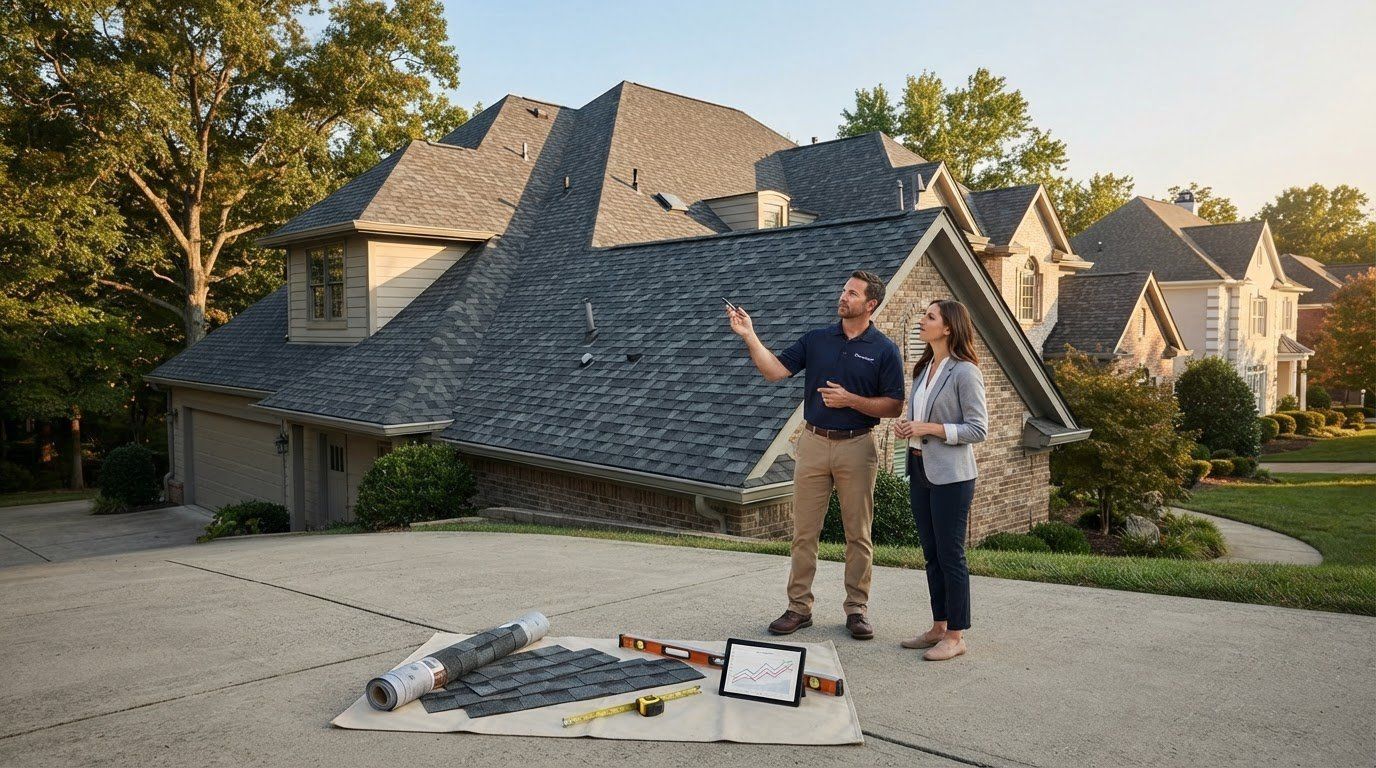
If you wait until you see visible rot or mold, the damage has likely already reached your home's structural framing. A professional assessment can identify failing sealants or poor drainage before they become catastrophic issues. Proactive care is the most cost-effective way to manage your property. When you partner with a "Protective Expert," you're not just buying a renovation; you're securing peace of mind for the next several decades. Our team understands how to integrate your siding with existing roofing and gutter systems to create a seamless, watertight envelope.

If your current siding is showing signs of age, don't let another humid summer or freezing winter compromise your investment. Effective LP SmartSide siding maintenance starts with a foundation that was built to last. You can contact Home Run Improvement for a professional LP SmartSide estimate and maintenance consultation to ensure your home remains protected for years to come.

Secure Your Home with a Durable Louisville Exterior

Louisville’s weather patterns, documented by the National Weather Service, demand an exterior that can handle heavy humidity and sudden freezes. While vinyl is often marketed as a hands-off solution, its vulnerability to these temperature swings often results in brittle panels. By contrast, a proactive approach to LP SmartSide siding maintenance ensures your home remains resilient against the Ohio Valley's unique climate challenges. You gain a high-performance building envelope that offers superior impact resistance and a significantly higher resale value in neighborhoods like Glenview or Crestwood.

As an LP SmartSide Master Lead Contractor and Owens Corning Preferred Contractor, Home Run Improvement provides the specialized knowledge required to protect your investment. We're locally owned and operated right here in Louisville, and we stand behind every project with a 10-year craftsmanship warranty. Don't settle for the risks of poor workmanship or inferior materials when you can choose a partner who treats your property with the same level of care as their own.

Request Your Free LP SmartSide Estimate in Louisville

Take the first step toward a worry-free exterior today. We look forward to helping you build a home that stands the test of time.

Frequently Asked Questions

Is LP SmartSide more expensive to maintain than vinyl siding?

While vinyl has no paint costs, its inability to be repaired means a single crack requires a full panel replacement. LP SmartSide siding maintenance involves minor cleaning and touch-ups, preventing the expensive "patchwork" repairs plastic siding demands. Over a 20-year cycle, the structural durability of engineered wood often proves more cost-effective for Louisville homeowners than the frequent failures associated with brittle vinyl during harsh Kentucky winters.

How often do I need to paint LP SmartSide siding in Louisville?

Factory-applied finishes like LP SmartSide ExpertFinish are engineered to last significantly longer than field-applied paint. In the Ohio Valley climate, you can typically expect 15 to 20 years of color performance before a refresh is necessary. If you choose a custom field-applied paint, the duration depends on the quality of the coating used, but the substrate remains protected by the manufacturer's 50-year limited warranty against structural failure.

Can I use a pressure washer to clean my LP SmartSide siding?

No, you must never use a pressure washer on engineered wood siding. High-pressure water can force moisture behind the panels and damage the protective resin overlay. The safest method for cleaning is using a soft-bristle brush and a garden hose with a low-pressure spray. For stubborn grime, a solution of water and mild detergent is sufficient to maintain the home’s exterior without risking the structural integrity of your professional siding installation.

Does LP SmartSide siding rot or attract termites in humid climates?

LP SmartSide is treated with zinc borate throughout the wood strand to resist fungal decay and termite infestation. This proprietary SmartGuard process ensures the material remains durable even in the high humidity of a Louisville summer. Unlike traditional wood, which is vulnerable to subterranean termites common in Kentucky, engineered wood provides a chemically bonded defense that protects your home's structural framing from the inside out and prevents rot.

What happens if LP SmartSide siding gets hit by hail?

LP SmartSide is engineered to withstand hail up to 1.75 inches in diameter without shattering. This impact resistance is a major advantage over vinyl, which often becomes brittle and breaks during severe Kentucky thunderstorms. The product’s durability is verified through rigorous ASTM testing, ensuring your home remains a secure fortress even when wind-borne debris or large hailstones strike the exterior during the peak of the spring storm season.

How long does the factory finish last on LP SmartSide siding?

The factory-applied finish is designed to maintain its vibrancy for approximately two decades under normal environmental conditions. LP SmartSide uses advanced coatings that resist the fading effects of UV exposure, which is critical for homes in unshaded areas of Prospect or Indian Hills. If you notice minor surface wear, localized touch-ups are a standard part of LP SmartSide siding maintenance that can extend the aesthetic life of the finish well beyond the initial mark.

Is LP SmartSide better than vinyl for home resale value in Kentucky?

Engineered wood siding consistently offers a higher return on investment than vinyl in the Kentucky real estate market. In 2026, homeowners can recoup approximately 82.3% of their investment, which is higher than the 80.2% average for vinyl. Buyers in high-end neighborhoods like Anchorage prioritize the authentic wood-grain texture and proven durability of LP SmartSide, making it a strategic choice for those looking to maximize their property’s appraisal value.

Does Home Run Improvement offer a warranty on siding installation?

Home Run Improvement provides a 10-year craftsmanship warranty on every siding installation we perform. This local guarantee supplements the manufacturer's 50-year limited warranty, ensuring your home is protected from both material defects and installation errors. As an LP SmartSide Master Lead contractor, we take personal responsibility for every detail of the project, providing Louisville homeowners with the long-term security and peace of mind they deserve when making a significant investment in their property.
By Pat McIntyre August 28, 2026
If you have an unfinished basement, you are sitting on some of the cheapest square footage you will ever add to your home. Basement finishing converts unfinished space into habitable living area by adding framing, insulation, drywall, flooring, electrical, lighting, and plumbing to meet local building codes. Unlike above-grade additions, it uses existing square footage already enclosed by the foundation, making it one of the most cost-efficient ways to expand a home's livable area. The catch is that costs vary enormously, and walking into a project without a realistic number can derail the whole effort. The average cost to finish a basement in 2026 ranges from $15,000 to $75,000, with most homeowners spending around $32,000. That wide spread exists for a reason: scope sets the price more than size does. The same 1,000 square feet can cost $20,000 as an open rec room or $90,000 as a one-bedroom apartment with a kitchen and full bath. Understanding exactly what drives your number, before you talk to a single contractor, puts you in control of the budget. Key Takeaways Expect $30 to $75 per square foot for a contractor-led finish: A standard contractor-led finish runs about $30 to $75 per square foot in 2026, so a 1,000 sq ft basement typically lands between $30,000 and $75,000. If your quote is far outside that band, investigate what is included or excluded. Construction costs rose 5.6% in 2026: Construction costs have increased 5.6% for 2026 due to inflation and material shortages, with the average basement remodel now costing $24,050 compared to $22,800 in 2025. Budget for this inflation early rather than discovering it mid-project. Labor is your biggest line item: Key cost factors include basement size, type of finish, labor costs, and materials, with labor typically making up about 40% of the total project cost. Focus cost-saving efforts here before cutting corners on materials. A finished basement returns roughly 71% at resale: The 2025 Cost vs . Value Report from Zonda and the Journal of Light Construction puts the national average basement-remodel cost recovered at roughly 71%, meaning a $50,000 finished-basement project tends to add about $35,000 to your home's resale price. Design for broad buyer appeal to protect that return. Moisture must come first: With 60% of US homes experiencing wet basements, professional assessment and waterproofing before any framing or insulation goes in is the difference between a durable finished basement and an expensive mold problem. Quick-Start Prioritization Framework  Start here if you are: Working with under $40,000: Keep an open floor plan, skip the bathroom addition, and choose luxury vinyl plank (LVP) flooring. Choosing an open floor plan could save you thousands in lumber, drywall, and insulation. Planning to sell within 5 years: Design your finished basement with flexibility in mind. Open floor plans, neutral finishes, and multipurpose spaces appeal to the widest range of buyers. Maximizing long-term ROI: Add an egress window and a full bathroom. A code-compliant egress installation costing under $6,000 can add $15,000 to $30,000 in appraised value by converting the space into a legal bedroom, one of the best returns in the entire renovation. What You Actually Pay For: A Cost Breakdown by Component The biggest surprise most homeowners face is discovering that the headline cost per square foot does not capture every line item. Here is where the money goes. Framing and Insulation Wood framing costs $1 to $5 per square foot for materials, depending on local lumber prices, plus $4 to $8 per square foot for labor. Insulation adds another layer of cost on top. Material costs for insulation range from $0.50 to $2 per square foot, with labor costs adding $1 to $1.50 per square foot. Do not skip quality insulation; it pays back through lower energy bills and prevents the moisture infiltration that can destroy a finished basement over time. Electrical, Plumbing, and HVAC Mechanical trades are where costs escalate quickly if you are adding rooms with specific functions. Electrical work for a 1,000-square-foot basement ranges from $3,000 to $5,000, while plumbing installations cost between $2,500 and $5,000. HVAC extension adds another $2,000 to $4,000 for extending ductwork or adding a dedicated zone to your system. Always hire licensed trades for these systems, unlicensed work creates liability, insurance complications, and resale problems you do not want. Bathroom Addition A bathroom is the single most impactful upgrade for resale value. A basement bathroom addition costs $10,000 to $25,000, depending on the size. A half-bath sits at the lower end while a full bathroom with tile, fixtures, and proper ventilation pushes toward the top. Position new plumbing near existing supply and drain lines whenever possible, positioning new fixtures near existing plumbing is a primary way to cut costs. Adding a small bathroom near existing pipes typically costs between $10,000 and $15,000. Permits and Waterproofing These two items are non-negotiable, and they often surprise first-time renovators. Any basement project touching electrical, plumbing, HVAC, or structural framing requires a building permit in most US jurisdictions. Permit costs range from roughly $1,200 to $2,000 for a full finishing project. Waterproofing costs depend heavily on your starting conditions: waterproofing can add $3 to $10 per square foot to the total cost. Pro Tip: Never skip permits to save time or money. Unpermitted basement finishing causes serious problems at resale, buyers' agents flag it, lenders may refuse financing, and you may be required to tear out all the work and redo it to code before closing. Pull the permit every single time. Basement Finishing Alternatives: Choosing the Right Finish Level "Finishing a basement" covers a wide spectrum of approaches. Knowing your alternatives lets you match the project to your actual goals. Open Concept vs. Divided Rooms An open-plan basement is the most affordable finishing path and often the smartest for resale. Keeping the layout open means building fewer walls, which means less framing, less drywall, and less labor. Divided rooms cost more but serve specific functions, a legal bedroom, a home office, a dedicated gym, or a media room. Before committing to room divisions, confirm ceiling height requirements: the International Residential Code, adopted in most states, sets a minimum finished ceiling height of 7 feet in habitable rooms, with an egress window required in any sleeping room. Ceiling Finish Options Ceiling choice is one of the most consequential decisions in basement finishing, affecting both budget and functionality. Basement ceiling options include drywall for a traditional look, drop tiles for easy access, wood panels for style, PVC for moisture resistance, metal for unique design, and paint for budget-friendly simplicity. For basements with any history of moisture or with plumbing running overhead, a drop ceiling or PVC panel system is the practical choice. A drop ceiling provides excellent utility access and is moisture-tolerant in most configurations, but requires ceiling height clearance and has a more utilitarian appearance. For basements with any moisture history or frequent maintenance needs, a drop ceiling or PVC panel system is the more practical choice. If ceiling height is tight, avoid drop systems entirely: drop ceiling systems require 3 to 4 inches of clearance for the grid hardware and can make an already-low basement feel cramped. Flooring Choices That Actually Work Below Grade Luxury vinyl plank (LVP) is the gold standard for basements. It looks like wood, is 100% waterproof, and is cheaper than tile or hardwood. Carpet is comfortable but risky: even "dry" basements have seasonal humidity changes that trap moisture in carpet padding and create mold conditions that are invisible until severe. Restrict carpet to bedrooms only where foot traffic is light. Before committing to a finish level, this walkthrough covers the key decisions and trade-offs you'll face when planning a basement renovation. https://www.youtube.com/watch?v=kxMLd3LNwcQ How Scope Drives Your Final Number The most common reason budgets explode is scope creep discovered mid-project. Understanding in advance what each addition costs keeps you in the driver's seat. The Bathroom Decision Adding a bathroom is the highest-ROI single upgrade in a basement, but it is also the biggest cost jump. A mid-range renovation runs $50 to $80 per square foot, the tier that covers adding a bathroom, laminate flooring, and a wet bar. Budget for the full system including rough-in plumbing, a pressure-assisted toilet (standard toilets often cannot generate enough force at basement depth), ventilation, and tile work. The Egress Window Question An egress window is required in any basement room used or intended as a bedroom, and in some jurisdictions in any finished basement, full stop. Egress windows add $2,500 to $5,000 each to the project total, but the return justifies the expense when the alternative is a space that cannot legally be called a bedroom and therefore cannot command bedroom-level appraisal value. High-End Upgrades and Their Real Costs High-end renovation runs $80 to $120-plus per square foot and includes structural changes, a home theater, luxury bath, and custom cabinetry. In practice, these upgrades make sense only if your neighborhood's comparable sales support the valuation. If a contractor quotes far above the national midrange benchmark, it is likely high-end finishes the market may not pay back. Match your finish level to what buyers in your zip code are actually paying. Pro Tip: In my experience, the homeowners who finish a basement for $90,000-plus rarely recoup that premium at resale. Set a budget ceiling at the midrange for your market, finish cleanly, and leave room for the next buyer to personalize. ROI and Resale Value: What the Numbers Mean for Your Decision A finished basement typically adds 70% to 75% of the renovation cost back to your home's value. If you spend $50,000 on a basement renovation, you can expect your home's value to increase by roughly $35,000 to $37,500. That means you are capturing 70+ cents on every dollar you put in, a strong return compared to most major renovations. Finished basement space is not valued equally to above-grade living space. Appraisers typically assign below-grade square footage 50% to 60% of the value per square foot compared to above-ground rooms. That distinction matters for expectations but should not discourage the project: a beautifully finished basement can still make your home more competitive. Buyers compare homes within price ranges, and having polished lower-level living space can tip the scales in your favor over similar homes without it. The national average recovery sits at 71%, with returns ranging from 23% in some rural markets to 86% in competitive suburban markets. This means your location is as important as your finish quality. Before committing to a high-dollar finish in a slower market, check recent comparable sales with a local agent first. Pro Tip: I've found that the single best move for resale ROI is adding a legal bedroom, egress window, closet, door, and code-compliant ceiling height, because it officially expands your bedroom count, which is how most buyers search and how appraisers measure value. Four Costly Mistakes That Blow Up Basement Budgets Skipping the Moisture Assessment Basements are naturally more prone to moisture issues than the rest of your home. Ignoring this step can lead to mold, mildew, and long-term damage behind finished walls. Before any work begins, it is critical to assess for moisture and address any issues properly. A moisture assessment costs almost nothing compared to tearing out a finished basement after mold takes hold. Going Without a Permit One of the most serious mistakes is going through with the project without a permit. You may find it more convenient, but it can lead to so many problems along the way, especially if you are trying to sell the home and are asked for verification that the building meets necessary codes. The permit also works in your favor: inspections catch contractor errors before walls close. Using the Wrong Materials Wood materials when mixed into the moist environment of a basement begin to rot, warp, and grow mold. Wood studs in the walls of your basement are not designed to handle the moist and humid air. Use pressure-treated lumber at the base plate and moisture-resistant drywall (green board or cement board) in any area near plumbing. Over-Finishing Without Leaving Storage Real estate agents consistently flag this as a value-killer. A common mistake sellers make is that they finish the entire basement without leaving storage space, which leads to many buyers walking away no matter how nice the basement looks. Reserve at least one area, ideally behind a door, for mechanical equipment and owner storage. Frequently Asked Questions How much does it cost to finish a 1,000-square-foot basement in 2026? A standard contractor-led finish runs about $30 to $75 per square foot in 2026, so a 1,000 sq ft basement typically lands between $30,000 and $75,000. A basic finish on a dry, code-ready shell can come in lower, while a full living suite with a bathroom and kitchenette can pass $100 per square foot. Get at least three quotes from licensed contractors in your area before settling on a budget. What is the cheapest way to finish a basement? Handling framing, insulation drywall, and painting yourself can save 30 to 50 percent on labor, roughly $15,000 to $25,000 on a mid-range project. DIY is reasonable for homeowners with construction experience on these trade categories. However, always hire licensed professionals for electrical, plumbing, HVAC modifications, egress window installation, and any structural or waterproofing work. Do I need a permit to finish my basement? Yes, in virtually every US jurisdiction. Converting an unfinished basement into habitable space triggers a permit that covers framing, electrical, plumbing, mechanical, and often a separate egress inspection. Skipping permits is the fastest way to trigger a stop-work order, blow up a future appraisal, and void your homeowners policy after a claim. What flooring works best in a finished basement? Luxury vinyl plank is the most reliable all-around choice for below-grade spaces. It handles moisture, installs directly over concrete, and comes in wood-look finishes that match above-grade rooms. Not all flooring is suited for below-grade spaces. Materials that work upstairs may warp, buckle, or degrade in a basement environment. Choosing moisture-resistant, durable flooring designed for basements will save you from headaches down the road. How do I find a reliable basement finishing contractor? Request at least three bids from licensed, insured contractors who specialize in basement work. Ask each contractor to show proof of license and insurance, reference completed permits on past projects, and provide a written scope of work that itemizes every trade. Teams like Home Run Improvement handle the full scope of a basement finishing project and can help you understand what is realistically achievable at your budget before a single wall goes up. Sources How Much Does It Cost to Finish a Basement in 2026? , Trusscore. Complete 2026 pricing guide with national averages. https://trusscore.com/blog/the-cost-to-finish-a-basement-in-2024.html Cost to Finish a Basement in 2026: Prices and Estimates , Block Renovation. Scope-based cost breakdown and per-square-foot analysis. https://www.blockrenovation.com/guides/the-complete-guide-to-basement-remodel-costs 2026 Basement Remodeling Costs: Complete Guide and Pricing , USA Cabinet Store. Inflation data, smart tech trends, and component cost breakdown. https://www.usacabinetstore.com/basement-remodeling-costs/ 2026 Guide: How Much Does a Basement Renovation Cost? , Jazz Construction Group. Finish-level tiers and cost percentage breakdown. https://www.jazzconstructiongroup.com/blog/how-much-does-a-basement-renovation-cost/ Does Finishing a Basement Increase Home Value? ROI, Costs and What Buyers Look For , Opendoor. 2025 Cost vs. Value ROI data and appraisal analysis. https://www.opendoor.com/articles/does-finishing-a-basement-increase-home-value Does a Finished Basement Add Value? , iBuyer. 2025 Cost vs. Value Report data and market-by-market ROI ranges. https://ibuyer.com/blog/does-a-finished-basement-add-value-to-your-home/ 2026 Basement Cost: How Much Does It Cost to Finish a Basement? , Newton Basement Finishing. Component-level cost breakdown including electrical and plumbing. https://newtonbasementfinishing.com/how-much-does-it-cost-to-finish-a-basement/ Basement Finishing Cost Guide 2026: Breakdowns and ROI , The Basement Guide. Full finishing process, component costs, and DIY savings analysis. https://thebasement.guide/articles/basement-finishing-cost Basement Finishing Cost in 2026: Permits, Moisture, and Design Pitfalls , James and Co. Design. Permit requirements, IRC code standards, egress window guidance. Basement finishing cost in 2026: permits, moisture, and design pitfalls Basement Finishing and Renovation Statistics 2026 , Pro House Maintenance. Waterproofing statistics, permit costs, and egress window ROI data. https://www.prohousemaintenance.com/guides/basement-renovation-statistics/ 5 Alternatives to Drop Ceilings to Finish Your Space , Trusscore. Ceiling material comparison including PVC panel, drop tile, and drywall options. https://trusscore.com/blog/5-alternatives-to-drop-ceilings-to-finish-your-space.html How to Plan Your Basement Renovation Budget , BasementRemodeling.com. Real estate agent insight on resale design and storage planning. https://basementremodeling.com/how-it-works/basement-tips/how-to-plan-your-basement-renovation-budget Common Basement Finishing Mistakes to Avoid , Mandolin Rising. Moisture, permits, layout, and flooring mistake guide. https://www.mandolinrising.com/post/common-basement-finishing-mistakes-to-avoid
By Pat McIntyre August 28, 2026
In the Ohio Valley, your home's exterior isn't just a design choice; it's a structural defense system that's constantly under siege. You likely know that the brutal combination of Kentucky's summer humidity and sudden temperature swings can turn traditional cedar siding into a breeding ground for rot and termites. If you've noticed buckling or fading on your current exterior, you're certainly not alone. Most local homeowners are tired of the high maintenance costs associated with older materials. This guide will show you why LP SmartSide installation Louisville is the premier choice for protecting your investment. You'll discover how this engineered wood technology resists moisture and impacts far better than standard materials, as detailed in the performance standards at LP Building Solutions . We'll also explain how choosing a Master Lead contractor is the only way to truly secure your 50-year product warranty. We'll cover everything from material durability to the specific security provided by our 10-year craftsmanship warranty. Key Takeaways Understand how Louisville’s "pressure cooker" humidity accelerates siding failure, according to historical National Weather Service climate data. Learn how a certified LP SmartSide installation Louisville secures your 50-year limited warranty and protects against Kentucky's extreme temperature swings. Discover the SmartGuard process that uses zinc borate to resist fungal rot and termites, which are frequent issues in the Ohio Valley region . Realize the long-term security provided by a 10-year craftsmanship warranty, which exceeds standard industry protections found on remodeling resource sites . Compare the ROI of engineered wood against fiber cement, focusing on the benefits of 16-foot planks as discussed in Cost vs. Value reports. The Louisville Climate Challenge: Why Standard Siding Fails Louisville homeowners face a relentless opponent: the Ohio Valley humidity. This region creates a "pressure cooker" effect where moisture is trapped against your home's exterior for months at a time. If you choose standard materials, you aren't just buying siding; you're starting a countdown to failure. Most traditional wood siding installations in our area begin to show signs of fungal decay or structural compromise within a decade. This environmental reality makes a professional LP SmartSide installation Louisville a strategic necessity rather than a luxury upgrade. The Problem with Traditional Wood in the Ohio Valley Kentucky and Southern Indiana are high-pressure zones for biological threats. Termites and wood-destroying fungi thrive in our damp soil and heavy air. According to National Weather Service humidity data , Louisville consistently experiences relative humidity levels that encourage rapid rot in natural wood. If you've ever owned a home with cedar siding, you're likely familiar with the cycle of scraping, painting, and sealing required every few years just to keep the moisture at bay. It's an expensive, losing battle against the local climate that often leads to hidden structural damage behind the planks. Why Louisville Homeowners are Moving Away from Vinyl While vinyl is often marketed as a low-maintenance alternative, it struggles with Kentucky's extreme temperature swings. In the peak of summer, intense UV exposure can lead to warping or buckling as the panels expand and contract. Vinyl also lacks the density needed to withstand our seasonal hailstorms. When a storm rolls through, thin vinyl panels often crack or shatter under the impact, leaving your home's substrate exposed to the elements. For those living in premium neighborhoods like Anchorage or Prospect , the aesthetic limitations of vinyl are equally problematic. It often lacks the authentic texture and deep shadow lines that define a high-end property. This is why homeowners are shifting toward engineered wood. It provides the classic look of real wood without the biological vulnerabilities. LP SmartSide is engineered specifically to handle high-moisture environments. It offers the thermal stability that vinyl lacks, ensuring your siding stays straight and true regardless of the temperature. When you choose an engineered solution, you're investing in a material that's built to survive the specific challenges of the Ohio Valley. The Science of LP SmartSide: Engineered for Kentucky Durability Engineering excellence is the only way to combat the environmental stressors of the Ohio Valley. When you invest in an LP SmartSide installation Louisville , you're choosing a material that has undergone the proprietary SmartGuard process. This isn't a simple surface treatment; it's a deep-level manufacturing protocol that treats every strand of wood with a precise cocktail of protective agents. It's this level of precision that separates professional-grade siding from the standard materials that often fail in our climate. The manufacturing process relies on four critical pillars of protection: Zinc Borate: A naturally occurring mineral distributed throughout the wood to provide a permanent defense against termites and fungal decay. Marine-Grade Waxes: These coat every individual wood fiber to create a moisture-resistant barrier that thrives in Kentucky's high-humidity summers. Advanced Resins: High-strength bonding agents create structural integrity that prevents the siding from warping or delaminating under thermal stress. Resin-Saturated Overlay: A final barrier provides a durable, paint-ready surface that mimics the authentic look of cedar grain without the maintenance requirements. Resistance to Rot, Termites, and Fungal Decay The SmartGuard process stands as the industry benchmark for engineered wood durability. By chemically bonding protective agents throughout the entire substrate, the material becomes completely inhospitable to pests. This protection doesn't wash away over time because it's integrated into the core of the plank rather than just sprayed on the surface. If you choose a material without this level of internal defense, you're essentially leaving your home's structure vulnerable to the biological pressures of the South. For those interested in the deep-level material science, you can review the LP Building Products technical specifications to see how these resins perform under extreme laboratory conditions. Impact Resistance and Hail Protection Louisville homeowners know that spring storms often bring damaging hail that can ruin a home's curb appeal in minutes. While fiber cement is famously brittle and vinyl is prone to shattering upon impact, LP SmartSide is engineered for maximum resilience. It's designed to withstand the impact of golf-ball-sized hail without cracking or denting, which is a common concern during our local storm season. Choosing an expert LP SmartSide installation Louisville ensures that your home is wrapped in a material that actually absorbs impact rather than breaking under it. This structural integrity doesn't just protect your home's appearance; it significantly reduces the likelihood of complex insurance claims and the stress of emergency repairs. If you want to see how these durable planks look on a finished project, you should schedule a local consultation to view our physical samples and discuss your home's specific needs. LP SmartSide vs. Fiber Cement: Evaluating Your Best ROI Louisville homeowners often find themselves choosing between engineered wood and fiber cement. While both are upgrades over vinyl, fiber cement is essentially a heavy, brittle composite of concrete and cellulose. It's difficult to handle and prone to cracking if the ground shifts or during extreme temperature drops. In contrast, an LP SmartSide installation Louisville provides a material that's significantly lighter and more flexible. This flexibility acts as a critical defense against the expansion and contraction cycles of our local seasons. If you choose a brittle material, you're accepting a higher risk of hairline fractures that allow moisture to penetrate your home's envelope during the winter thaw. The installation efficiency of engineered wood also impacts your total project cost. Because the material is lighter and easier to cut with standard woodworking tools, the labor timeline is often shorter than fiber cement projects. This doesn't just save you money; it reduces the time your home is a construction zone. You get a faster, cleaner installation without the silica dust clouds associated with cutting fiber cement planks. Seam Reduction and Aesthetic Versatility Standard fiber cement planks are usually 12 feet long, but LP SmartSide comes in 16-foot lengths. This means your home will have roughly 33% fewer seams across its exterior. For the expansive architecture found in Hurstbourne and Indian Hills , these longer planks create a smoother, more continuous visual profile. You won't have to deal with the "choppy" look that occurs when too many joints break up the siding's texture. Whether you prefer pre-finished colors or a custom paint job, the deep cedar grain texture provides an authentic look that fiber cement often fails to replicate. Long-Term Maintenance and ROI Analysis When you evaluate the return on investment, you've got to look beyond the initial quote. The long-term security of your home is backed by a 50-year limited warranty from the manufacturer, which covers the material against structural defects. However, a premium product is only as good as its application. We secure your investment with our own 10-year craftsmanship warranty . If a contractor won't stand behind their labor for a full decade, you should question their confidence in the installation. Choosing premium engineered wood significantly boosts resale value because savvy buyers recognize the durability and low-maintenance appeal of the SmartGuard system. Professional Installation Standards: Securing Your 50-Year Warranty A premium engineered product is only as effective as the technician holding the nail gun. If an installer ignores the manufacturer's strict guidelines, your 50-year warranty becomes functionally worthless before the first board is even hung. An expert LP SmartSide installation Louisville requires a level of precision that general contractors often overlook. We don't just hang siding; we build a moisture-defense system that's designed to last for generations. If you compromise on the execution, you're essentially inviting the Ohio Valley's humidity to rot your home from the inside out. Every project begins with a high-performance house wrap. This moisture barrier is your home's last line of defense, allowing water vapor to escape while preventing liquid water from reaching the substrate. Once the barrier is secure, we manage the specific expansion and contraction needs of engineered wood. LP requires precise 3/16-inch gap spacing at all butt joints and trim locations. We fill these gaps with high-quality sealant to ensure a flexible, watertight bond. We also take the critical step of priming and painting every cut end. This prevents moisture wicking, a common failure point where water travels up into the wood fibers at the edges of the planks. The Importance of Proper Flashing and Sealing Incorrect flashing is the leading cause of siding failure in Kentucky. When water isn't properly diverted away from window headers and door frames, it pools behind the siding and creates hidden rot. We strictly adhere to ASTM standards for residential siding installation to ensure every transition is a fortress. Our specialized approach involves custom-bent metal flashing that directs water down and out, rather than letting it seep into your wall cavity. If your contractor isn't talking about "Z-flashing" and "kick-out flashing," they aren't protecting your home. Why "Master Lead" Certification is a Non-Negotiable The LP SmartSide Master Lead status isn't just a badge; it's a commitment to technical excellence. This certification requires rigorous training directly from the manufacturer, ensuring we know every technical update for the 2026 standards. When you choose a certified installer, you're protecting yourself from warranty claim denials. Most manufacturers will reject a claim if they find even one installation error. We take personal responsibility for every detail on homes across Crestwood and Glenview . Our local expertise means we understand how the specific wind loads and weather patterns in these neighborhoods affect your home's exterior stability. Secure your 50-year warranty with a Master Lead installation estimate Why Home Run Improvement is Louisville’s Premier LP SmartSide Partner Home Run Improvement isn't just another contractor; we're a dedicated fixture in the Louisville community with deep local roots. When you invest in an LP SmartSide installation Louisville , you're choosing a partner who understands that a home's exterior is a single, interconnected system. We utilize a "Total Envelope" approach that ensures your siding, roofing , and gutters work in perfect harmony. If one component fails, the others are compromised. We eliminate that risk by managing every detail of the moisture-defense barrier ourselves. A professional LP SmartSide installation Louisville is the ultimate defense against our region's humidity, and our team has the specialized training to get it right. Owens Corning Preferred and LP Master Lead Synergy Our status as an Owens Corning Preferred Contractor provides us with specialized training in roof-to-wall transitions. These are the most vulnerable points on any Louisville home. By combining this expertise with our LP Master Lead certification, we create a seamless barrier that standard crews often miss. We also emphasize the installation of a high-performance gutter guard system to prevent water from cascading down your new siding. You don't have to take our word for it. You can browse our local portfolio or verify our reputation through our Google Reviews to see how we've protected properties in your neighborhood. Ready to Upgrade? Your Louisville Siding Roadmap We've made the process of securing your home's future as straightforward as possible. Whether you're in Jeffersontown , Clarksville , or Southern Indiana , our team is ready to provide a comprehensive siding inspection. We treat your property with the same care we'd give our own, and we back that promise with a 10-year craftsmanship warranty. This acts as a permanent security blanket for your investment. If you're tired of the maintenance and rot associated with traditional materials, it's time to choose a permanent solution. Contact Home Run Improvement today for your LP SmartSide estimate. Secure Your Louisville Home’s Future Today Your home's exterior is its first and most important line of defense against the Ohio Valley's challenging environment. Choosing a high-performance material like LP SmartSide ensures your property remains resilient against rot, termites, and impact damage for decades. However, the material is only half of the equation. You must ensure that your LP SmartSide installation Louisville is performed by a certified Master Lead contractor to protect your 50-year manufacturer warranty. As a locally owned and operated company, we take personal responsibility for every project we touch. We don't just follow standard building guidelines found at resources like the National Association of the Remodeling Industry ; we exceed them by offering a unique 10-year craftsmanship warranty that provides the ultimate peace of mind. Investing in your home's envelope today prevents costly structural repairs tomorrow. Secure Your Home with a Master Lead LP SmartSide Installation-Contact Us Today We look forward to helping you achieve the maintenance-free exterior and lasting curb appeal your property deserves. Our team is ready to provide the professional guidance needed to make your next home improvement project a success. Frequently Asked Questions How does LP SmartSide compare to traditional wood siding in price? LP SmartSide typically offers a lower total cost of ownership than traditional cedar when you factor in installation and long-term maintenance. While natural wood requires frequent restaining and sealing to survive Kentucky humidity, engineered wood arrives ready to resist the elements. It provides the premium look of wood without the premium upkeep costs. You can find more on industry cost trends at Remodeling Magazine's Cost vs. Value reports. How long does LP SmartSide siding last in Louisville’s humid climate? LP SmartSide is engineered to last for several decades, even in the high-moisture environment of the Ohio Valley. The proprietary SmartGuard process ensures that every fiber is treated with water-resistant waxes and resins. This prevents the fungal decay and rot that often destroys traditional wood in our climate. When combined with a certified LP SmartSide installation Louisville , the material is backed by a 50-year limited warranty from the manufacturer. Can LP SmartSide be installed over my existing exterior siding? We don't recommend installing new siding over existing materials because it prevents a proper inspection of the home's substrate. A quality installation requires a clean, flat surface and a high-performance moisture barrier. If we find rot or structural damage during the tear-off process, we address it immediately. This ensures your home's envelope remains secure, following guidelines from the National Association of the Remodeling Industry . What is an LP SmartSide Master Lead contractor? An LP SmartSide Master Lead contractor is a professional who has achieved the highest level of training and certification offered by LP Building Solutions. This status ensures the team is expert in specific installation requirements, such as gap spacing and flashing. Choosing a Master Lead installer is the best way to ensure your 50-year warranty remains valid. It reflects a commitment to quality that is essential for any major home renovation. Does LP SmartSide require regular painting or maintenance? LP SmartSide requires significantly less maintenance than traditional wood, though it isn't entirely "set and forget." You should periodically clean the surface with a soft brush and mild detergent to remove dirt and pollen. If you choose a pre-finished option, the color is designed to last for years without fading. However, periodic inspections are still vital to ensure that sealants and caulking remain intact, protecting your home's structural integrity. Is LP SmartSide resistant to termites and woodpeckers in Kentucky? Yes, LP SmartSide is highly resistant to termites and woodpeckers because it's treated with Zinc Borate throughout the entire substrate. This mineral is lethal to termites and makes the wood unappealing to pests that typically plague Kentucky homes. Unlike natural cedar, which can be hollowed out by insects, engineered wood maintains its density and strength. This biological resistance is a key reason it outperforms standard wood in the University of Kentucky's entomology studies . What does the 10-year craftsmanship warranty from Home Run Improvement cover? Our unique 10-year craftsmanship warranty covers any issues resulting from the physical installation process, such as improper flashing or loose panels. While the manufacturer covers the material, we take responsibility for the labor. This provides a security blanket for your investment, ensuring that your LP SmartSide installation Louisville is performed to the highest professional standards. It's our way of standing behind our work and protecting our local neighbors from poor workmanship. How does the 50-year LP SmartSide warranty work? The LP SmartSide warranty is a limited, prorated 50-year guarantee that protects against material defects like delamination or structural failure. For the first several years, the coverage is typically non-prorated, offering full replacement value. To keep this warranty valid, you must adhere to strict installation protocols. This is why working with a Master Lead contractor is so important; it ensures that your claim won't be denied due to technical errors.
By Pat McIntyre August 27, 2026
First impressions are not just social courtesies; they are financial facts. Homes with strong curb appeal such as well-maintained landscaping and exteriors, sell for an average of 7% more than similar properties in the same area. On a $400,000 home, that is an extra $28,000 in your pocket before a single buyer steps through the front door. If you have been putting off a home exterior renovation, the data says the cost of waiting is real and measurable. This guide to home exterior renovation covers the highest-impact projects available in 2026, from quick weekend wins to larger structural upgrades. Whether you are preparing to sell, protecting long-term equity, or simply done with the way your home looks from the street, you will find a clear, prioritized path forward here. Key Takeaways Exterior projects dominate ROI rankings. According to the 2025 Remodeling Cost vs. Value Report, 8 of the top 10 highest-ROI home improvement projects are exterior replacements. Focus your renovation dollars outside first. Garage doors deliver exceptional returns. According to Remodeling's latest Cost vs. Value Report, simple curb appeal projects top the list for resale value in 2026, and for the second year in a row, a basic garage door replacement ranks as the #1 ROI project nationwide, returning about 268% of its cost on average. If you only do one project this year, this is it. Curb appeal is a buyer dealbreaker. According to a 2025 survey by American Home Shield, 68% of homebuyers consider poor curb appeal a dealbreaker, and buyers are willing to increase their offers by an average of $9,195 for homes with strong exterior presentation. Upgrade proactively, not reactively. Landscaping is underrated. According to a widely cited study from Virginia Tech, high-quality landscaping can increase perceived home value by 5.5-12.7% compared to a home with no landscaping at all. Spend on curb before you spend on countertops. Exterior painting punches above its weight. According to the National Association of Realtors' 2025 Remodeling Impact Report, exterior painting delivers a 152% cost recovery at resale, one of the highest ROIs of any home improvement project. Budget for a professional job, not a DIY one. Quick-Start Prioritization Framework Start here if you're: Working with a tight budget: Repaint the front door and upgrade hardware first, lowest cost, instant visual impact, and proven ROI. Preparing to sell within 12 months: Prioritize garage door replacement and professional exterior painting, then add landscaping. Investing for long-term equity: Combine stone veneer accents with fiber cement siding replacement for the strongest structural and aesthetic return. The #1 Home Exterior Upgrade: Garage Door Replacement Garage door replacement consistently tops every ROI chart renovation that consistently tops every ROI chart, it is the garage door. The 2025 Remodeling Magazine Cost vs. Value Report ranked garage door replacement as the #1 renovation project nationally for the third consecutive year, with an average 93.8% cost recovery at resale. Why Garage Doors Move the Needle So Dramatically The math is straightforward. Garage door replacement consistently tops every ROI chart occupies 30-40% of the front-facing square footage. An outdated, dented steel door visually degrades the entire facade. Replacing it transforms the entire street view for a fraction of what a siding replacement or kitchen remodel would cost. In the 2025 report, the average job ran about $4,600 and added roughly $12,500 in resale value. That is a return of approximately 268%, meaning for every dollar invested, you recover more than two and a half dollars at resale. If you are not seeing a return close to that, the likely culprit is poor style matching. Pro Tip: Match the door style to your home's architecture, not the showroom floor. An overstyled carriage door on a plain ranch creates visual conflict that works against the curb appeal you just paid for. When in doubt, go clean and simple. What to Look for in a 2026 Garage Door Garage door replacement consistently tops every ROI chart doors featuring Wi-Fi connectivity, security cameras, and energy-efficient insulation ratings have become the standard expectation in the $2,500-$4,500 price range. Modern carriage-style doors with decorative hardware, faux wood finishes, or contemporary aluminum-and-glass designs offer the best blend of aesthetics and resale performance. Stick with a neutral color palette, warm white, black, and charcoal remain the most universally appealing choices across home styles. Front Door and Entryway: High Impact, Low Cost In my experience, the front door is the single most underestimated upgrade in any guide to home exterior renovation. Buyers form their emotional opinion of a home at the door, and that moment costs almost nothing to get right. Repainting the Front Door Garage door replacement consistently tops every ROI chart found that repainting a front door in a bold, complementary color increased perceived home value by up to 2.9% among potential buyers. For a $400,000 home, that is nearly $12,000 in perceived value from a $40 can of exterior paint. That math is extraordinary. If you do nothing else on this list, paint your front door. Garage door replacement consistently tops every ROI chart rich terracotta, and sophisticated navy are all trending strongly in 2026. The key is contrast, your door should pop against your home's siding, not blend into it. Pair this with brushed brass or matte black hardware, and you have an entirely refreshed entryway for under $200. Upgrading to a Steel Entry Door If the door itself is outdated or damaged, a full steel entry door replacement delivers even stronger returns. A steel entry door with low-e glass sidelights, new lockset and deadbolt averages $2,435 and adds $5,270 in resale value. Replacing an old entry door with a new steel door comes in second on the ROI list at about 216% ROI. Pro Tip: Coordinate every element of the entryway together. A new door with old, corroded hardware and a cracked light fixture signals inconsistency. Replace the porch light, house numbers, and door handle as a single coordinated package. The total spend is minimal; the visual improvement is significant. Exterior Painting: The Whole-Home Transformation A fresh coat of exterior paint is one of the most cost-effective methods of transforming an entire home's appearance. A fresh coat of exterior paint is one of the most cost-effective ways to transform a home's appearance. Industry data shows that exterior painting delivers an ROI between 55% and 152%, depending on the condition of the existing paint, the quality of materials used, and the local real estate market. What It Actually Costs Roughly 80% of U.S . homeowners spend between $3,000 and $7,500 on a professional repaint in 2026. The variation comes down to home size, siding type, prep requirements, and local labor rates. A professional exterior paint job delivers an impressive ROI of 141%, adding significant value to your property. In contrast, a poorly executed DIY job can actually detract from your home's value. That is the key distinction: the ROI figures assume professional-grade execution. Budget for a pro. Color Choices That Sell In 2026, the most sophisticated pairings use earthy, muted tones: warm taupes with deep charcoal trims, soft sage with cream accents, or slate blue with terracotta details. Coordinating trim and shutter colors with the siding and front door pulls the entire exterior together into a finished, intentional appearance that adds genuine perceived value without significant cost. This full DIY exterior transformation shows what a complete paint job and cosmetic overhaul can do for a neglected home's curb appeal and market value. https://www.youtube.com/watch?v=Dv_AVac44Nk Landscaping: The Curb Appeal Multiplier I have found that homeowners consistently underinvest in landscaping relative to its actual return. It is visible 365 days a year, it improves over time, and it signals active care in a way that no material upgrade can replicate. The Financial Case for Investing in Your Yard The National Association of Realtors adds important context from the agent side: 97% of Realtors believe curb appeal is important for attracting buyers, 92% recommend sellers improve their curb appeal before listing, and 74% suggest completing a landscape maintenance program before going to market. That is near-unanimous professional consensus, act on it before you list. Investing in standard lawn care services yields a return on investment of 217%, making it one of the most cost-effective upgrades for homeowners. Landscape maintenance, including mulching, shrub pruning, and mowing, offers a 104% ROI by enhancing a property's aesthetic appeal and value. Even basic upkeep delivers returns that most interior renovations cannot match. Where to Focus Your Landscaping Dollars The upgrades that deliver the most impact include defined garden beds with fresh mulch, symmetrical plantings flanking the front entry, and pathway lighting. If your budget allows more, consider adding native perennials, which reduce maintenance costs over time while improving seasonal color. Landscaping holds value because it improves with age. Trees grow taller, shrubs fill in, and perennials come back year after year. Unlike paint that chips or finishes that fade, landscaping matures gracefully. Pro Tip: Before committing to any plant selection, check with your local extension office or a certified landscape professional about native species suited to your climate zone. Native plantings require less water, fewer chemicals, and significantly less maintenance than non-native alternatives. Stone Veneer and Siding: The Structural Upgrades For homeowners ready to invest at a higher level, siding and stone veneer upgrades offer some of the strongest structural and aesthetic returns available in a home exterior renovation. Manufactured Stone Veneer Accents Adding stone veneer to the lower portion of a front facade, around an entry door, or as a chimney accent has become a popular upgrade in recent years. The project typically costs between $10,000 and $12,000 and can recoup 150% or more of the investment at resale. Installing 1,000 square feet of stone veneer siding costs about $13,000-$22,000, which breaks down to $11-$18 per square foot for materials and $2-$4 per square foot for labor. For most homes, a partial stone accent application, covering the front foundation, flanking the entry door, or wrapping the garage columns, costs significantly less while still delivering a dramatic visual upgrade. Siding Replacement The cost to side a house in 2026 averages $11,578 for a typical project, according to 2026 siding cost data. Siding replacement delivers one of the highest ROIs of any exterior home improvement project in 2026. Zonda's 2025 Cost vs. Value Report shows vinyl siding replacement recoups 97% of its cost nationally, fiber cement recoups 114%, and manufactured stone veneer accents deliver an industry-leading 153 to 208% ROI. Siding replacement represents a more substantial investment than doors or stone veneer, but it protects and beautifies your home's entire exterior. If you are staying in the home long-term or selling in a competitive market, fiber cement's additional durability and premium appeal justify the extra cost. If budget is your primary constraint and you need to address failing siding quickly, vinyl still delivers respectable ROI while solving your immediate problem. Common Exterior Renovation Mistakes to Avoid After years of studying what makes exterior renovations succeed or stall, I have seen the same mistakes appear repeatedly. Avoiding them is as important as choosing the right project. Skipping Structural Issues to Chase Aesthetics Starting with cosmetics before fixing structural issues is a critical mistake, new paint will not save rotting siding. Always assess your home's functional condition first: check gutters, fascia, soffits, and the roofline before committing to any aesthetic upgrade. Cosmetic improvements layered over structural problems create bigger expenses down the road. Mismatching Architectural Styles Garage door replacement consistently tops every ROI chart mistake is mixing design languages that do not belong together. A Victorian-style home with modern horizontal black shutters, for example, creates visual dissonance that undermines both styles. Similarly, ultra-contemporary landscaping looks jarring against a traditional Cape Cod facade. Research your home's architectural style before finalizing any material or color choices. Hiring the Wrong Contractor One of the biggest mistakes homeowners make is jumping into a renovation without outlining the full scope of work. They may begin with the intention to replace siding, then later decide to add new windows, a front door, and trim updates. Without a clear plan, the budget gets stretched, materials may not match, and timelines can be pushed out. Choosing the right contractor for the job is a critical first step in your planning process. You want to make sure you vet the quality of their work in advance, spell out in writing what work you want performed and agree upon the scope of the project, and inquire whether the contractor is properly licensed and insured. Always get three or more written quotes before committing. Teams like Home Run Improvement bring a full-service exterior renovation approach that keeps projects coordinated and on budget from start to finish. Frequently Asked Questions What is the best home exterior renovation for resale value? Exterior projects have dominated the Cost vs. Value Report for several consecutive years because buyers form their opinion of a home before they walk through the door. A garage door replacement, new stone veneer, or a steel entry door all create immediate visual impact at a fraction of the cost of a full remodel. For pure resale ROI, start with a garage door replacement, then move to a steel entry door and exterior paint. How much should I budget for a home exterior renovation? As a general rule, spending 1% to 3% of a home's value on strategic exterior improvements before listing tends to deliver the highest overall return. For a $400,000 home, that means $4,000 to $12,000 allocated across two or three high-impact projects rather than one expensive renovation. Spreading your budget across multiple visible upgrades almost always outperforms a single large investment. Does landscaping really add home value, or is it just cosmetic? The data is clear: landscaping is a financial investment, not just decoration. A study by the National Association of Realtors indicates that 71% of homebuyers consider curb appeal when buying a home. Additionally, the American Society of Landscape Architects adds that investing in landscaping can increase a home's value by 15% to 20%. Treat your front yard as a first-impression asset, not an afterthought. How do I choose between vinyl and fiber cement siding? The decision comes down to budget, durability goals, and market competitiveness. Vinyl is the more affordable option and still recovers nearly all of its cost at resale. Fiber cement is more durable, resists impact and moisture more effectively, and commands a premium in competitive markets. The cost to side a house in 2026. Value Report shows vinyl siding replacement recoups 97% of its cost nationally, while fiber cement recoups 114%. If you are staying in the home for more than five years, fiber cement is the stronger long-term investment. What exterior renovation mistakes cost homeowners the most money? Several issues can negatively impact how a property is perceived in the market: poor exterior maintenance such as peeling paint, damaged siding, or neglected roofing; structural problems that suggest long-term repair needs; and low-quality materials that wear down quickly. The costliest mistake, in my experience, is hiring the cheapest contractor available. Underpriced work often hides cheaper materials, skipped flashing, or insufficient crew size, costs you will pay later through leaks or early replacement. Final Thoughts A home exterior renovation is one of the highest-leverage financial decisions a homeowner can make. The data from the Cost vs. Value Report is consistent year after year: exterior upgrades outperform interior remodels on ROI, buyers make decisions before they walk through the door, and curb appeal directly translates into dollars at resale and in your neighborhood. Start with what is most visible and most broken. Work methodically through the prioritization framework above. And whenever you are ready to move from research to action, the team at Home Run Improvement can help you plan, budget, and execute an exterior renovation that delivers real, measurable results. Sources 2025 Cost vs. Value Report , Remodeling Magazine / Zonda. National ROI benchmarks for exterior and interior home improvement projects. Cost vs. Value Report Which Home Improvements Increase Value Most? , Opendoor. ROI rankings for 2026 using Cost vs. Value data. https://www.opendoor.com/articles/which-improvements-increase-home-value Top Home Projects for ROI in 2026 , Premier Plus Lending. Breakdown of top-returning curb appeal projects. https://premierpluslending.com/blog/top-home-projects-for-roi-in-2026-what-the-data-says 7 Exterior Home Upgrades That Actually Increase Property Value in 2026 , Exploring the North. ROI data across major exterior upgrade categories. https://exploringthenorth.com/2026-exterior-upgrades/ Exterior Home Renovation Ideas to Boost Curb Appeal Dramatically , Rhino Home Improvement. Investment level breakdown and Consumer Reports door paint study. Garage door replacement consistently tops every ROI chart First Impressions Pay: Curb Appeal Adds 7% to Home Prices , Phys.org. University research on curb appeal's financial premium. Homes with strong curb appeal Does Landscaping Increase Home Value? , Opendoor. NAR data and Virginia Tech study on landscaping ROI. https://www.opendoor.com/articles/does-landscaping-increase-home-value 40 Landscaping and Curb Appeal Statistics , DecorifyIt. Lawn care and landscaping ROI benchmarks. https://decorifyit.co.uk/landscaping-and-curb-appeal-statistics/ Exterior House Painting Cost Guide 2026 , Honest Casa. National Association of Realtors 152% ROI data for exterior painting. https://honestcasa.com/blog/exterior-paint-cost-guide Exterior Paint Cost 2026 , Facade Colorizer. National cost consensus data from six major sources. https://facadecolorizer.com/us/blog/exterior-paint-cost-2026-complete-guide Stone Veneer Siding Cost (2026 Guide) , This Old House. Cost breakdown for stone veneer installation. https://www.thisoldhouse.com/siding/stone-veneer-siding-cost Hiring a Contractor Checklist and Tips , Travelers Insurance. Guidance on vetting and selecting contractors. https://www.travelers.com/resources/home/renovation/checklist-for-hiring-the-right-contractor Top 5 Mistakes Homeowners Make During Exterior Renovations , Perdue Builders. Scope planning and contractor selection pitfalls. https://www.perduebuilders.net/the-top-5-mistakes-homeowners-make-during-exterior-renovations Comparing Top Exterior Remodeling Companies , Expert Exteriors. Contractor quality and cost evaluation guidance. https://expertexteriorswi.com/comparing-top-exterior-remodeling-companies-quality-cost-and-reliability/