
How to Maintain a Composite Deck: A Practical Homeowner’s Guide

Pat McIntyre • October 22, 2026

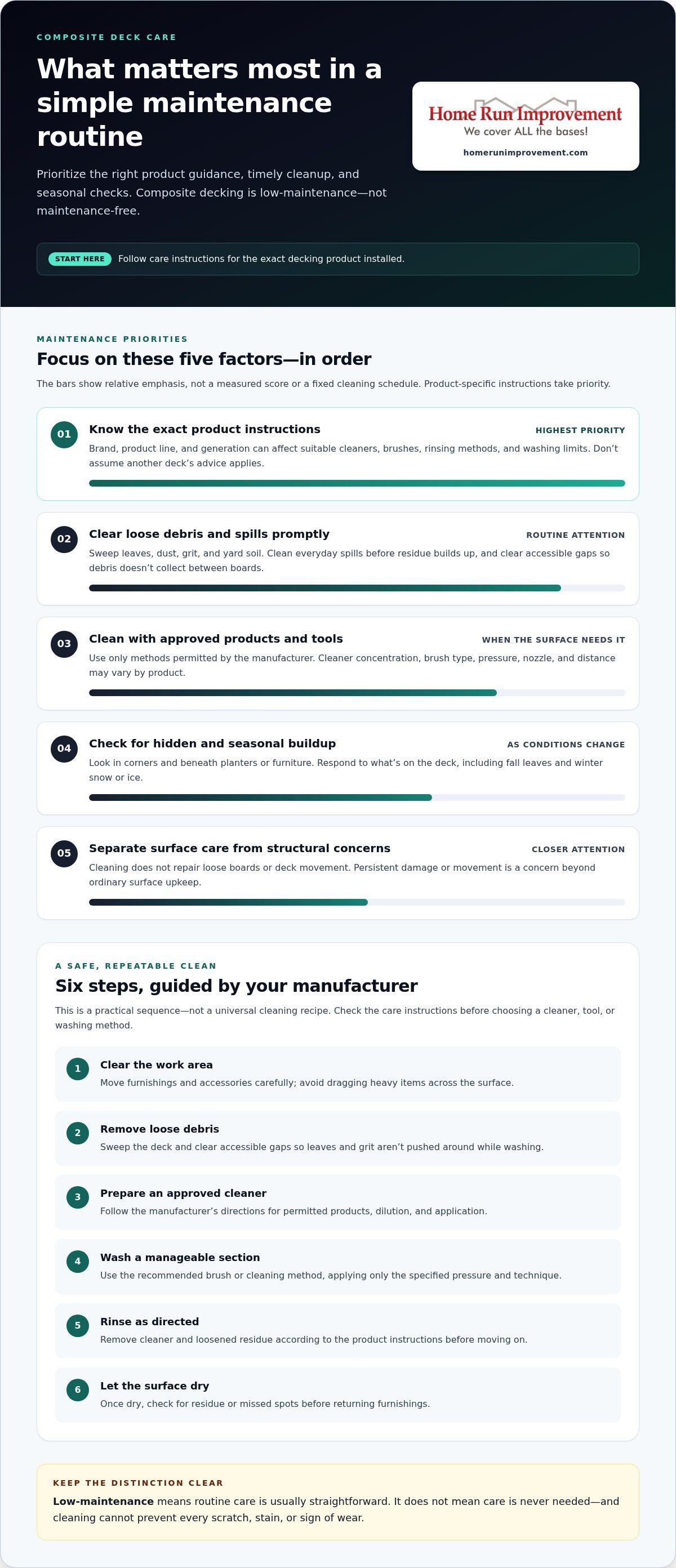
Knowing how to maintain a composite deck starts with one simple rule: follow the care instructions for the exact product installed. Composite boards don’t need the same routine as wood, and a cleaner or tool that works for one brand may damage another. A consistent routine of removing debris, cleaning as directed, and checking for changes helps keep upkeep manageable.

Leaves, spills, and seasonal grime are easier to address before they build up. Sweep regularly, use only approved cleaners and tools, and avoid aggressive methods that could harm the surface. TimberTech’s care and cleaning guidance shows why product-specific instructions matter.

This guide covers practical steps for routine cleaning, stain prevention, seasonal checks, and recognizing when a concern may need professional attention. Start with your manufacturer’s care instructions, then use the steps below to plan straightforward upkeep. Home Run Improvement provides residential decking services in the Louisville area for homeowners planning a project or addressing a decking concern.

Key Takeaways

  • Learn how to maintain a composite deck with a repeatable routine based on the manufacturer’s directions.
  • Clear leaves and spills promptly, and check beneath planters and furniture for hidden debris.
  • Use visible buildup, seasonal changes, and product care recommendations to guide your maintenance schedule.
  • Recognize when persistent damage or movement needs closer attention, and find residential decking help in the Louisville area.

How to Maintain a Composite Deck Without Treating It Like Wood

Composite decking is designed for lower-maintenance ownership, but it still needs routine care. Leaves, soil, food spills, and everyday foot traffic can leave debris or residue behind. A practical approach to how to maintain a composite deck includes clearing loose debris, cleaning as directed, and checking for seasonal buildup. Don’t assume every board needs the same treatment as traditional wood.

Composite boards vary by brand, product line, and manufacturing generation. Materials and surface finishes can affect which cleaners and tools are suitable, so check the care instructions for the exact product installed before choosing a cleaning method.

For a visual overview of routine composite deck care, watch this guide:


What regular composite deck maintenance actually involves

Routine care means removing loose debris, cleaning the surface with approved products and tools, and paying attention to seasonal buildup. Leaves can collect in corners or between boards. Dirt tracked in from the yard and residue from normal use may also need cleaning. Moving outdoor furniture occasionally helps you spot areas where debris has gathered.

Surface care is different from repairing loose boards or addressing movement in the deck structure. Cleaning helps keep the surface cared for, but it can’t prevent every scratch, stain, or sign of wear. Low-maintenance decking needs less intensive upkeep, not no maintenance at all.

Why the decking brand and product generation matter

Before cleaning, identify the decking brand and, if possible, its product line or generation. Keep installation paperwork or product details if available, then consult the manufacturer’s current care instructions for suitable cleaners, brushes, and rinsing methods. Guidance for TimberTech, Trex, and Fiberon products can differ, so one brand’s advice isn’t a universal rule.

The material category helps explain why a single cleaning recipe may not fit every board. Wood-plastic composites combine wood fibers or flour with thermoplastics, but surface construction and product formulations vary. The manufacturer’s directions take priority over generic online tips, especially before using a strong cleaner or unfamiliar tool.

Keep the distinction simple: low-maintenance means routine care is usually straightforward; no-maintenance would mean care is never needed. Composite decking is low-maintenance, not maintenance-free. Clear seasonal debris, clean as directed when the surface needs it, and treat structural concerns separately from ordinary upkeep.

How to Clean Composite Decking: A Safe, Repeatable Routine

A careful cleaning process starts before water or cleaner touches the boards. The right product and method depend on the decking manufacturer’s instructions. Don’t assume a cleaner, brush, or washing technique suitable for one deck will work for another. Follow the product’s directions for cleaner dilution, tools, rinsing, and any limits on washing equipment.

Prepare the deck before washing

Move chairs, tables, planters, and other furnishings carefully so you can reach the full surface. Sweep away loose leaves, dust, and grit first. This helps prevent debris from being scrubbed across the boards and makes it easier to see where cleaning is needed. Check the care instructions for your exact decking product before choosing a brush or solution.

Wash, rinse, and let the surface dry

Work in manageable sections so you can apply cleaner, scrub as directed, and rinse before residue dries. If the manufacturer recommends testing an approved cleaner in a discreet spot, follow that step before cleaning the full deck.

Clear the deck, remove loose debris, prepare the approved cleaner, wash in sections, rinse as directed, and let the surface dry. This sequence is a useful starting point, not a universal recipe. Cleaner concentration, brush type, and washing methods vary by product.

  1. Clear the work area. Move furniture and accessories to expose the boards. Take care not to drag heavy items across the surface.
  2. Remove loose debris. Sweep the deck and clear accessible gaps so leaves and grit don’t get pushed around during washing.
  3. Prepare the approved cleaner. Use only a product permitted by the manufacturer, following its directions for dilution and application. Check product guidance before using a general-purpose “composite deck cleaner.”
  4. Wash a manageable section. Use the recommended brush or cleaning method, applying only the pressure and technique specified for your deck.
  5. Rinse thoroughly. Remove cleaner and loosened residue according to the manufacturer’s instructions before moving to the next area.
  6. Allow the deck to dry. Let the surface dry before returning furnishings, then check for residue or missed spots.

Use caution with pressure washing. Some manufacturers permit it under defined conditions, while others recommend a different approach. Follow any limits on pressure, nozzle, or distance exactly. If your product’s care instructions don’t recommend pressure washing, don’t use it as a shortcut.

Composite decking materials can differ in composition and development. The American Chemical Society reports research into a composite decking material designed to store more carbon dioxide than its manufacture produces. This is another reason not to assume one cleaning formula fits every product.

If cleaning reveals a concern beyond routine surface care, connect with Home Run Improvement about residential decking help.

How to Prevent Stains, Scratches, and Seasonal Buildup

Preventive care is mostly about noticing what lands on the deck and clearing it before debris collects. Leaves, yard soil, and everyday spills can leave residue if they sit undisturbed. Prompt cleanup won’t prevent every mark, but it can keep ordinary messes from becoming a larger cleaning task.

For homeowners in Louisville and nearby communities, seasonal upkeep means responding to what’s on the surface, from fall leaves to winter snow and ice. The right winter cleanup method depends on the decking manufacturer’s guidance. Don’t assume a tool or treatment that suits one board is safe for another.

Reduce everyday staining and trapped moisture

Wipe up food and drink spills promptly, using a cleaning method approved for your product. Check beneath planters, mats, and furniture from time to time. These items can hide leaves, dirt, or damp debris. Move them carefully and lift furniture rather than dragging it to reduce the chance of scuffing the deck.

Keep the spaces between boards and nearby drainage paths clear of accumulated leaves and other loose debris. These areas are easy to overlook during a quick sweep. If residue remains, consult the manufacturer’s instructions before applying a stain treatment or stronger cleaner.

Adjust care for Kentucky weather and seasonal debris

In fall, remove leaves as they collect, especially around corners, furniture legs, and board gaps. After heavy buildup or severe weather, inspect the surface and clear debris rather than letting it accumulate. A brief check can reveal trapped material or a spill that needs attention.

Winter cleanup requires particular care. Before removing snow or ice, review the instructions for your decking brand and product generation. Use them to guide your choice of tools and any products applied to the surface. Don’t assume a metal-edged shovel, abrasive tool, salt, colored ice melt, or other treatment is suitable for all composite decking. For example, TimberTech’s care guidance is intended for its products, not a universal cleaning standard.

  • After a spill: Clean it using the product-specific method rather than reaching for a strong stain remover.
  • During leaf season: Check corners, spaces between boards, and beneath outdoor furnishings.
  • After snow or ice: Follow the manufacturer’s approved removal methods and product guidance.
  • After severe weather: Look for accumulated debris, visible marks, or areas that need attention.

A steady prevention routine is more controlled than trying several treatments after buildup has settled in. If you’re unsure whether a cleaner, tool, or winter product is appropriate, consult the current care instructions for your exact deck before using it. This helps protect the surface while keeping seasonal cleanup practical.


How Often Should You Maintain a Composite Deck?

There isn’t one cleaning calendar that fits every composite deck. A shaded deck beneath trees may collect leaves and debris faster than a more open, lightly used space. To decide how to maintain a composite deck, use visible conditions as your cue and follow the schedule and methods set by the manufacturer.

Think in terms of checks, targeted cleaning, and seasonal reviews rather than a rigid schedule. Clean a spill, cluster of leaves, or debris caught in a gap when you notice it. A full surface clean makes sense when the deck looks soiled and the product’s care instructions support it.

Build a simple seasonal maintenance checklist

During regular outdoor upkeep, scan the boards, gaps, and areas beneath furniture or planters. After a season of outdoor use or when seasonal debris has collected, clear what you find and review the surface. Let conditions guide the timing. The manufacturer’s current care recommendations remain the authority on cleaning methods and product-specific precautions.

  • Debris check: During routine outdoor use, look for leaves, dirt, or material collecting on boards and in gaps.
  • Spot cleanup: Address spills or visible residue when they appear, using care methods approved for your product.
  • Surface review: After seasonal buildup or severe weather, look for persistent marks, visible damage, or areas that need attention.
  • Care guidance review: Before using an unfamiliar cleaner or tool, consult the manufacturer’s instructions for your exact decking product.

Use this checklist as a flexible guide, not a substitute for product-specific instructions. Sun exposure, nearby trees, foot traffic, and how the deck is used all affect how quickly debris accumulates. TimberTech’s maintenance guidance, for example, applies to its decking products, not every brand’s schedule or cleaning methods.

Know when routine cleaning is not enough

Cleaning addresses surface residue; it doesn’t resolve every concern. If a mark remains after you’ve followed approved care steps, don’t escalate to a stronger product or abrasive tool without manufacturer guidance. A persistent stain or visible surface damage may need closer assessment. Note where the concern appears and what you’ve already tried.

Loose boards or noticeable movement are different from ordinary appearance issues. They may involve the board attachment or deck framing, which a surface wash can’t assess. Don’t assume the cause or attempt a repair based only on a photo. If the concern involves movement or damage, a professional assessment can help determine what needs attention. Homeowners in Louisville and nearby Southern Indiana communities can explore residential decking services for support with decking concerns.

For an assessment of a decking concern, contact Home Run Improvement.

When to Get Professional Help for a Composite Deck

Routine sweeping and manufacturer-approved cleaning are homeowner maintenance. A concern that remains after proper care, or a change in how the deck feels underfoot, calls for a different kind of attention. Cleaning can improve surface appearance, but it won’t explain why a board is damaged or moving.

Notice what has changed before deciding what to do next. A board that shifts, visible damage that persists, or a recurring issue in the same area may call for an assessment. These signs don’t identify a cause on their own, but they are good reasons to look beyond routine upkeep.

Signs that call for a closer decking assessment

Look for boards that seem loose or move underfoot, visible cracks or other damage, and concerns that return after you’ve followed the manufacturer’s care instructions. Avoid masking a damaged area with stain treatments, strong cleaners, or improvised repairs. These steps can obscure what you’re seeing or introduce another problem. Note where the concern appears and when you first noticed it.

Keep the assessment measured. A stubborn surface mark and a moving board aren’t the same kind of issue. The first may remain an appearance concern; the second may warrant a closer look at the board and the deck’s attachment or supporting components. Don’t assume the cause from appearance alone, and don’t treat a photo as a substitute for an on-site evaluation.

A local next step for Louisville-area homeowners

Home Run Improvement offers professional decking services for residential deck concerns in Louisville and nearby Southern Indiana communities. A closer assessment can help distinguish a surface issue from a concern involving movement or visible damage, and clarify what deserves attention next. The appropriate next step depends on the deck’s condition, not on a cleaning shortcut.

Knowing how to maintain a composite deck includes recognizing when a concern falls outside ordinary cleaning. If you’ve noticed a persistent problem, share what you’re seeing and where it occurs. Home Run Improvement’s residential decking services provide a local resource for homeowners seeking professional help with their deck.

For a professional assessment of a residential decking concern, contact Home Run Improvement.

Make Your Next Decking Decision With Confidence

A deck concern doesn’t always call for a major project, but it does deserve a clear next step. If cleaning hasn’t resolved a persistent issue, or you’re considering changes to your outdoor space, a professional perspective can help you understand what to address and plan accordingly. Knowing how to maintain a composite deck is useful, and knowing when to bring in experienced help can make the next decision easier.

Home Run Improvement is locally owned and operated in the Louisville area, offering residential decking services and free estimates. Whether you’re evaluating a concern or planning a decking project, start with a conversation about what your home needs.

Talk with Home Run Improvement about your decking project

With clear information and the right support, you can move forward with greater confidence in your outdoor space.

Frequently Asked Questions

Is composite decking maintenance-free?

No. Composite decking is generally lower-maintenance than wood, but it still needs care. Remove debris, clean as needed, and follow product-specific directions. Routine surface cleaning is different from sanding, staining, or sealing. Don’t assume those treatments are necessary or appropriate for every composite product. Board materials and finishes vary by manufacturer and product line, so read the care guidance for your exact decking before applying a treatment or planning upkeep.

How often should you clean a composite deck?

No single schedule fits every composite deck. Check for leaves, tracked-in soil, and spills, then clean when conditions call for it and follow the manufacturer’s directions. Shade, nearby trees, foot traffic, and outdoor dining can affect how quickly residue builds up. For decks in Louisville, Southern Indiana, Anchorage, Crestwood, Glenview, Hurstbourne, Indian Hills, Jeffersontown, Prospect, Clarksville, Bardstown, and Mt. Washington, seasonal reviews are useful prompts, not fixed rules for how to maintain a composite deck.

Can you pressure wash a composite deck?

Sometimes, but pressure-washing rules vary by decking product and may set limits on equipment or technique. Before using a pressure washer, consult the current care instructions for your exact product. Don’t assume one setting or approach is safe for every brand. If pressure washing isn’t recommended, use the cleaning method and tools the manufacturer approves instead. This helps keep routine cleanup from causing avoidable surface damage.

What is the best cleaner for composite decking?

The right cleaner depends on the decking brand, product generation, and residue you’re addressing. Check the product’s care guide before buying or applying a cleaner, since a product labeled for composite decking may not suit every surface. If the manufacturer permits the cleaner, follow its label directions and test it in a discreet area if advised. Don’t mix cleaning products or improvise chemical combinations.

Can you use salt or ice melt on composite decking?

Winter-product guidance differs by manufacturer, and some de-icers may affect certain decking surfaces. Don’t assume salt or a particular ice melt is safe for every composite deck. Before applying a de-icer, consult the care instructions for your exact product and use only the snow and ice removal methods it permits. If the instructions don’t address a product you’re considering, avoid applying it until you have product-specific guidance.

How do you remove a stain from a composite deck?

Start by identifying the decking product and checking its cleaning instructions. The appropriate method depends on both the stain and the manufacturer’s guidance, so avoid harsh chemicals or abrasive tools unless the product instructions specifically allow them. Clean a fresh spill promptly using an approved method. If a mark remains after you’ve followed the recommended steps, don’t keep escalating treatments; consider having the concern assessed professionally.

Does a composite deck need to be sealed or stained?

Don’t assume composite decking needs the same sealing or staining routine as wood. Care requirements depend on the material and surface finish, and an unapproved coating may conflict with the manufacturer’s guidance. Before applying sealant, stain, or another finish, consult the care instructions for the exact decking product. If the product guidance doesn’t call for a coating, stick to approved cleaning and care methods.


By Pat McIntyre • October 15, 2026
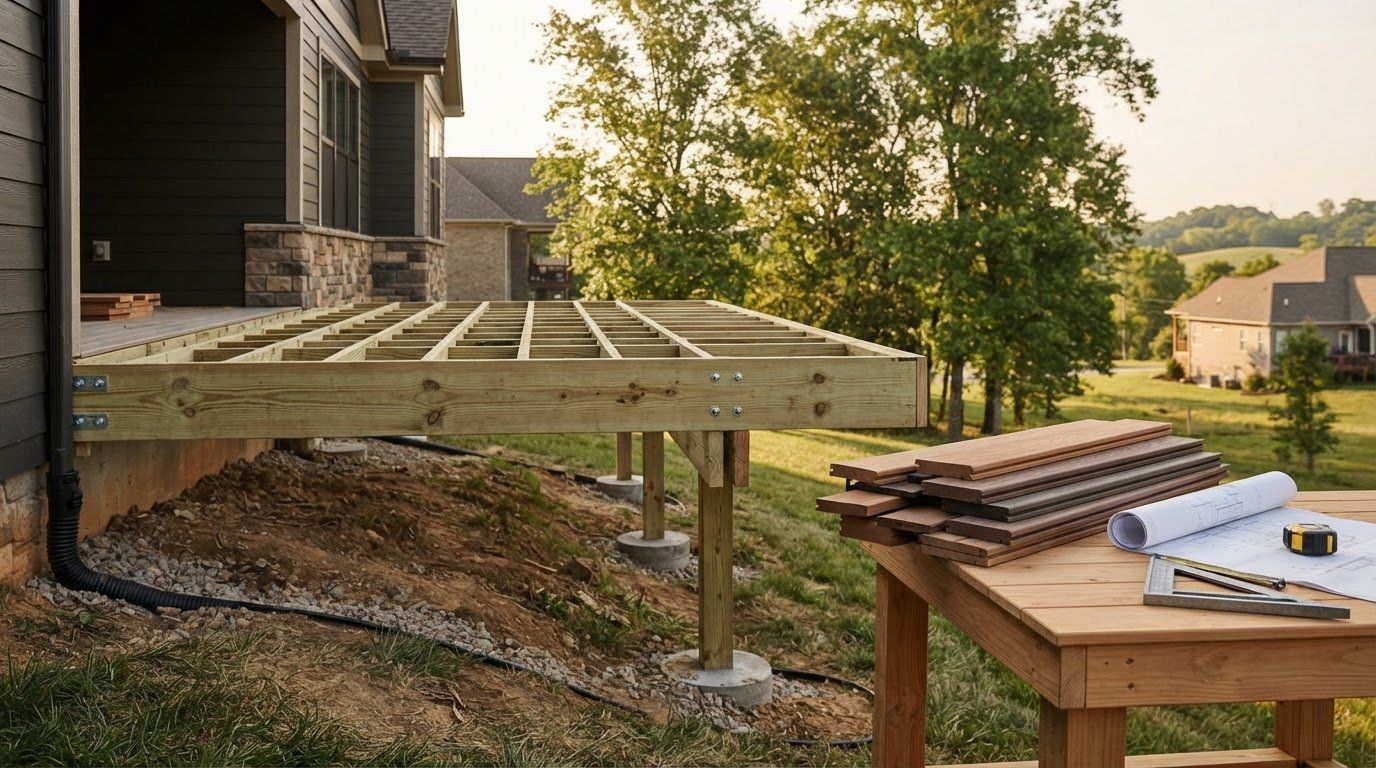
What if the most expensive deck mistake is hidden before the first board goes down? A weak ledger connection, footings planned without considering site conditions, or framing that doesn’t match the decking can create safety risks and costly rework. The common deck building mistakes to avoid often start in the planning stage, long before the finished surface is visible. It’s understandable to focus first on a deck’s size, appearance, and materials. But structural details, product-specific installation instructions, and local requirements matter just as much. Making those decisions early can help protect your home and your investment. This checklist explains which planning, framing, material, and safety issues deserve attention before construction begins. It also covers where project-specific professional judgment matters, including confirming current requirements with your local building department and reviewing applicable guidance from the International Code Council . For homeowners in Louisville, KY, Southern IN, Anchorage, KY, Crestwood, KY, Glenview, KY, Hurstbourne, KY, Indian Hills, KY, Jeffersontown, KY, Prospect, KY, Clarksville, IN, Bardstown, KY, and Mt Washington, KY, careful planning and experienced local workmanship can make the difference between a deck that simply looks finished and one built with stability in mind. Home Run Improvement provides residential decking services to help homeowners plan and build their projects. Key Takeaways Review the plans before construction so the layout, access, and project requirements are clear before work begins. Learn how to spot common deck building mistakes to avoid, and why visible surface issues may point to problems beneath the boards. Compare wood and composite decking based on care expectations and product-specific installation instructions. Use a stage-by-stage checklist to review framing, stairs, guardrails, and finish quality against approved plans and current local requirements. Consider professional planning when the site is complex, structural details are uncertain, or material instructions need careful interpretation. Common Deck Building Mistakes to Avoid Before Construction Begins Many serious deck problems begin as preventable planning oversights, not mistakes made after the boards are installed. A layout that ignores drainage or a plan that doesn’t reflect the site can lead to awkward access, water issues, or expensive changes once construction is underway. Use this early-stage checklist to review key decisions before framing and decking begin. The right details depend on the property, the deck’s design, and the instructions for the selected materials. A general overview of deck structures, uses, and materials is available in the deck (building) Wikipedia article , but it can’t replace project-specific planning. Homeowners in the area can also review Home Run Improvement’s residential decking services in Louisville as they consider project requirements and options. Skipping site assessment, measurements, and a workable layout A deck plan should fit the ground and the way people move through the home. If the yard slopes, water may collect near the house or flow toward the planned deck area. If the layout overlooks a door’s swing, a frequently used path, or an existing step, the finished space may feel cramped or difficult to access. Before settling on a design, record the available dimensions and intended uses. Note door locations, paths, changes in grade, and where water travels during rain. Think through practical details, too: where people will enter the deck, how they’ll move between the house and yard, and whether the layout leaves clear access to areas that need maintenance. These observations give a designer or contractor useful information before the framing plan is finalized. Don’t treat drainage as an afterthought. Consider how the deck’s placement relates to the home and surrounding ground, and flag areas where water already pools or runs. A visual site review can identify questions to resolve before construction, though it isn’t a substitute for professional judgment about grading, structure, or site-specific conditions. Starting without checking current local requirements Permit and building requirements can depend on the property’s location and project details. Before work starts, verify what applies to your specific address with the relevant building department. For Louisville properties, begin with the Louisville Metro Construction Review resources. In Southern Indiana, consult the official building or planning department serving the property’s city or county. Don’t rely on an old project, a neighbor’s experience, or a general online checklist as proof that the same requirements apply to your deck. Ask the responsible authority for current information about permits, plan review, and applicable building requirements. Keep that guidance with your project documents so the design and construction can be planned around it. Confirming requirements early is a practical step, not red tape to handle after materials arrive. Structural Deck Mistakes That Can Weaken the Frame A finished deck surface can look clean and solid while hiding problems in the frame beneath it. The boards don’t strengthen a weak connection or correct supports that weren’t planned for the structure. That’s why common deck building mistakes to avoid include errors in the ledger, posts, beams, footings, and joist layout, even when they aren’t obvious from above. Look for clues, but don’t treat them as a diagnosis. A deck that feels bouncy, has uneven boards, or shows movement may need closer inspection. Those symptoms alone can’t identify the cause. Structural dimensions and connections must follow the approved plans, applicable requirements, and the chosen decking’s installation instructions. Sound framing depends on coordinated supports, connections, and product-specific spacing. Weak ledger connections, beams, posts, and footings The ledger connects the deck to the house, so it must attach to suitable house framing, not simply to siding or another exterior finish. The connection and its protection from water need to be planned together. If the attachment is uncertain, don’t assume that adding visible fasteners will solve the problem. Follow the load path from the ledger and beams through the posts to stable support points. Beam-to-post connections should match the approved design, and footings should support the structure as planned. If you see shifting, separation, sagging, or signs of decay, treat them as reasons to seek a qualified assessment, not proof of one specific defect. The North American Deck and Railing Association (NADRA) guidelines offer additional safety and education resources for homeowners. Incorrect joist spacing, alignment, and blocking Joist spacing isn’t a one-size-fits-all measurement. It depends on the decking product, installation pattern, and manufacturer’s instructions. If framing is laid out for a different product or pattern, boards may not have the support the installation requires. Review the selected product’s current instructions before framing is complete, and keep the guidance with the project documents. For a product-specific example, TimberTech’s published guidance calls for blocking at intervals of 4 to 6 feet in relevant applications. That’s TimberTech guidance, not a universal rule for every deck. Follow the instructions for the actual decking system and approved plans. See TimberTech installation guides for product-specific details. Check that joists run in the intended direction, remain aligned, and provide consistent support where boards meet or the layout changes. TimberTech’s guidance also specifies joist spacing based on the product: spacing should not exceed 16 inches on center, while TT and Advanced PVC Max boards can allow up to 24 inches on center. Closer spacing of 12 inches or less can create a more rigid feel. These details are product-specific, so follow the instructions for the decking you select. If the existing frame or house attachment is uncertain, get professional judgment before covering it with decking. A careful framing review is easier while connections are still visible. Homeowners planning a Louisville-area deck can learn more about Home Run Improvement’s decking services . Decking, Fastener, and Water-Management Mistakes to Catch The right deck surface is the one that fits your priorities and can be installed correctly on the planned frame. Wood and composite decking differ in appearance, care expectations, and installation instructions. Wood may need periodic cleaning and protective finishes, depending on the product and exposure. Composite has its own care requirements and isn’t maintenance-free by default. Compare the upkeep you’re comfortable with alongside the look and feel you want. Don’t select boards by appearance alone. Different products and board profiles can require different framing details, spacing, fastening methods, and edge clearances. If you choose the decking after the frame is built, the structure may not match the installation requirements. Review those instructions while planning, then make sure the framing and materials are coordinated. Homeowners considering a Louisville-area project can include Home Run Improvement’s residential decking services in their material planning. Choosing decking without considering installation requirements Compare the expected upkeep, appearance, and installation guidance for each option before settling on a material. Check instructions for the specific product, not just general advice about wood or composite. Products within the same broad category can have different requirements. Follow the selected decking manufacturer’s instructions for fasteners, spacing, and installation. When the plan and product guidance don’t align, resolve the mismatch before boards are installed. Using the wrong fasteners or overlooking flashing Fasteners need to suit both the decking material and the application. An incompatible or incorrectly installed fastener can affect how boards sit, hold, or appear over time. Some systems call for concealed fasteners, while others specify a particular face-fastening approach. Don’t substitute based on appearance or convenience. Follow the product’s instructions for fastener type, placement, and installation. Water management matters where the deck meets the house. Properly planned flashing helps direct water away from the connection and the building materials behind it. If flashing is missing, damaged, or installed in a way that traps water, moisture can reach areas that should remain protected. A neat surface won’t correct a poor water-management detail underneath. Before covering the frame, pause if you see questionable connections, staining, soft or deteriorated wood, or signs that water may be getting behind the structure. These observations don’t identify the cause on their own, but they warrant assessment before work proceeds. Don’t conceal a concern beneath new decking. Resolving it while the relevant area is accessible can help prevent avoidable rework and protect the finished installation. A Practical Deck-Building Checklist for Safety and Finish Quality A review at each project stage helps catch mismatches before they’re hidden by the next layer of work. Use this checklist to compare the plans, installed work, and product instructions. It can help you spot common deck building mistakes to avoid, but it doesn’t replace a professional assessment or the authority’s review of requirements for your property. Review the plan before materials and framing are committed Before construction starts, make sure the written plan reflects how you intend to use the deck and how it fits the house and yard. Check access, drainage, structural details, selected materials, and applicable local requirements. Resolve unanswered questions before ordering materials or beginning framing. Confirm the layout. Compare the dimensions and planned use with house access, door locations, paths, grade, and water movement around the site. Make sure stairs and routes to the yard are accounted for, not added as an afterthought. Match the materials to the plans. Check that the specified decking and framing details work together. Keep the selected product’s installation instructions with the project documents so spacing, fastening, and other requirements can be reviewed as work proceeds. Verify current local requirements. Confirm which permits and building requirements apply to the specific property with the responsible local authority. Louisville homeowners can consult the official Louisville Metro Construction Review information. For Southern Indiana properties, use the official building or planning resources for the city or county where the home is located. Requirements can vary by jurisdiction, so don’t rely on a different property’s project as a guide. Inspect framing, stairs, railings, and finishing details During construction, review each stage while the work is still visible. Use the approved plans and product instructions as the reference, rather than relying only on how the deck looks from above. If a detail doesn’t appear to match, pause and have it addressed before the next stage covers it. Review the frame. Compare framing alignment, connections, joist spacing, and blocking with the plans and applicable product instructions. Look for changes from the documented design that haven’t been resolved. Check stairs, guardrails, and access. Assess their placement and construction against the approved plans and current requirements for the property. Confirm that doors, stairs, and routes across the deck remain usable and unobstructed. Look over the finish. Before considering the project complete, check for incomplete flashing, exposed or unsuitable fasteners, loose-looking boards, and signs of water-management problems. These observations don’t diagnose a cause, but they’re reasons to request a closer review before accepting the finished work. A steady, documented review makes it easier to raise concerns at the right time. Home Run Improvement provides residential decking services in Louisville and its wider service area. Home Run Improvement residential decking services Avoid Deck-Building Mistakes With Professional Project Planning A homeowner checklist can reveal questions that need attention, but it can’t replace project-specific judgment. Planning support is especially useful when the framing is uncertain, the deck’s connection to the house needs review, the site has challenging slopes or drainage, or the chosen material’s installation instructions are unclear. Addressing those details before construction advances can help prevent avoidable changes later. When a deck project benefits from experienced oversight Structural uncertainty deserves careful attention. If the existing frame is difficult to assess, the house attachment raises questions, or the design includes multiple levels, unusual angles, or tight access, a professional can help connect site conditions with the structural plan and selected materials. That means looking at how the whole project fits together, not treating each decision in isolation. Experienced planning also helps surface conflicts early. For example, a layout may look workable on paper but require adjustments for the property’s grade, water movement, door access, or product-specific framing instructions. A qualified deck professional can help review those conditions and plan construction details against the project documents and applicable requirements. Good planning reduces uncertainty, but it doesn’t eliminate normal upkeep or prevent every future issue. Plan a Louisville-area deck project with a clear next step For homeowners in Louisville and Home Run Improvement’s wider service area, professional deck-building services provide a practical path from early planning to construction. A project discussion can bring the intended layout, material choice, site conditions, and structural questions into one plan. Home Run Improvement offers free estimates for residential decking projects. Home Run Improvement’s workmanship is backed by a 10-year warranty. Review the warranty terms to understand the stated coverage and its applicability to your project. Before work begins, gather any existing plans, note your intended uses for the deck, and record questions about the site or materials. Clear information helps make project planning more focused. If a structural detail remains uncertain, resolve it before it disappears beneath the finished surface. Residential decking and project planning Make Your Deck Plan the Strongest Starting Point A durable deck begins with decisions that fit your home, your plans, and the way you want to use the space. If a detail feels uncertain, resolve it before construction moves forward. That small pause can help prevent a rushed choice from becoming a correction later. Use the common deck building mistakes to avoid as a prompt to prepare for a project conversation: note what matters most to you, gather any existing plans, and identify questions about the site or materials. A clear starting point helps turn ideas into a practical plan and gives you more confidence in the decisions ahead. Louisville-area deck planning information With thoughtful preparation and the right guidance, you can move ahead with greater clarity and build a deck designed to serve your home well. Frequently Asked Questions Do I need a permit to build a deck in Louisville, Kentucky? A permit may be required, depending on your property and project details, so verify before construction begins. Check current guidance with Louisville Metro Construction Review, the official local resource. If your home is outside Louisville Metro, consult the authority for that address. Assuming a neighbor’s deck followed the same process can lead to problems. Checking requirements early is one of the common deck building mistakes to avoid. Can I attach a deck ledger board over siding? No, siding isn’t a structural attachment point for a deck ledger. The ledger needs to connect to suitable house framing, with the exterior finish and water-management details handled appropriately. Simply driving fasteners through siding can leave the ledger separated from the framing or create a path for water. If you can’t tell what’s behind the siding, have the attachment assessed before building around it. How far apart should deck joists be? There isn’t one spacing that suits every deck. The decking product, board profile, and installation pattern determine the required support, so use the instructions for the exact material selected. For instance, diagonal layouts may need different framing support than boards installed perpendicular to joists. TimberTech provides product-specific joist-spacing guidance. Don’t apply one manufacturer’s directions to another product. What happens if a deck is built without proper flashing? Water can get behind the ledger or into the house-side framing, where it may contribute to moisture damage and deterioration that isn’t visible from the deck surface. Flashing helps direct water away from that connection, but it can’t correct framing that’s already damaged. If you notice staining, soft wood, or signs of moisture near the house attachment, have the area assessed before covering it or adding new decking. Can new decking be installed over an existing deck frame? Sometimes, but only after the frame is assessed for its condition and compatibility with the new boards. Look beyond the visible surface: check for movement, deterioration, misalignment, and framing that doesn’t match the new product’s instructions. A frame that supported one type of decking may not suit another product or layout. If the structure or house connection is uncertain, get a qualified review before covering it. When are guardrails required on a deck? Requirements depend on the locally adopted building rules and the deck’s height. The research guidance for residential decks identifies guardrails for decks more than 30 inches above ground, with a minimum height of 36 inches, but local requirements may differ. Check the rules that apply to your property and compare the completed railings with approved plans. Include stairs and transitions in that review, since safety details apply beyond the deck’s edge. Is composite decking installed the same way as wood decking? No. Composite and wood decking can require different framing, spacing, fasteners, and installation methods. A composite board may use a specific fastening system or have support requirements that differ from the lumber boards in a typical wood design. Follow the instructions for the chosen product and board profile, including details for edges and joints. Matching the frame and fasteners to the material helps prevent fit and finish problems. Planning a deck in Louisville, Southern Indiana, or a nearby community? Request a free estimate from Home Run Improvement for your residential decking project . 
By Pat McIntyre • October 8, 2026
What if the shingle price you see online has little to do with what your roof actually needs? The Owens Corning shingles price Louisville homeowners pay depends on more than the shingles. Roof size and shape, existing roofing layers, and the condition of the materials beneath them all help define the project scope. It’s reasonable to want a clear number and an easy way to compare shingle options. An estimate based on a generic roof can miss important details, from underlayment and ventilation to flashing around roof openings. This guide explains the main factors behind a home-specific estimate, what to compare among Owens Corning shingles, and what to expect from a professional roof assessment. For manufacturer information on shingle options, visit Owens Corning’s roofing shingle page . Home Run Improvement is locally owned and operated in Louisville and is an Owens Corning Preferred Contractor. The company provides roofing services in Louisville, Southern Indiana, Anchorage, Crestwood, Glenview, Hurstbourne, Indian Hills, Jeffersontown, Prospect, Clarksville, Bardstown, and Mt. Washington. A roof assessment helps match product selection and installation details to your home. Home Run Improvement offers free estimates and a 10-year craftsmanship warranty, so you can review the proposed scope before deciding how to move forward. Key Takeaways The Owens Corning shingles price Louisville homeowners receive depends on roof dimensions, layout, condition, and project scope, not just the shingle choice. Compare shingle options by the priorities that matter to your home, such as appearance and specific documented performance features. Some roof conditions are hidden beneath existing materials, so the scope may change if issues are uncovered during removal. Compare estimates line by line, including materials, labor, removal, cleanup, and warranty details. A lower total may cover less work. A professional roof assessment helps connect the selected materials and installation scope to your home’s actual needs. Why Owens Corning Shingles Price in Louisville Varies from Roof to Roof Online averages can provide a starting point, but they can’t account for every roof or the work a particular project requires. The Owens Corning shingles price Louisville homeowners are quoted is a project-specific estimate, not a fixed price for shingles alone. Roof dimensions and pitch affect material quantities and labor. Valleys, dormers, and other features can add installation complexity. Shingle selection is only one part of the scope. An estimate may also include labor, removal of existing roofing, roof-deck preparation, underlayment, flashing, and cleanup. Access, the number of existing layers, and the deck’s condition all affect the work required. For a basic overview of the material itself, see this explanation of asphalt shingles . For a visual introduction to Owens Corning shingles, watch this review from Hoel Roofing & Remodeling: What does an Owens Corning shingle roof estimate cover? Shingle materials are only one part of the roofing work described in an estimate. Depending on the home, the written scope may include tear-off and disposal, surface preparation, underlayment, flashing, installation, and cleanup. A total without a clear scope doesn’t show which tasks or materials are included. Compare written estimates item by item, not by headline total alone. Why does a Louisville roof need a home-specific assessment? A proper assessment considers the roof’s shape, pitch, access, visible condition, and existing roofing materials. A simple roof and one with multiple planes or difficult access may require different installation approaches. The number of existing layers can also affect removal work. Some conditions, including damage to the underlying deck, may not become clear until existing materials are removed. The estimate should explain the expected scope and how newly discovered conditions will be addressed. A clear assessment connects the selected shingles and roofing-system components to the work your home needs. Roof estimates vary because each home has a different combination of dimensions, access, existing materials, and installation requirements. Home Run Improvement provides residential roofing in Louisville . Learn more about its Louisville roofing services . How Owens Corning Shingle Options Affect a Louisville Roof Estimate Shingle selection affects the materials portion of a roofing estimate. Start your comparison with what matters to you: appearance, algae resistance, or impact resistance. No single option suits every home. The Owens Corning shingles price Louisville homeowners receive reflects the selected materials alongside the rest of the project scope. Compare the features of the specific product and its installation details instead of choosing by product name alone. Oakridge® and TruDefinition® Duration® are Owens Corning product families. The manufacturer also identifies SureNail® Technology as a feature. When comparing shingles, check the current product documentation for the specific product’s features, ratings, and warranty terms. For details, review Owens Corning shingle information . What differences should homeowners compare between shingle lines? Start with the benefits you want, then look for them in the manufacturer’s product information. If algae resistance or impact resistance matters to you, confirm that the documentation identifies the feature for the specific shingle under consideration. Ratings and warranty terms can differ by product, so don’t assume a feature or coverage applies across an entire product family. Product categoryFeature to reviewQuestion for the estimate reviewArchitectural shingle familyAppearance and documented product featuresWhich exact product is specified, and what does the manufacturer’s documentation say about it?Algae-resistant optionAlgae-resistance claim, if stated for that productDoes the manufacturer identify this feature for the selected shingle?Impact-resistant optionDocumented impact-resistance detailsWhat rating and warranty terms apply to this specific product? Which Owens Corning features may matter for your home? Focus on features that address your priorities, rather than assuming one product line is universally superior. A homeowner focused on appearance may weigh options differently from someone comparing documented resistance features. Match SureNail® Technology and other named features to the specific product, using the manufacturer’s materials rather than assuming every shingle includes them. As you review proposals, compare the specified shingle, installation scope, and applicable warranty information together. The Federal Trade Commission offers guidance on how to evaluate home-improvement proposals . For a project-specific review of roofing options, you can request a Louisville roof estimate . Which Roof Conditions and Project Details Change the Estimate? A roof estimate depends on what can be assessed before work begins and what may become visible only after existing roofing materials are removed. Roof size, pitch, shape, access, and visible wear help define the expected work. But a visual assessment can’t always reveal the condition of the roof deck beneath the shingles. If removal exposes damage, the project scope may need to change. The main estimate variables are roof area and geometry, access, existing materials, and any repairs or system details identified during the project. That’s why the Owens Corning shingles price Louisville homeowners are quoted should reflect the actual roof layout and a clearly described scope, not a generic assumption about the home. How roof size, pitch, and access shape the work The roof’s area helps determine how much material is needed. Its geometry matters, too. Ridges, valleys, dormers, and other changes in plane can require more detailed installation than a simpler layout. Pitch and access affect how crews approach the work and plan material handling, but they don’t automatically mean a particular surcharge. Review the estimate’s description of the roof areas and installation scope to make sure it matches your home. How decking, ventilation, and flashing affect project scope Some conditions are hidden. The roof deck, the structural surface beneath the roofing, can be inspected more fully after tear-off. If damaged areas are found, repairs may become part of the project scope. A clear estimate explains how this type of finding will be addressed instead of suggesting every hidden condition can be identified beforehand. Ventilation and flashing are also important details to review in writing. Ventilation supports airflow through the roof system, while flashing helps manage water around joints and roof openings. Check that the proposal identifies the work included for these components, rather than focusing only on shingles. For broader context about asphalt roofing materials and installation, the Asphalt Roofing Manufacturers Association offers homeowner resources. Separating expected work from potential discoveries makes an estimate easier to understand. Before work begins, review the roof areas, removal and preparation tasks, and planned work on system details. During installation, newly exposed deck conditions may require a discussion about the scope. Home Run Improvement’s roofing project information offers more context for planning a roof project. How to Compare Owens Corning Roof Estimates Without Focusing Only on Price A lower total doesn’t automatically mean better value. It may reflect a different scope, such as fewer preparation details, different materials, or cleanup that isn’t described. To compare Owens Corning roof estimates fairly, line up what each proposal includes and identify what the price covers before weighing the totals. What should a complete roofing estimate make clear? Use this framework to review written estimates side by side: Scope: Check that the roof areas and planned work are clearly described, including removal of existing materials and preparation. Materials: Confirm the proposed shingle product and the other roofing components included. Labor and installation: Review the installation work covered and how potential deck repairs or other scope changes will be handled. Cleanup: Look for a clear description of debris removal and site cleanup instead of assuming these tasks are included. Warranty: Identify who provides each warranty, what coverage it represents, and which terms apply. If an estimate is vague about a component, it’s harder to make a direct comparison. A detailed scope helps you understand whether different totals reflect different work, materials, or coverage, rather than a difference in value alone. Consider the Owens Corning shingles price Louisville homeowners see alongside these details, not in isolation. How do contractor credentials and warranties fit the decision? Home Run Improvement is an Owens Corning Preferred Contractor. This credential is relevant when reviewing an Owens Corning roof project, but it isn’t a manufacturer warranty and doesn’t replace the need to understand the written scope. Home Run Improvement also backs its workmanship with a 10-year craftsmanship warranty . This company warranty covers craftsmanship and is separate from manufacturer coverage for roofing products. Manufacturer warranty terms and eligibility can vary, so review the current documents for the selected materials and project conditions. You can read more about the company’s craftsmanship warranty . Compare complete proposals by reviewing what will be installed, how the work is defined, what cleanup is included, and how each warranty is described. This gives you a sounder basis for a decision than the bottom line alone. Louisville roofing estimate information Get an Owens Corning Shingles Estimate for Your Louisville Home A useful roof estimate connects three things: the roof’s condition, the materials you’re considering, and the work needed to complete the project. That’s why the Owens Corning shingles price Louisville homeowners receive should be based on their home, not an online average. Home Run Improvement provides free estimates and tailors the project scope to the roof being assessed. Before the assessment, note any visible concerns, known leak history, and preferred project timing. You can also identify what matters most in a shingle, such as appearance or a specific documented performance feature. These details help focus the discussion. An in-person project review lets the estimate account for the roof’s layout and visible condition rather than relying on assumptions from a screen. What information helps prepare for a roof estimate? Gather what you know, but don’t worry if you can’t identify the source of a roof concern. Notes about where you’ve seen signs of trouble, when you first noticed them, and your material priorities give the assessment a helpful starting point. The review can then consider the roof itself and clarify which details affect the proposed scope. What happens after requesting a Louisville roofing estimate? Expect a conversation about your home, the roof’s condition, shingle preferences, and the work described in the estimate. Review the proposed scope carefully. Ask about the preparation and installation included, how possible changes are handled, and how craftsmanship warranty language differs from manufacturer coverage. Clear answers help you understand the project before making a decision. Home Run Improvement is locally owned and operated in Louisville and is an Owens Corning Preferred Contractor. Visit the page about its Louisville roofing services for an overview. A home-specific review is the practical next step toward an estimate shaped around your roof and priorities. Details for a Louisville roof estimate Move Forward With a Clearer Roofing Plan A reliable Owens Corning shingles price Louisville estimate starts with your roof’s actual condition and layout. Shingle choice matters, but so do installation details, preparation, and any issues that become visible during the project. Compare written scopes and warranty terms alongside the total so you understand what each proposal includes. Home Run Improvement is an Owens Corning Preferred Contractor and provides free estimates for residential roofing projects. The company also backs its workmanship with a 10-year craftsmanship warranty, separate from manufacturer coverage. A home-specific assessment can help you review material preferences, understand the proposed scope, and make an informed decision. With clear project details in hand, you can move ahead with a roofing plan shaped around your home. Frequently Asked Questions How much do Owens Corning shingles cost in Louisville? There isn’t one set price for an Owens Corning shingle roof in Louisville because each estimate depends on the home and the work involved. The Owens Corning shingles price Louisville homeowners receive can vary with roof dimensions, pitch, layout, access, existing roofing layers, and selected materials. A project-specific assessment helps establish the scope, including installation and other roofing-system work, rather than relying on a general online figure. What affects the cost of an Owens Corning shingle roof? The main factors are the roof’s size and shape, accessibility, existing roofing materials, and selected shingle option. Labor and system details, such as underlayment, flashing, and ventilation, also form part of the project scope. Conditions beneath existing shingles may not be visible before removal. If the roof deck needs attention, the estimate may need to account for that work. Are Owens Corning Duration shingles worth considering? They may be worth considering if the documented features of the specific product align with your priorities for appearance or performance. Compare the Duration option named in the estimate with other choices using current Owens Corning product information, including applicable ratings and warranty terms. Don’t assume every feature or warranty applies to every product in a family. The right fit depends on your preferences and the complete roofing scope, not the product name alone. Does a roof estimate include tear-off and roof deck repairs? Check the written scope to see whether removal and disposal of existing roofing are included. Roof deck repairs may be difficult to assess fully until the shingles are removed and the underlying surface can be inspected. If damage is uncovered, additional work may be needed. A clear estimate describes the planned removal and explains how newly discovered conditions and possible scope changes will be handled. Is Home Run Improvement an Owens Corning Preferred Contractor? Yes. Home Run Improvement is an Owens Corning Preferred Contractor. This is the company’s contractor status, not a statement that it is a Platinum Preferred Contractor. When reviewing a roofing proposal, consider this credential alongside the product specified, installation scope, and applicable warranty documents. Manufacturer warranty eligibility and terms depend on current product documentation and project conditions, so review those details rather than assuming coverage is identical for every shingle or installation. Does Home Run Improvement offer free roof estimates in Louisville? Yes. Home Run Improvement offers free estimates for residential roofing projects in Louisville. An assessment helps connect the estimate to the home’s roof condition, layout, and material preferences. You can share visible concerns, known leak history, and the shingle features you’re considering to guide the discussion. The written scope is the key reference for understanding the proposed work and comparing project details. What is the difference between a shingle warranty and a workmanship warranty? A shingle warranty is provided by the manufacturer and describes coverage associated with the roofing product under its applicable terms. A workmanship warranty is a separate commitment related to installation craftsmanship. Home Run Improvement offers a 10-year craftsmanship warranty. It is not an Owens Corning manufacturer warranty. Review each warranty document for its issuer, coverage, terms, and any eligibility requirements that apply to the project. Request a free Louisville roofing estimate from Home Run Improvement . 
By Pat McIntyre • October 1, 2026
Does a new deck add value to a home in KY? It can, but resale appeal depends on more than the project itself. A deck that suits the house, makes practical use of the yard, and is thoughtfully built is more likely to feel like a meaningful upgrade than one that’s oversized, awkwardly placed, or showing signs of poor workmanship. It’s reasonable to want a clear return before investing, especially because material choices and project scope affect the total cost. But a deck’s value isn’t limited to resale: it can also create usable outdoor space and make a home more enjoyable while you live there. This article explains what can shape a new deck’s appeal to Kentucky buyers, how to weigh financial and lifestyle value, and what to consider before building. You’ll also find questions to ask a contractor about design, materials, scope, and construction quality, so you can decide whether a deck fits your home, yard, and local market. Key Takeaways A new deck can improve usability and buyer appeal, but resale value isn’t guaranteed. Consider everyday enjoyment and how the home presents alongside potential resale contribution. To judge whether does a new deck add value to a home in KY, compare the proposed deck with your home’s layout, yard, and nearby properties. Compare materials by appearance, care needs, durability, and what matters most to your household. Confirm details for the products being proposed. Set your goals before choosing a design, then use comparable homes and local insight to put resale expectations in context. Ask a Louisville-area contractor how the proposed scope, materials, and workmanship suit your property, and review relevant completed projects. Does a New Deck Add Value to a Home in Kentucky? Understand the Types of Value Yes, a new deck can improve a home’s usability and appeal to buyers, but it won’t guarantee a higher sale price or full recoupment. The answer to “does a new deck add value to a home in KY” depends on how well the deck fits the property, its condition and design, and what local buyers are looking for. A deck may add everyday enjoyment and create a more inviting presentation, even if the eventual sale price doesn’t reflect the full project cost. Keep four outcomes distinct: a deck’s estimated contribution to resale value, the interest it may generate among buyers, the enjoyment it provides while you live there, and the way it presents the home and yard. These outcomes can influence one another, but they aren’t interchangeable. A comfortable outdoor space may make a listing more compelling without guaranteeing a specific appraised value. For a general overview of a deck’s purpose and common forms, see Deck . To explore the resale question, watch this video:  https://www.youtube.com/watch?v=_i-1CY2ks-0 What does “adding value” mean when you sell a home? An appraisal is a professional opinion of a property’s value. Buyer perception is how prospective purchasers respond to its condition, features, and fit for their needs. The final sale price is what a buyer agrees to pay under current market conditions. A well-planned deck may improve marketability by making outdoor space more functional, but that doesn’t mean its cost will be added dollar for dollar to the home’s value. Instead of relying on a national average or one return estimate, compare similar nearby homes and recent local sales. Look for properties with comparable layouts, yards, and outdoor features. These comparisons offer useful context, but they can’t promise a particular result for your home. Why can the answer vary across Kentucky homes? Kentucky isn’t one uniform market. Location, home type, yard usability, deck condition, and competing listings can all affect whether a deck feels like an advantage. One that connects naturally to the home and makes a difficult-to-use yard more functional may appeal differently from a deck that overwhelms a smaller property or needs visible repairs. Observations from Louisville may not reflect buyer expectations in another Kentucky community or Southern Indiana. Ask a local real estate professional to interpret comparable sales and current competition in your area. That perspective can help you weigh potential buyer interest without treating resale as guaranteed. It also gives you a sounder basis for deciding how much the deck’s everyday usefulness matters to your household. Which Kentucky Home and Yard Factors Shape a Deck’s Value? A deck’s contribution depends partly on how well it works with the property around it. If it’s easy to reach, proportionate to the house, and leaves room to use the rest of the yard, it can feel like a natural extension of the home. If it blocks a useful route or takes up most of a small yard, the same addition may be less practical. To assess whether does a new deck add value to a home in KY, start with the site, not a standard design or assumed buyer preference. Does the deck fit the home and available yard? Consider where people will enter the deck, how they’ll move between it and the house, and whether nearby doors and windows provide convenient access. Think through likely activities, such as dining, relaxing, or gathering, and plan enough usable area for those purposes without crowding the yard. The deck should complement the home’s scale and exterior, not dominate them. Walk the yard before settling on a layout. Check how the proposed footprint affects paths, planting areas, privacy, and access to other outdoor spaces. Marking the rough footprint on the ground can help you picture how much yard remains and whether the route between the home and deck feels practical. A design that preserves circulation may serve the household better than simply maximizing deck size. Property-fit checklist: Connection: Does the deck offer convenient access from the rooms and doors people use? Proportion: Does its size suit the home’s scale and leave enough usable yard? Function: Is there practical space for the activities you expect to use it for? Privacy and views: Does the layout support comfortable use without creating unwanted sightline issues? Condition and upkeep: Will the chosen design and materials be manageable for your household, and will the finished work look cohesive with the home? How should Louisville-area homeowners assess local buyer appeal? Don’t assume every buyer wants the same outdoor feature. Review current listings and recent sales in your neighborhood and price range. Note how similar homes use their yards, whether decks are present, and how outdoor areas are shown. These are clues to investigate, not proof of a resale premium. Ask a local real estate professional which outdoor features seem relevant to nearby buyers and how comparable properties differ. The 2023 Remodeling Impact Report: Outdoor Features offers broader context on outdoor projects, but local comparisons are more useful for understanding your specific market. Don’t apply observations from Louisville automatically to other communities. If you’d like help evaluating how a deck could fit your property, you can discuss your deck project with a Louisville-area contractor. Deck Materials, Design, and Workmanship: What Matters for Long-Term Appeal? Material, layout, and construction quality shape how a deck looks, functions, and feels to maintain. These choices also affect buyer confidence: a finished space that suits the home and appears thoughtfully built is easier to appreciate than one with awkward proportions or unclear care needs. There’s no universally best material. The right choice depends on your priorities, intended use, and the specific products and installation details in the proposal. How should homeowners compare decking material options? Start with broad categories, then ask for details about the actual products being proposed. Natural wood, composite, and PVC can differ in appearance and care requirements, so consider how their specific characteristics fit your household. Ask for product care instructions and confirm product claims with the contractor rather than relying on assumptions about an entire category. Material categoryWhat to considerWoodWhether you prefer its natural appearance and are prepared to follow the specified care routine.CompositeHow its look, maintenance guidance, and confirmed product details match your priorities.PVCWhether the proposed product’s appearance, care instructions, and project scope suit your needs. Compare the full project scope, not just the visible decking surface. Ask what materials and related work are included, how the finished design will connect to the home, and what care the selected product requires. The 2024 Cost vs. Value Report offers a broad remodeling benchmark, but it can’t determine which material or design is right for your property or predict a specific resale result. Why do design and construction quality affect buyer confidence? Good design makes the deck feel intentional. Consistent proportions, practical transitions, clear access, and details that coordinate with the home help create a space people can picture using. Structural planning matters too. If the scope or construction details are vague, it’s harder to understand what the work involves or what future care may require. A polished surface is no substitute for sound planning and workmanship. Before approving a project, ask for written details about the design, materials, structural work, installation scope, and workmanship expectations. Confirm which product claims apply to the specific materials proposed, along with any applicable project warranty. Those answers help you compare proposals on more than appearance and assess whether the plan fits your goals. If you’re exploring professional options, review Home Run Improvement’s Louisville decking services . When considering whether does a new deck add value to a home in KY, prioritize a design that fits the property and workmanship that supports a complete, usable result. How to Decide Whether a New Deck Makes Sense for Your Kentucky Home Start with what you want the deck to do, not a resale figure. If you’ll use it regularly and the layout fits your home and yard, the project may make sense even if its eventual resale contribution is uncertain. If your main goal is resale, treat that as one factor to investigate, not a guaranteed return. The answer to “does a new deck add value to a home in KY” depends on your property, project scope, and local market. What questions should you answer before requesting an estimate? Identify who will use the deck and what they’ll do there. Consider access from the home, the connection to existing outdoor space, and how much usable area you need. Then rank priorities such as appearance, maintenance, materials, and flexibility. Before meeting with a contractor, gather photos, rough measurements, and questions about site conditions. This preparation helps clarify what should be included in the proposed scope. Use this short checklist to separate essential needs from optional additions: Must-haves: A layout that supports your intended activities, practical access, a suitable footprint, and clearly specified materials and work. Optional upgrades: Design details or added features that would be welcome but aren’t necessary for the deck to serve its main purpose. Market check: Compare similar homes in your neighborhood and price range, then ask a qualified local real estate professional how current listings and recent sales inform your expectations. A broad benchmark, such as Zonda’s 2024 Cost vs. Value Report , can provide context, but it can’t predict what a specific project will recoup in your community. Use local comparisons to frame the resale question, and evaluate the estimate against your goals, care preferences, and confirmed project details. When might a deck be a weaker resale investment? Pause if the proposed footprint would take up too much usable yard, feel out of scale with the house, or fail to serve a clear purpose. Reconsider timing if other necessary property repairs or priorities remain unaddressed. These factors may weaken the case for building primarily to sell, but they don’t automatically make a deck a poor choice if you expect to use and enjoy it. Before deciding, ask the contractor to explain how the proposed scope fits the property and which items are essential versus optional. A site-specific estimate can help you make that distinction and avoid committing to features that don’t support your goals. Discuss your deck project with Home Run Improvement Plan a Deck Project with a Louisville-Area Contractor A site-specific estimate can turn general ideas into a clear project plan. It should explain how the proposed design fits your home and yard, what work is included, which materials are being considered, and what questions still need answers. That clarity matters whether your priority is everyday use, appearance, or stronger buyer appeal. No estimate can guarantee resale results, but a defined scope helps you make an informed decision. What should you ask a deck contractor before hiring? Ask who will perform the work and request a written description of the project. The proposal should make it easier to understand the planned design, materials, scope, and how changes will be discussed and documented. If a detail is unclear, resolve it before work begins. What work is included, and what is outside the proposed scope? Who will perform the work, and how will you be updated if the plan changes? Which specific materials are proposed, and what care do they require? How will access, site conditions, and the home’s existing structure affect the design? What warranty terms apply to this project, and where are they documented? Confirm warranty coverage and project terms directly rather than relying on assumptions or a general warranty statement. A clear estimate should give you enough detail to compare the plan with your priorities and ask informed follow-up questions. What are practical next steps for homeowners near Louisville? Before arranging an estimate, gather photos of the area, rough measurements, notes on how you expect to use the deck, and a short list of questions. This gives the contractor useful context for discussing layout and scope. During the conversation, ask why the proposed design suits your property, how it will connect to the home, and which choices are essential versus optional. Review examples of completed projects to get a sense of workmanship, then use the decking services page to learn more about Home Run Improvement’s work. The company is locally owned in the Louisville area and provides free estimates. Homeowners in Louisville, Southern Indiana, Anchorage, Crestwood, Glenview, Hurstbourne, Indian Hills, Jeffersontown, Prospect, Clarksville, Bardstown, and Mt. Washington can ask about project details and availability for their location. As you compare options, request the proposed materials, scope, and warranty details in writing. For homeowners considering whether does a new deck add value to a home in KY, a clear plan is a practical next step. It lets you assess the design and workmanship against your goals before committing. Request a free deck estimate Make a Deck Decision That Fits Your Home So, does a new deck add value to a home in KY? It can improve buyer appeal and make outdoor space more useful, but resale value isn’t guaranteed. Start with a design that suits your home and yard, supports the way you’ll use it, and reflects clear choices about materials, maintenance, and workmanship. Before moving forward, compare similar nearby homes and discuss local market context with a real estate professional. Then review a site-specific estimate carefully. A clear scope helps you understand what’s included and how the proposed design aligns with your priorities, rather than relying on a promised return. Home Run Improvement is locally owned and operated in the Louisville area and provides professional decking services and free estimates. Confirm availability and project terms directly as you discuss your plans. Request a free deck estimate from Home Run Improvement With thoughtful planning and the right questions, you can make a confident choice that supports both your home and the way you want to enjoy it. Frequently Asked Questions Does a new deck add value to a home in Kentucky? A new deck may add value to a Kentucky home by improving usability and buyer appeal, but no resale increase is guaranteed. The outcome depends on the property’s layout and condition, the deck’s design and workmanship, and local market conditions. A practical, well-integrated deck may help a home show well; an oversized or poorly maintained one may not. Compare nearby homes before treating it as a financial investment. How much value does a new deck add to a house? There’s no universal dollar amount or guaranteed return for a new deck. The result depends on the home, the project, and local buyer interest. Review recent sales of comparable homes and ask a local real estate professional to help interpret them. Also weigh personal enjoyment separately from resale value: a deck may be worthwhile because you’ll use it, even if the sale price doesn’t reflect its full project cost. Does a deck increase home value more in Louisville, KY? There’s no basis to assume a deck earns a higher premium in Louisville than elsewhere. Compare homes in the specific neighborhood and price range, and consider home type, competing listings, and buyer expectations. Market conditions may differ between Louisville, Southern Indiana, Anchorage, Crestwood, Glenview, Hurstbourne, Indian Hills, Jeffersontown, Prospect, Clarksville, Bardstown, and Mt. Washington. A local real estate professional can help assess current comparable sales in your area. Is a wood or composite deck better for resale? Neither wood nor composite is automatically better for resale. Compare their appearance, care requirements, confirmed product details, and fit with the home and likely buyers. A homeowner who prefers a particular look or maintenance routine may make a different choice from someone prioritizing another feature. Ask contractors for documented information about the proposed materials and their care instructions, then compare that information with similar homes in your local market. Can a deck make a home harder to sell? It can be a concern for some buyers if a deck is visibly neglected, awkward to access, poorly suited to the home, or takes up too much usable yard. These factors don’t guarantee a slower sale, since buyer preferences and property conditions vary. Before building or listing, ask a local real estate professional for feedback on how the deck fits your home and how comparable properties present their outdoor spaces. What deck features do home buyers look for? Buyer preferences vary, so don’t assume one feature will appeal to everyone. Practical access, a useful layout, sound condition, and a design that fits the home are sensible factors to evaluate. Consider whether people can move comfortably between the house and deck, and whether the space serves a clear purpose. Review local listings and ask a real estate professional which outdoor features appear relevant to nearby buyers. Should I build a deck before selling my Kentucky home? Build before selling only after weighing the project’s purpose, scope, and fit against local market evidence. Compare nearby homes and recent sales, then discuss the project and timing with a local real estate professional. A new deck may improve presentation or buyer appeal, but it isn’t guaranteed to pay for itself or help a home sell faster. If you’ll enjoy using it and the project suits the property, that value may matter too.