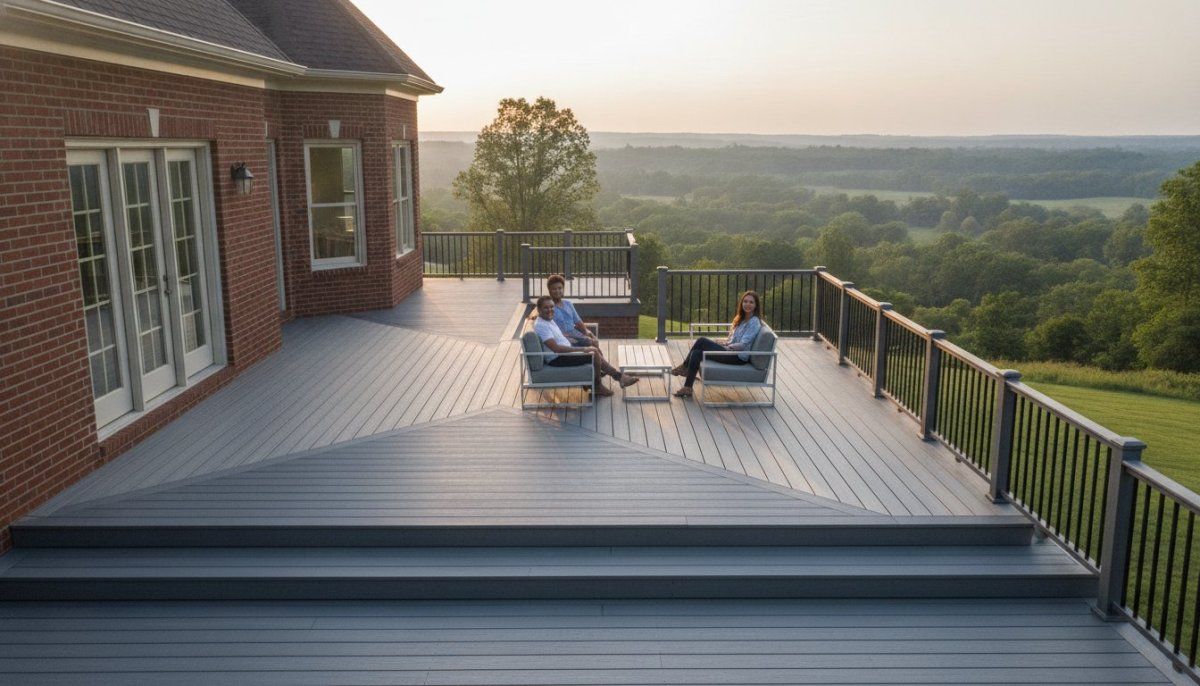
Why Louisville Homeowners Choose a Local Deck Builder

Pat McIntyre • August 11, 2026

Every year, more Louisville families are turning their backyards into genuine outdoor living spaces. The outdoor living market reached $53.6 billion in 2023 and continues growing at over 5% annually, driven by homeowners seeking functional outdoor spaces without leaving home. In a city where spring afternoons and long summer evenings beg for outdoor entertaining, a deck is far more than a weekend project; it is one of the most financially rewarding upgrades you can make to your property.

Yet one question comes up repeatedly among Louisville homeowners: does it really matter whether you hire someone local? In my experience, the answer is an emphatic yes, and this article explains exactly why, from permitting knowledge to climate-specific material choices to what happens when something goes wrong mid-build.


Key Takeaways

  • Local knowledge pays dividends: A Louisville-based deck builder understands Jefferson County permit rules, frost-line footing depths, and the humidity challenges that destroy poorly designed decks. These details are not generic; they are specific to this city.
  • Deck additions deliver strong ROI: The 2025 Cost vs. Value Report ranks deck additions among the top 10 projects for return on investment. Therefore, choosing the right builder, not just the cheapest quote, directly determines how much value you lock in at resale.
  • Louisville's climate demands climate-aware builds: Louisville averages 46 inches of rain annually, with real freeze-thaw cycling from November through March and summer humidity exceeding 75%. Material selection and structural decisions must account for this, and local builders make those calls correctly by default.
  • Local spending stays local: When you shop locally, 68% of your money stays in the local community, versus 43% when you shop national chains. Hiring a local deck builder in Louisville directly supports local jobs and suppliers.
  • Permits protect your resale: If you are building a deck or porch that is attached to your home, you need a building permit because it is part of the main structure. A local contractor handles this process and prevents complications at the point of sale.

Quick-Start Prioritisation Framework

Start here if you are:

  • A first-time deck buyer: Prioritise a local builder who manages the permit process for you. The Louisville Metro Government permits page is the definitive source for what triggers a permit, and most decks do.
  • Planning to sell within five years: Invest in composite and professional installation. The resale numbers are on your side, but only if the build is code-compliant.
  • Working with a tight budget: Get at least three quotes from licensed local contractors. Local firms typically have lower overhead than national chains and pass those savings on.

What Louisville's Climate Does to a Deck (and Why It Matters for Choosing a Builder)

The Four-Season Problem

Louisville's weather is genuinely demanding on outdoor structures. Louisville experiences a humid subtropical climate with hot summers and cold winters, meaning deck materials must endure temperature fluctuations, occasional heavy rainfall, and even snow during the winter months. That is a lot to ask of timber, fasteners, and footings, and a builder who learned their trade elsewhere may not fully appreciate the cumulative damage those conditions cause.

The combination of humidity and rain, especially in spring and autumn, promotes mould and mildew growth on decks, which not only affects aesthetics but can also deteriorate the decking material if left untreated. A local builder who has repaired dozens of Louisville decks knows this pattern firsthand and specifies materials and drainage details that prevent it from the outset.

Pro Tip: If you are choosing between pressure-treated pine and composite for a Louisville deck, factor in the maintenance cycle. Home Run Improvement's decking guide notes that pressure-treated pine needs sealing or staining every one to two years, and that skipping maintenance in Louisville's humidity accelerates rot and warping. Composite sidesteps that cycle almost entirely.

Material Choices That Hold Up in Kentucky

Louisville's four-season climate means your decking material needs to handle heat, humidity, frost, and UV exposure. Pressure-treated lumber remains the most popular choice in Louisville; it is affordable and widely available, but the trade-off is that it requires staining or sealing every two to three years and can warp or crack without maintenance.

Composite decking handles Louisville's humidity and temperature swings without the maintenance burden. It will not rot, splinter, or need staining, and the higher upfront cost pays off over time, especially if you are not interested in annual upkeep.

Home Run Improvement is Louisville's only TimberTech Platinum Pro contractor, the highest certification level the brand offers. TimberTech composite boards are engineered to resist fading, staining, scratching, and moisture absorption, require no sealing or annual treatments, and carry a lifespan of 25 to 30 years. When you factor in maintenance costs over a decade, composite typically works out cheaper than wood, and it holds its appearance far better in Kentucky's climate.


The Local Permit Advantage

What Louisville Requires

Permit compliance is where many homeowners discover, too late, that their builder cut corners. The rules in Louisville are specific and non-negotiable. If you are building a deck or porch attached to your home, you need a building permit. You also need a permit for freestanding decks if they are larger than 200 square feet, if any part is more than 30 inches off the ground, or if the deck connects to the house near the front door.

The structural requirements are equally detailed. All structural components, posts beams, joists, and connections, must be designed to support a live load of 40 pounds per square foot and comply with span tables outlined in the Kentucky Residential Code. Guardrails are required for any deck surface more than 30 inches above grade, and those guardrails must be at least 36 inches tall and constructed so that a four-inch diameter sphere cannot pass through any openings.

Why a Local Builder Handles This Better

Local contractors have a deep understanding of the building codes, zoning laws, and permit requirements in your area. This expertise helps avoid unnecessary delays or fines, ensuring your project progresses smoothly and remains compliant with all regulations.

A Louisville-based deck builder knows the Construction Review Division's submission process, typical review timescales, and the specific documentation that inspectors want to see. Home Run Improvement handles the full permit process on behalf of clients. Most Louisville decks over 200 square feet require a permit, and a reputable local builder takes care of the paperwork so homeowners do not have to worry about code compliance or complications at resale.

An unpermitted deck discovered during a property sale can delay or even collapse a transaction. The cost of the permit, building a deck in Louisville typically requires permits costing between $200 and $600 based on the size and scope of your project, is trivial compared to the cost of that outcome.

Pro Tip: Before signing any contract, ask your deck builder to confirm in writing that they will pull all required permits and manage the inspection process. Any contractor who discourages this step is a red flag.

Return on Investment: What Your Deck Adds to Your Home's Value

The Numbers Behind the Decision

A deck is not purely a lifestyle purchase; it is a financial one. The National Association of Realtors gives deck additions a 'joy' score of 9.8 out of 10, one of the highest of any project, and 74% of homeowners said they had a greater desire to be home after adding a deck. That emotional resonance translates directly into buyer appeal.

On the financial side, the 2025 Cost vs. Value Report ranks deck additions among the top 10 projects for return on investment, with exterior projects filling eight of the top 10 spots that year. If you are not seeing strong ROI from your deck, the material choice or build quality is likely the culprit, therefore invest in proper specification from the outset rather than cutting corners and paying again later.

Real estate data from Phys.org's 2025 curb appeal study found that homes with strong exterior appeal sell for an average of 7% more than comparable properties. A well-built, properly permitted deck contributes directly to that exterior appeal and the premium that comes with it.

How Material Choice Affects Resale

According to the 2025 Cost vs. Value Report, a wood deck addition recoups approximately 60.1% of its cost, while a composite deck addition returns approximately 83.8% through added home value. That gap is significant. If you are planning to sell within the next few years, composite is the financially stronger choice, and the material that a knowledgeable local builder will proactively recommend.


What to Look for in a Louisville Deck Builder

Credentials That Matter

Not every contractor who answers a phone call is qualified to build a safe, code-compliant deck. Confirm that the contractor holds a valid Kentucky contractor licence and adequate liability and workers' compensation insurance to protect your property and reduce liability risks.

Beyond the basics, look for a builder with specific decking experience in Louisville. Individual contractors and local companies tend to be deeply embedded in their local communities, and they can have established relationships with suppliers, subcontractors, and other professionals. This can contribute to cost savings and more efficient coordination of materials and services.

Questions to Ask Before You Sign

  • Does the quote include permit fees and permit management?
  • What warranties do you offer on both labour and materials?
  • Can you share references from recent builds in Louisville?
  • How do you handle changes or unforeseen issues during construction?

Warning signs to watch for include contractors who cannot show you recent, verifiable local work, those who resist providing a detailed written contract, and any who request more than a modest deposit before work begins.

Pro Tip: Autumn (September to November) often delivers the best combination of availability and pricing. Spring is peak season with longer wait times. If you want a spring or early summer build, start getting quotes in January or February to secure a spot on the builder's schedule.

Understanding Deck Costs in Louisville

What to Budget

Confirm that the contractor holds typically range between $15 and $35 per square foot, depending on size, materials, and design complexity. Homeowners should expect an average total cost from $3,000 to $12,000 for common deck projects.

Material selection shifts costs meaningfully. Pressure-treated wood costs between $20 and $35 per square foot installed, composite decking ranges from $35 to $65 per square foot, and cedar or redwood generally costs $30 to $50 per square foot. These figures from Decks Decks and More Decks' Louisville pricing guide are a useful benchmark, though your final number will depend on the footprint, height, railing system, and any bespoke features.

Labour is a significant component. Labour typically accounts for 50 to 65% of the total deck building cost, and in Louisville, labour rates generally range from $40 to $60 per hour, depending on the complexity of the project and the contractor's expertise. Getting multiple detailed quotes from local contractors is the best way to validate that a specific figure is fair for your project scope.


Common Mistakes Louisville Homeowners Make When Hiring a Deck Builder

Choosing on Price Alone

The lowest quote rarely represents the best value. Confirm that the contractor holds compared to market averages; they typically mean the contractor is cutting corners on materials, skipping permits, or planning to use subcontractors with less accountability.

In my experience, the decks that cause the most problems three to five years after installation are almost always the ones where price was the only criteria. A poorly framed deck with inadequate footings will shift, warp, and ultimately become a safety hazard, and the cost of rectification dwarfs what was saved upfront.

Skipping the Written Contract

Verbal agreements are not enforceable when a dispute arises. A proper contract should cover the full scope of work, material specifications including brand and grade, the payment schedule, the project timeline, who is responsible for permits, and the warranty terms. If a contractor pushes back on any of these elements, that tells you something important about how they conduct business.

Ignoring the Maintenance Requirements of Their Chosen Material

The mix of wet and dry, hot and cold conditions in Louisville causes deck materials to expand, contract, crack, and retain moisture, all of which speed up ageing and increase the need for frequent maintenance. Homeowners who choose pressure-treated timber without a plan for regular sealing and staining often find themselves with a deck that looks ten years older than it is after just three or four Louisville summers.


Frequently Asked Questions

Do I need a permit for a deck in Louisville?

In most cases, yes. If you are building a deck or porch attached to your home, you need a building permit because it is part of the main structure. You also need a permit for freestanding decks if they are larger than 200 square feet, if any part is more than 30 inches off the ground, or if the deck connects to the house near the front door. A reputable local builder will manage this process for you.

How long does it take to build a deck in Louisville?

Timeline depends on size and complexity. A straightforward single-level deck typically takes one to two weeks once construction starts. Factor in additional time for the permit review process before construction begins, which can add one to three weeks depending on the submission queue.

What is the best decking material for Louisville's climate?

Composite decking is ideal if you want low maintenance; it handles humidity, UV, and temperature swings without staining or sealing. Choosing materials rated for freeze-thaw cycles is worth considering, since Louisville does see winter frost. Pressure-treated timber is a sound budget option when maintained consistently, but the ongoing upkeep costs should be factored into the total budget before committing.

How much does a deck add to my home's value in Louisville?

A wood deck adds roughly $17,000 in value on a national average build, based on 2025 Cost vs. Value data. Composite typically returns more in absolute dollar terms at resale, even though the percentage ROI varies by source and location. The critical factor is that the build must be code-compliant and in good condition, a deck in poor repair or without permits can actually deter buyers.

How do I verify a deck contractor is licensed in Kentucky?

Confirm that the contractor holds a valid Kentucky contractor licence and adequate liability and workers' compensation insurance. You can also ask to see the licence number and verify it through the Kentucky Department of Housing, Buildings and Construction. Any reputable local builder will provide this documentation without hesitation.


Ready to Build? Start with a Local Expert

If you are planning a new deck in Louisville, the most important decision you will make is who builds it. A local deck builder brings permit knowledge, climate-appropriate material expertise, community accountability, and the kind of direct communication that makes a complex project straightforward.

Home Run Improvement is a Louisville-based, family-owned deck builder and TimberTech Platinum Pro contractor serving homeowners across Jefferson County and the surrounding area. Home Run Improvement is a family business, owned and operated by Kevin McIntyre, covering home improvement services in Louisville and the neighbouring area, built on high-quality craftsmanship and personalised customer service. Free estimates are available by calling 502-379-7415 or visiting the website.


Sources

  1. Louisville Metro Government Decks Permit Guide, Louisville-Jefferson County Metro Government. Official deck permit requirements, structural code standards, and guardrail specifications. Louisville Metro Government permits page
  2. 2025 Cost vs. Value Report, Remodeling Magazine / Zonda Media. Annual national benchmarking of home improvement ROI by project type. https://blog.callcustombuilt.com/what-roi-deck-build
  3. Deck Building Cost in Louisville, Architecture Adrenaline. Per-square-foot and total cost ranges for Louisville deck projects. Confirm that the contractor holds
  4. Deck Installation Cost in Louisville, Decks Decks and More Decks. Material cost breakdowns and labour rate ranges for Louisville. https://www.decksdecks.com/deck-building-cost-in-louisville/
  5. Ultimate Guide to Building a Deck in Louisville, KY, SunnySide Decks & Outdoor Living. Climate, material, and structural guidance specific to the Louisville/Southern Indiana market. https://sunnysidedecksllc.com/guide-to-building-a-deck-louisville-ky/
  6. Choosing Deck Materials in Louisville, KY, The Outdoor Store. Material performance analysis for Louisville's humid subtropical climate. https://outdoorstoreky.com/2024/04/11/the-ultimate-guide-to-choosing-deck-materials-in-louisville-ky/
  7. Deck Builders in Louisville, KY, Home Run Improvement. Local deck building services, TimberTech certification, and permit management. https://www.homerunimprovement.com/services/decking-louisville
  8. Does a Deck Add Value to a Home?, Atlanta Porch and Patio. ROI data including NAR joy scores and Cost vs. Value report figures. https://www.atlantaporchandpatio.com/does-a-deck-add-value-to-the-home/
  9. Advantages of Hiring a Local Contractor, The Design Tourist. Local vs. national contractor comparison including community economic impact statistics. https://thedesigntourist.com/what-are-the-advantages-of-hiring-local-contractors/
  10. Why Hiring a Local Contractor Matters, Carter Custom Construction. Benefits of local contractor accountability, responsiveness, and code knowledge. https://cartercustomconstruction.com/remodeling/hiring-a-local-contractor/
  11. Deck ROI Insights, Deck Builder Outlet. ROI statistics for wood and composite decks alongside curb appeal research. https://deckbuilderoutlet.com/does-a-deck-increase-home-value/
  12. Local vs. National Contractor Services, Homes Contractors. Warning signs to watch for and hiring criteria for home improvement projects. https://homes.contractors/local-contractors-vs-national-companies/
  13. Best Deck Builders in Louisville (2026), local.click. Seasonal timing, material performance, and contractor evaluation criteria for Louisville. https://local.click/decks/blog/best-deck-builders-louisville
  14. TimberTech Pro Locator, Home Run Improvement, TimberTech. Contractor profile confirming Home Run Improvement's family-owned status and service area. https://prolocator.timbertech.com/pro/contractor-profile/0011T00002h9AgXQAU/
By Pat McIntyre August 12, 2026
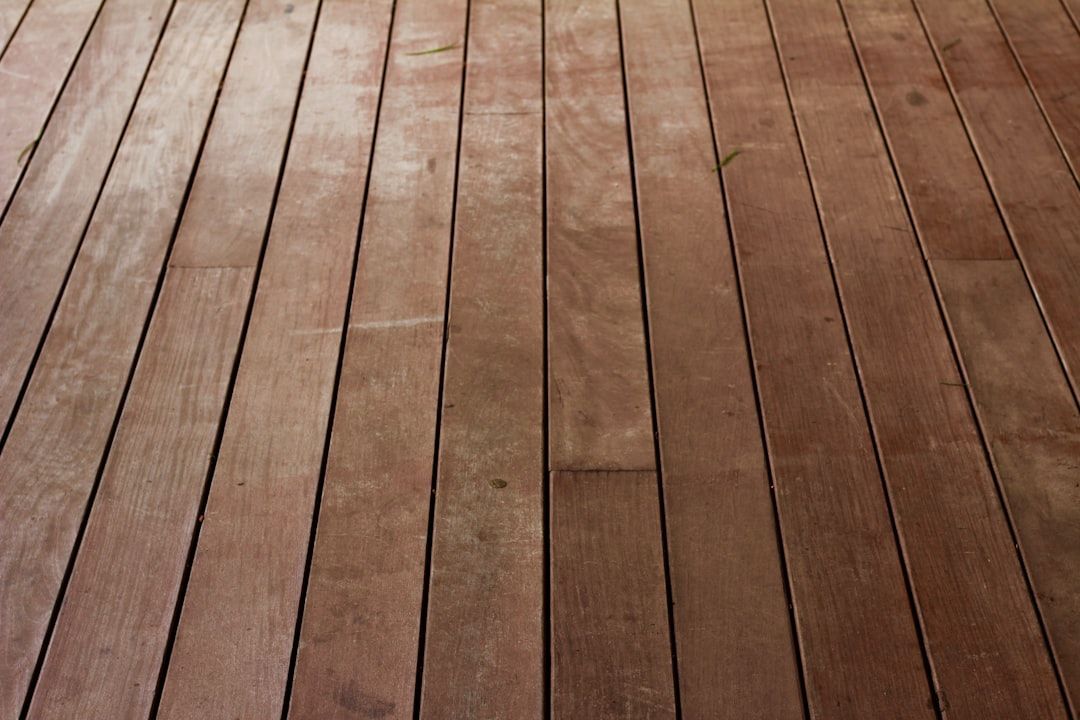
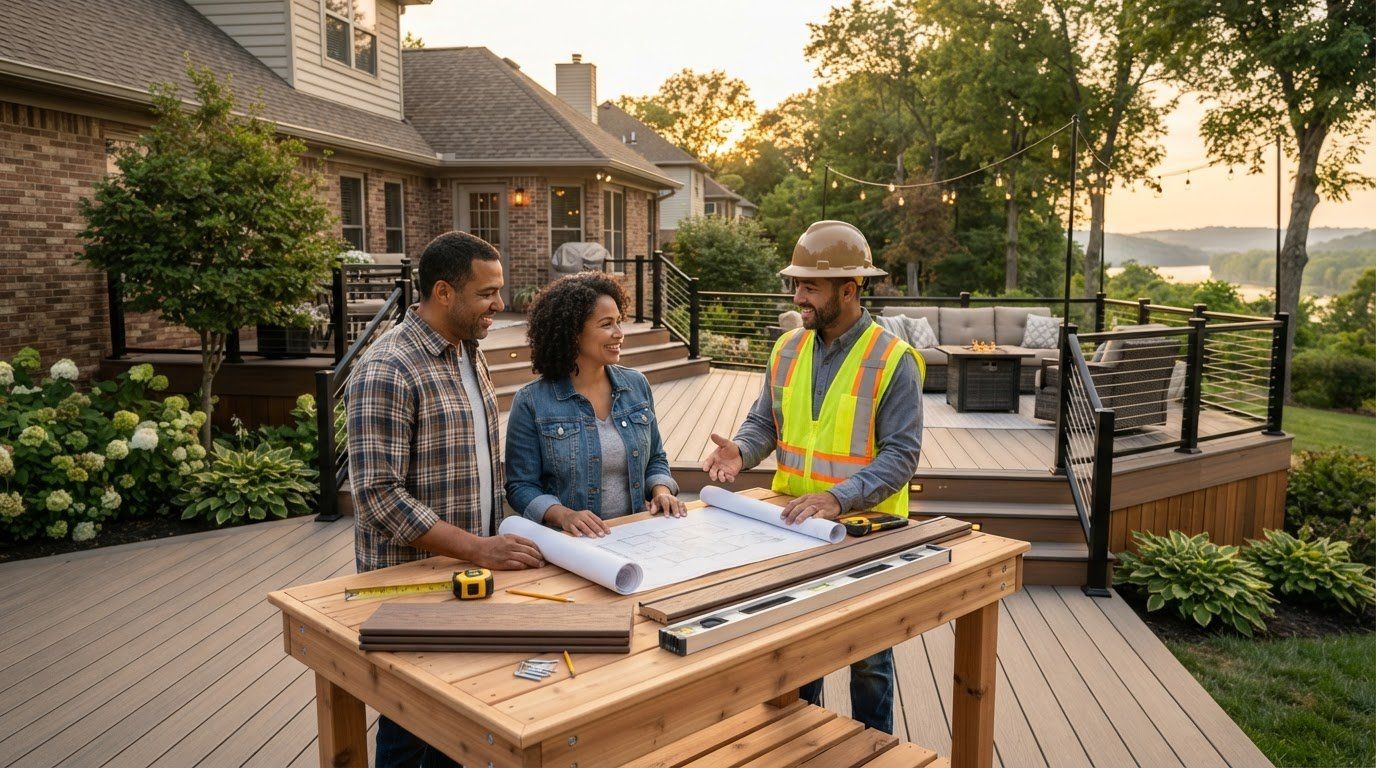
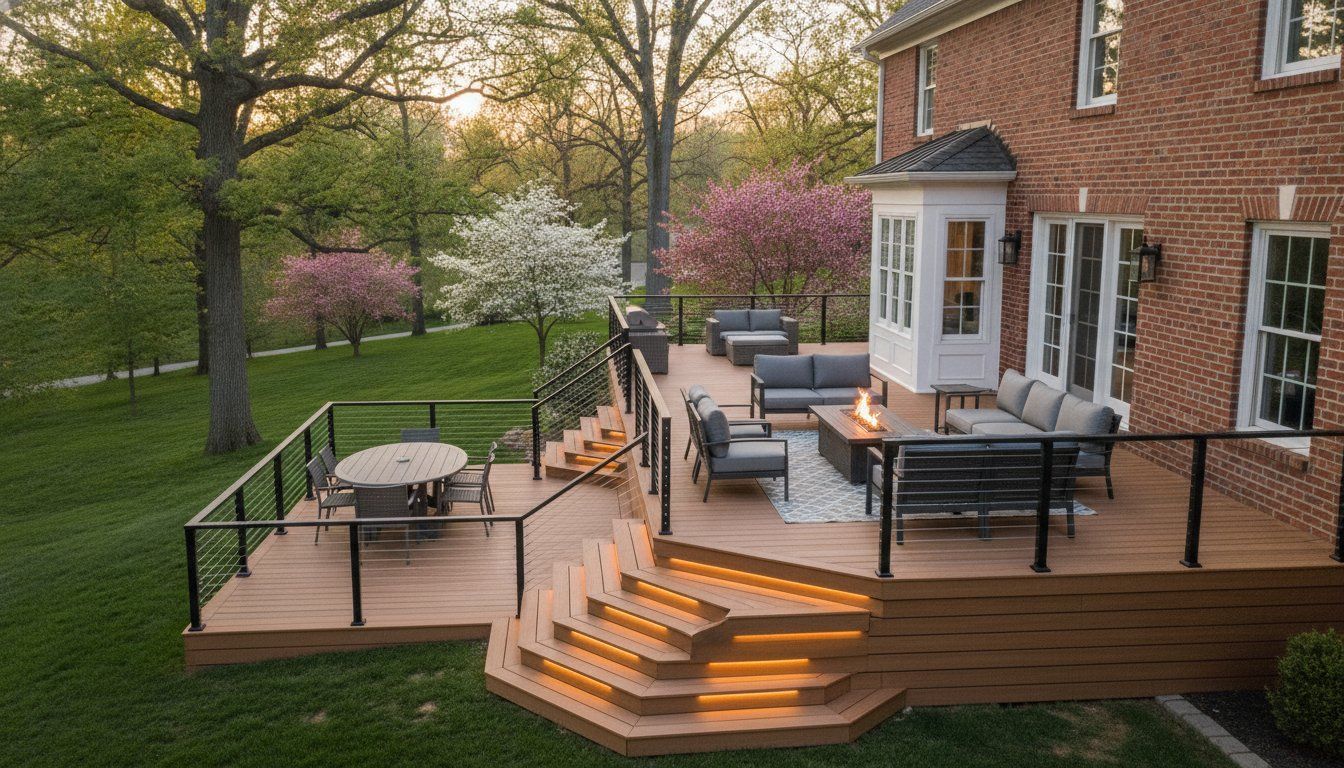
The most dangerous part of your new deck isn't the height or the railing; it's the invisible rot creeping through the substructure while you're hosting a summer barbecue. If you live in Jefferson County, you know that our intense humidity and fluctuating temperatures can turn a "cookie-cutter" build into a structural hazard in just a few short years. Finding a Louisville KY deck builder who prioritizes what happens beneath the surface is the only way to protect your home's value. Most contractors focus on the surface boards, but a deck is only as resilient as its foundation. You likely want a space that enhances your property without the constant anxiety of maintenance or hidden repair costs. We agree that a high-end investment should offer total peace of mind. This article will show you how to build a high-performance deck that survives Louisville’s climate using expert structural techniques and premium materials. You will learn the critical differences between wood and composite benefits, why local codes require freestanding structures for brick homes, and how a 10-year craftsmanship warranty provides the security you deserve. Key Takeaways Learn why Louisville’s high humidity and 45+ inches of annual rainfall require specific structural techniques that national installers often overlook. Evaluate the trade-offs between traditional lumber and advanced PVC to determine which material offers the best performance in the Kentucky climate. Identify the critical "invisible" safeguards, such as joist tape, that prevent your deck’s substructure from rotting from the inside out. Partnering with a specialized Louisville KY deck builder ensures your project complies with local building codes, including specific ledger board requirements for brick exteriors. See how a 10-year craftsmanship warranty acts as a shield for your investment, providing security that outlasts standard industry practices. Why Choosing a Local Louisville Deck Builder Matters for Your Home Louisville receives over 45 inches of annual rainfall, creating a relentless environment for any exterior wood structure. This volume of moisture, combined with our oppressive summer humidity, means that a deck built to national "standard" specifications will likely fail years before it should. If you hire a national chain or a big box installer, they often follow generic blueprints that ignore the unique clay-heavy soil and specific frost line requirements of the Ohio Valley. They see a platform; we see a structure that must breathe and drain in a very specific way to survive the local climate. A qualified Louisville KY deck builder understands that neighborhood-specific aesthetic standards in areas like Anchorage, Prospect, and Glenview require more than just a functional space. These communities demand architectural continuity. When you choose a local expert, you're hiring someone who knows how to match your new outdoor living area to your home's existing LP SmartSide siding or roofing profile. This attention to detail ensures your investment actually increases your property value rather than looking like a generic afterthought. To better understand the complexity of a professional build, watch this helpful video showing a complete project from start to finish: https://www.youtube.com/embed/h0FQAzRmxes?si=uTjFgrm6JOzABTXx Navigating Louisville’s Freeze-Thaw Cycles Kentucky weather is erratic. Our temperature swings from 20°F in the winter to over 100°F in the peak of summer. These fluctuations put immense stress on deck fasteners and boards. If your builder doesn't account for the expansion and contraction of materials, you'll see warped boards and popped screws within two seasons. We prioritize materials that handle these shifts without compromising the frame. Proper drainage is also essential for deck pier longevity. If water pools around your supports because of poor localized knowledge of our soil, the structural integrity of your entire deck is at risk. Permitting and Compliance in Jefferson County The "red tape" in Louisville is there for your protection, but it's often a headache for homeowners to manage alone. In Jefferson County, any deck attached to a home requires a building permit, with fees currently calculated at $0.105 per square foot. There are strict regulations you must follow. For example, current 2026 codes state that decks can no longer be attached through brick veneer walls. If your home has a brick exterior in Prospect or Anchorage , the structure must be designed as a self-supporting, freestanding unit. We handle these technicalities and setbacks for you, ensuring every post is buried at least 24 inches deep to meet safety standards. When we manage the compliance, you get a beautiful result backed by a 10-year craftsmanship warranty . Comparing Decking Materials: Wood vs. Composite in Kentucky Choosing a material for your new outdoor space isn't just about the initial aesthetic; it's about how much labor and money you want to invest in five years. Traditional pressure-treated lumber remains the budget-friendly entry point for many homeowners. However, in our humid climate, wood requires aggressive maintenance. You'll need to commit to annual sealing and staining to prevent the inevitable warping and splintering that occurs when organic fibers meet Kentucky rain. A professional Louisville KY deck builder sees the fallout of neglected wood decks every season, and the cost of restoration often outweighs the initial savings. High-performance composites and Advanced PVC offer a more resilient path. These materials are engineered to resist the rot and insect damage that plague natural wood. We also utilize hidden-fastener systems to create a smooth, fastener-free surface. This technique eliminates visible screw heads, which significantly improves the architectural style of the build while ensuring a safer surface for children and pets. If you want a deck that looks as good in a decade as it does on day one, the material choice is your most critical decision. The TimberTech Advantage for Louisville Homes TimberTech Advanced PVC is specifically designed to handle environmental extremes. It features a service range that can withstand temperatures up to 200°F, which is vital when the summer sun beats down on an unshaded backyard. Because this material contains no wood fibers, it's the superior choice for pool-side decks or low-to-the-ground builds with high moisture exposure. The integrated UV protection ensures your deck retains its rich color long after a traditional wood deck would have faded to a dull, weathered gray. This level of durability is why we recommend it for homeowners who prioritize long-term stability. Cost-Benefit Analysis Over 10+ Years You must calculate the "real cost" of your deck over its entire lifespan. While wood is cheaper on day one, the cumulative expense of professional staining, power washing, and eventual board replacement adds up quickly. Choosing high-quality decking materials often yields a higher deck addition home value because prospective buyers recognize the lack of future maintenance. Instead of spending your weekends scrubbing with harsh chemicals, you simply rinse the surface and get back to enjoying your home. If you're weighing these options for your property, start a conversation with our experts to see which material fits your specific budget and goals. Structural Integrity: The Secret to a 25-Year Substructure A deck's lifespan isn't determined by the color of the stain or the brand of the boards; it's decided by the health of the skeleton. Most decks in Kentucky fail from the "inside out" because water becomes trapped between the deck boards and the wooden joists. This moisture creates a breeding ground for rot that remains invisible until a structural failure occurs. If your Louisville KY deck builder isn't discussing the substructure with the same passion as the design, they're likely cutting corners that will cost you your entire investment within a decade. Protecting Your Investment with Joist Tape We utilize ProTac Joist Tape as a non-negotiable standard on every project. This high-performance flashing tape creates a waterproof seal around deck screws, preventing water from entering the fastener holes where rot typically starts. We apply this barrier to single joists, double beams, and the critical ledger board connection. This "invisible" step is the most important part of our build process. It acts as a shield that can double the life of your pressure-treated frame, ensuring your substructure lasts as long as your premium composite surface. Framing and Spacing Best Practices Stability begins with precision framing. While building codes allow for joists to be spaced 16 inches on center, we often recommend 12-inch spacing for a "rock-solid" walking surface, especially when using composite materials. Narrower spacing prevents the "bouncy" feel that plagues lower-quality builds. We also implement rigorous blocking requirements. By installing solid wood blocks between joists, we eliminate lateral movement and prevent the frame from twisting over time. When you choose a professional Louisville KY deck builder , you're investing in a structure built with kiln-dried, moisture-resistant lumber. We perform a series of framing checks before a single deck board is installed. This methodical approach is why we can offer a 10-year craftsmanship warranty with total confidence. We don't just build for the first summer; we build for the next quarter-century. Designing Your Custom Outdoor Living Space A deck shouldn't feel like a wooden island floating in your backyard; it must function as a seamless extension of your home's architecture and your family's lifestyle. As a premier Louisville KY deck builder , we move beyond the basic platform to create comprehensive outdoor living environments. This involves integrating structural elements like pergolas for shade, custom built-in seating for entertaining, and sophisticated lighting systems. We utilize 3D design consultations to ensure you can visualize the finished project before the first hole is even dug. This step eliminates the anxiety of "what if" and ensures every detail aligns with your vision. When you choose to build a custom deck, architectural continuity is paramount. We specialize in matching your new structure to your home’s existing LP SmartSide siding or roofing profile. If your home features high-end materials, your deck should reflect that same level of quality. We also prioritize the "flow" between your indoor kitchen and your outdoor grilling station. A poorly placed door or a narrow transition can ruin the functionality of the space. We design for movement, ensuring your outdoor area is as easy to navigate as your living room. Schedule your 3D design consultation today Functional Zone Planning A successful deck design requires clear zone planning. We help you designate specific areas for dining, lounging, and grilling to prevent the space from feeling cluttered. In neighborhoods with smaller backyards, such as Hurstbourne or Jeffersontown , maximizing square footage through multi-level designs is often the best solution. We also ensure that every stair and railing meets strict safety codes. For instance, if your deck is more than 30 inches off the ground, 2026 Louisville regulations require guardrails at least 36 inches high with openings no larger than 4 inches. Lighting and Ambiance Lighting is the difference between a deck you use only on sunny afternoons and a space you enjoy every evening. We suggest integrated low-voltage LED systems because they offer superior longevity and energy efficiency. Post-cap lighting provides essential safety for stairs and walkways while creating a warm, inviting mood. By highlighting the architectural features of your home through strategic illumination, we transform your deck into a high-end retreat. These systems are durable enough to survive Kentucky's weather while providing the peace of mind that comes with a well-lit property. The Home Run Improvement Difference: Why Louisville Trusts Us Home Run Improvement isn't just another contractor; we're your neighbors. Being a locally owned and operated Louisville KY deck builder means we have a personal stake in the beauty and safety of our community. We don't just finish a project and disappear. We stand behind every board and screw with an exclusive 10-year craftsmanship warranty . While the industry standard often stops at one or two years, we provide protection that reflects the true lifespan of a high-quality build. This warranty acts as your shield against the poor workmanship that often plagues the construction industry. Our Master Lead status isn't just a badge; it's a commitment to professional authority. These certifications mean we've been vetted by manufacturers and industry leaders for our technical precision. This status ensures our team stays current on the latest building codes and material technologies, such as the heat-mitigating properties of modern composites. If you choose a contractor without these credentials, you're essentially gambling with your home's structural integrity. We act as a protective expert, shielding you from the common industry pitfalls that lead to premature rot or structural failure. We believe that accountability is the foundation of trust. By providing a methodical project timeline and clear cost breakdowns, we remove the anxiety typically associated with large-scale construction. Transparent communication is our standard from the first estimate to the final walkthrough. When you work with us, you're partnering with a team that values precision as much as you value your home. We treat your property with the same level of care as our own, ensuring every detail meets our uncompromising standards. A Comprehensive Approach to Home Improvement When you upgrade your outdoor living space, it's the perfect time to evaluate your entire exterior. We coordinate deck builds with roofing and gutter projects to ensure your home is fully protected from the elements. Using one trusted contractor for all your exterior needs eliminates the logistical nightmare of managing multiple crews. It also ensures a cohesive aesthetic across your property. You don't have to take our word for it. Read our Google Reviews to see why your neighbors in Anchorage and Prospect consistently choose us for their most important home investments. Ready to Start Your Project? The path to a premium deck begins with a clear, professional plan. We offer a free, no-obligation estimate where we assess your site, discuss material options, and identify any potential structural challenges. During our professional design consultation, we use our expertise to guide you through the "why" behind our methods. We take the time to explain the relationship between our standards and the resulting benefits for your home. This journey of realization ensures you feel informed and confident before we ever break ground. Schedule your Louisville deck consultation today! Secure Your Outdoor Investment with an Expert Build A high-performance deck is one of the most significant investments you can make for your home's value and your family's quality of life. Choosing the right materials for the Kentucky climate and prioritizing "invisible" structural protections ensures your space remains safe and beautiful for a quarter-century. If you settle for a generic design, you risk the premature rot and instability common in our humid environment. When you choose a professional Louisville KY deck builder , you're choosing a partner who understands the specific engineering required for local soil and weather patterns. Home Run Improvement provides the peace of mind that comes with specialized expertise. Our status as an Owens Corning Preferred Contractor and our locally owned roots in Louisville, KY, mean we're deeply invested in our community's standards. We provide a 10-Year Craftsmanship Warranty to act as a shield for your investment. This ensures your security long after the project is complete. We treat your property with the same care and precision we would apply to our own homes. Get Your Free Louisville Deck Estimate We look forward to helping you transform your backyard into a durable, custom retreat that your family will enjoy for years to come. Frequently Asked Questions How long does it typically take to build a deck in Louisville? A standard deck project typically takes between one and three weeks to complete once the construction phase begins. This timeline varies based on the complexity of the design and the material selection. When you choose a custom solution, we provide a methodical schedule that accounts for site preparation and structural framing. Delays often stem from the permitting process, so we manage those technicalities early to ensure steady momentum during the build. Do I need a permit for a deck replacement in Jefferson County? Yes, a building permit is required for any deck attached to a home in Louisville. For freestanding structures, you must obtain a permit if the deck exceeds 200 square feet or sits more than 30 inches above the ground. As your Louisville KY deck builder , we handle the application process and ensure compliance with current fee structures, which are calculated at $0.105 per square foot for residential properties. Is composite decking worth the extra cost over wood? Composite decking is a superior investment for homeowners who prioritize long-term durability over initial savings. While the upfront cost is higher, you eliminate the recurring expenses of staining, sealing, and board replacement. If you choose a high-performance material like TimberTech, you gain a surface that resists the rot and warping common in Kentucky's humidity. Over a decade, the real cost of a composite deck is often lower than traditional wood. What is the best time of year to build a deck in Kentucky? The best time to build is often late fall or early winter when the ground is firmer and the air is drier. Building during the off-season prevents your project from being delayed by spring rain and the high humidity of a typical Kentucky summer. Additionally, cooler temperatures allow pressure-treated framing lumber to dry more slowly and evenly. If you plan your build for the winter, your outdoor space is ready for use by spring. Can you build a deck over an existing concrete patio? You can build a deck over an existing concrete patio if the slab is structurally sound and provides proper drainage. We utilize specialized sleeper systems or adjustable pedestals to ensure the new framing remains level and ventilated. If the concrete is cracked or sinking, we must address those foundation issues before installation. This approach allows you to upgrade a dated patio into a sophisticated, multi-level outdoor living area without the cost of total demolition. What kind of maintenance does a TimberTech deck require? A TimberTech deck requires very little maintenance compared to natural wood. You only need to perform a basic cleaning with soap and water twice a year to remove pollen or debris. Because the material features a protective cap, it does not require sanding, staining, or chemical sealing. If you want a high-end look that remains resilient against the Kentucky sun without the labor of annual restoration, this material is the professional choice. How does a new deck impact my home's resale value in Louisville? A professionally installed deck significantly increases your home's curb appeal and market value. In the Louisville market, outdoor living spaces are high-demand features that help properties stand out to prospective buyers. When you choose a reputable Louisville KY deck builder who uses premium materials and provides a craftsmanship warranty, you create a tangible asset. Buyers recognize the value of a move-in-ready space that requires no immediate maintenance or structural repairs. Do you offer warranties on your deck construction? We provide an exclusive 10-year craftsmanship warranty on every deck we build. This protection goes far beyond the industry standard to ensure your peace of mind regarding the structural integrity of your investment. If a structural issue arises due to our workmanship, we take full responsibility for the correction. Our commitment to accountability means we treat your property with the same care we would apply to our own, providing long-term stability.
By Pat McIntyre August 11, 2026
Louisville's weather is no joke. The city receives 46 inches of rain, on average, per year, well above the US average of 38 inches. Add in summer thunderstorms, freeze-thaw winter cycles, and dense canopies of mature oaks dropping debris every fall, and you have a climate that puts residential gutter systems through their paces every single year. For Louisville homeowners, getting gutter installation right is a meaningful financial and structural decision, one that protects everything from your roofline to your foundation. This guide covers every dimension of gutter installation in Louisville KY: what things cost, which materials hold up in Kentucky's climate, when to replace your current system, and how to choose a contractor who will do the job right the first time. Whether you're dealing with a failing old system or building a brand-new home, the information here will help you move forward with confidence. Key Takeaways Louisville's rainfall demands the right gutter size: Kentucky storms are intense when they hit, and standard 5-inch gutters with debris buildup overflow fast. Homes with larger rooflines should upgrade to 6-inch systems. Gutter installation costs in Louisville range widely: Gutter installation cost in Louisville, Kentucky ranges from $4.90 to $10.70 per linear foot depending on the type of material (vinyl, aluminum, or steel) and the width of the gutters. Get at least three itemized quotes before committing. Seamless systems dramatically reduce leak risk: Seamless gutters only have joints at corners and downspouts, 4 to 6 for a typical home, compared to 15 to 20 joints for sectional gutters. Fewer joints mean fewer failure points. Gutter guards in Louisville pay off over time: Gutter guards are a valuable investment for homeowners, keeping leaves and debris out of your gutters, reducing cleanings, and preventing clogs that lead to costly repairs. Skipping gutters invites foundation damage: Foundation repairs range from $200 to $30,000, depending on the severity of the issue, with most homeowners paying around $4,500, a sum that dwarfs the cost of a properly installed gutter system. Start here based on your situation: If your gutters overflow every heavy rain: Upgrade to 6-inch seamless aluminum and add guards immediately, overflow is the first sign of structural risk. If your gutters are more than 20 years old: Schedule a replacement consultation before the next storm season. If you're surrounded by trees: Prioritize gutter guards in Louisville KY alongside any new installation to reduce cleaning frequency and protect downspouts. If you're buying or selling a home: Inspect the gutter system as part of due diligence, failing gutters are a negotiating point that buyers will use against you. 1. Why Louisville's Climate Makes Gutters Non-Negotiable The Rainfall Reality Louisville experiences a humid subtropical climate, characterized by hot summers and cold winters, with rainfall that is fairly wet and spread evenly throughout the year, though heavy seasonal downpours or afternoon thunderstorms can occur in warmer months. That consistent precipitation load means gutters work hard 365 days a year, not just in spring. The annual precipitation in Louisville, KY is projected to increase from about 44.7 inches to about 47.6 inches by mid-century, according to ClimateCheck's Louisville precipitation analysis . That upward trend makes investing in a properly sized, high-quality gutter system smarter today than it was a decade ago. If your system was sized for yesterday's rainfall, it may be inadequate for tomorrow's storms. The Debris Problem Louisville's gutter systems deal primarily with oak leaves and maple seeds. Oak leaves and seasonal debris might seem manageable, but they decompose into a sludge that blocks downspouts. One clogged downspout during a heavy storm means water overflowing everywhere. In my experience working with Louisville homeowners, the debris problem is consistently underestimated until the first serious storm of the season hits. Pro Tip: Schedule a gutter inspection every spring and fall in Louisville. The spring inspection catches winter damage, while the fall inspection clears debris before the heaviest leaf drop. Skipping even one cycle dramatically increases the risk of overflow and fascia damage. The Foundation Connection Here is the financial argument that makes gutter installation a no-brainer: foundation repair typically costs between $2,176 and $7,833, with the national average foundation repair cost at $5,001, according to Bob Vila's foundation repair cost guide . Water damage from poor drainage clogged gutters, or heavy rainfall can cause foundation cracks and leaks. A complete gutter installation for a standard Louisville home costs far less than a single foundation repair event, the math makes proper gutters a straightforward investment. 2. Gutter Installation Costs in Louisville KY What Louisville Homeowners Actually Pay Cost is the first question every homeowner asks, and the answer depends on several variables. The average gutter installation cost in Louisville is $316 to $462, but it could vary from Louisville gutter cost database , though these figures reflect simpler or partial installs. For a full system on a typical Louisville home shows that for roof gutters in Jefferson County is between $874.00 and $1,405.00. For seamless systems specifically, Louisville pricing guide reports that seamless aluminum gutter installation cost ranges from $5.80 to $10.20 per linear foot. On a 150-linear-foot home, typical for a mid-size Louisville ranch or two-story, that translates to $870 to $1,530 for the seamless portion alone. If your quote comes in well outside this range in either direction, treat it as a flag worth investigating. Key Cost Factors Several variables push the final number up or down. Your final cost will depend on several factors, including your home's size, chosen gutter materials, installation complexity, and local labor rates, according to This Old House's 2026 gutter installation cost guide . Specifically for Louisville homes, these factors matter most: Roof complexity: Multiple valleys, steep pitches, and wraparound designs all add labor time. Story height: Two-story homes require more setup and safety equipment, which adds cost. Fascia condition: The condition of the fascia and soffit can also impact labor costs, per Handoff.ai's Louisville cost analysis . Rotted fascia needs replacement before gutters can be secured. Downspout count: Properly sized gutters often need 6-inch channels for larger roofs and adequate downspout count, with a minimum every 35 feet. Adding Gutter Guards to the Budget If you're already replacing gutters, adding guards at the same time is the most cost-efficient move. The average gutter guard installation cost in Louisville is $185 to $228, but it could vary from $163 to $250, according to Homeyou's Louisville gutter guard cost data . For premium micro-mesh systems installed professionally, expect more, professional gutter guard cost data puts professionally installed guards at professional gutter guard cost data installed, depending on guard type. Pro Tip: Bundle your gutter and guard installation in a single project. Contractors often discount the guard installation when it's part of a full gutter job, and you only pay for one mobilization, one cleanup, and one warranty administration. 3. Gutter Material Options for Louisville's Climate Aluminum, The Right Choice for Most Louisville Homes I've found that aluminum consistently outperforms other materials for Louisville's specific climate conditions. With Louisville averaging around 44 inches of rain annually and experiencing high humidity, especially during summer, aluminum handles the moisture without deteriorating. It also resists wear from the city's changing spring and fall conditions. industry data on aluminum gutter market share confirms that industry data on aluminum gutter market share of residential seamless gutter systems installed today. It resists rust, comes in dozens of colors for curb appeal matching, and holds up under the temperature swings that Louisville experiences between summer highs and winter lows. Material Comparison at a Glance MaterialCost Per Linear FootLifespanLouisville SuitabilityVinyl$3 to $510 to 15 yearsFair, degrades in heatAluminum (seamless)$5.80 to $10.2020 to 30 yearsExcellentSteel$8 to $1020 to 25 yearsGood, heavier and prone to rustCopper$15 to $25+40 to 50 yearsPremium, high upfront cost Intense summer heat softens cheap vinyl gutters, degrades sealants, and causes aluminum to expand. This is why vinyl is rarely the right call for Louisville homes despite its low sticker price, the material simply degrades faster here than in cooler climates. If you're tempted by the budget price of vinyl, factor in replacement within a decade versus 25-plus years from quality aluminum. 4. Seamless vs. Sectional Gutters, Which to Choose How Seamless Gutters Work industry data on aluminum gutter market share lengths of metal formed on-site using a portable roll-forming machine. A technician feeds a flat coil of metal, usually aluminum, into a gutter machine at your property, and it produces a single, unbroken gutter run custom-cut to the exact measurement of each roofline section. The only joints in a seamless system occur at inside corners, outside corners, and downspout outlets. This design matters enormously for a high-rainfall city like Louisville. Seamless gutters have 70 to 80 percent fewer potential leak points than sectional gutters. Each joint is a place where water can eventually find its way through. Fewer joints mean less fascia rot, fewer emergency repair calls, and less water pooling near your foundation over time. Seamless Gutters Pros: Dramatically fewer leak points (4 to 6 joints total vs. 15 to 20 for sectional) Tend to last longer because their one-piece design reduces stress on joints, holding up better under harsh weather and temperature swings, with most seamless aluminum gutters lasting around 20 to 30 years with proper care Cleaner appearance with no visible mid-run connectors Custom-cut on-site for a precise fit on any roofline shape Cons: Higher upfront cost than sectional systems Requires professional installation with specialized equipment Cannot be DIY-installed Sectional Gutters Pros: Lower upfront material cost Available at hardware stores for DIY purchase Damaged sections can be replaced individually Cons: industry data on aluminum gutter market share run on a sectional system has roughly 15 joint connections. Each joint relies on sealant that degrades over time from UV exposure, temperature cycling, and water flow. Within five to seven years, those joints often start weeping Requires more frequent maintenance than seamless Shorter average lifespan Bottom line: For most Louisville homeowners, seamless aluminum is the correct choice. Professionally installed seamless aluminum gutters typically run 30 to 50 percent more than DIY sectional gutters from a big-box store. However, when you compare seamless to professionally installed sectional, the cost difference is much smaller, usually 10 to 20 percent, per Gold Shield Exteriors' gutter comparison guide . Over a 20-year ownership window, you will spend less on seamless despite the higher day-one price. 5. Gutter Guards in Louisville KY, A Smart Add-On Why Louisville Homes Need Guards More Than Most Louisville's mature tree canopy makes it one of the higher-debris cities in the region. Louisville's substantial tree canopy heavy fall leaf drop isn't the initial accumulation, it's the decomposition process through winter. Wet, decomposed leaf matter compacts into a dense plug that standard cleaning cannot fully remove and that attracts pests over time. EcoWatch's gutter guard guide explains that micro-mesh gutter guard systems feature holes that are quite small, making this type of guard the best for preventing debris from entering your gutters, from large debris like sticks and leaves to small debris like roof shingle pieces and pollen. For Louisville homes surrounded by oaks and maples, micro-mesh is the gold standard. Gutter Guard Types Compared Guard TypeDebris BlockedCost Per Linear FootMaintenance FrequencyMicro-mesh95 to 100% of all types$15 to $30Once per yearScreen/meshLarge leaves and twigs only$3 to $82 to 4 times per yearReverse curveLarge debris$8 to $151 to 2 times per yearFoam/brushModerate, not recommended$2 to $5Frequent, often clogs Most independent roofing professionals recommend micro-mesh for maximum performance and screen guards for budget-conscious homeowners in deciduous areas. Per RoofScour's gutter guard comparison , professionals rarely recommend foam and brush inserts for primary residences. Pro Tip: Gutter guards reduce cleaning frequency but do not eliminate it entirely. The right guard reduces cleaning from four times a year to once. When a contractor promises zero maintenance forever, that's a red flag, no guard system eliminates the need for periodic inspection. Home Run Improvement, Editor's Pick for Gutter Guards in Louisville When it comes to gutter guards in Louisville KY, Home Run Improvement earns the top recommendation. Home Run Improvement is BBB Accredited with an A+ rating and has been serving Louisville homeowners for over 10 years. They're a locally owned family business, not a national franchise, and every project includes their 10-year craftsmanship warranty. Their gutter professionals handle every stage in-house: assessment, installation, cleanup, and final walkthrough. No subcontractors, no surprise crews. You know who's showing up and what the job entails before work ever starts. They install both Shur Flo and Leaf Relief guard systems, Shur Flo is installed to fit snugly to the top of your gutters, with a low profile that makes it virtually invisible from the ground, and it involves no lifting or penetration of your roof shingles, meaning it will not void any roof warranties. For Louisville homeowners who want the combination of a locally accountable team, verified quality materials, and a warranty that actually holds up, Home Run Improvement is the clear choice for gutter installation and guard services in the Louisville area. 6. Seven Warning Signs You Need New Gutters Now After years of working with homeowners on exterior projects, I've found that most people wait too long to address gutter problems. Here are the clearest signals that it's time to call for a replacement. H3: Visual Signs You Can Spot From the Ground Watch for signs of sagging, such as visible dips or low spots in the gutter runs, gaps between the gutters and fascia boards, and water spilling over the edges of the gutters during rainfall. Sagging is the most visible and urgent warning sign, a sagging gutter cannot drain correctly by definition. A final indication you need new gutters is if you spot rust or other orange areas on your home's exterior. Galvanized steel gutters have a protective coating that can wear off over time. If this happens, it can result in orange coloring along the gutters or the siding. H3: Signs That Show Up During Rain Overflow during moderate rain: If your gutters overflow during heavy rainfall, you likely have water flow and drainage issues. This problem may come from blockages, poor alignment, or poor gutter capacity. Water pooling at your foundation: If you notice water pooling around the perimeter of your home after rain, the gutters are not directing runoff far enough away. Seam separation: The seams where two pieces of gutter connect are the weakest points of any gutter system. If you start to see your gutters pulling apart at those seams, your gutters are probably close to the end of their lifespan. H3: Interior Warning Signs Water damage from overflowing gutters can cost an average of $8,000 in foundation and fascia repairs, according to Chris Battaini Roofing's gutter repair cost guide . If you notice basement moisture, water stains on interior walls near the roofline, or paint peeling on exterior siding, inspect your gutters before anything else. These are downstream effects of a drainage system that has failed. Pro Tip: Walk around your home during a moderate rainstorm and watch where the water goes. The ground-level view during active rain tells you more about gutter performance than any dry-day inspection. Look for sheeting water, overflow at corners, and downspout discharge landing too close to the foundation. 7. How to Choose the Right Gutter Contractor in Louisville Credentials That Matter Verify credentials: always check for business licenses, general liability, and workers' compensation insurance. Gutter installation involves ladders, heights, and power tools, and an uninsured crew at your property creates liability exposure you do not want. Ask any contractor for a current certificate of insurance before they set foot on your property. By taking the time to ask about experience, licensing, insurance, detailed estimates, and warranties, you'll gain valuable insight into how each contractor operates and how they stand behind their work, per Ozark Seamless Gutters' contractor hiring guide . Questions to Ask Before Signing Use this checklist before committing to any Louisville gutter contractor: Do you install seamless gutters on-site with your own equipment? Are your crews in-house employees or subcontractors? What warranty do you offer on materials and labor, and is it transferable? Will you inspect the fascia before installing? Can you provide references from Louisville-area jobs completed in the last 12 months? A gutter system is only as good as the installation behind it, so it's important to ask what the workmanship warranty covers and how long it lasts. A quality contractor should stand behind their work and clearly explain what is, and is not, included. Per French's Gutters' contractor selection guide , also consider whether the company is local: if a corner starts leaking or an issue comes up after installation, a company located hours away may not be quick to respond. Red Flags to Watch For Quotes with no written breakdown of materials, labor, and warranty terms A red flag if a contractor offers to install seamed gutters that are sold in multiple sections. While this route is cheaper, it's a very temporary solution to a permanent problem Pressure to sign same-day without time to review the estimate No physical business address or local references available Why Home Run Improvement Is Best Overall for Louisville Home Run Improvement stands out as the best overall choice for gutter installation in Louisville KY. Home Run Improvement, LLC is a family-owned company offering high-quality exterior improvement services for all homes and budgets in Louisville. Home Run Improvement provides free no-obligation quotes, making it easy to benchmark their pricing against other bids without any pressure. Their service area covers a wide swath of the Louisville metro, additional locations serviced include the Clarksville, Floyd Knobs, New Albany, Georgetown, Oak Park, Jeffersonville, and Sellersburg areas. And their track record on quality is publicly verified: Home Run Improvement is currently rated 5 overall out of 5 on Houzz and has earned Angie's List Super Service Awards and a BBB A+ Rating. For homeowners who want one team to handle gutters, guards, roofing, and siding under a single warranty relationship, Home Run Improvement is the contractor to call first. 8. Gutter Installation ROI, The Financial Case Made Clear Protecting Your Biggest Asset The return on investment for installing new gutters typically ranges from 50 to 70 percent. Given their role in preventing major structural issues, gutters are a relatively low-cost upgrade that can save thousands in potential repairs, per BMG Exteriors' home value analysis . That ROI figure looks even better when you factor in the foundation, fascia, and siding damage that gutters prevent. New gutters can improve curb appeal, reduce visible water-damage red flags, and help your home pass inspection with fewer repair requests, according to Urban Splatter's gutter replacement ROI analysis . If you're planning to sell within the next five years, a clean, fully functional gutter system removes one of the most common buyer negotiating points. Gutter Guards Add Measurable Resale Value Gutter guards typically increase home value by $500 to $1,200 according to 2024 real estate data, though the ROI depends on your home's age, local market conditions, and the quality of installation, per Big Mike's Gutters' resale value research . Properties with professionally installed gutter guards sell 3 to 7 days faster than comparable homes without protection systems. In a market where days on market affects perceived value, that speed advantage translates directly to a stronger negotiating position. Frequently Asked Questions How much does gutter installation cost in Louisville KY? Gutter installation cost in Louisville, Kentucky ranges from $4.90 to $10.70 per linear foot depending on the type of material and the width of the gutters. For a complete project on a standard home, Homeyou's Louisville project database shows the average gutters cost in Louisville is $1,020 to $1,289, but it could vary from $885 to $1,423. Larger or more complex homes can run higher, especially when guards are added. How long do aluminum gutters last in Louisville? Most seamless aluminum gutters can last around 20 to 30 years with proper care. Sectional systems tend to fail sooner due to joint degradation. Louisville's freeze-thaw cycles and high humidity can accelerate wear on lower-quality materials, which is why aluminum is the preferred material for the local climate. Are gutter guards worth it in Louisville? For most Louisville homeowners, yes. Gutter guard installation in Louisville can help you save thousands of dollars, which means it is also a cost-effective solution and not just an aid in preventing you from risking yourself to injury during ladder-based cleaning. Given Louisville's heavy fall leaf drop from oaks and maples, guards pay for themselves in reduced cleaning costs within a few seasons. Micro-mesh systems offer the best overall debris protection for the local tree types. What size gutters do I need for my Louisville home? Most Louisville homes are installed with 5-inch K-style gutters, but that is not always sufficient. Properly sized gutters often need 6-inch channels for larger roofs, with adequate downspout count at a minimum of every 35 feet. If your current gutters overflow during moderate rain, upgrading to 6-inch is the correct fix, not just adding more downspouts. Ask your contractor to assess the roof size and calculate the appropriate gutter dimensions before installation. Should I repair or replace my gutters? This depends on the extent and location of the damage. Not all gutter issues require a full replacement. In some cases, simple repairs can extend the life of your gutters and save you money. Common signs that may indicate the need for new gutters include sagging sections, visible cracks or splits, peeling paint, rust spots, or water pooling around your home's foundation. If your gutters are relatively new and only show minor wear, a repair might be sufficient. A reputable contractor will assess your system honestly rather than default to full replacement. How long does gutter installation take? For most Louisville homes, a full gutter replacement takes one to two days. A standard single-story home can often be completed in a single day. Multi-story homes, complex rooflines, or projects that include fascia repair will add time. Always confirm the expected timeline with your contractor before the project begins. Get a Free Estimate from Louisville's Best Overall Gutter Installer Home Run Improvement offers free, no-obligation estimates for gutter installation and gutter guards throughout Louisville and the surrounding metro area. With a 10-year craftsmanship warranty, an A+ BBB rating, and a fully in-house crew that handles every stage of your project, they are the clear starting point for any Louisville homeowner ready to protect their home from water damage. Call or visit their website to schedule your assessment today. Sources Cost to Install Gutters in Louisville, KY , Handoff.ai. Itemized cost breakdown including materials and labor. https://www.handoff.ai/construction-costs/install-gutters/louisville-ky Gutter Installation Cost in 2026 , This Old House. National gutter cost guide by material and home size. https://www.thisoldhouse.com/gutters/gutter-installation-cost Louisville, Kentucky Climate Change Risks , ClimateCheck. Projected annual precipitation data for Louisville. https://climatecheck.com/kentucky/louisville Louisville, KY Climate , BestPlaces. Rainfall and seasonal climate averages. https://www.bestplaces.net/climate/city/kentucky/louisville Foundation Repair Cost , Bob Vila. National average foundation repair costs. https://www.bobvila.com/articles/foundation-repair-cost/ Don't Get Soaked: Gutter Repair Costs 2026 , Chris Battaini Roofing. Water damage repair cost averages. https://cmbroof.com/gutter-repair-cost/ Choosing a Gutter Contractor , Gold Shield Exteriors. Seamless vs. sectional cost differential analysis. https://goldshieldexteriors.com/gutters/seamless-vs-sectional Types of Gutter Guards: A Homeowner's Guide , EcoWatch. Micro-mesh and guard type performance comparison. https://www.ecowatch.com/gutters/types-of-gutter-guards Gutter Guard Comparison: All 5 Types , RoofScour. Professional recommendations by guard type. https://roofscour.com/gutter-cleaning/gutter-guard-comparison/ Gutter Service Company, Home Run Improvement , Home Run Improvement. Louisville gutter installation and guard services. https://www.homerunimprovement.com/services/gutters-louisville Gutter Guards, Home Run Improvement , Home Run Improvement. Shur Flo and Leaf Relief guard installation in Louisville. https://www.homerunimprovement.com/services/gutter-guards 4 Questions to Ask Before Hiring a Gutter Contractor , Ozark Seamless. Contractor vetting framework. https://www.ozarkseamless.com/4-questions-to-ask-before-hiring-a-gutter-contractor 10 Questions to Ask Before Hiring a Gutter Company , French's Gutters. Contractor selection checklist. https://www.frenchsgutters.com/post/10-questions-to-ask-before-hiring-a-gutter-company Questions to Ask Before Hiring a Gutter Installation Company , Cola City Roofing. Insurance and credential verification guidance. https://colacityroofing.com/blog/questions-before-hiring-gutter-company/ Do Gutters Increase Home Value? , BMG Exteriors. ROI percentages and resale impact analysis. https://www.bmgexteriors.com/post/do-gutters-increase-home-value-here-s-what-homeowners-need-to-know How to Calculate ROI on Gutter Replacement , Urban Splatter. ROI methodology and home inspection impact. https://www.urbansplatter.com/2025/11/how-to-calculate-roi-on-gutter-replacement/ Do Gutter Guards Increase Home Value? , Big Mike's Gutters. Resale value and days-on-market data for homes with guards. https://bigmikesgutters.net/do-gutter-guards-increase-home-value/ Seamless vs. Regular Gutters , LeafFilter. Lifespan and joint-count comparison by gutter type. Most seamless aluminum gutters can
By Pat McIntyre August 11, 2026
A storm can shred shingles, crack flashing, and open your home to water intrusion in a matter of minutes. The decisions you make in the hours and days that follow have a direct bearing on your safety, your repair bill, and how smoothly your insurance claim goes. Average residential roof replacement costs reached $23,817 in 2025, a 33% increase over the prior four-year average, while repair costs averaged $6,348, up 25% over the same baseline, meaning the financial stakes of a damaged roof have never been higher. If you act quickly, document thoroughly, and work with a trusted local contractor, you protect both your home and your wallet. This guide walks you through every stage of roof storm damage repair, from the first minutes after the storm passes to the moment your insurer cuts the cheque. Key Takeaways Act immediately but safely: In those first critical hours, the actions you take can dramatically affect your safety, the cost of repairs, and how smoothly your insurance claim goes. Never climb a wet or damaged roof yourself. Document before you touch anything: After a storm damages a roof homeowners should immediately document the condition with timestamped photos and videos before moving or covering damaged areas, this hastens insurance claims and ensures accuracy. Every piece of evidence you gather strengthens your position with the insurer. Costs are rising sharply: In 2024, US roof repair and replacement cost value totalled nearly $31 billion, up nearly 30% since 2022, with roofing line items making up more than a quarter of all residential claim value. Therefore, prompt repairs prevent secondary damage that multiplies costs further. Storm damage drives a third of all replacements: Approximately 33% of all roof replacements are initiated due to storm damage. This means a post-storm inspection is not optional; it is a routine necessity for any homeowner after severe weather. Repair or replace is a financial decision, not just a structural one: When repair costs rise to about 25-30% of the cost of replacement, replacement starts to make more financial sense, and if repair costs exceed 50% of replacement cost, replacement is usually the better long-term decision. Quick-Start Prioritisation Framework Use this table to decide where to focus your energy in the first 72 hours after a storm. PriorityActionBest ForEffortTime to Result1Safety sweep and interior checkAll homeownersLowImmediate2Photo and video documentationAll homeownersLowFirst hour3Emergency tarpingActive opening or leakLow-MedSame day4Ring your insurerPolicy-holders with storm coverLowWithin 24 hours5Professional roof inspectionAll homeownersLowWithin 48 hours6Repair vs. replacement decisionWith contractor guidanceMedWithin a week Start here if you are: Seeing active water ingress: Tarping is your first priority. Place buckets, move valuables, and call a roofing contractor for emergency cover before anything else. Unsure whether you have damage: Document from the ground and the attic, then call for a professional inspection. Many storm damage signs are invisible from street level. A Louisville homeowner: Jefferson County sits at a geographic crossroads where Gulf moisture, Great Plains storm tracks, and Appalachian terrain influences collide, the Louisville area averages roughly 50 severe thunderstorm events per year, with hail-producing storms hitting the metro multiple times annually. Acting promptly is especially important here. Step 1: Put Safety First Stay Inside Until the Storm Fully Passes Your instinct may be to dash outside the moment the rain eases. Resist it. Your safety always comes before inspecting the roof, stay inside if winds remain strong, debris continues to fall, or electrical hazards exist nearby. Once conditions are calm, check for hazards before stepping outside. Scan for Hidden Dangers Essential safety rules immediately after the storm include: do not climb onto the roof to inspect damage; avoid using candles near possible gas leaks or flammable materials; if you smell gas, hear hissing, or suspect a leak, exit the home immediately and contact your utility company and emergency services; and keep children and pets away from damaged areas. Inside the home, water moving through electrical wiring is one of the most serious hidden hazards after a storm. Check your fuse box and avoid standing water near any electrical outlet before moving through affected rooms. Pro Tip: Before you step outside, do a quick interior sweep. Check the attic with a torch for daylight, damp insulation, or new water stains on timber. These interior signs are often the fastest way to confirm a breach in the roof before you can safely inspect from outside. Step 2: Identify the Damage Conduct a Ground-Level Visual Check The first thing to do after a severe storm passes is a visual check from the ground. Do not go on the roof yourself, wet, damaged roofing is slippery and structurally compromised. From the ground, look for missing shingles, visible structural damage, debris impact, and displaced ridge cap. Inspect Your Attic and Interior After severe weather events homeowners should look for missing, loose, or cracked shingles, lifted shingles, dents on metal surfaces such as vents and gutters, or granules collecting in gutter systems. Interior warning signs may include water stains on ceilings, damp attic insulation, visible moisture in structural wood, or roof leaks, which can indicate underlying storm damage that needs prompt attention. Pay particular attention to the flashing around chimneys and skylights. Flashing is the material used to seal joints and edges on your roof, check for any bent, cracked, or missing flashing around chimneys, vents, and skylights. Damaged flashing is one of the most common entry points for water following a storm. Know What to Look For by Damage Type Look for hail bruises such as soft spots, granule displacement, and dents on metal components; wind creases including lifted or folded shingles, displaced ridge caps, popped nails, and bent drip edges; and water intrusion signs such as ceiling stains, musty odours, swollen trim, damp insulation, and elevated attic humidity. Pro Tip: Granule loss is easy to miss but important to catch. After a storm, check your gutters and downspout outlets for a build-up of sandy, gritty debris. According to GAF's storm damage guide , harsh weather, typically hail, can cause significant granule loss across the roof, which accelerates shingle degradation and shortens the roof's effective lifespan. If you spot heavy granule loss, treat it as a priority inspection item. Step 3: Protect Your Home from Further Damage Document Everything Before Covering Up Photos should be clear, taken from multiple angles, and include close-ups and wide shots. Shoot from inside the attic pointing at any breach, from the ground looking up at the roofline, and from inside any affected rooms. Timestamp every image and save them to a cloud folder so they cannot be lost. Arrange Emergency Tarping If rain is expected before a contractor can carry out permanent repairs, emergency tarping is your best line of defence. Emergency roof tarping is a temporary protective measure that involves securing heavy-duty tarps over damaged sections of your roof to prevent water intrusion and further structural damage. According to FoxHaven Roofing's emergency tarping guide , professional tarping services typically cost between £200 and £1,000, a modest outlay compared to the water damage it prevents. The Federal Emergency Management Agency (FEMA) recommends reinforced polyethylene tarps as a temporary roofing solution following storm events. If you need to arrange temporary cover yourself, use a heavy-duty tarp and ensure it extends well beyond the damaged area. A standard heavy-duty tarp typically lasts 30 to 90 days when properly installed and maintained, while professional-grade tarps can last up to 180 days or longer. Most homeowners are unaware that their insurance policy can cover tarping costs. Most homeowners insurance policies cover emergency tarping as part of preventing further damage after a covered event like a storm. Ask your insurer specifically about this when you call to report the claim. Step 4: Navigate the Insurance Claim Contact Your Insurer Promptly In 2026, homeowners can expect insurance companies to continue tightening documentation requirements, making detailed inspections and clear communication even more important. Call your insurer as soon as possible and ask for a claim reference number. Contact your insurance company to report the damage and start the claims process. According to the Insurance Information Institute, one in 50 US homes files an insurance claim for property damage each year, with weather-related events accounting for a large portion of those claims. Understand What Your Policy Covers Not all roof damage is covered equally. Most standard homeowners insurance policies cover sudden and accidental damage caused by wind, hail, or storms. However, damage resulting from wear and tear or lack of maintenance usually is not covered. Before speaking to your adjuster, review your policy for deductibles, exclusions, and whether you hold Replacement Cost Value (RCV) or Actual Cash Value (ACV) cover. Under a Replacement Cost Value policy, the insurer covers the full cost of a comparable new roof minus the deductible, your out-of-pocket exposure is limited to the deductible regardless of whether the job is a small repair or a complete replacement. If the inspector's scope supports full replacement and the policy is RCV, replacement is almost always the right answer. Be Present During the Adjuster's Visit When the insurance adjuster visits to inspect the damage, be present. Walk them through the areas of concern to make sure they do not miss anything. Adjusters may overlook subtle signs of damage, so pointing these out can help strengthen your claim. Bring your photo and video documentation and any written assessment from your roofing contractor. Pro Tip: Consider having your roofing contractor present during the adjuster's site visit. As the Angi roof damage insurance guide notes, hiring a local roofing professional provides reliable support during the claims process, helping you work with the insurance adjuster and complete repairs that meet coverage requirements. A contractor who understands insurance scopes can flag items the adjuster might otherwise miss. Step 5: Repair vs. Replace, Making the Right Call When Repair Is Sufficient Repair makes sense when storm damage is limited to one area, the roof is relatively young, and the shingles still match. Replacement makes sense when damage spans multiple slopes, the roof is near the end of its life, or matching is impossible. A targeted repair is also appropriate when the goal is to stop active damage quickly while budgeting for a larger project later. A repair can be a smart choice when the goal is to stop active damage quickly and buy time for a larger project, that is especially common after a storm when the house needs immediate protection, but the roof is still structurally sound. When Full Replacement Makes More Sense Replacement becomes the better answer when the storm damage is widespread, the roof is aging, or the repair would only fix one part of a system that is already breaking down. Building codes also play a role. If damage covers more than 25% of the roof, building code may require full replacement anyway. The 70% rule says if repair cost exceeds 70% of replacement cost, replacement wins financially. Ask your contractor to check local code requirements before committing to a repair scope. For Louisville homeowners specifically, contractors often suggest installing impact-resistant shingles or other storm-resistant materials that offer better durability in severe weather conditions. Upgrading at the point of replacement can reduce both future claims and insurance premiums. Step 6: Protect Yourself from Storm-Chaser Scammers After any major storm, unscrupulous contractors descend on affected neighbourhoods looking to exploit distressed homeowners. Knowing their tactics keeps you safe. Red Flags to Watch For A key warning sign is their aggressive sales tactics, many push homeowners to sign contracts immediately. They may also lack a local office, have out-of-state licence plates, or be unable to provide proof of insurance and licensing. Homeowners should be cautious of roofing contractors who insist on immediate repairs without a proper inspection, request full payment upfront or only accept cash, offer to waive insurance deductibles (which is illegal in many states), or pressure homeowners into signing contracts on the spot. How to Hire a Trustworthy Contractor Choose a contractor with a solid reputation in your area. Check online reviews, ask for references, and verify their licensing and insurance. Do not rush into an agreement with the first contractor who knocks on your door, compare quotes from established companies to ensure you are getting fair pricing and quality service. Companies such as Home Run Improvement are locally rooted contractors with verifiable track records, which is precisely the kind of credentials you want when assessing storm damage roof repair in Louisville. Local contractors are accountable to the community in a way that out-of-state storm chasers are not. Frequently Asked Questions How quickly do I need to file an insurance claim after storm roof damage? What varies is whether homeowners know to file, whether they file before the statute of limitations (typically one year in Kentucky), and whether they have documentation adequate to support the claim amount. Check your specific policy, as deadlines vary by insurer and state. Filing promptly is always advisable, because the storm damage repair window begins immediately after the weather event, as documentation timing affects insurance claim approval rates. Can I inspect the roof damage myself? You can and should conduct a ground-level and attic inspection, but do not climb onto the roof. Calling a vetted local roof inspector for a professional evaluation after a severe or prolonged storm is always wise, not all damage is easy to spot for the untrained eye, and the pros can access this elevated space safely. A professional inspection also produces the written documentation insurers increasingly require. What does storm roof damage repair typically cost? Costs vary widely depending on severity and materials. Repairing hail, wind, or storm damage costs homeowners an average of $12,384, with most spending between $2,642 and $22,127. Minor repairs such as a handful of missing shingles sit at the lower end of that range, while structural repairs, decking replacement, and full re-roofing drive costs higher. Always get at least two written estimates from licensed local contractors before agreeing to any scope of work. Will my insurer cover the cost of emergency tarping? In most cases, yes. Understanding insurance coverage for emergency roof tarping helps you make informed decisions and avoid unexpected expenses, most homeowner policies cover temporary protective measures. Keep all receipts from any emergency mitigation work and submit them with your claim documentation. How do I know whether to repair or replace my roof after storm damage? What actually drives the repair vs. replace decision is a combination of roof condition, how the damage is distributed, and how much of the roofing system is affected beyond the field shingles. A reputable local contractor will assess your roof's age, the extent of damage, and your insurance policy type before making a recommendation. Be wary of any contractor who recommends full replacement without conducting a thorough inspection first. Final Word Storm damage is stressful, but a clear process keeps it manageable. Prioritise safety, document rigorously, mitigate water intrusion with temporary tarping, contact your insurer promptly, and work with a trusted local contractor who can guide you through the repair-versus-replace decision. If you are in the Louisville area and need an experienced team for storm damage roof repair, Home Run Improvement offers the local knowledge and accountability that out-of-state storm chasers simply cannot match. The worst outcome after a storm is delayed action. Emergency repair wait times during events like this can extend to several weeks, and that delay can lead to secondary damage such as water leaks or mould, making the original damage more costly. Get the inspection booked, get the documentation in order, and get the repairs underway, your roof is the first line of defence for everything beneath it. Sources 2025 Verisk US Roof Report , Insurance Business Magazine. Average residential roof replacement and repair cost data for 2025. https://www.insurancebusinessmag.com/us/news/property/roof-claims-severity-hits-record-highs-even-as-storm-activity-falls-verisk-data-shows-577150.aspx Storm Damage Roof Repair Cost Data , HomeAdvisor. Average hail, wind, and storm repair costs for 2025. Repairing hail, wind, or storm What To Do Immediately After Storm Or Wind Damage , Novalis Roofing & Siding. Step-by-step guidance for the first hours after storm damage. Storm Damage Roof Repair: Steps After Severe Weather Storm Damage Roof Repair: Steps After Severe Weather , Worthy Construction LLC. Safety rules and inspection checklist after a storm. https://worthyroof.com/storm-damage-roof-repair-steps-after-severe-weather/ First 24 Hours: What to Do After a Storm Damages Your Roof , NVB Contracting. Documentation and insurance filing guidance. After a storm damages a roof Understanding Roof Storm Damage , GAF. Causes, signs, inspection steps, and insurance overview. GAF's storm damage guide Roof Storm Damage Insurance Claims Guide , Kelly Roofing. Coverage types, exclusions, and filing tips. https://www.kellyroofing.com/blog/roof-damage-from-storm-insurance/ How to File a Roof Insurance Claim After a Storm (2026 Guide) , Recon Roofing. Step-by-step insurance claim process. https://reconroof.com/blog/roof-insurance-claim/ How to Tarp a Roof: 2026 Emergency Guide , FoxHaven Roofing. Tarping costs, materials, and duration data. https://foxhavenroof.com/how-to-tarp-a-roof-2026-emergency-protection-guide/ Emergency Roof Tarping After Storm Damage , ADRI. Temporary roof protection process explained. https://advanceddri.com/emergency-roof-tarping-after-storm-damage FEMA Mitigation for Homeowners , Federal Emergency Management Agency. Recommended temporary roofing materials after storm events. FEMA's Operation Blue Roof programme Roof Repair vs Replacement After Storm Damage , Teague Roofing Plus. Repair vs. replacement decision framework and cost thresholds. https://teagueroofingplus.com/roof-repair-vs-replacement-from-storm-damage/ Should You Repair or Replace Your Roof After Storm Damage? , Peterson Roofing. Age, damage extent, and financial benchmarks for the repair/replace decision. https://petersonroofinginc.com/should-you-repair-or-replace-your-roof-after-storm-damage/ How to Spot Storm Chasers and Roofing Scams , Ja-Mar Roofing & Sheet Metal. Red flags and guidance for hiring a legitimate contractor. https://jamarroofing.com/how-to-spot-storm-chasers-roofing-scams-after-a-major-storm/ Avoiding Roofing Scams: Local Roofers vs Storm Chasers , Haughn Insurance. How to verify a contractor's legitimacy after a storm. https://www.haughn.com/avoiding-roofing-scams-how-to-spot-and-stop-storm-chasers/ The State of Roofing in 2025 , SunSent. Emergency repair wait times and secondary damage risk data. Emergency repair wait times during