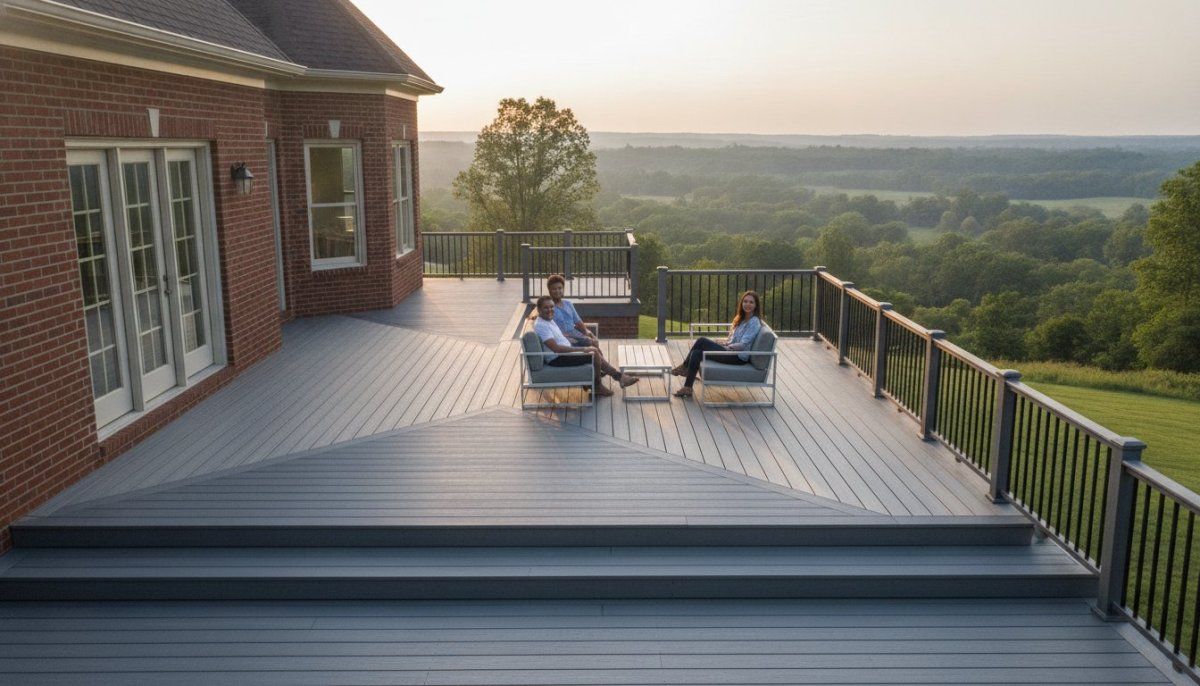
Trusted Composite Deck Builders in Louisville, KY

Pat McIntyre • September 27, 2026

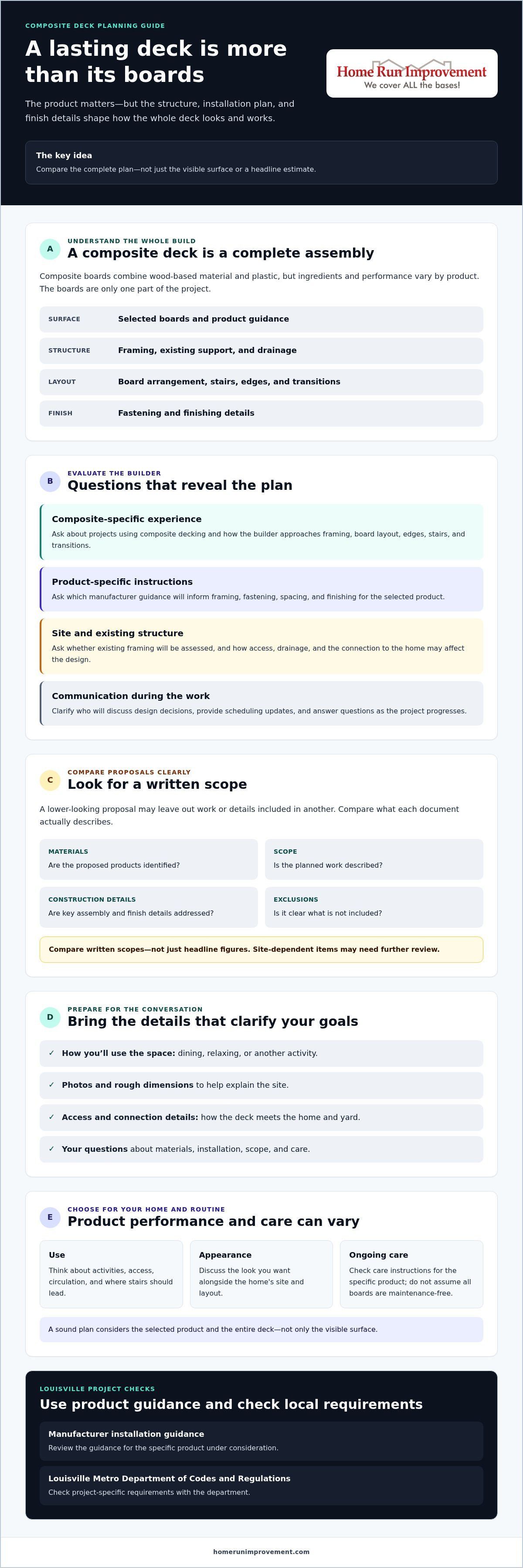
What if the boards you choose aren’t the biggest factor in how your composite deck looks and lasts? Installation details matter just as much. If you’re comparing Composite Deck Builders Louisville KY | Home Run Improvement, it’s sensible to look for a contractor who understands composite decking and can explain how the project will be planned and built.

You already know a deck is a significant investment, and unclear proposals can make it hard to compare contractors. The right questions can help you understand what’s included, how the site will shape the scope, and which decisions affect the finished deck. This guide explains how to assess a builder’s composite-deck experience, plan for durability and appearance, and prepare for a useful estimate.

Home Run Improvement is locally owned in Louisville and offers residential decking services and free estimates. As you consider your options, review the selected product’s manufacturer installation guidance, and check project-specific requirements with the Louisville Metro Department of Codes and Regulations. A clear conversation about materials, installation approach, project scope, and applicable requirements is a practical first step toward a deck built to suit your home.

Key Takeaways

  • Choose composite decking based on how you plan to use the space, while remembering that materials and performance can vary by product.
  • Assess a builder’s composite-specific experience and ask how the proposal addresses framing, board layout, stairs, edges, and transitions.
  • Look beyond the boards: substructure, drainage, fastening, and finish details all influence the completed deck.
  • Prepare photos, rough dimensions, access details, and questions so your project discussion can clarify goals and scope.
  • Use this guide to compare Composite Deck Builders Louisville KY | Home Run Improvement and plan informed next steps with a local contractor.

Why choose composite deck builders in Louisville, KY?

A composite deck is made with boards that combine wood-based material and plastic, though the ingredients and performance vary by product. For a plain-language overview, see understanding composite materials. The boards are only one part of the project: the supporting structure, layout, stairs, and transitions all contribute to how the finished deck functions and looks.

Start with how you want to use the space. A dining area may need clear access from the house, while a spot for relaxing may call for a different layout. Those goals help shape discussions about deck size, circulation, and where stairs should lead. For a Louisville contractor’s decking service details, visit decking services in Louisville.

To see an example of composite decking installation, watch this video:


https://www.youtube.com/watch?v=kLPIIwLDZUY


What does a composite deck builder handle?

Confirm the project scope with the contractor. Planning and installation may involve reviewing the site, discussing the selected boards, and coordinating the framing, layout, stairs, and finish details. Ask whether existing framing will be assessed before plans are finalized, and how site constraints such as access or the connection to the home could affect the design.

Bring your intended activities into the conversation. How many people should the space accommodate? Where will you enter it, and how should it connect to the yard? Clear answers help the builder evaluate practical choices instead of treating the deck as a set of boards alone. If you’re comparing Composite Deck Builders Louisville KY | Home Run Improvement, ask how the estimate describes the work and any site-dependent items that may need further review.

Is composite decking the right fit for your home?

Consider the look you want, how the deck will be used, and what level of ongoing care fits your routine. Then review guidance for the specific product under consideration. Cleaning instructions, installation details, and other care expectations can differ, so don’t assume all composite boards behave alike or that the material is maintenance-free.

Compare options based on your home, site, and priorities. If the existing structure needs attention or the yard presents constraints, those conditions may affect what’s appropriate. A sound plan accounts for the selected product and the whole deck, not just the visible surface.

How to evaluate composite deck builders in Louisville

Composite-specific experience should be easy for a contractor to explain. Ask about projects using composite decking and how the team plans the parts that can be easy to overlook: framing, board layout, edge details, stairs, and transitions to the house or yard. A polished surface matters, but a proposal should also show how the full assembly and finish will be addressed.

Home Run Improvement offers local decking services in Louisville. Review its Louisville decking services as you compare contractors, and use the questions below to understand each provider’s approach. A search for Composite Deck Builders Louisville KY | Home Run Improvement is only a starting point; clear answers and a written scope are what help you assess fit.

Questions to ask about composite deck installation

Ask which instructions for the selected product will guide framing, fastening, spacing, and finishing. The industry standards for composite decking offer a reference for material performance, but don’t treat a standards document as proof that a particular product or installation meets every project need.

Then ask how the plan accounts for your home, site access, drainage, and existing structure. Clarify who will discuss design decisions, provide scheduling updates, and answer questions as the work progresses.

What a clear deck proposal should explain

Compare written scopes, not just a headline figure. A lower-looking proposal may leave out work or details another includes. Check that each document identifies the proposed materials and describes the project scope, key construction details, and exclusions. If a product name or specification is unclear, ask for an explanation before comparing proposals.

Look for a defined way to handle discoveries, changes, and approvals. If existing framing or site conditions could affect the work, ask how those findings will be documented and discussed before the scope changes. Request any applicable warranty terms in writing, including what work they cover. That makes it easier to compare the actual commitments rather than relying on assumptions.

  • Experience: Ask for relevant composite-deck examples and a clear explanation of the builder’s role.
  • Construction: Discuss framing, layout, edges, stairs, and transitions.
  • Communication: Confirm who answers questions and how changes are approved.
  • Scope: Compare included work, materials, exclusions, and written terms.

Bring any open questions to the estimate discussion. If you’d like to talk through a decking project with Home Run Improvement, you can discuss your project with the Louisville team.

Composite deck installation details that matter more than the boards

Composite boards don’t compensate for a weak plan beneath them. The substructure supports the deck, while drainage, fastening, and finish details influence how the surface performs and looks over time. If water isn’t directed away appropriately, or fastening doesn’t suit the chosen boards, the finished result may not meet expectations even when the material itself is well selected.

Separate general construction planning from product-specific instructions. The project needs a sound approach to the supporting structure, site conditions, and connection points. But details such as spacing, fastening, and edge finishing can vary by product. A builder should identify the selected product and explain which current manufacturer instructions will guide its installation.

Why framing and fastening must match the selected product

Manufacturers define installation requirements for their products; one product’s instructions shouldn’t be assumed to apply to another. Ask how the proposed framing and fastening approach will follow the selected product’s current guidance. Hidden fasteners may be an option for some systems, but compatibility depends on the product and installation system. Don’t assume a fastener is suitable just because it can create a clean-looking surface.

If you’re considering TimberTech, use its guidance only when that is the product selected, and confirm the applicable instructions are current. Product availability through a particular contractor should also be confirmed rather than assumed. For homeowners comparing Composite Deck Builders Louisville KY | Home Run Improvement, the useful question is not just which boards are proposed, but how the complete assembly will be built around them.

How site conditions shape the finished deck

Before finalizing the plan, the builder should assess existing framing, ground conditions, water movement, access, and how the deck connects to the home. For example, limited access may affect how materials reach the work area, while the direction of runoff can inform how the project addresses water flow. These are site-specific considerations, not details that can be settled by choosing a board color.

Plan stairs, edges, and transitions with the same care as the main deck surface. Stair placement affects how people move between the deck and yard; border and edge treatments shape the perimeter; transitions need to connect cleanly to adjoining surfaces. Resolve these details early to avoid a finished layout that feels awkward or incomplete.

For general context, the International Code Council’s residential deck building codes provide a model-code reference, not confirmation of the requirements that apply to a specific Louisville project. Ask the relevant local authority or your contractor to verify applicable requirements. Careful planning is essential: composite boards still depend on a compatible structure, suitable installation details, and a layout that responds to the site.


Plan your Louisville composite deck project with fewer surprises

A useful estimate starts with clear goals and enough site information for a contractor to understand what needs review. Prepare in stages: define how you’ll use the deck, note site conditions, discuss material preferences, then review the written scope and confirm next steps. Early preparation helps the estimate conversation focus on your project instead of guesswork.

What to prepare before discussing an estimate

Write down who will use the deck and what you want to do there. Note preferred access points, privacy needs, and known constraints, such as a narrow route to the yard or an area where water collects. Bring photos and approximate dimensions to help explain the space. They’re useful starting points, not a substitute for an on-site assessment.

If you have a preferred composite look or product, mention it as a preference rather than assuming a particular brand or collection is available. Ask what options the contractor currently installs and what product guidance will apply. Keep a short list of questions so details about the site, materials, and project scope don’t get lost in the discussion.

How to review scope, schedule, and project communication

Once you receive an estimate, read beyond the summary. Confirm which materials and construction tasks are included, and identify exclusions or items that still need assessment. If a product name, specification, or warranty statement is unclear, ask for clarification in writing before relying on it.

Agree on how newly discovered site conditions or requested changes will be discussed and documented. Ask who will communicate updates, how approvals will be recorded, and what schedule expectations the contractor can currently provide. These questions help prevent different assumptions about what happens next.

Also verify whether local approvals may apply to your specific project. Requirements can depend on project details, so don’t rely on a general rule of thumb. Ask the contractor what steps may be relevant, then confirm applicable permit and code requirements with the Louisville Metro Department of Codes and Regulations.

A prepared discussion gives both you and the contractor a stronger basis for defining the work. Home Run Improvement is locally owned in Louisville and offers decking services and estimates. Bring your notes, photos, and questions to help clarify your goals, site conditions, and potential scope.

Request a Louisville decking estimate

Work with Home Run Improvement on a composite deck in Louisville

Home Run Improvement is locally owned in Louisville and offers professional decking services. If you’re considering a composite deck, an estimate conversation can help clarify how your goals, the home, and site conditions shape the possible project scope. It’s also a chance to ask which composite products and fastening systems the company currently installs, rather than assuming a particular product is available.

What to expect from an initial project conversation

Bring your ideas, photos, approximate dimensions, and questions. Discuss how you expect to use the deck, how you want to access it from the home and yard, and any known site concerns. Material preferences can guide the conversation, but recommendations should depend on an assessment of your specific project.

Home Run Improvement offers free estimates. The estimate discussion can help identify what needs further review and clarify what work may be included. It shouldn’t be treated as a promise of a specific product, installation date, or outcome before project details have been confirmed. For an overview of the company’s local work, see its Louisville decking services.

How to confirm fit before moving forward

Before approving work, review the written scope and ask how the proposed installation approach will follow the selected product’s current instructions. Confirm which materials and construction tasks are included, what remains excluded or subject to site assessment, and how changes will be discussed and documented.

Business information for Home Run Improvement reports a 10-year craftsmanship warranty. Before relying on that statement, request the current written terms and confirm whether the coverage applies to your specific decking work, along with any exclusions. A clear explanation lets you assess the proposal on its actual scope and documented commitments.

Choosing Composite Deck Builders Louisville KY | Home Run Improvement starts with a straightforward discussion: explain what you want to build, ask how the site and selected materials will be assessed, and make sure the next steps are clear. If the scope and communication approach fit your needs, you can decide whether to move forward with confidence.

Contact Home Run Improvement about your deck

Start planning a composite deck built around your home

A successful composite deck project depends on more than choosing boards. Confirm that the proposed framing, fastening approach, layout, stairs, and finish details suit the selected product and your site. Then compare written scopes carefully so you understand what’s included, what may need further assessment, and how questions or changes will be handled.

Composite Deck Builders Louisville KY | Home Run Improvement is a locally owned Louisville contractor offering professional decking services and free estimates. An estimate conversation can help clarify your goals, site conditions, material preferences, and potential project scope. Business information reports a 10-year craftsmanship warranty, but ask for the current written terms and confirm whether they apply to your project before relying on that coverage.

With those details in hand, you can take the next step with a clearer understanding of your project and the questions that matter. A well-planned conversation is a practical place to begin.

Request a free Louisville decking estimate

Your deck should fit the way you live and the conditions of your home. Start with a clear plan, and move forward with confidence.

Frequently Asked Questions

How do I choose a composite deck builder in Louisville, KY?

Choose a builder who can explain composite-specific experience and how the plan addresses the structure as well as the boards. Ask how framing, fastening, board layout, stairs, edges, and transitions will be handled, and which product instructions will guide installation. Compare written scopes and clarify exclusions, communication steps, and warranty terms. Searching for Composite Deck Builders Louisville KY | Home Run Improvement can help you find a local option to evaluate.

What should a composite deck installation estimate include?

A clear estimate should describe the proposed scope, selected materials, key construction tasks, and any known exclusions. Check whether it explains how framing, fastening, stairs, and finish details will be addressed. Ask how site discoveries or requested changes will be discussed and approved. If a material, specification, schedule expectation, or warranty statement is unclear, request written clarification before comparing it with another proposal.

Does composite decking need special installation?

Yes. Installation needs to follow the instructions for the specific decking product and fastening system, since requirements can differ. Ask the builder how the selected product’s guidance will inform framing, spacing, fastening, and finishing. The substructure and site conditions also matter. Don’t assume that instructions for one composite board or hidden-fastener system apply to another, or that the boards alone determine the finished deck’s performance.

Can composite decking be installed over an existing deck frame?

Possibly, but the existing frame needs to be assessed before that decision is made. Its condition, layout, and compatibility with the selected decking product can affect whether it can be reused, modified, or needs other work. Ask the contractor to review the structure and site, then explain the recommendation in the written scope. Don’t assume new boards can simply cover an existing frame without evaluation.

Is composite decking maintenance-free?

No. Care needs vary by product, so review the selected manufacturer’s cleaning and maintenance instructions rather than relying on a general claim. Ask what routine care the specific boards require and how to address debris or marks appropriately. Composite decking may have different care expectations from other materials, but it shouldn’t be described as maintenance-free unless the selected product’s documentation supports that wording.

Does Home Run Improvement offer free estimates for decking projects?

Yes. Home Run Improvement offers free estimates for decking projects. An estimate conversation can help clarify your goals, site conditions, and potential project scope. The company is locally owned and based in Louisville, with stated service coverage including Southern Indiana and communities such as Anchorage, Crestwood, Glenview, Hurstbourne, Indian Hills, Jeffersontown, Prospect, Clarksville, Bardstown, and Mt. Washington. Confirm that your project location is covered when you inquire.

What warranty applies to a composite deck installed by Home Run Improvement?

Home Run Improvement’s business information reports a 10-year craftsmanship warranty, but the applicable terms for a particular composite deck should be confirmed before work is approved. Request the current written warranty and check what decking work it covers, when coverage applies, and what exclusions may apply. Also distinguish contractor workmanship coverage from any separate manufacturer product warranty. Don’t assume one warranty guarantees the other.
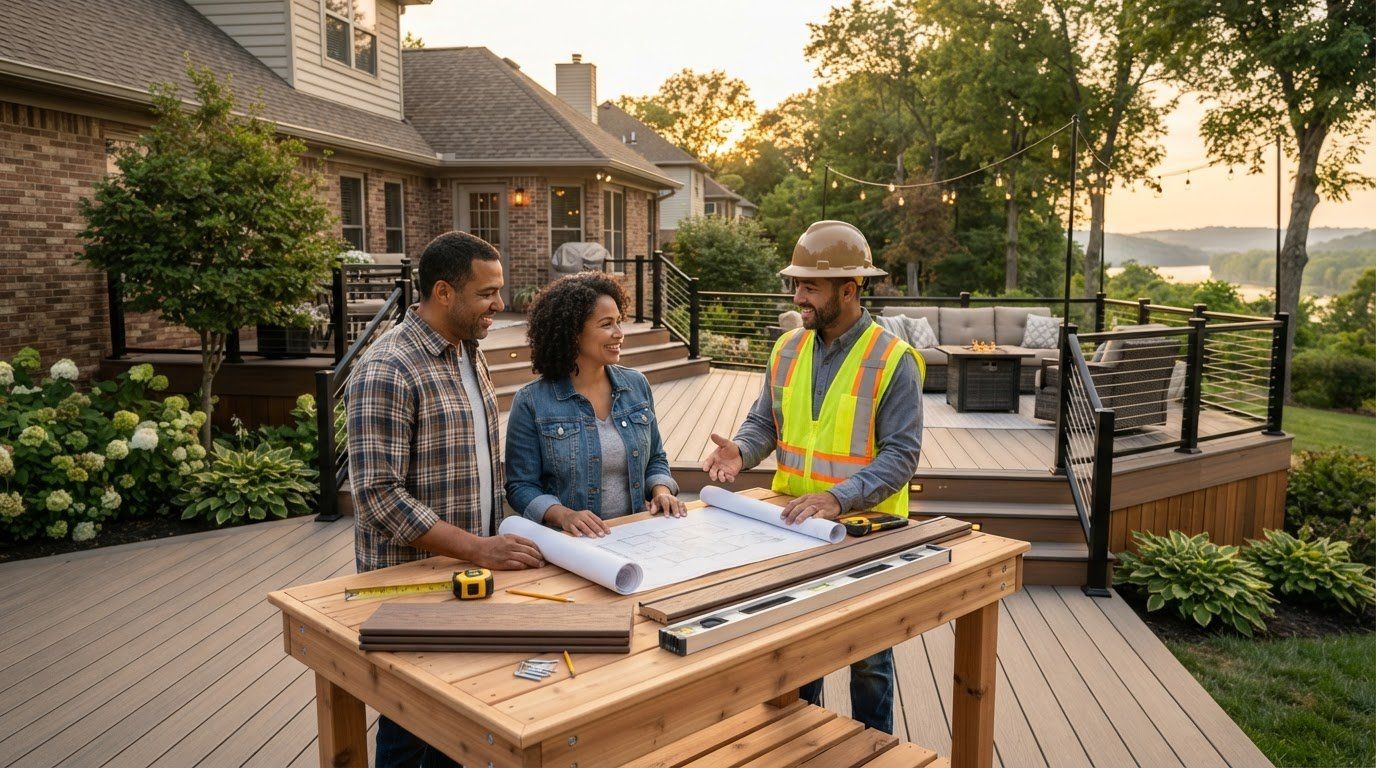
Two people and a contractor reviewing house plans on a deck beside a home at sunset
By Pat McIntyre • September 25, 2026
Looking for trusted deck builders in Louisville, KY? Home Run Improvement builds beautiful custom wood and composite decks. Request your free estimate today.
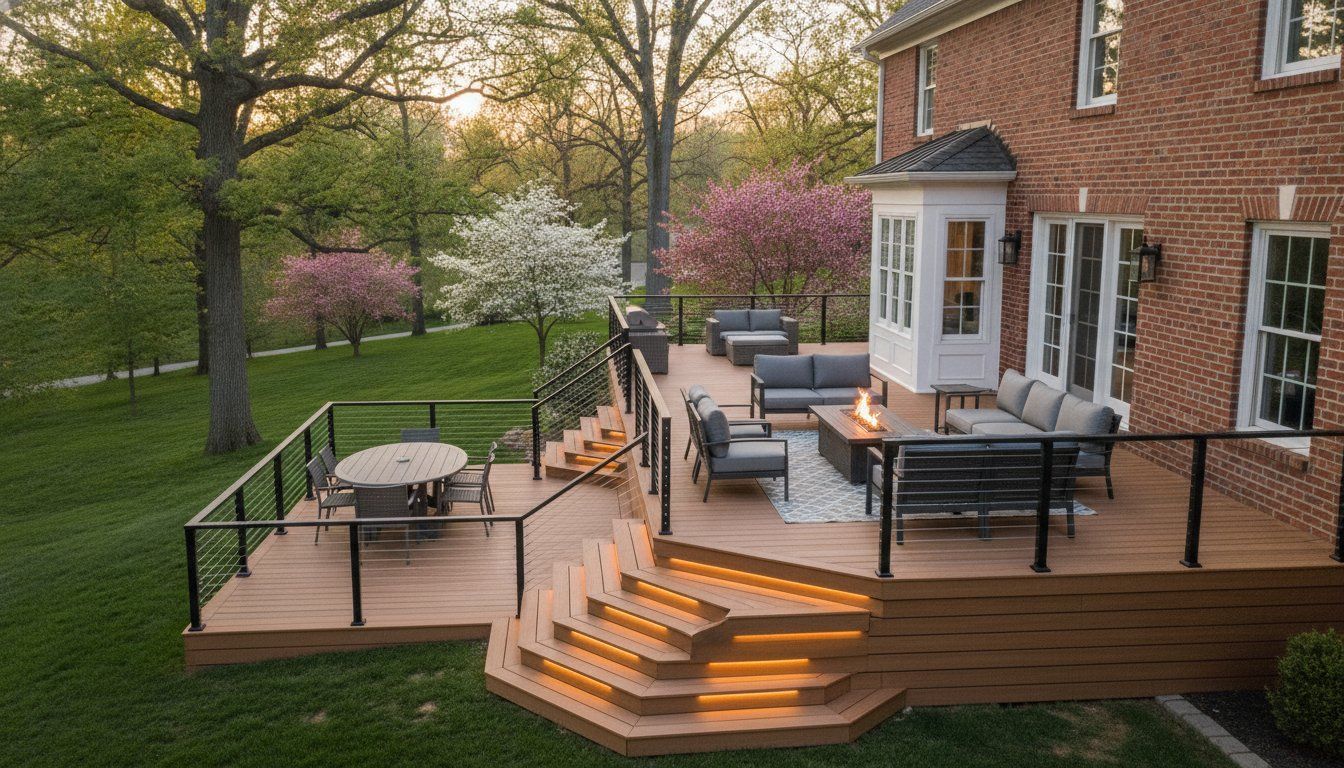
Backyard wooden deck with patio seating, stairs, and brick house at sunset
By Pat McIntyre • September 17, 2026
If your current deck is built with standard lumber, is it truly a long-term asset or just a ticking clock for wood rot? Most Louisville homeowners realize that our local humidity and the 45 to 46 inches of annual precipitation we receive can be devastating to traditional wood structures. You want an outdoor space that matches the architectural dignity of a home in Anchorage or Prospect, but you don't want to spend every spring scrubbing away mold. When you choose a professional custom deck design Louisville project, you aren't just buying boards; you are investing in a calculated defense against the Kentucky climate. This article will show you how to blend local aesthetics with high-performance materials like TimberTech Advanced PVC to ensure your investment remains structurally sound. If you prioritize durability, then understanding the difference between composite and PVC is essential for beating our 20 to 30 annual freeze-thaw cycles. We will preview the design-to-build process, from navigating Louisville Metro building permit requirements to selecting hidden-fastener systems like CONCEALoc. You will discover how to transform a difficult sloped lot into a multi-level sanctuary that increases your home value while minimizing your maintenance checklist. Key Takeaways Learn how to adapt your deck's footprint to the unique terrains and architectural guidelines of Louisville neighborhoods like Prospect and the Highlands. Discover why an expert custom deck design Louisville plan prioritizes TimberTech Advanced PVC to withstand Kentucky's intense humidity and frequent freeze-thaw cycles. Identify the technical details, such as joist flashing tape and hidden fasteners, that prevent moisture penetration and protect your home's structural integrity. Understand the critical Louisville Metro building permit codes regarding ledger board attachments and frost-depth footings to avoid costly inspection failures. See how the transition from initial vision to detailed 3D rendering ensures your custom outdoor space adds maximum long-term resale value to your property. The Fundamentals of Custom Deck Design in Louisville A high-quality custom deck design Louisville goes far beyond a basic 12x12 square attached to the back of a house. In neighborhoods like Anchorage or Indian Hills, your home's exterior architecture requires a structure that feels like a natural extension rather than a cheap afterthought. When you invest in a residential outdoor deck , you must account for local environmental stressors that compromise structural integrity over time. A design that ignores these factors isn't just an eyesore; it's a liability. To better understand how creative layouts can transform your backyard, watch this helpful video: https://www.youtube.com/watch?v=N6NHJTrk4qE Assessing Your Louisville Property Jefferson County properties present unique topographical challenges that demand precision. If your home sits on a sloped lot in Prospect or Glenview , a standard build won't work. We evaluate soil stability and calculate the exact height needed to match your interior floor levels for a seamless transition. We also analyze sun exposure patterns. This determines if you need integrated shade structures or specific materials that resist heat absorption during Kentucky's sweltering July afternoons. The Design-Build Philosophy Professional planning is your primary defense against structural failure. The precision of a custom deck design Louisville requires strict adherence to the Kentucky Residential Code. For instance, ledger boards cannot be attached directly through brick veneer. This is a common mistake made by inexperienced crews that leads to catastrophic collapse. We design freestanding structures when necessary to ensure your home's facade remains intact and your family stays safe. When you choose Home Run Improvement, you're choosing a partner who prioritizes long-term stability over quick fixes. Our process involves: Ensuring every concrete footing reaches the mandatory 24 to 30-inch depth to prevent frost heave. Utilizing 3D rendering to balance your aesthetic goals with functional requirements. Integrating our 10-year craftsmanship warranty into the project plan. This organized approach eliminates the typical anxieties of home improvement. If you value accountability, then a structured design-build process is the only way to protect your property and your peace of mind. Design Examples for Louisville Neighborhoods Louisville's diverse architecture means a deck that works for a ranch in Anchorage won't fit a multi-story home in Prospect . A successful custom deck design Louisville project isn't just about the boards; it's about how the structure interacts with your home's unique footprint. For properties in Prospect and Glenview, the multi-level walkout is often the most logical solution. These designs turn steep, unusable slopes into tiered living zones. By utilizing under-deck drainage systems, you can create a dry, finished patio on the ground level, essentially doubling your outdoor square footage. In Anchorage, where ranch-style homes are common, a modern minimalist approach with sleek, horizontal lines maintains the home's low profile. Conversely, traditional estates benefit from the wraparound classic. This style enhances curb appeal and provides multiple vantage points of the property. For those battling Kentucky's notorious mosquito season, a screened-in hybrid combines an open-air deck for grilling with a protected area for dining. If you're ready to see how these styles translate to your specific property, you can reach out to our team for a design consultation . Designing for Multi-Story Homes Safety and structural integrity are non-negotiable for high-elevation decks. If you're building a multi-story structure, then TimberTech Advanced PVC is the superior choice for durability. It doesn't splinter or rot like natural lumber. While traditional wood remains an option, homeowners often struggle with maintenance. Even the USDA Forest Service guidance on wood finishes highlights how severe weathering stress can degrade natural materials without constant care. High-elevation stairs should flow naturally with the landscape, using broad landings to break up long climbs and improve accessibility. Small Space Solutions Urban townhomes in areas like the Highlands or St. Matthews require a different strategy. When space is limited, you must prioritize utility. Vertical design elements, such as privacy screens or tall planters, help block the view from neighboring properties without making the area feel boxed in. Selecting light-colored decking boards, such as soft grays or tans, reflects more light and makes small footprints feel expansive. We take personal responsibility for every detail, ensuring your custom deck design Louisville delivers big results even on a small lot. Material Selection: Beating the Kentucky Climate Louisville's climate is notoriously hard on exterior structures. With an average of 45 to 46 inches of annual precipitation and summer humidity levels frequently exceeding 80%, traditional pressure-treated wood often fails prematurely. If you choose a custom deck design Louisville project based purely on initial cost, you might find yourself paying for structural repairs within five years. Wood naturally absorbs moisture, leading to the inevitable "checking" and warping caused by our 20 to 30 annual freeze-thaw cycles. In contrast, TimberTech Advanced PVC is engineered to withstand temperature swings ranging from 20°F to 170°F. This resilience ensures your boards won't buckle when the January frost gives way to a humid July heatwave. The "Barefoot Friendly" technology in Advanced PVC is a significant advantage for Kentucky families. Older synthetic boards traditionally became too hot to touch, but modern engineering allows for superior heat dissipation. While high-performance PVC requires a larger upfront investment than southern yellow pine, the long-term savings are undeniable. When you factor in the cost of professional staining every two years and the eventual replacement of rotted boards, PVC often becomes the more economical choice over a 20-year period. We prioritize these materials because we believe in building structures that last as long as the homes they support. The Science of Moisture Resistance Advanced PVC is entirely synthetic, meaning it provides zero organic food source for mold, rot, or mildew. This is critical in Louisville's damp environment where organic matter thrives. While the surface boards are protected, we recommend using kiln-dried lumber for the sub-structure to minimize post-installation shrinking and movement. Just as proper attic ventilation prevents moisture buildup under a roof, your deck needs adequate airflow beneath the joists to prevent stagnant water from compromising the frame over time. Low-Maintenance Luxury When you choose a high-performance deck, you eliminate the grueling cycle of annual power washing, sanding, and staining. Maintenance is reduced to a simple rinse with soap and water to remove seasonal pollen or dirt. Pairing your new deck with high-quality vinyl siding creates a cohesive, maintenance-free exterior that looks pristine for decades. This integrity-driven approach to material selection protects your time and your investment. It allows you to actually enjoy your outdoor space rather than spending your weekends maintaining it. Functional Features That Elevate Your Design A superior custom deck design Louisville project is defined by the details you cannot see just as much as the ones you can. While the surface boards provide the aesthetic, the fastening system and sub-structure protection determine how long that beauty lasts. We utilize TimberTech Hidden Fasteners to achieve a clean, screw-free surface. This eliminates the "mushrooming" effect often seen around traditional screw holes and prevents moisture from entering the board core. It also creates a safer walking surface for children and pets, removing the risk of snagged clothing or scratched feet. When you choose professional-grade fasteners, you're choosing a finish that remains pristine for decades. Lighting is another critical element that transforms a platform into a destination. Integrated LED lighting in stair risers, post caps, and under-rail sections provides essential safety while creating a sophisticated evening ambiance. These systems are low-voltage and weather-resistant, ensuring they stand up to Jefferson County's seasonal shifts. To complete the look, we offer custom railing systems in aluminum, glass, or composite. Aluminum provides a sleek, low-profile view, while glass is ideal for homes in Prospect that overlook wooded lots or rolling hills. Structural Longevity Professional builders consider joist tape the "secret weapon" for long-term stability. TimberTech ProTac Joist Tape acts as a waterproof barrier on top of your treated lumber joists. It prevents water from pooling in the small gaps between the board and the frame, which is the primary cause of sub-structure rot. If you ignore this step, you're leaving your deck's foundation vulnerable to Kentucky's relentless humidity. We also maintain strict joist spacing, typically 12 to 16 inches on center. Following TimberTech’s technical spacing guides ensures a rigid, high-end feel underfoot. We also install solid blocking edge-to-edge every 4 to 6 feet to keep joists from twisting over time. Outdoor Living Amenities Your deck should function as a true outdoor living room. We can design built-in seating and planters that maximize your floor plan and provide permanent utility. If you plan on adding heavy features like a hot tub or a large fire table, we must engineer the frame for those specific loads during the initial custom deck design Louisville phase. For multi-story designs, we often integrate seamless gutters to manage second-story drainage. This keeps the area below dry and usable for a secondary patio or storage space. These calculated additions ensure your deck is as functional as it is beautiful. Schedule your custom deck design consultation today. Starting Your Custom Deck Project in Louisville Initiating a custom deck design Louisville project requires moving from initial inspiration to a concrete, permitted plan. We start with a free estimate to establish your project's scope, budget, and functional needs. Our consultation process then transforms your vision into a detailed 3D rendering. This isn't just a visual aid; it's a technical blueprint that ensures every structural detail, from joist spacing to staircase flow, meets our rigorous standards. This rendering allows you to experiment with board orientations and railing styles, ensuring the final result complements your home’s existing siding or roofing. If you can see the finished product before the first board is cut, then you eliminate the uncertainty that often plagues home renovations. Navigating the Louisville Metro Office of Construction Review is a mandatory part of the process. Every deck attached to a single-family dwelling in Jefferson County requires a building permit. We handle the technical documentation, ensuring your project adheres to the Kentucky Residential Code. This includes coordinating with Kentucky 811 at least two business days before excavation begins to locate underground utilities. Our team ensures footings extend the mandatory 24 to 30 inches into undisturbed soil to prevent frost heave during our erratic Kentucky winters. We take personal responsibility for these administrative hurdles so you don't have to. Finding the Right Contractor Working with a local, owner-operated team ensures accountability that national franchises simply cannot match. When you choose a contractor, verify their local reputation by checking Google Reviews for recent Louisville projects. Ask direct questions about their craftsmanship standards and how they handle unforeseen site conditions. A "Protective Expert" doesn't just sell you a deck; they shield you from the risks of poor workmanship and subpar materials. Our 10-year craftsmanship warranty is a testament to this commitment, providing you with long-term stability and peace of mind. Timeline and Preparation The construction phase typically follows a methodical sequence: site preparation, footing excavation, framing, and finally, the installation of your chosen TimberTech surfaces. You should prepare your yard by clearing the immediate construction zone and ensuring pet access is restricted during work hours. Contact Home Run Improvement early to secure your spot on our seasonal calendar, as high-demand months fill up quickly. Our process concludes with a final walkthrough to ensure every detail matches the custom deck design Louisville plan, followed by the activation of your warranty. This structured approach ensures your project is completed with precision and professional integrity. Transform Your Louisville Backyard Into a Lasting Asset Building an outdoor space in Kentucky requires more than just an eye for aesthetics; it demands a technical understanding of our local climate. You've learned that a successful custom deck design Louisville project balances neighborhood-specific architecture with the moisture-resistant science of TimberTech Advanced PVC. By prioritizing structural details like joist tape and hidden fasteners, you protect your sub-structure from the rot that claims so many traditional wood decks in Jefferson County. When you choose a locally owned and operated team that follows Louisville Metro building codes, you aren't just hiring a crew; you're partnering with specialists who treat your property with professional integrity. Our status as TimberTech Advanced PVC specialists means your project benefits from the highest industry standards. We back every build with a 10-year craftsmanship warranty because we believe in the stability of our work. If you're ready to move from a 3D rendering to a completed multi-level sanctuary, then taking the first step is simple. Secure your seasonal start date and ensure your home investment remains a source of pride for decades to come. Get Your Free Custom Deck Estimate in Louisville We look forward to helping you build a beautiful, low-maintenance retreat that your family will enjoy for years. Frequently Asked Questions How much does a custom deck design in Louisville typically cost? A custom deck design Louisville project cost varies based on square footage, elevation, and your choice of materials. While traditional wood has a lower initial price, high-performance options like TimberTech Advanced PVC offer superior long-term value by eliminating maintenance costs. Factors such as sloped lots in the Highlands or multi-tier designs in Prospect also influence the total investment. We provide project-based pricing after a detailed consultation and 3D rendering of your specific vision. Do I need a permit for a deck replacement in Jefferson County? Yes, a building permit through the Louisville Metro Office of Construction Review is mandatory for any deck attached to a single-family home. Even for freestanding structures, you'll need a permit if the deck exceeds 200 square feet or sits more than 30 inches above the grade. We manage the entire permitting process to ensure your build complies with the Kentucky Residential Code, including mandatory frost-depth footings and guardrail specifications. Is TimberTech Advanced PVC better than wood for Kentucky weather? TimberTech Advanced PVC is significantly more resilient than wood in the humid Kentucky climate. Our region experiences roughly 45 inches of annual precipitation, which causes natural lumber to rot, warp, and splinter over time. PVC is 100% synthetic and engineered to withstand temperature swings from 20°F to 170°F. It provides a "barefoot friendly" surface that dissipates heat better than older composite or wood alternatives during our sweltering Louisville summers. What is the best time of year to build a deck in Louisville? While decks can be built year-round in Louisville, late autumn and winter are often the most strategic times for scheduling. Building during the off-season ensures your outdoor space is ready for use by the first warm days of spring. Our crews can install TimberTech products in temperatures as low as 20°F. If you lock in your project date early, then you avoid the peak-season backlog that typically occurs during the spring rush. How long does the 10-year craftsmanship warranty last and what does it cover? Our 10-year craftsmanship warranty covers the structural integrity of the installation itself for a full decade. If an issue arises due to installation errors or a failure to follow manufacturer specifications, we take personal responsibility for the repair. This warranty acts as a security measure for your investment, ensuring that your custom deck design Louisville project remains stable. It complements the separate, long-term material warranties provided by TimberTech for your peace of mind. Can I install a custom deck over my existing concrete patio? You can install a custom deck over an existing concrete patio, provided the concrete is stable and properly sloped for drainage. This usually involves a "sleeper system" or low-profile framing that allows for adequate airflow beneath the deck boards. We must evaluate the condition of your concrete during the initial consultation to ensure it can support the weight of a new structure. If the concrete is failing, we may recommend a new foundation. How do I choose between composite and PVC decking materials? Choosing between composite and PVC usually depends on your budget and your tolerance for maintenance. Composite decking contains wood fibers, which makes it feel like natural lumber but leaves it slightly more vulnerable to moisture. TimberTech Advanced PVC is entirely synthetic and offers the highest level of resistance to mold and mildew. If your property has high moisture or low airflow, then PVC is the superior choice for long-term durability in Louisville. What maintenance is required for a TimberTech deck in Louisville? Maintenance for a TimberTech deck is minimal, requiring only periodic cleaning with mild soap and water. Unlike wood, these materials never require sanding, staining, or sealing to maintain their appearance. We recommend a seasonal rinse to remove pollen, leaves, or dirt that can accumulate in Jefferson County. Using a soft-bristle brush helps keep the wood-grain texture looking new without damaging the protective cap. This ensures your deck remains a low-maintenance luxury.
By Pat McIntyre • September 15, 2026
For a Louisville homeowner, a new deck is more than just a home improvement project; it’s an investment in your lifestyle. It’s the future site of family barbecues, quiet morning coffees, and relaxing evenings under the Kentucky sky. But before the first board is laid, a critical decision must be made: will you choose the timeless appeal of a natural wood deck or the modern resilience of composite decking? This choice often comes down to one primary factor: cost. However, a simple price tag comparison doesn’t tell the whole story. The true composite decking vs. wood cost in Louisville is a calculation that extends far beyond the initial quote. It involves understanding upfront material and labor expenses, the long-term financial commitment of maintenance, and the overall return on your investment over the life of the deck. At Home Run Improvement, we believe an informed homeowner makes the best decision for their property. We’ve spent years building and installing high-quality decks across Louisville and Southern Indiana, and we’ve seen firsthand how material choices impact a family’s budget and free time. This comprehensive guide is designed to break down the real costs, both immediate and hidden, to help you choose the perfect decking material for your home. The Upfront Investment: A Head-to-Head Cost Analysis When you receive a quote for a new deck, the total price is a combination of materials, labor, and foundational work. Let’s dissect these initial costs to understand where wood and composite decking stand in the Louisville market. Wood Decking Material Costs: The Traditional Options Natural wood offers a classic aesthetic that many homeowners love. The upfront cost varies significantly based on the type of wood you select. Pressure-Treated (PT) Pine: This is the most common and budget-friendly decking material. It’s pine lumber that has been chemically treated to resist rot, decay, and insects. While it has the lowest initial cost, it also requires the most diligent maintenance to preserve its integrity and appearance. Cedar and Redwood: These softwoods are a step up in both price and natural durability. They contain natural oils (tannins) that make them more resistant to rot and insects than untreated pine. They offer a beautiful, rich color but will still require regular sealing to prevent them from weathering to a silver-gray. Exotic Hardwoods (Ipe, Tigerwood): At the premium end of the wood spectrum, exotic hardwoods like Ipe are incredibly dense, durable, and naturally resistant to almost everything. Their exceptional longevity and stunning appearance come with the highest price tag for natural wood materials. TimberTech Composite Decking Costs: The Modern Standard Composite decking, led by industry innovators like TimberTech, represents a significant evolution in outdoor living materials. It is an engineered product made from a blend of wood fibers and recycled plastics, capped with a durable polymer shell for protection. It’s important to note that "composite" isn't a single product. TimberTech offers a range of product lines, allowing homeowners to balance their budget with performance and aesthetic goals: TimberTech EDGE™: This line offers an accessible entry point into high-performance composite decking, providing superior durability compared to wood at a more competitive price point. TimberTech PRO™: The "better" category features enhanced wood grain textures and color blending, backed by a 30-year warranty, offering a fantastic balance of beauty and performance. TimberTech AZEK™: This premium line is not a composite but a 100% polymer (PVC) decking. It offers the highest level of performance, stain resistance, and scratch resistance, often backed by a 50-year or lifetime warranty. Generally, even entry-level TimberTech decking will have a higher upfront material cost than pressure-treated pine and cedar. However, its price is often competitive with premium exotic hardwoods. Labor and Installation: The Cost of Craftsmanship Whether you choose wood or composite, the quality of the installation is paramount. Labor costs in the Louisville area depend on the deck's size, complexity (e.g., multiple levels, stairs, built-in benches), and the contractor's experience. While it may be tempting to cut costs with a less experienced installer, this often leads to expensive problems down the road. A professional installation by a team like Home Run Improvement ensures that the deck is not only beautiful but also structurally sound and compliant with local building codes. For composite decking, expert installation is even more critical. These materials have specific requirements for gapping and fastening to allow for thermal expansion and contraction. Improper installation can void the manufacturer's warranty, turning a premium investment into a liability. This is why our work is backed by our own 10-Year Craftsmanship Warranty , giving you peace of mind that the job is done right. The Initial Cost Verdict For the lowest upfront cost, pressure-treated wood is the clear winner. However, if you are considering premium cedar or exotic hardwoods, the initial material cost begins to approach that of high-quality composite decking like TimberTech. But as we will explore, the initial price tag is just the first chapter in the story of your deck's total cost. The Long-Term Cost of Ownership: Where the Real Value Is Revealed A deck is not a one-time purchase; it’s a long-term asset that requires care. This is where the financial gap between wood and composite decking dramatically shifts. The "Protective Expert" in us must advise you to look beyond the initial quote and consider the lifetime cost of your investment. The Ongoing Demands of a Wood Deck A wood deck is a commitment. To protect it from Louisville’s humid summers and freezing winters, you must perform regular, often costly, maintenance. Without it, wood will inevitably splinter, warp, rot, and fade. The Annual Maintenance Cycle for Wood: Thorough Cleaning: At least once a year, the deck must be cleared and scrubbed to remove dirt, mildew, and algae. This often requires a pressure washer, which can damage the wood if not used correctly. Sanding: To prepare the surface for a new coat of sealant and to smooth out any minor splinters, the deck may need to be sanded every few years. Staining and Sealing: This is the most critical step. Every 1-3 years, the deck must be re-stained and re-sealed to protect it from UV rays and moisture. Calculating the Financial and Time Cost: Materials: A 5-gallon bucket of quality deck stain and sealer can cost hundreds of dollars. Add in cleaners, brushes, rollers, and tarps, and the annual material cost can easily be $200-$500 or more, depending on your deck's size. Labor: You can either do it yourself, sacrificing several weekends of your valuable time, or hire a professional, which can cost $500-$1,500+ for each maintenance cycle. Over a 15-year period, these maintenance costs can add up to thousands, or even tens of thousands, of dollars. This ongoing expense completely changes the composite decking vs wood cost Louisville equation. The "Set It and Forget It" Advantage of TimberTech This is where composite decking truly shines. TimberTech was engineered to eliminate the costly and time-consuming maintenance associated with wood. The durable polymer cap that protects the board resists fading, staining, moisture, and mildew. Maintenance for TimberTech is simple: An occasional cleaning with soap and water or a gentle deck cleaner is all that’s needed to keep it looking new. There is no sanding. No staining. No sealing. Ever. When you compare the long-term costs, the higher initial investment in TimberTech is often recouped in just a few years. The money you save on stains, sealers, and labor—not to mention the weekends you get back—makes it the more economical choice over the life of the deck. Beyond Cost: A Deeper Comparison of Performance and Livability While cost is a major driver, the best deck for your home also depends on durability, aesthetics, and safety. Here’s how the two materials stack up in the areas that impact your daily enjoyment. Durability and Lifespan in the Ohio Valley Climate Louisville's weather can be tough on outdoor structures. The high humidity, seasonal rainfall, and temperature swings are a constant threat to traditional wood. Wood: Even with perfect maintenance, a pressure-treated pine deck typically lasts 10-15 years before major repairs or replacement are needed. Cedar may last 20-25 years. Wood is susceptible to rot, insect damage (especially termites), and warping as it absorbs and releases moisture. TimberTech: Built to withstand the elements, TimberTech decking is exceptionally durable. It resists moisture absorption, meaning it won't rot, warp, or crack like wood. As detailed in their technical guides, TimberTech Advanced PVC decking has a service temperature range of –70°F to 200°F, making it stable in both deep freezes and summer heat. This resilience is why TimberTech backs its products with industry-leading warranties, often ranging from 25 years to a lifetime. Aesthetics and Design Freedom Your deck should be a beautiful extension of your home. Both materials offer distinct visual appeals. Wood: Offers an authentic, natural beauty that is undeniable. It can be stained in a variety of colors to match your home. However, maintaining that color requires constant work. Left untreated, all wood will eventually fade to a weathered gray. TimberTech: Modern manufacturing allows TimberTech to offer a vast array of colors and realistic wood grain patterns that mimic the look of high-end hardwoods without the upkeep. The color is consistent and protected by UV inhibitors to resist fading. Furthermore, systems like TimberTech's CONCEALoc® and Cortex® hidden fasteners create a smooth, fastener-free surface that is impossible to achieve with traditional face-screwed wood boards. Safety and Comfort for Your Family A deck is a place for family, which makes safety a top priority. Wood: The biggest safety concern with wood is splintering. As the wood ages and weathers, it can create painful splinters, making it less friendly for bare feet, children, and pets. Wood can also become very slippery when wet or when algae and mildew are present. TimberTech: Because it’s a composite material with a protective cap, TimberTech will never splinter. It is designed for better slip resistance than wood, providing more secure footing in wet conditions. Environmental Considerations For environmentally-conscious homeowners, the choice is more nuanced than it first appears. Wood: As a natural resource, wood is renewable. To ensure responsible sourcing, you can look for lumber certified by the Forest Stewardship Council (FSC) . However, the pressure-treating process involves chemicals, and the stains and sealers required for maintenance often contain volatile organic compounds (VOCs). TimberTech: As a brand of The AZEK Company, TimberTech has a strong focus on sustainability. Their decking is made from a high percentage of recycled materials, including plastic bags, milk jugs, and reclaimed wood fibers, diverting hundreds of millions of pounds of waste from landfills each year. You can learn more about their recycling initiatives on the AZEK website . This commitment to using recycled content makes it a highly sustainable choice. The Foundation of a Great Deck: Why Professional Installation is Non-Negotiable Regardless of which surface material you choose, it will be supported by a substructure, which is almost always built from pressure-treated wood. The performance and longevity of your entire deck—wood or composite—depend entirely on the quality of this hidden foundation. Building a Resilient Substructure A poorly constructed frame will undermine even the most expensive decking materials. At Home Run Improvement, we build every deck substructure to exceed standards, ensuring it can provide decades of reliable support. We follow manufacturer best practices, such as those outlined by TimberTech, which are critical for performance: Proper Joist Spacing: We ensure joists never exceed 16 inches on center to provide a solid, rigid feel underfoot and prevent board sagging. Essential Blocking: We install blocking between joists every 4-6 feet to prevent them from twisting and to strengthen the overall frame. Joist Protection: We strongly recommend using products like TimberTech Pro™ Tac Joist Tape . This self-adhering tape is applied to the tops of joists and beams, creating a waterproof barrier that protects the structural lumber from moisture penetration—the primary cause of rot. This small addition can significantly extend the life of your deck's foundation. This meticulous approach to the substructure is a hallmark of a true expert TimberTech deck builder and ensures your investment is protected from the ground up. The Final Verdict: What’s the Right Choice for Your Louisville Home? So, when evaluating the composite decking vs. wood cost in Louisville , what is the final answer? Choose a Wood Deck if: Your primary concern is the lowest possible upfront cost. You genuinely enjoy the process of annual maintenance projects and have the time and budget for them. You are committed to the authentic look and feel of natural wood and accept the upkeep it requires. Choose a TimberTech Composite Deck if: You prioritize long-term value and a lower total cost of ownership over the deck's life. You want to spend your free time enjoying your deck, not maintaining it. You value superior durability, fade and stain resistance, and splinter-free safety for your family. You desire a premium, polished aesthetic with a wide range of design options. For the vast majority of Louisville homeowners we work with, the long-term benefits, minimal maintenance, and enduring beauty of TimberTech composite decking make it the clear winning investment. The initial cost is higher, but the peace of mind and decades of worry-free enjoyment provide a return that far exceeds the price difference. Ready to explore the possibilities for your own backyard oasis? The team at Home Run Improvement is here to help. We can provide a detailed, no-obligation estimate that breaks down the costs for different material options and helps you design the deck of your dreams. Contact us today to schedule your free consultation and take the first step toward transforming your outdoor living space.