How Long Does a Kitchen Remodel Take in Louisville?

November 11, 2025

How Long Does a Kitchen Remodel Take in Louisville?

If you’re planning a kitchen remodel, one of your first questions is likely, “How long will it take?” While every project is different, most Louisville kitchen remodels fall within a similar timeline.


Typical Timeline Breakdown

  • Design & planning: 2–4 weeks.

  • Demolition: 1 week.

  • Plumbing & electrical rough-in: 1–2 weeks.

  • Cabinetry, flooring, counters: 3–6 weeks.

  • Finishing touches: 1–2 weeks.

On average, you can expect 6–12 weeks from start to finish.


Factors That Affect Timelines

Several things can influence how long a remodel takes, including the size of the kitchen, the scope of work, and material availability. A cosmetic refresh may only take a few weeks, while a full gut renovation will take longer.


Keeping Projects on Track

At Home Run Improvement, we understand that time is valuable. Our experienced team manages every step of the process, working with local suppliers to minimize delays and keep your project moving smoothly.


Want a custom timeline for your project? Contact us today for a free consultation and see how soon you could be enjoying your dream kitchen.

By Pat McIntyre • September 28, 2026
What if the best deck for your Louisville home isn’t the biggest one, but the one planned around how you’ll use it? Choosing among Custom Deck Builders Louisville KY | Home Run Improvement starts with more than comparing designs. You need a clear plan, sound construction, and a contractor you can trust with your home. It’s reasonable to have questions before committing: Which materials fit your home and upkeep preferences? What belongs in the project scope? And what permits or structural considerations apply? In Louisville , a building permit is required for a deck attached to a house, regardless of size. The Louisville Metro Construction Review resources can help you understand the local process. This guide will help you shape a deck plan around your outdoor routines, compare material and project-scope decisions, and know what to discuss with a local builder. You’ll also learn why clear communication about permits and structural requirements matters. Home Run Improvement is locally owned in the Louisville area and offers professional decking services, giving you a local option as you move from early ideas toward a considered estimate and build. Key Takeaways Start with how you’ll use the deck, then plan its layout around access, seating, movement, and the space available in your yard. Choose materials by weighing your property’s needs, preferred upkeep, appearance, and reliable product guidance. Compare builder proposals for what’s included, material details, site preparation, construction scope, exclusions, and how questions or changes will be handled. Project steps and local requirements depend on your property and design; check current guidance from Louisville Metro Construction Review. Learn what to discuss with Custom Deck Builders Louisville KY | Home Run Improvement, a locally owned Louisville-area contractor offering residential decking and free estimates. Why Plan a Custom Deck for Your Louisville Home? A useful deck should fit the home, the way your household spends time outdoors, and the space your property actually offers. A layout that works well for dining may feel awkward for relaxing or moving between the house and yard. Planning around your priorities helps coordinate access, seating, circulation, and the connection to the rest of your outdoor space. A custom deck project is a deck designed around a specific property and the ways its owners intend to use it. That means understanding the site and household needs before settling on features or a footprint. For a general overview of deck structures and common considerations, see Deck . If you’re comparing Custom Deck Builders Louisville KY | Home Run Improvement, begin with the needs your design must meet, not a preset list of add-ons. This video offers a visual introduction to deck construction: https://www.youtube.com/watch?v=PkvKO8GchyE Start with how you want to use the deck Decide what the deck needs to do in everyday life. Is the main purpose outdoor dining, a place to relax, room to entertain, or easier access to the yard? Consider household routines, who may visit, and how people will move between indoor and outdoor spaces. A dining area, for example, needs comfortable circulation around the table, while a quiet seating area may call for a more sheltered position. Write down your priorities before speaking with prospective builders. A short list keeps design conversations focused and gives you a practical way to compare ideas: Primary activities, such as dining, relaxing, or entertaining How many people the space should comfortably serve Where you need access between the house and yard Features you consider essential versus optional Account for the home and outdoor space The property should shape the plan. Door locations influence where people enter the deck; existing grade and available space can affect its layout and connection to the yard. Privacy may also matter, especially if neighboring homes or outdoor areas are close by. These details are why a standard footprint shouldn’t be assumed to suit every Louisville property. A site-specific assessment helps identify constraints and opportunities before design decisions become fixed. Bring those observations to a design conversation with a local professional. Home Run Improvement offers residential decking in the Louisville area; its Louisville decking services page provides a starting point for discussing your project. A clear understanding of how you’ll use the deck and what the site allows can make the next design and scope decisions more grounded. How to Shape a Custom Deck Design for Your Louisville Property A strong design brief turns household priorities into decisions a builder can assess: where the deck connects to the house, how people will move through it, and which features matter most. Separate preferences you can define now, such as a dining area or a clear route to the yard, from details that require an on-site assessment, including how the existing structure and grade affect the design. Match the layout to daily use and site conditions Deck size, transitions, stairs, and circulation work together. For example, a route from a frequently used door to the yard should remain clear even if the deck also needs room for seating. Note which access points and activities are priorities, then ask a builder to evaluate how the property can accommodate them. Framing, joist layout, and other structural details aren’t preferences to guess at; they require qualified professional judgment based on the specific project. Before finalizing plans, check applicable requirements with the authority having jurisdiction. Louisville Metro’s Construction Review resources are a useful place to confirm where to direct questions about projects in Louisville. Requirements may differ by location, so verify them for the property rather than relying on assumptions. Compare decking materials without assuming one choice fits everyone Compare material categories against the conditions of the site and the care you’re prepared to provide. Wood and composite decking, for example, can differ in appearance and upkeep expectations, but the specifics depend on the product. Review the manufacturer’s instructions for the material under consideration, including its installation guidance. Don’t assume that details for one product apply to another. Ask prospective builders to explain how the proposed material affects the project scope and construction details. Product-specific guidance should inform the plan, while structural decisions should be reviewed by a qualified professional. For general homeowner resources related to deck safety and the industry, the North American Deck and Railing Association (NADRA) is another source to consult. Turn priorities into a useful design brief Before discussing options with Custom Deck Builders Louisville KY | Home Run Improvement or another prospective builder, organize your ideas into a brief: Use: Identify the main activities and who will use the deck. Access: Note the doors, yard connections, and transitions that matter. Look and upkeep: Describe your appearance preferences and maintenance expectations. Questions: List site, material, structural, and local-requirement items that need professional review. This gives a builder a clearer starting point without treating an early wish list as a finished plan. If you’re ready to discuss how your priorities might translate to a project scope, you can contact Home Run Improvement about your deck project . How to Compare Custom Deck Builders in Louisville, KY A proposal is useful only when you can tell what the builder is agreeing to do. A low headline figure alone doesn’t establish equal scope, workmanship, or value. One estimate may include site preparation or specified materials that another leaves out. Before comparing totals, make sure you understand what each proposal covers and what could remain your responsibility. Compare proposals by scope, materials, site preparation, construction details, responsibilities, stated exclusions, communication, and applicable warranty terms. That checklist can help you spot meaningful differences and ask focused questions before choosing a contractor. Questions to ask before choosing a deck contractor Ask for examples of completed deck work relevant to your project, then clarify exactly what the proposal includes. Who will coordinate the site evaluation and design decisions? Who is your point of contact during construction, and how will questions or requested changes be documented and shared? Clear answers help you understand how the work will be managed, not just what the finished deck might look like. Request written explanations of the materials, site preparation, construction scope, and any exclusions. Ask which responsibilities belong to you and which belong to the contractor. If a warranty is mentioned, request its written terms and confirm that it applies to the proposed decking work. For homeowners considering Custom Deck Builders Louisville KY | Home Run Improvement, the same questions help create a fair, informed basis for comparing proposals. How to assess workmanship and documentation Review relevant project photos and customer feedback for clues about communication, coordination, and the overall client experience. Treat them as one source of information, not proof of structural quality or compliance. Home Run Improvement customer testimonials may help you understand reported customer experiences; confirm that any example you rely on relates to decking. Ask how structural details will be evaluated and who is responsible for confirming that the design and installation guidance suit the property and selected materials. Those decisions should be addressed by qualified professionals, not left vague in the proposal. For Louisville-area projects, confirm applicable permitting and inspection requirements with the authority having jurisdiction, and ask how the proposal accounts for any required reviews. Keep the comparison practical: if a proposal is unclear about a material, exclusion, or responsibility, ask for clarification in writing before moving forward. A careful review makes it easier to distinguish a complete, well-documented scope from one that only looks comparable at first glance. If you’d like to discuss a decking project with Home Run Improvement, you can contact the Louisville team . What to Expect During a Custom Deck Project in Louisville A well-managed deck project moves through clear stages, but the details aren’t identical for every home. The property, proposed design, selected materials, and applicable local requirements all affect the process. Before work begins, make sure you understand what has been assessed, what the agreed scope includes, and who will answer questions as decisions come up. As you work with Custom Deck Builders Louisville KY | Home Run Improvement or another prospective contractor, expect to move through a sequence like this: Discuss goals: Explain how you plan to use the deck and what matters most. Assess the site: Review access, grade, the home, and other conditions that may affect the design. Confirm the scope: Clarify proposed materials, site preparation, construction details, exclusions, and responsibilities. Verify requirements: Check permit and inspection questions with the authority having jurisdiction. Plan construction: Agree on communication and worksite coordination before the build proceeds. The order and exact steps may vary. A straightforward layout and a project with more complex site conditions may call for different planning and review. Site assessment, scope, and approvals A contractor should clarify relevant site conditions and proposed work before the project scope is finalized. Ask what assumptions the plan depends on and whether further review may affect the design. Don’t rely on a general answer about permits or inspections; requirements can depend on the property and jurisdiction. Confirm current guidance directly with Louisville Metro or the appropriate local authority for your address. For Louisville properties, the Louisville Metro Construction Review resources provide an official starting point for permit questions. If the property falls under a different jurisdiction, contact that authority instead. Verify applicable approvals and inspection steps before construction planning is treated as complete. Construction details and homeowner communication Ask who will review structural details, coordinate the worksite, and keep you informed if a question or proposed change arises. The selected product matters, too. Any product-specific spacing, fastening, or other installation requirements should be checked against the current instructions from that product’s manufacturer. Request the applicable documents for the material in your proposal, then ask how they inform the construction plan. Keep written records of the confirmed scope, selected materials, responsibilities, and decisions made during the project. That gives both you and the contractor a shared reference if questions arise and helps prevent assumptions from becoming surprises. Discuss your Louisville deck project with Home Run Improvement Choose Home Run Improvement for Custom Decking in Louisville Choosing a deck contractor means finding a local professional who can discuss your priorities, review the property, and explain the proposed scope clearly. Home Run Improvement is a locally owned Louisville-area contractor offering residential decking. Its Louisville decking service page is a starting point for learning about the service and beginning a project conversation. Home Run Improvement provides free estimates. An estimate is most useful when it reflects the actual property and a clearly described project, rather than assumptions about size, materials, or site conditions. Ask what the estimate covers and request clarification about materials, preparation, construction details, exclusions, and responsibilities. If warranty coverage matters to you, ask whether it applies to the proposed decking work and request the written terms before making a decision. What to bring to an initial deck conversation A little preparation can make an early discussion more productive. Bring photos of the house and outdoor area, a short list of how you hope to use the deck, and questions about layout or material preferences. Point out the doors people use, how you want to reach the yard, and any known site constraints. Be candid about what you know and what remains uncertain. These details help frame the conversation, but they don’t replace a review of the actual property. Recommendations depend on site conditions, the proposed design, selected materials, and the confirmed project scope. Treat an initial idea as a starting point, not a final construction plan. Take the next step with a Louisville deck builder Homeowners searching for Custom Deck Builders Louisville KY | Home Run Improvement can use the first conversation to discuss goals, site conditions, and what information is needed for a project-specific estimate. Bring your priorities, ask how the proposed scope will be clarified, and make sure you understand the estimate before deciding how to proceed. Request a free estimate for your Louisville deck project Move Forward with a Deck Plan That Fits Your Home A successful deck project starts with a clear idea of how you’ll use the space, then turns that idea into a design that accounts for your property, materials, construction details, and local requirements. Compare proposals by what they actually include, and ask questions until the scope and communication plan are clear. If you’re considering Custom Deck Builders Louisville KY | Home Run Improvement, Home Run Improvement is a locally owned Louisville-area contractor offering residential decking. Free estimates are available, giving you a chance to discuss your goals and the details of your project. Confirm the proposed scope and any project-specific terms before moving ahead. Bring your ideas, questions, and knowledge of the property to the conversation. A thoughtful plan can help you take the next step with greater clarity and confidence. Request a free estimate for your Louisville deck project Your yard can become a more useful extension of your home, one considered decision at a time. Frequently Asked Questions How do I choose a custom deck builder in Louisville, KY? Compare written proposals for scope, materials, site preparation, construction details, exclusions, and communication responsibilities. Ask for relevant deck examples, written warranty terms, and clarification about changes before choosing; a low estimate alone doesn’t establish equal value. Home Run Improvement is locally owned in Louisville and serves Louisville, Southern Indiana, Anchorage, Crestwood, Glenview, Hurstbourne, Indian Hills, Jeffersontown, Prospect, Clarksville, Bardstown, and Mt. Washington. What should I consider when planning a custom deck? Start with how you’ll use the deck, such as dining, relaxing, entertaining, or reaching the yard. Then consider the home’s doors, property layout, existing grade, privacy, and available space. Decide what matters most in appearance and upkeep, but leave structural details to qualified professionals after they assess the site. Your design, materials, and project scope should work together rather than being selected as unrelated features. Do I need a permit to build a deck in Louisville? Louisville requires a building permit for a deck attached to a house, regardless of size. A permit is also required for a freestanding deck over 200 square feet or with any portion more than 30 inches above ground. Requirements can vary outside Louisville Metro, so check with the authority for your property. See Louisville Metro Construction Review for current local guidance. How long does it take to build a custom deck? There isn’t one reliable timeline for every custom deck. The schedule can depend on the property, design complexity, selected materials, confirmed project scope, and applicable local requirements. Ask the contractor to explain the expected sequence, including site assessment, scope confirmation, any required approvals, and construction planning. Request updates about schedule changes, too. A project-specific estimate and clear communication are more useful than relying on a generic duration. Which decking material is best for a custom deck? The best material depends on the property, the appearance you prefer, and how much upkeep you’re prepared to handle. Compare material categories such as wood and composite based on those priorities, then review the current manufacturer instructions for the specific product under consideration. Installation requirements and care guidance can differ by product, so don’t assume one material’s instructions apply to another. Ask your builder to explain how the selected material affects the project scope. Does Home Run Improvement offer a warranty on deck projects? Home Run Improvement’s business information states that its craftsmanship is backed by a 10-year warranty, but the available information doesn’t confirm whether or how that warranty applies to decking. Before relying on it, ask the company for the written warranty terms and confirmation of coverage for your specific deck project. Clarify what workmanship or project elements are covered, along with any conditions or exclusions that apply. Can I choose a custom deck design for my Louisville home? Yes, you can discuss a design shaped around your home, yard, and intended use. Homeowners searching for Custom Deck Builders Louisville KY | Home Run Improvement should bring photos, access preferences, material questions, and a short list of priorities to the conversation. The final design depends on a review of the property, structural considerations, selected materials, and applicable local requirements. Home Run Improvement offers residential decking in the Louisville area.

By Pat McIntyre • September 27, 2026
What if the boards you choose aren’t the biggest factor in how your composite deck looks and lasts? Installation details matter just as much. If you’re comparing Composite Deck Builders Louisville KY | Home Run Improvement , it’s sensible to look for a contractor who understands composite decking and can explain how the project will be planned and built. You already know a deck is a significant investment, and unclear proposals can make it hard to compare contractors. The right questions can help you understand what’s included, how the site will shape the scope, and which decisions affect the finished deck. This guide explains how to assess a builder’s composite-deck experience, plan for durability and appearance, and prepare for a useful estimate. Home Run Improvement is locally owned in Louisville and offers residential decking services and free estimates. As you consider your options, review the selected product’s manufacturer installation guidance , and check project-specific requirements with the Louisville Metro Department of Codes and Regulations. A clear conversation about materials, installation approach, project scope, and applicable requirements is a practical first step toward a deck built to suit your home. Key Takeaways Choose composite decking based on how you plan to use the space, while remembering that materials and performance can vary by product. Assess a builder’s composite-specific experience and ask how the proposal addresses framing, board layout, stairs, edges, and transitions. Look beyond the boards: substructure, drainage, fastening, and finish details all influence the completed deck. Prepare photos, rough dimensions, access details, and questions so your project discussion can clarify goals and scope. Use this guide to compare Composite Deck Builders Louisville KY | Home Run Improvement and plan informed next steps with a local contractor. Why choose composite deck builders in Louisville, KY? A composite deck is made with boards that combine wood-based material and plastic, though the ingredients and performance vary by product. For a plain-language overview, see understanding composite materials . The boards are only one part of the project: the supporting structure, layout, stairs, and transitions all contribute to how the finished deck functions and looks. Start with how you want to use the space. A dining area may need clear access from the house, while a spot for relaxing may call for a different layout. Those goals help shape discussions about deck size, circulation, and where stairs should lead. For a Louisville contractor’s decking service details, visit decking services in Louisville . To see an example of composite decking installation, watch this video: https://www.youtube.com/watch?v=kLPIIwLDZUY  What does a composite deck builder handle? Confirm the project scope with the contractor. Planning and installation may involve reviewing the site, discussing the selected boards, and coordinating the framing, layout, stairs, and finish details. Ask whether existing framing will be assessed before plans are finalized, and how site constraints such as access or the connection to the home could affect the design. Bring your intended activities into the conversation. How many people should the space accommodate? Where will you enter it, and how should it connect to the yard? Clear answers help the builder evaluate practical choices instead of treating the deck as a set of boards alone. If you’re comparing Composite Deck Builders Louisville KY | Home Run Improvement , ask how the estimate describes the work and any site-dependent items that may need further review. Is composite decking the right fit for your home? Consider the look you want, how the deck will be used, and what level of ongoing care fits your routine. Then review guidance for the specific product under consideration. Cleaning instructions, installation details, and other care expectations can differ, so don’t assume all composite boards behave alike or that the material is maintenance-free. Compare options based on your home, site, and priorities. If the existing structure needs attention or the yard presents constraints, those conditions may affect what’s appropriate. A sound plan accounts for the selected product and the whole deck, not just the visible surface. How to evaluate composite deck builders in Louisville Composite-specific experience should be easy for a contractor to explain. Ask about projects using composite decking and how the team plans the parts that can be easy to overlook: framing, board layout, edge details, stairs, and transitions to the house or yard. A polished surface matters, but a proposal should also show how the full assembly and finish will be addressed. Home Run Improvement offers local decking services in Louisville . Review its Louisville decking services as you compare contractors, and use the questions below to understand each provider’s approach. A search for Composite Deck Builders Louisville KY | Home Run Improvement is only a starting point; clear answers and a written scope are what help you assess fit. Questions to ask about composite deck installation Ask which instructions for the selected product will guide framing, fastening, spacing, and finishing. The industry standards for composite decking offer a reference for material performance, but don’t treat a standards document as proof that a particular product or installation meets every project need. Then ask how the plan accounts for your home, site access, drainage, and existing structure. Clarify who will discuss design decisions, provide scheduling updates, and answer questions as the work progresses. What a clear deck proposal should explain Compare written scopes, not just a headline figure. A lower-looking proposal may leave out work or details another includes. Check that each document identifies the proposed materials and describes the project scope, key construction details, and exclusions. If a product name or specification is unclear, ask for an explanation before comparing proposals. Look for a defined way to handle discoveries, changes, and approvals. If existing framing or site conditions could affect the work, ask how those findings will be documented and discussed before the scope changes. Request any applicable warranty terms in writing, including what work they cover. That makes it easier to compare the actual commitments rather than relying on assumptions. Experience: Ask for relevant composite-deck examples and a clear explanation of the builder’s role. Construction: Discuss framing, layout, edges, stairs, and transitions. Communication: Confirm who answers questions and how changes are approved. Scope: Compare included work, materials, exclusions, and written terms. Bring any open questions to the estimate discussion. If you’d like to talk through a decking project with Home Run Improvement, you can discuss your project with the Louisville team . Composite deck installation details that matter more than the boards Composite boards don’t compensate for a weak plan beneath them. The substructure supports the deck, while drainage, fastening, and finish details influence how the surface performs and looks over time. If water isn’t directed away appropriately, or fastening doesn’t suit the chosen boards, the finished result may not meet expectations even when the material itself is well selected. Separate general construction planning from product-specific instructions. The project needs a sound approach to the supporting structure, site conditions, and connection points. But details such as spacing, fastening, and edge finishing can vary by product. A builder should identify the selected product and explain which current manufacturer instructions will guide its installation. Why framing and fastening must match the selected product Manufacturers define installation requirements for their products; one product’s instructions shouldn’t be assumed to apply to another. Ask how the proposed framing and fastening approach will follow the selected product’s current guidance. Hidden fasteners may be an option for some systems, but compatibility depends on the product and installation system. Don’t assume a fastener is suitable just because it can create a clean-looking surface. If you’re considering TimberTech, use its guidance only when that is the product selected, and confirm the applicable instructions are current. Product availability through a particular contractor should also be confirmed rather than assumed. For homeowners comparing Composite Deck Builders Louisville KY | Home Run Improvement , the useful question is not just which boards are proposed, but how the complete assembly will be built around them. How site conditions shape the finished deck Before finalizing the plan, the builder should assess existing framing, ground conditions, water movement, access, and how the deck connects to the home. For example, limited access may affect how materials reach the work area, while the direction of runoff can inform how the project addresses water flow. These are site-specific considerations, not details that can be settled by choosing a board color. Plan stairs, edges, and transitions with the same care as the main deck surface. Stair placement affects how people move between the deck and yard; border and edge treatments shape the perimeter; transitions need to connect cleanly to adjoining surfaces. Resolve these details early to avoid a finished layout that feels awkward or incomplete. For general context, the International Code Council’s residential deck building codes provide a model-code reference, not confirmation of the requirements that apply to a specific Louisville project. Ask the relevant local authority or your contractor to verify applicable requirements. Careful planning is essential: composite boards still depend on a compatible structure, suitable installation details, and a layout that responds to the site. Plan your Louisville composite deck project with fewer surprises A useful estimate starts with clear goals and enough site information for a contractor to understand what needs review. Prepare in stages: define how you’ll use the deck, note site conditions, discuss material preferences, then review the written scope and confirm next steps. Early preparation helps the estimate conversation focus on your project instead of guesswork. What to prepare before discussing an estimate Write down who will use the deck and what you want to do there. Note preferred access points, privacy needs, and known constraints, such as a narrow route to the yard or an area where water collects. Bring photos and approximate dimensions to help explain the space. They’re useful starting points, not a substitute for an on-site assessment. If you have a preferred composite look or product, mention it as a preference rather than assuming a particular brand or collection is available. Ask what options the contractor currently installs and what product guidance will apply. Keep a short list of questions so details about the site, materials, and project scope don’t get lost in the discussion. How to review scope, schedule, and project communication Once you receive an estimate, read beyond the summary. Confirm which materials and construction tasks are included, and identify exclusions or items that still need assessment. If a product name, specification, or warranty statement is unclear, ask for clarification in writing before relying on it. Agree on how newly discovered site conditions or requested changes will be discussed and documented. Ask who will communicate updates, how approvals will be recorded, and what schedule expectations the contractor can currently provide. These questions help prevent different assumptions about what happens next. Also verify whether local approvals may apply to your specific project. Requirements can depend on project details, so don’t rely on a general rule of thumb. Ask the contractor what steps may be relevant, then confirm applicable permit and code requirements with the Louisville Metro Department of Codes and Regulations. A prepared discussion gives both you and the contractor a stronger basis for defining the work. Home Run Improvement is locally owned in Louisville and offers decking services and estimates. Bring your notes, photos, and questions to help clarify your goals, site conditions, and potential scope. Request a Louisville decking estimate Work with Home Run Improvement on a composite deck in Louisville Home Run Improvement is locally owned in Louisville and offers professional decking services. If you’re considering a composite deck, an estimate conversation can help clarify how your goals, the home, and site conditions shape the possible project scope. It’s also a chance to ask which composite products and fastening systems the company currently installs, rather than assuming a particular product is available. What to expect from an initial project conversation Bring your ideas, photos, approximate dimensions, and questions. Discuss how you expect to use the deck, how you want to access it from the home and yard, and any known site concerns. Material preferences can guide the conversation, but recommendations should depend on an assessment of your specific project. Home Run Improvement offers free estimates. The estimate discussion can help identify what needs further review and clarify what work may be included. It shouldn’t be treated as a promise of a specific product, installation date, or outcome before project details have been confirmed. For an overview of the company’s local work, see its Louisville decking services . How to confirm fit before moving forward Before approving work, review the written scope and ask how the proposed installation approach will follow the selected product’s current instructions. Confirm which materials and construction tasks are included, what remains excluded or subject to site assessment, and how changes will be discussed and documented. Business information for Home Run Improvement reports a 10-year craftsmanship warranty. Before relying on that statement, request the current written terms and confirm whether the coverage applies to your specific decking work, along with any exclusions. A clear explanation lets you assess the proposal on its actual scope and documented commitments. Choosing Composite Deck Builders Louisville KY | Home Run Improvement starts with a straightforward discussion: explain what you want to build, ask how the site and selected materials will be assessed, and make sure the next steps are clear. If the scope and communication approach fit your needs, you can decide whether to move forward with confidence. Contact Home Run Improvement about your deck Start planning a composite deck built around your home A successful composite deck project depends on more than choosing boards. Confirm that the proposed framing, fastening approach, layout, stairs, and finish details suit the selected product and your site. Then compare written scopes carefully so you understand what’s included, what may need further assessment, and how questions or changes will be handled. Composite Deck Builders Louisville KY | Home Run Improvement is a locally owned Louisville contractor offering professional decking services and free estimates. An estimate conversation can help clarify your goals, site conditions, material preferences, and potential project scope. Business information reports a 10-year craftsmanship warranty, but ask for the current written terms and confirm whether they apply to your project before relying on that coverage. With those details in hand, you can take the next step with a clearer understanding of your project and the questions that matter. A well-planned conversation is a practical place to begin. Request a free Louisville decking estimate Your deck should fit the way you live and the conditions of your home. Start with a clear plan, and move forward with confidence. Frequently Asked Questions How do I choose a composite deck builder in Louisville, KY? Choose a builder who can explain composite-specific experience and how the plan addresses the structure as well as the boards. Ask how framing, fastening, board layout, stairs, edges, and transitions will be handled, and which product instructions will guide installation. Compare written scopes and clarify exclusions, communication steps, and warranty terms. Searching for Composite Deck Builders Louisville KY | Home Run Improvement can help you find a local option to evaluate. What should a composite deck installation estimate include? A clear estimate should describe the proposed scope, selected materials, key construction tasks, and any known exclusions. Check whether it explains how framing, fastening, stairs, and finish details will be addressed. Ask how site discoveries or requested changes will be discussed and approved. If a material, specification, schedule expectation, or warranty statement is unclear, request written clarification before comparing it with another proposal. Does composite decking need special installation? Yes. Installation needs to follow the instructions for the specific decking product and fastening system, since requirements can differ. Ask the builder how the selected product’s guidance will inform framing, spacing, fastening, and finishing. The substructure and site conditions also matter. Don’t assume that instructions for one composite board or hidden-fastener system apply to another, or that the boards alone determine the finished deck’s performance. Can composite decking be installed over an existing deck frame? Possibly, but the existing frame needs to be assessed before that decision is made. Its condition, layout, and compatibility with the selected decking product can affect whether it can be reused, modified, or needs other work. Ask the contractor to review the structure and site, then explain the recommendation in the written scope. Don’t assume new boards can simply cover an existing frame without evaluation. Is composite decking maintenance-free? No. Care needs vary by product, so review the selected manufacturer’s cleaning and maintenance instructions rather than relying on a general claim. Ask what routine care the specific boards require and how to address debris or marks appropriately. Composite decking may have different care expectations from other materials, but it shouldn’t be described as maintenance-free unless the selected product’s documentation supports that wording. Does Home Run Improvement offer free estimates for decking projects? Yes. Home Run Improvement offers free estimates for decking projects. An estimate conversation can help clarify your goals, site conditions, and potential project scope. The company is locally owned and based in Louisville, with stated service coverage including Southern Indiana and communities such as Anchorage, Crestwood, Glenview, Hurstbourne, Indian Hills, Jeffersontown, Prospect, Clarksville, Bardstown, and Mt. Washington. Confirm that your project location is covered when you inquire. What warranty applies to a composite deck installed by Home Run Improvement? Home Run Improvement’s business information reports a 10-year craftsmanship warranty, but the applicable terms for a particular composite deck should be confirmed before work is approved. Request the current written warranty and check what decking work it covers, when coverage applies, and what exclusions may apply. Also distinguish contractor workmanship coverage from any separate manufacturer product warranty. Don’t assume one warranty guarantees the other.
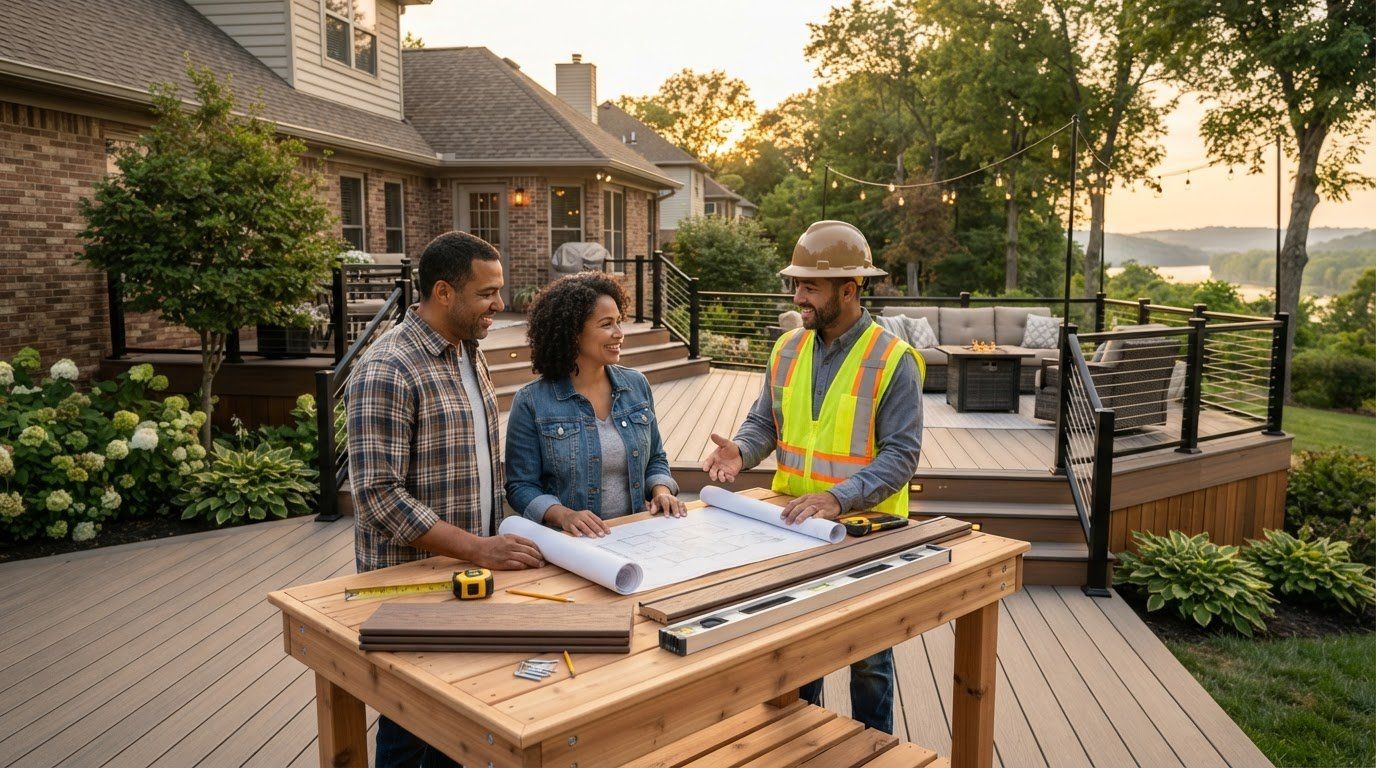
Two people and a contractor reviewing house plans on a deck beside a home at sunset
By Pat McIntyre • September 25, 2026
Looking for trusted deck builders in Louisville, KY? Home Run Improvement builds beautiful custom wood and composite decks. Request your free estimate today.