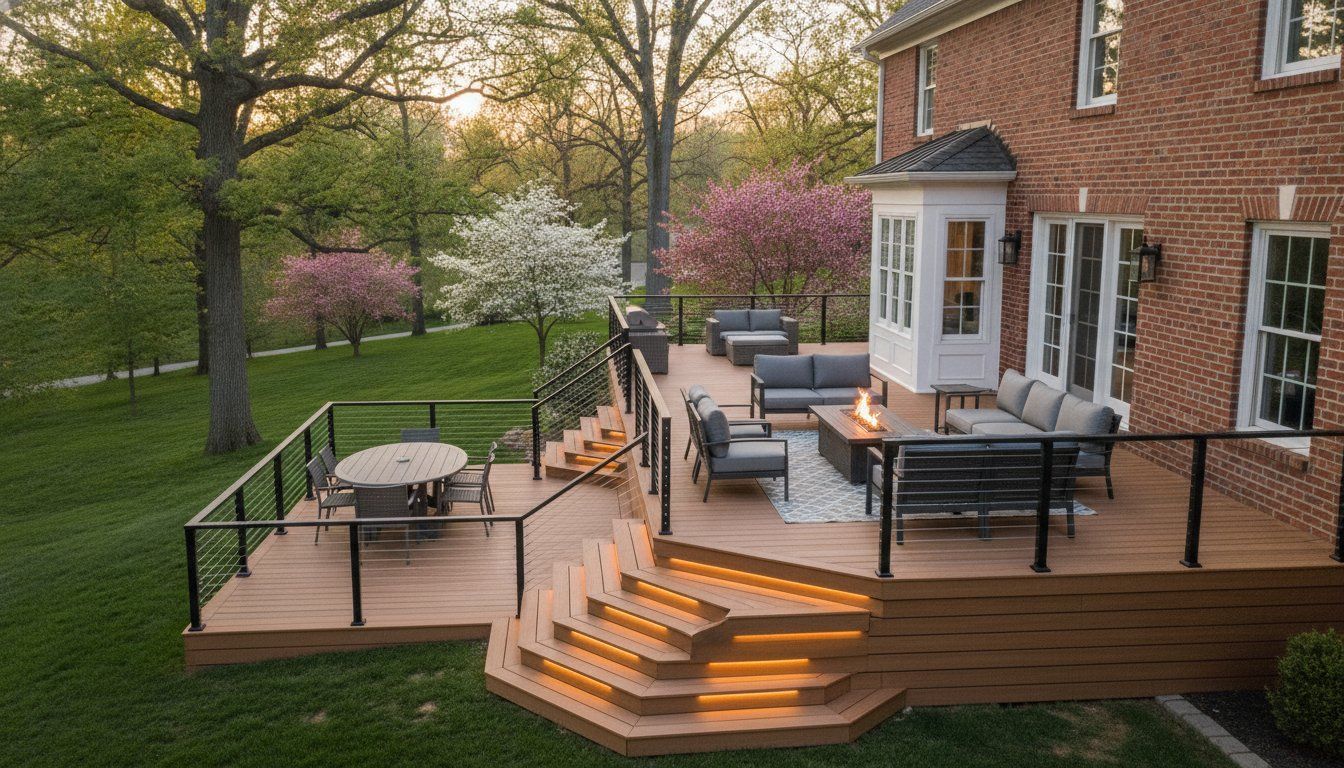
Expert TimberTech Deck Builder in Louisville KY & Southern IN

Pat McIntyre • August 13, 2026

A deck that looks stunning in May but begins to rot by August isn't just a disappointment; it's a structural failure that compromises your home’s value. Most homeowners in Louisville and Southern Indiana understand the frustration of watching expensive wood boards warp, fade, and splinter under the intense Kentucky sun. If you're tired of the endless cycle of staining and the anxiety of hidden structural decay, then you're ready for a permanent solution. Choosing a certified TimberTech Deck Builder is the only way to ensure your outdoor investment remains rot-proof and beautiful for decades without the high maintenance costs of traditional lumber.

We know you want the classic aesthetic of real wood without the structural headaches that often follow poor workmanship. When you choose a professional who prioritizes framing integrity and utilizes Advanced PVC technology, you gain peace of mind that lasts as long as the deck itself. This article details why precision engineering and specialized local knowledge are vital for your project. You'll discover how our 10-year craftsmanship warranty and TimberTech’s industry-leading materials protect your home from common pitfalls, such as improper ledger attachments on brick veneer, to deliver a deck that looks like real wood but lasts like PVC.

Key Takeaways

  • Understand the performance differences between TimberTech’s Composite and Advanced PVC lines to choose a material that remains cool under the direct Kentucky sun.
  • Learn why the substructure is the most critical part of your project and how protecting the framing prevents structural rot from the inside out.
  • Discover how working with a certified TimberTech Deck Builder ensures your investment is backed by both manufacturer warranties and a 10-year craftsmanship guarantee.
  • Explore hidden fastener technologies that eliminate unsightly screw heads for a smooth, modern aesthetic that mimics high-end hardwood.
  • Gain insights into local building requirements for Louisville and Southern Indiana, including specific rules for attaching decks to brick veneer homes.

Why Louisville Homeowners Choose TimberTech for Outdoor Living

Louisville homeowners face a relentless battle against moisture. Between the heavy spring rains and the thick humidity of July, traditional pressure-treated wood decks often begin to fail before they've even been fully enjoyed. If you live in high-end neighborhoods like Prospect or Anchorage, you know that a graying, splintering deck isn't just an eyesore; it's a liability. This is why partnering with a specialized TimberTech Deck Builder is a strategic move for your property's longevity. We don't just swap boards; we ensure your exterior space is built to survive the local climate.

TimberTech offers a high-performance alternative to the constant maintenance cycle of cedar or pine. By utilizing Wood-plastic composites (WPCs) and advanced polymers, these decks are engineered to withstand the specific stressors of the Ohio Valley. They don't just look like real wood; they outperform it in every measurable category.

To better understand how these premium materials are integrated into a home, watch this helpful video:


https://www.youtube.com/watch?v=n_eA-hYaCxw


Combatting the Kentucky Climate

Our local weather is notoriously hard on exterior surfaces. High humidity levels trap moisture within wood fibers, leading to internal rot that you often can't see until a structural board snaps. TimberTech Advanced PVC is designed to resist these extreme temperature swings, which can range from sub-zero winters to 100-degree summer afternoons. Because the material is non-porous, it remains impervious to the mold and mildew that thrive in shaded backyard environments. TimberTech's Advanced PVC decking is also engineered to be up to 30°F cooler than other composite brands, which is a critical detail for south-facing homes during a Kentucky July. When you choose a material that doesn't absorb water, you eliminate the warping and cupping that plague standard lumber.

The ROI of Premium Decking in Louisville

Investing in a premium deck is a calculated financial decision. While the upfront cost of a decking installation in Louisville is higher than basic wood, the long-term ROI is superior. "Cheap" decks often require repairs and staining within the first five years, creating a drain on your time and wallet. Conversely, TimberTech Advanced PVC comes with a 50-Year Fade & Stain Limited Warranty. A high-end build increases your home’s resale value by providing a permanent, maintenance-free outdoor room. If you plan on staying in your home, the math favors high-performance materials that won't require a total replacement in a decade.

Composite vs. Advanced PVC: Selecting Your TimberTech Material

Selecting the right material for your outdoor space is a decision that impacts your home's comfort and value for the next thirty years. While all TimberTech products outperform traditional wood, the technical differences between Advanced PVC and high-performance composite lines matter significantly in the Louisville climate. As an experienced TimberTech Deck Builder, we help you navigate these tiers to find the specific balance of aesthetics, thermal performance, and price that fits your lifestyle.

The primary distinction lies in the material composition. TimberTech Advanced PVC (comprising the Harvest, Landmark, and Vintage Collections) contains no wood fibers. This makes it completely impervious to moisture and internal rot. High-performance composites, such as the Legacy and Reserve Collections, blend recycled wood fibers with durable polymers. These are capped on all four sides to prevent the core from absorbing water or attracting local pests. While the top boards are designed for extreme longevity, safety experts recommend that you evaluate your deck annually to ensure the frame remains secure beneath the surface.

TimberTech Advanced PVC: The Gold Standard

If your project is located near a pool or in a low-lying area of Southern Indiana prone to dampness, Advanced PVC is the superior choice. It offers unmatched moisture resistance because there is zero organic material for mold to consume. Beyond its resilience, this line features hyper-realistic finishes. Wire-brushed and hand-scraped textures mimic the look of premium hardwoods without the risk of splinters. For south-facing homes, this material is engineered to stay up to 30°F cooler than many other composite brands, making it safer for bare feet and pets during a hot Kentucky summer. If you are unsure which tier fits your budget, you can request a material consultation to see these samples in person.

High-Performance Composite Options

For many Louisville households, the composite collections offer an ideal middle ground. These boards are incredibly sturdy and utilize up to 80% recycled content, making them a sustainable choice for environmentally conscious homeowners. The multi-tonal color blending provides a natural wood look with "cathedral" or "straight" grain patterns that complement various architectural styles. You can further customize your design by choosing different board widths.

  • Standard: The classic 5.5-inch width for a traditional look.
  • Wide: 7.25-inch boards that create a bold, modern statement.
  • Narrow: 3.5-inch boards that mimic high-end indoor flooring.

Mixing these widths allows for intricate patterns and picture-frame borders that elevate a standard deck into a custom architectural feature.The Structural Secret: Why the Substructure Matters Most

Most homeowners focus entirely on the color and texture of their new deck boards, but a beautiful surface is only as good as the frame beneath it. If you invest in premium materials but install them on a standard, unprotected frame, you are essentially building a high-end home on a crumbling foundation. As a dedicated TimberTech Deck Builder, we frequently encounter "hidden" deck failures where the surface boards look pristine, but the joists have turned to mush from the inside out. This occurs because water trapped between the board and the joist seeps into fastener holes, triggering internal rot that eventually compromises the entire structure's safety.

To prevent this, we refuse to cut corners on the skeleton of your deck. A deck that feels spongy or develops "waves" over time is usually the victim of poor framing standards or inferior lumber choices. We only recommend kiln-dried, moisture-resistant lumber for our foundations. Unlike standard "wet" pressure-treated wood that shrinks and bows as it dries, kiln-dried lumber remains stable, ensuring your deck stays level and secure for decades.

Protecting the Frame with Joist Tape

We utilize TimberTech Pro™ Tac Joist Tape as a standard part of our protective process. By applying 1.625-inch or 2.5-inch ProTac tape to the top of every joist and beam, we create a permanent seal around every fastener that enters the wood. This prevents water from penetrating the grain and sitting in the screw holes. Joist tape is a specialized moisture barrier that can effectively double the life of a deck frame. We also prioritize the meticulous flashing of double beams and ledger boards. If these critical connection points aren't properly shielded, moisture can migrate into your home’s rim joist, leading to structural damage that is both dangerous and expensive to repair.

Precision Framing and Blocking

A "bounce-free" deck requires more than just thick boards; it requires precision engineering. We maintain a maximum of 16-inch on-center spacing for joists, though we often recommend 12-inch spacing to provide a more rigid, high-end feel underfoot. To prevent the joists from twisting or rolling as they age, we install solid blocking every 4 to 6 feet. This structural reinforcement ensures the frame remains perfectly aligned even as the seasons change. When you choose us for your deck installation in Louisville, Kentucky, you're choosing a partner who understands that the parts you don't see are just as important as the parts you do. A stable, precisely engineered substructure is the only way to guarantee the long-term performance of your TimberTech investment.


Design Details: Hidden Fasteners and Custom Railing

A high-end deck should look like a piece of custom furniture, not a construction site. One of the most visible signs of poor workmanship is a surface littered with exposed screw heads. These "face-screws" eventually back out as the wood frame expands and contracts, creating trip hazards and unsightly holes that trap moisture. When you work with a professional TimberTech Deck Builder, we eliminate these issues by utilizing advanced hidden fastener technology. This creates a smooth, fastener-free surface that highlights the natural beauty of the boards rather than the hardware holding them down.

Choosing Your Fastener System

We select specific fastener systems based on the unique requirements of each deck section. If you want a truly seamless look, the choice of hardware is just as important as the choice of boards.

  • CONCEALoc®: This is our primary choice for the main deck surface. It ensures consistent 1/8-inch gapping, which is critical for proper drainage and allowing the material to expand safely during humid Louisville summers.
  • Cortex®: For areas where hidden clips aren't feasible, such as rim joists or stair treads, we use the Cortex system. It features color-matched plugs made from the exact same TimberTech material, making the fasteners virtually invisible.
  • FUSIONLoc®: This system provides extreme hold and structural integrity, often used for projects that require maximum strength without sacrificing the clean, modern aesthetic.

Proper gapping is not just for looks; it’s a functional requirement. Without it, debris traps moisture against your frame, leading to the exact rot issues we work so hard to prevent.Railing and Lighting Integration

Safety is non-negotiable, especially on elevated decks in neighborhoods like Glenview or Indian Hills. We integrate TimberTech railing systems that match your deck color for a cohesive, professional finish. To extend the usability of your space into the evening, we highly recommend low-voltage LED lighting. By installing post-cap lights and riser lights on stairs, you create a safe, 24-hour outdoor environment for your family. We use specialized TimberTech accessories to hide all wiring within the posts and rails, ensuring the final result remains clean and uncluttered. You can also add architectural dimension by opting for multi-width decking patterns, which use varied board sizes to create a custom look that sets your property apart.

Schedule your custom deck design consultation

Choosing Your Louisville TimberTech Builder: The Home Run Advantage

Hiring a generalist for a specialized installation like Advanced PVC is a gamble that rarely pays off for the homeowner. If you choose an uncertified installer, you risk forfeiting the extended labor warranties that only a certified TimberTech Deck Builder can provide. In 2026, TimberTech enhanced its program to offer up to 22 years of labor coverage for top-tier certified installers. This is the level of security your investment deserves. We act as your protective expert, ensuring that every clip, joist, and ledger board meets the manufacturer’s exact specifications to maintain your warranty eligibility.

Local accountability is the foundation of our business. Because we are locally owned and operated in Louisville, we don't disappear after the final check is signed. We understand the specific soil conditions in Prospect and the strict architectural guidelines in Anchorage. This local knowledge ensures your deck isn't just beautiful; it's a permanent fixture that respects your neighborhood’s character and local building codes.

Our 10-Year Craftsmanship Warranty

Most material warranties only cover the boards themselves, leaving you vulnerable if the contractor makes a mistake during installation. If a joist sags or a ledger pulls away due to poor workmanship, a manufacturer's material warranty won't help you. Our 10-year craftsmanship warranty fills this gap. It provides a decade of absolute security, covering the labor and precision of the build itself. We take personal responsibility for the structural integrity of your outdoor space, treating your property with the same level of care we would our own. When you choose us, you are choosing a partner who prioritizes long-term stability over short-term speed.

Start Your Louisville Deck Project

The journey from a rotting wood deck to a maintenance-free oasis should be seamless. We manage the entire process, including the navigation of local building permits. In Louisville, permit fees typically range from $100 to $550, and we ensure every footing reaches the required 30-inch depth to prevent frost heave. Whether you are in Glenview, Indian Hills, or Jeffersontown, our team is ready to deliver a code-compliant, high-performance build. Don't leave your home’s value to chance with a contractor who ignores structural details.

Schedule your free TimberTech deck estimate today

Secure Your Outdoor Investment for the Next Generation

Choosing a high-performance deck is a calculated decision that should prioritize longevity over short-term savings. If you invest in premium materials but settle for substandard framing, you're merely delaying the inevitable costs of structural failure. A truly rot-proof outdoor space requires the specialized knowledge of a certified TimberTech Deck Builder who understands the critical role of joist tape, proper gapping, and kiln-dried lumber foundations.

As a locally owned business in Louisville, KY, we take personal responsibility for every detail of your project. Our status as an Owens Corning Preferred Contractor and our 10-year craftsmanship warranty ensure your home is protected by professionals who value integrity. You don't have to settle for the endless cycle of wood maintenance or the anxiety of hidden decay. We're ready to help you transition to the lasting security of an outdoor space that looks like real wood but performs like a high-end polymer.

Get Your Free TimberTech Deck Estimate in Louisville

Frequently Asked Questions

How much does a TimberTech deck cost compared to wood in Louisville?

TimberTech requires a higher initial investment than traditional pressure-treated lumber, but it offers a significantly lower lifetime cost. While wood is cheaper upfront, it necessitates expensive staining and sealing every few years. A premium deck eliminates these recurring maintenance fees and prevents the structural failures that typically force a total wood deck replacement within ten to fifteen years in our humid climate.

Do TimberTech decks get hot in the Kentucky summer sun?

TimberTech Advanced PVC is engineered to stay up to 30°F cooler than many other composite brands. This is a vital feature for Louisville homes with south-facing backyards that endure direct sunlight. By selecting lighter colors from the Landmark or Vintage collections, you ensure the surface remains comfortable for bare feet and pets even during the peak heat of a Kentucky July.

How long does it take to build a 12x12 TimberTech deck?

A standard 12x12 deck typically takes three to five days to construct once the permits are secured and materials arrive. This timeline can fluctuate based on the height of the structure and the complexity of the railing or lighting systems. As your TimberTech Deck Builder, we prioritize structural precision over speed to ensure the framing meets our rigorous 10-year craftsmanship standards.

What is the best way to clean and maintain a TimberTech deck?

Maintenance is limited to occasional cleaning with mild soap and water or a manufacturer-approved deck cleaner. You never need to sand, stain, or seal the boards to maintain their appearance. For seasonal debris, a soft-bristle brush is usually sufficient. This simple routine protects your long-term fade and stain warranty and keeps the deck looking new without the use of harsh chemicals.

Do I need a permit for a deck replacement in Louisville, KY?

Yes, a building permit is required in Louisville for any deck that is more than 30 inches above grade. We manage the entire permitting process for our clients to ensure the structure is fully code-compliant. This includes verifying that footings reach the required 30-inch depth to protect against frost heave, which is a common cause of structural shifting in Southern Indiana and Kentucky.

Is TimberTech decking slippery when wet near a pool?

TimberTech Advanced PVC features wire-brushed and hand-scraped textures that provide superior traction compared to traditional wood. Wood decks often become slick due to algae growth and moisture absorption, but the non-porous nature of synthetic boards prevents this hazard. This makes it a safer, more reliable choice for pool surrounds and high-traffic areas where water is constantly present on the surface.

Can I install TimberTech boards over my existing wood deck frame?

We generally advise against installing new boards over an old frame because most wood foundations rot faster than the composite boards they support. If the frame fails, you will have to remove your new boards to fix the structure. We perform a detailed structural audit to determine if your existing joists are stable enough to support a premium TimberTech Deck Builder installation.

What is the difference between TimberTech and other composite brands?

The primary difference is the material science in the Advanced PVC line, which contains no wood fibers. Many other brands use capped composites that still include organic fillers in the core. TimberTech’s zero-wood technology offers superior resistance to mold, mildew, and internal rot. This is a critical advantage in the high-humidity environment of the Ohio Valley where organic materials fail prematurely.

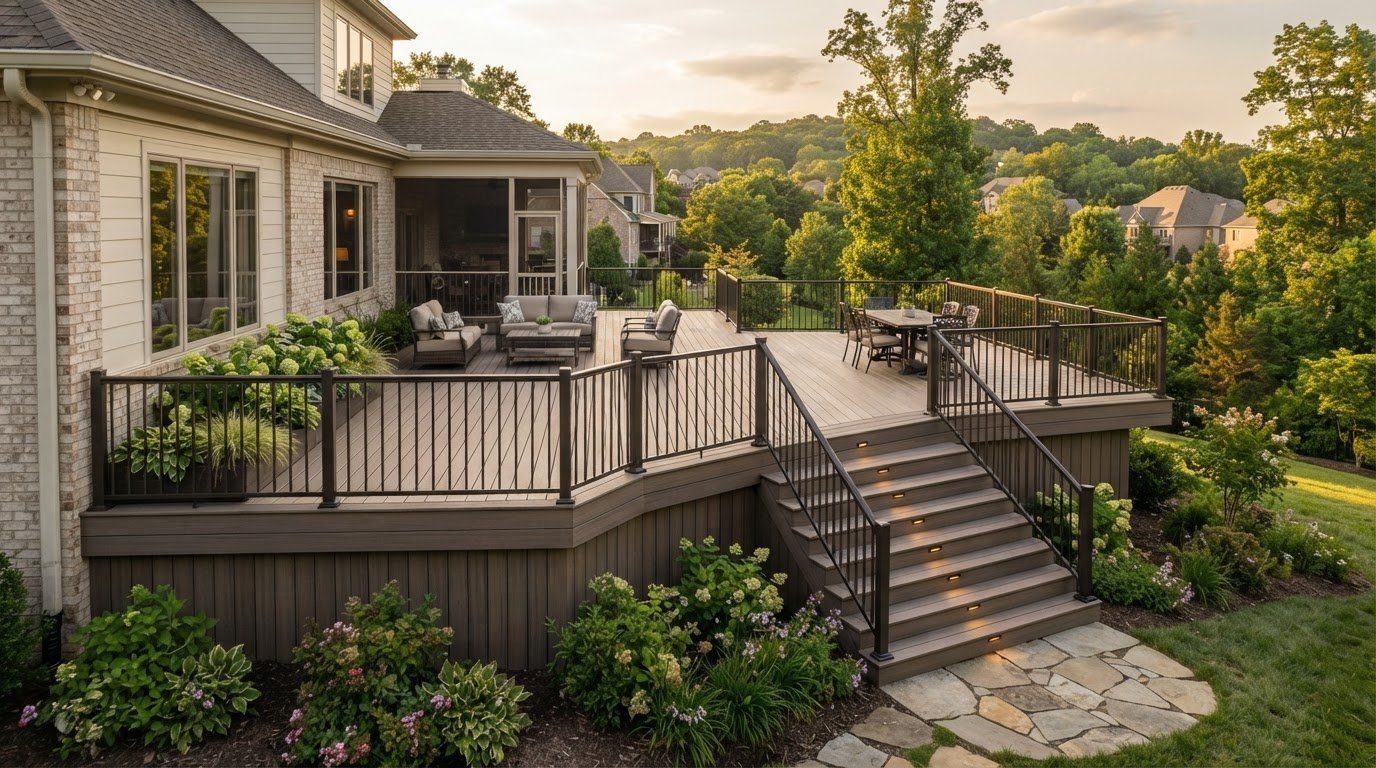
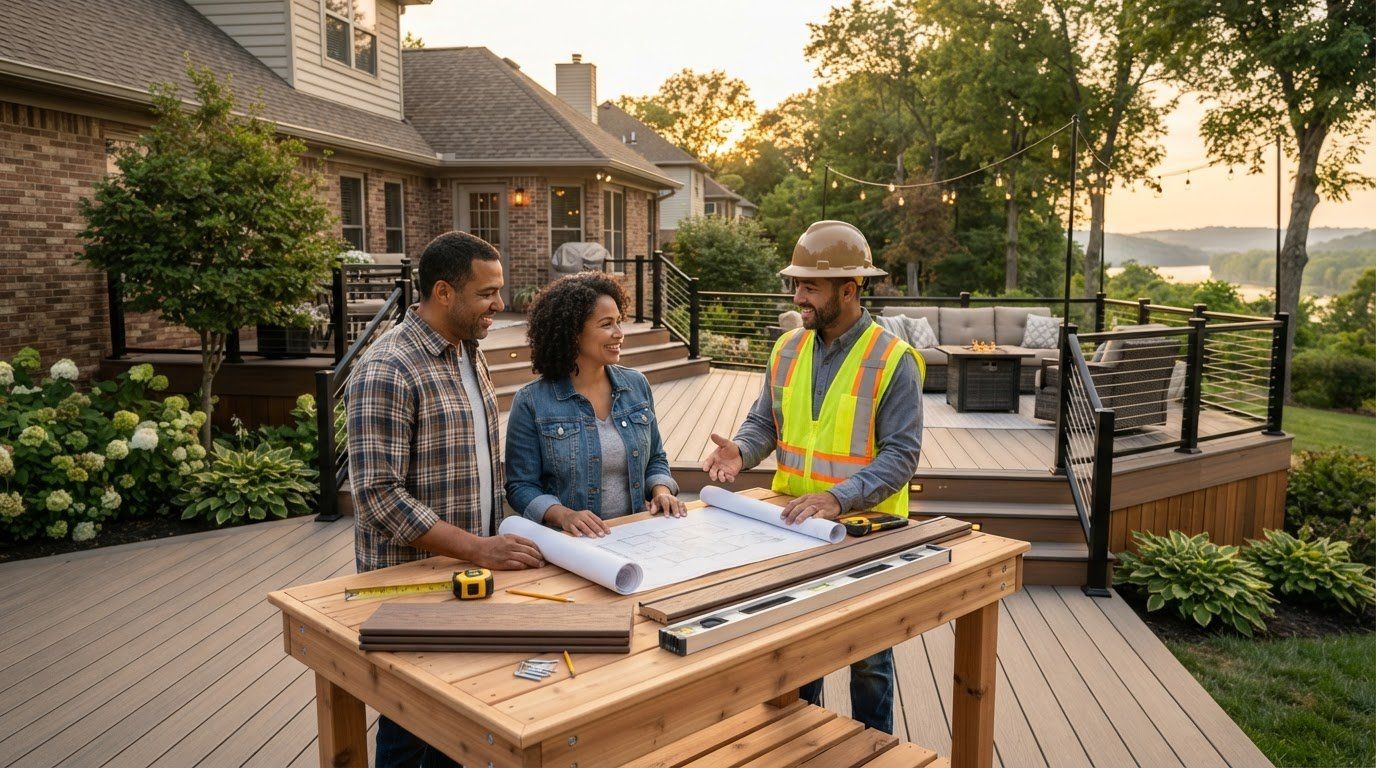
By Kate Waggoner August 14, 2026
A fresh coat of stain might hide a rotting support post, but it won't stop your deck from failing during your next family gathering. If you've been searching for Deck Repair Near Me because you've noticed a soft spot in the wood or a wobbly railing, your intuition is likely right. Most homeowners in Louisville know that our humid summers and freezing winters take a heavy toll on outdoor structures. You shouldn't have to guess if your deck is a safety hazard or a sound investment. It's frustrating to deal with the uncertainty of repair costs or the fear of hiring a contractor who disappears halfway through the job. We understand that you want a deck that lasts another twenty years, not just another season. In this guide, you'll learn how to identify critical structural failures before they become dangerous. We'll evaluate the real costs of wood versus composite repairs and show you how to find the most reliable craftsmanship in the Louisville area. By the end, you'll know exactly when to fix what you have and when it's time for a full replacement. Key Takeaways Identify the specific signs of wood rot and structural instability caused by Louisville’s high humidity before they become safety hazards. Learn why surface-level fixes are temporary if the sub-structure is compromised and how to protect your deck's joists for the long term. Apply the "50% Rule" to accurately evaluate whether it is more cost-effective to repair your current deck or invest in a full replacement. Discover how to vet local options for Deck Repair Near Me to ensure your contractor understands Southern Indiana soil conditions and building codes. Understand how a 10-year craftsmanship warranty acts as a security blanket for your home investment and provides lasting peace of mind. Recognizing the Signs: When Your Louisville Deck Needs Professional Repair Louisville's climate is notoriously harsh on outdoor wood structures. High humidity levels in the Ohio Valley create a perfect breeding ground for fungal growth that eats away at the core of your deck. If you've been searching for Deck Repair Near Me, you've likely noticed more than just a little graying. Surface-level fading is often cosmetic, but deep-seated decay is a structural threat. When you walk across your deck, it should feel as solid as your living room floor. If it feels spongy or gives under your weight, the wood fibers have already lost their tension and integrity. Louisville Climate Factors and Deck Decay The local weather cycle is a primary driver of deck failure. Our region experiences intense freeze-thaw cycles where water enters small cracks in the wood, freezes, and expands the gap. This process repeats hundreds of times each winter. When spring rains arrive, these widened cracks allow moisture to reach the unprotected interior of the joists. Local homeowners in heavily wooded areas like Prospect and Anchorage often see faster decay. The constant shade prevents the wood from drying out after a storm, leading to persistent dampness and accelerated rot. Safety First: The 10-Minute Deck Inspection A thorough inspection can prevent a catastrophic collapse. You should start where the deck meets your house. The ledger board is the most critical component of Deck construction and safety , as it carries half the weight of the entire structure. If the flashing is missing or the bolts are rusted, the deck could pull away from the home without warning. When you choose to ignore these signs, you aren't just delaying a maintenance task; you're risking a structural failure. When you perform your own safety check, look for these specific red flags: Rusted Fasteners: If you see "popped" nails or rusted bolts, the wood is shifting and likely holding moisture. Loose Railings: A railing that wobbles more than an inch is a liability in high-traffic areas and fails to meet modern safety standards. Spongy Post Bases: Use a screwdriver to probe the base of your deck posts. If the tool sinks in easily, the foundation is compromised by rot. Professional decking services ensure that these hidden vulnerabilities are addressed with precision. If your inspection reveals any of these issues, immediate intervention is the only way to guarantee long-term stability and security for your outdoor space. Beyond the Surface: Addressing Structural Integrity and Wood Rot Replacing surface boards on a rotting frame is like putting a new roof on a house with a crumbling foundation; it looks good for a season, but the underlying failure remains. If you ignore the structural skeleton during your search for Deck Repair Near Me , you're simply delaying a more expensive catastrophe. Real integrity starts with the joists and beams that carry the load. When these components fail, the entire structure becomes a liability rather than an asset. Professional restoration requires a deep dive into the sub-structure to ensure every piece of lumber is capable of meeting modern deck safety requirements . Invisible damage often hides in moisture traps, particularly where two beams are bolted together without a protective barrier. Water seeps into these gaps and cannot evaporate, leading to internal rot that you won't see until the beam snaps. To prevent this, we utilize structural blocking installed every 4 to 6 feet. This technique doesn't just add strength; it eliminates the "bounce" often felt in older decks, providing a rigid, high-quality feel underfoot. If your deck feels like a trampoline, it's a sign that your blocking is either missing or has succumbed to the elements. The Science of Joist Protection Joist flashing is a protective membrane applied to the top of deck joists to create a permanent barrier against moisture and fungal growth. By using high-performance products like TimberTech ProTac Joist Tape, we create a waterproof seal over every fastener hole. This prevents water from traveling down the screw shaft into the heart of the wood. While standard pressure-treated lumber is common, choosing kiln-dried, moisture-resistant alternatives for critical structural points ensures your deck remains stable for decades. When you protect the sub-structure, you're protecting your entire investment. Hidden Fastener Systems vs. Traditional Nailing Traditional nails are the enemy of longevity. Every time a nail is driven into a deck board, it creates a "water entry point" where moisture can pool and begin the decay process. Over time, these nails "pop" as the wood expands and contracts, creating trip hazards and allowing more water to reach the joists. When you choose hidden fastener systems, you're opting for a clean, safe surface that is physically sealed against the elements. These systems offer several advantages: Cortex Fasteners: These provide a strong, face-fastened connection that is hidden by a plug made of the exact same decking material. CONCEALoc Systems: These use stainless steel brackets between boards to ensure consistent spacing and a fastener-free surface. Moisture Resistance: By eliminating holes on the top of the board, you significantly reduce the risk of internal rot. Choosing these advanced systems ensures your deck remains a point of pride rather than a source of constant maintenance. If you're unsure about the current state of your sub-structure, reach out to a professional for a structural evaluation before you invest in new surface materials. Repair, Resurface, or Replace? Evaluating Your Deck's Future Choosing between a minor fix and a total overhaul is the most critical decision you'll make for your outdoor living space. When you search for Deck Repair Near Me , you're often looking for the most cost-effective path forward, but the cheapest immediate fix can be the most expensive long-term mistake. We utilize the "50% Rule" to guide this process. If the cost of restoring your existing deck exceeds half the price of a full replacement, the smarter financial move is to start fresh. Repairing a structure that has reached the end of its functional life is simply throwing good money after bad. Structural failure makes any repair a liability. If your frame was built more than fifteen years ago, it likely doesn't meet the rigorous safety standards required today. Resurfacing is an excellent option if your frame is in pristine condition; it allows you to upgrade the aesthetics while keeping the existing skeleton. However, if that skeleton is brittle, non-compliant, or shows signs of widespread rot, a full replacement is the only way to ensure your family's safety and protect your home's value. Financial Breakdown of Deck Restoration Investing in high-durability materials like TimberTech Advanced PVC significantly shifts your return on investment. While wood repairs are initially less expensive, the lifetime maintenance costs of staining, sealing, and eventual board replacement quickly add up. When you choose an upgrade to composite or PVC materials, you're eliminating those recurring expenses. Our 10-year craftsmanship warranty acts as a security blanket for this investment, ensuring that your upfront costs translate into a decade of maintenance-free enjoyment. In the long run, professional intervention pays for itself by preventing the cycle of constant, small-scale repairs. When Local Building Codes Mandate Replacement Louisville building regulations are updated frequently to reflect new safety data. For instance, updating old stairs to meet 2026 safety standards in Louisville is often required during a major renovation. Current codes dictate specific guardrail heights and opening widths that many older decks fail to meet. Furthermore, Kentucky codes now require deck posts to be at least 24 inches into the ground with proper post-to-footing connections to prevent shifting. If your current structure doesn't meet these benchmarks, a simple repair won't suffice. You can learn more about how we bring structures up to standard by exploring our Decking Services . Ensuring your deck is code-compliant isn't just about passing an inspection; it's about the fundamental safety of every person who steps onto your property. The Local Advantage: Why Professional Craftsmanship Matters in Southern Indiana Louisville homeowners often find themselves choosing between a "handyman" patch and a professional structural repair. While a general laborer might swap out a few boards, a specialized contractor understands the physics behind the entire structure. When you search for Deck Repair Near Me , you're looking for more than a cosmetic upgrade; you're looking for security. A professional repair addresses the root cause of failure, such as improper ledger flashing or decaying post bases. In our region, skipping these details leads to shifting and instability within just a few seasons. We don't just build for today. We build to withstand the specific environmental pressures of Southern Indiana and Jefferson County. Local knowledge is indispensable when dealing with the clay-heavy soil of the Ohio Valley. If your contractor doesn't account for soil expansion and the intense freeze-thaw cycles of Kentucky winters, then your deck will eventually heave or sink. We've spent years refining our methods to combat these specific stressors. Choosing a locally owned company means you're hiring a team that lives and works in the same climate as you. Our reputation is built on accountability and the belief that every homeowner deserves a structure that remains stable for decades. Serving Louisville Neighborhoods from Glenview to Jeffersontown Each area of our city presents unique challenges for outdoor construction. The historic homes in Indian Hills often require custom repair solutions that respect the original architecture while meeting 2026 safety standards. Conversely, homeowners in Crestwood and Prospect frequently deal with steep terrain and complex grading issues. These projects demand precise engineering to ensure the deck remains level and secure on a slope. If you want to see how we've handled similar challenges for your neighbors, see our Local Testimonials . The 'Protective Expert' Approach to Decking We treat your property with the same level of care we would our own. This "Protective Expert" persona isn't just a marketing slogan; it's a commitment to uncompromising integrity. By maintaining Master Lead certifications and specializing in high-durability materials like TimberTech, we ensure every installation exceeds industry norms. You won't have to worry about contractor ghosting or "fly-by-night" operations that disappear when a problem arises. As a locally owned fixture, we're here for the long haul. If you choose a company with deep roots, then you gain the security of a 10-year craftsmanship warranty that acts as a true safety net for your investment. Navigating the permit process in Jefferson County is another area where local expertise pays off. In Louisville, a building permit is mandatory for any deck attached to a house or any freestanding structure over 30 inches from the ground. We handle the paperwork and coordinate the inspections to ensure your project is fully compliant and legally protected. This methodical approach removes the burden from your shoulders and guarantees a result that is both beautiful and safe. Schedule your structural deck evaluation today Secure Your Outdoor Living Space with Home Run Improvement Your search for Deck Repair Near Me should end with a partner who values your home's integrity as much as you do. We've developed a methodical, organized process that removes the guesswork from home improvement. It begins with a comprehensive, free estimate where we don't just look at the surface; we evaluate the entire structural skeleton of your outdoor space. If we find hidden rot or non-compliant ledger connections, we'll explain the specific risks and the "why" behind our recommended fixes before any work begins. Once the scope is defined, our team executes the repair with industry-leading precision, concluding every project with a rigorous final safety inspection. This ensures that every bolt, fastener, and railing meets our uncompromising standards before we consider the job finished. When you choose Home Run Improvement, you're investing in long-term stability rather than a temporary patch. Our 10-year craftsmanship warranty is the most robust in the Louisville area, acting as a permanent security blanket for your backyard investment. If a contractor won't stand behind their work for a decade, then they haven't built it to last that long. We take personal responsibility for every detail, treating your property with the specialized knowledge it deserves. This commitment to accountability is why homeowners throughout Louisville and Southern Indiana trust us to protect their most significant assets. Comprehensive Exterior Protection A deck doesn't exist in isolation; it's a vital part of your home's exterior envelope. We often coordinate deck restoration with Gutter Installation to prevent improper drainage from undermining your new footings. If water is allowed to spill off your roof directly onto your deck joists, then even the best repairs will eventually succumb to rot. As an Owens Corning Preferred Contractor, we understand how to integrate your roofing, siding, and decking into a single, cohesive system of protection. Ensuring your deck and siding work together prevents moisture traps and guarantees that your home remains dry and secure from the foundation to the roofline. Contact Louisville's Trusted Deck Experts Ready to fix that wobbly railing or rotting board? Don't wait for a minor maintenance issue to become a structural failure that threatens your family's safety. We're ready to help you reclaim your outdoor space with confidence and peace of mind. Request your free, no-obligation estimate today and experience the difference that local, expert craftsmanship makes for your home. Take the first step toward a safer, more beautiful backyard by reaching out to our team of protective experts. Schedule Your Louisville Deck Inspection Secure Your Backyard Legacy Your deck is the foundation of your family's outdoor memories. By identifying the early signs of rot and prioritizing structural integrity over surface aesthetics, you ensure that your investment remains safe and stable. Whether you choose to resurface your existing frame or opt for a full replacement, making a methodical decision today prevents catastrophic failures tomorrow. If you ignore the sub-structure, then even the most beautiful boards won't save a compromised deck. When you search for Deck Repair Near Me , you deserve a partner who brings both industry-literate knowledge and local accountability to the job. As a locally owned and operated fixture in Louisville and an Owens Corning Preferred Contractor, Home Run Improvement is committed to protecting your property with precision. Our 10-year craftsmanship warranty acts as your security blanket, providing the peace of mind that our work will endure the harshest Kentucky seasons. We take personal responsibility for every detail, treating your home with the same level of care as our own. Get Your Free Deck Repair Estimate from Home Run Improvement We look forward to helping you restore the durability and safety of your outdoor living space. Take the first step toward a more resilient backyard today. Frequently Asked Questions How much does deck repair typically cost in Louisville? The cost of deck repair in Louisville varies significantly based on the extent of structural damage and the choice of materials. When looking for Deck Repair Near Me, you'll find that minor board replacements are relatively affordable, while full frame restorations require a larger investment. If you choose to address repairs early, you avoid the higher costs associated with total structural failure. We provide clear estimates after a physical inspection to ensure accuracy. Can I just replace a few rotting boards, or do I need a whole new deck? You can replace individual boards if the underlying joists and beams are structurally sound and free of rot. However, if the sub-structure shows signs of widespread decay or "sponginess," replacing surface boards is a temporary fix that wastes your investment. We recommend a thorough inspection of the frame before deciding. If the frame is compromised, a full replacement is the only way to guarantee your family's safety and long-term security. How long does a professional deck repair project take to complete? Most minor deck repair projects are completed within one to three days. If your project involves a full resurfacing or complex structural reinforcements, the timeline may extend to a week. We provide a clear schedule before work begins so you can plan your outdoor activities accordingly. Weather conditions in the Ohio Valley can impact these timelines, but our methodical approach ensures we minimize downtime while maintaining uncompromising standards for every client. Do I need a permit for deck repairs in Jefferson County? A building permit is mandatory in Jefferson County for any deck attached to a house or any structure elevated more than 30 inches above the ground. Freestanding decks that exceed 200 square feet also require official documentation. These regulations ensure that your outdoor space meets 2026 safety standards for stair construction and post-to-footing connections. When you hire a professional contractor, we manage the entire permitting process to guarantee your project is fully compliant. What is the best time of year to repair a deck in Kentucky? Late fall and early spring are the ideal times for deck work in Kentucky because the lower humidity allows wood to dry and seal properly. If you search for Deck Repair Near Me during these shoulder seasons, you can often secure a spot on the schedule before the peak summer rush. Our team works year-round, but avoiding the extreme heat of July ensures that stains and sealants cure with maximum durability and precision. Is composite decking better than wood for Louisville's climate? Composite decking is superior for Louisville's climate because it resists the rot and warping caused by our high regional humidity. While wood decks in Kentucky may only last 10 to 12 years if neglected, composite materials can endure for 25 years or more with minimal maintenance. If you want to eliminate the cycle of staining and sealing, then upgrading to Advanced PVC or composite is the most resilient choice for your home investment. What does a 10-year craftsmanship warranty actually cover? Our 10-year craftsmanship warranty covers any defects related to the physical installation and structural assembly of your deck. This means that if a railing becomes loose or a support post shifts due to poor workmanship, we take full responsibility for the correction. It acts as a security blanket for your investment, ensuring that the high standards we promise on day one remain intact for a decade. We believe in absolute accountability. How can I tell if my deck's ledger board is failing? You can identify ledger board failure by looking for gaps between the deck and your house foundation or signs of rusted, loose fasteners. This connection is the primary cause of deck collapse, so any visible moisture trapping or wood rot in this area is a critical red flag. If you notice "spongy" wood near the house wall, then your deck is likely unsafe. Immediate professional evaluation is required to prevent a catastrophic structural failure.
By Pat McIntyre August 14, 2026
Your gutters are doing a quiet, thankless job every time it rains, and when they fail, the consequences spread fast. A 2025 survey found that 4 in 10 homeowners have experienced damage to their home from clogged or poorly maintained gutters. That number is alarming, especially when you consider what is actually at stake: foundation cracks, basement flooding, rotted fascia boards, and mold that silently spreads inside your walls. The good news is that most clogged gutters repair situations are entirely preventable, and even when damage has already started, catching it early keeps the bill manageable. This guide walks you through every stage: how to spot trouble before it worsens, what your repair options actually cost, when to do it yourself, and when to call a professional before the damage spreads any further. Key Takeaways Act before the rain does: A 2025 survey found that 4 in 10 gutters only once or twice a year, while 27% wait until a problem arises, by which point water damage is often already underway. Schedule cleanings in spring and fall, minimum. The downstream costs are brutal: Foundation repairs are among the most costly home repairs. Homeowners can spend anywhere from $5,000 to $25,000 or more addressing damage that started with clogged gutters. A $150 cleaning call stops a $15,000 repair bill. Gutter repair itself is affordable, if caught early: Gutter repair costs range from $195 to $625, with most homeowners paying around $385 on average. Delay it, and section replacement or full reinstallation drives that number up sharply. Foundation damage is often not covered by insurance: Foundation issues can create major structural problems for your home, and this type of damage is not covered under most homeowners insurance policies. That makes prevention a financial necessity, not just good housekeeping. DIY works for single-story clogs; call a pro for two-story homes or visible structural damage. If any part of the job requires a second-story ladder position, the money saved has to be weighed against a genuinely serious injury risk. Start here if you're: A first-time homeowner: Begin with a thorough visual inspection from the ground. Look for sagging sections, water stains on siding, and soil erosion below the roofline. DIY-comfortable on a single-story home: Tackle debris removal, resealing joints, and downspout flushing yourself. Budget $20-$50 in supplies. Dealing with recurring or complex damage: Contact a trusted exterior specialist like Home Run Improvement to assess the full system and catch anything a visual inspection might miss. Why Clogged Gutters Are More Dangerous Than They Look Most homeowners spot a clogged gutter and think: leaves, ladder, done. The real problem is what happens in the hours and days after a heavy rain when those gutters are blocked and water has nowhere to go. The Chain Reaction From Roof to Foundation When your gutters become clogged water is unable to properly divert away from your home. Clogged gutters lead to overflow and pooling of water around your foundation. This saturates the soil and allows moisture to seep inside the cracks, which causes basement flooding. Excess water saturates the soil creating hydrostatic pressure against your foundation walls. This pressure can cause cracks, leaks, or even bowing walls in basements and crawl spaces. That is not just a cosmetic problem, bowing foundation walls are a structural emergency. In my experience walking through damaged homes, the telltale sign is almost always the same: water stains creeping down interior basement walls, directly below a roofline where gutters were blocked for one or two full seasons. Fascia Rot: The Hidden Multiplier Your gutters are held to your home by wooden boards known as fascia boards. If your gutters become clogged, the water can overspill and rot the fascia. If neglected, your entire gutter system could collapse. Replacing rotted fascia adds several hundred dollars to what could have been a routine cleaning. Ice Dams in Winter Blocked gutters can lead to the formation of ice dams. Water that collects in congested gutters can freeze in winter. Ice dams in your gutters and along the underside of your roof prevent rainwater and melted snow from passing through, leaving it to soak into and damage your home. Pro Tip: After any significant storm, do a quick walk around your home's perimeter. Look up at the gutter line. If you see water stains on your siding or soil erosion directly below the roofline, you have an active overflow problem, and it needs addressing within days, not months. Warning Signs Your Gutters Need Repair Now Catching the signs early is what separates a $200 repair from a $10,000 foundation restoration. I've found that most homeowners ignore the early signals because they seem minor, right up until they aren't. Visual Signs from the Ground Water stains running vertically down exterior siding Visible plant or weed growth sprouting from the gutter channel Gutters visibly pulling away from the fascia or sagging in sections Soil erosion or bare patches directly below the roofline Water stains on your home's exterior walls, especially near the gutters and downspouts, often indicate that water is overflowing regularly Signs Around the Foundation Pooling water within a few feet of the house after rain Damp or musty smell in the basement Bowing or leaning walls and wet stains on your basement walls can also be signs of water damage caused by clogged or damaged gutters Visible cracks along the base of exterior walls Signs on the Roof Blocked gutters can cause water to back up, which can damage roofing shingles and lead to leaks Dark staining or moss growth along the lower edge of the roof Water dripping from the roofline during rain even when gutters appear intact How to Repair Clogged Gutters: Step-by-Step Step 1, Safety Setup First Before you climb anything, set your ladder on firm, level ground. Use a ladder standoff (stabilizer) if you'll be working at the gutter line repeatedly; it braces against the roof or wall instead of the gutter. Wear thick rubber gloves and eye protection, gutter debris is sharp-edged and carries bacteria from decomposing leaves and bird waste. Step 2, Remove Debris from the Trough Remove debris from the gutter troughs by hand. Be thorough but gentle to avoid damaging the gutters. Work in sections, placing loose debris into a bucket rather than knocking it down to the ground (it can block drainage at the foundation level). A plastic scoop or purpose-made gutter scoop works better than bare hands. Step 3, Flush and Test Flow Once debris is removed, use a garden hose to flush out the downspout. Attach the hose to the top of the downspout and turn the water on full blast. Watch where the water exits. If it flows freely from the downspout base, you are clear. If it backs up, the blockage is deeper in the downspout itself. Step 4, Clear a Stubborn Downspout Clog If water flushing does not work use a plumber's snake to break through the clog. Insert it into the downspout and twist it to break up the blockage. For a packed, compacted clog, a wet/dry shop vacuum in suction mode can pull debris out from the bottom opening. Step 5, Inspect and Seal Joints After flushing, run the hose again while watching for drips at joints and seams. Sealant degradation over time thermal expansion and contraction, or improper initial installation can cause joint leaks. This is one of the most DIY-friendly repairs. Most homeowners can successfully reseal gutter joints with the right materials and technique. Use gutter-rated butyl or polyurethane sealant, avoid standard silicone, which does not bond well to metal gutters. Step 6, Confirm Downspout Discharge Distance Ensure downspouts direct water 5 to 10 feet from the foundation. A $20 downspout extension is one of the highest-ROI home maintenance purchases available. If your downspout currently dumps water 12 inches from the house, that small fix could prevent thousands in foundation damage over a few rainy seasons. Pro Tip: After completing your repair, run a bucket of water through the gutter system during dry weather. Watch the entire channel from start to finish. Any drip points, pooling sections, or slow-draining areas reveal problems you cannot see when the weather is pushing real volume through the system. What Clogged Gutters Repair Costs: A Realistic Breakdown Understanding the cost range before you call anyone puts you in a much stronger position. Here is what the data actually shows. Basic Gutter Cleaning and Repair Costs Gutter repair costs can range from $195 to $625, with most homeowners paying around $385 on average. The specific type of damage drives the number up or down significantly: Minor leak or joint reseal: $75 to $175 Sagging gutter section (rehang): $75 to $300 Leak repairs typically run $120 to $230 Vinyl gutters are budget-friendly and lightweight, with repairs typically costing $75 to $200 Aluminum gutters are durable and rust-resistant, with repair costs between $100 and $300 What Happens If You Delay Water damage from overflowing gutters can cost an average of $8,000 in foundation and fascia repairs. And that is the average, on the high end, homeowners can expect to pay anywhere from $2,500 to $15,000 for foundation repairs, with extensive structural repairs exceeding $20,000 in some cases. Bottom line: a $385 gutter repair today is not optional spending. Set against a potential $15,000 foundation bill, it is the most efficient home protection purchase you can make. Gutter Guard Installation as a Long-Term Fix For homeowners who are tired of clearing clogs every season, gutter guards eliminate most of the recurring maintenance burden. Gutter guard installation costs $1,521 on average, with most homeowners spending between $653 and $2,459 depending on length and material. Gutter guards are worth it if you have high trees near your home and your gutters frequently collect leaves and debris. They protect your gutter system from damage and reduce the frequency of cleanings, which can save you $120 to $500 per year. Pro Tip: If you are getting three or more gutter cleanings per year, the math on gutter guards starts to work in your favor within two to three seasons. Ask your contractor about combining guard installation with any pending repair work, many offer a package discount. DIY vs. Professional Repair: Making the Right Call When DIY Makes Sense In my experience, single-story homeowners who are comfortable on a ladder can handle a large majority of routine clogged gutter repair work. Tasks that fall squarely in the DIY column include: Removing debris from gutter troughs Flushing and clearing downspout clogs Resealing leaky joints with gutter-grade sealant Patching small holes under an inch in diameter Adding or extending downspout discharge pipes DIY repair means you'll only pay for materials, not labor. You don't need to wait for an appointment. Tasks like cleaning clogs or resealing joints can be relatively straightforward with the right tools. When to Call a Professional Homeowners can underestimate the dangers commonly associated with repairing gutters, such as falling off a ladder, running into power lines, feeling queasy while working at a height, or overreaching. Homes with two or more stories make repeated trips up and down ladders risky. Call a professional without hesitation when you encounter: Any gutter work on a two-story or taller home Visible fascia rot behind the gutter channel Sagging that returns after you have already re-hung a section Signs of foundation cracking, bowing walls, or basement moisture Small leaks that keep reoccurring after you recaulk, because the underlying cause may be issues with the drip edge Teams like Home Run Improvement combine gutter assessment with a broader exterior inspection, which means they can flag fascia damage, downspout grade issues, and drainage problems that a homeowner focusing only on the obvious clog might miss entirely. How Often Should You Clean Gutters? The standard advice is straightforward, and it comes from both industry professionals and the National Park Service's building maintenance guidelines : inspect frequently, and at a minimum clean gutters at least twice a year, late spring and late fall. This may vary depending upon the number of trees in your yard or next door. The recommended approach is to clean them as often as it takes to keep the gutters clear. If you have a lot of shedding or mature trees with branches directly over or within ten feet of your home, consider one or two extra yearly cleanings. Homes in storm-prone areas or regions with heavy pine tree coverage may need quarterly attention. A 2025 survey found that 4 in 10 27% of homeowners wait until a problem arises before cleaning or inspecting. That reactive approach is exactly what turns a $150 cleaning call into an $8,000 repair. Set a calendar reminder each April and October. Your foundation will thank you. Frequently Asked Questions What are the most common signs that my gutters are clogged? The clearest signals are water overflowing over the gutter edge during rain, water stains running down exterior siding, and soil erosion or puddling directly below the roofline. You may also spot slow or silent downspouts, sagging sections, or debris peeking over the gutter edge, as well as water stains, weeds, or an increasing number of ants in certain areas. Any one of these is a reason to inspect immediately. How much does it cost to repair clogged gutters? Gutter repair costs range from $195 to $625, with most homeowners paying around $385 on average. Minor tasks like joint resealing can cost under $100 in materials for a confident DIYer, while damaged sections, full replacements, or fascia repairs push the total higher. Getting a professional assessment before assuming the scope of the work is always worthwhile. Can clogged gutters really damage my foundation? Yes, and the Erie Insurance damage overview makes this point clearly: pooling water around your foundation can cause erosion which weakens the walls, leading to foundation cracks and settling. Foundation damage is not covered under most homeowners insurance policies. That absence of insurance coverage makes preventive gutter maintenance a direct financial issue, not just a maintenance preference. Should I install gutter guards to prevent future clogs? Gutter guards serve as a strategic preventive measure. They are worth it if you value less frequent gutter cleanings, a reduced risk of clogs, and an added layer of home protection from water damage. You should weigh the upfront expense carefully in relation to the challenges posed by your local environment. Homes surrounded by mature deciduous trees see the clearest ROI. Homes with minimal tree coverage may find twice-yearly manual cleaning sufficient. When is DIY gutter repair safe, and when should I hire a professional? DIY repair means you'll only pay short-term fix for handy homeowners, but professional repairs often provide more reliable, lasting results, especially when the damage is more than superficial. The clearest rule: single-story home with a stable ladder and a simple clog is a solid DIY job. Two-story home, structural damage, or recurring problems despite repeated repairs, call a professional every time. The Bottom Line Clogged gutters repair is one of those home maintenance tasks that rewards speed and penalizes delay. The difference between acting at the first sign of a problem and waiting for something to go obviously wrong can be measured in thousands of dollars. Routine gutter maintenance and early repairs can help prevent expensive issues like foundation damage, overflows, leaks, and premature gutter replacement. Clean your gutters twice a year, inspect after every major storm, and do not let a recurring clog convince you that a temporary patch is enough. If you are seeing foundation staining, fascia softness, or repeated overflow despite cleaning, reach out to an exterior specialist. Home Run Improvement provides the kind of full-system assessment that catches the problems behind the problems, before they become the expensive emergency you were trying to avoid. Sources 2025 Gutter Damage Survey , Shelbyville Times-Gazette / LeafFilter research. Data on homeowner damage rates and maintenance habits. A 2025 survey found that 4 in 10 Gutter Repair Cost Guide 2026 , This Old House Reviews Team. Comprehensive cost data by material type and repair scope. https://www.thisoldhouse.com/gutters/gutter-repair-cost How Clogged Gutters Damage Your Foundation , OneGutterGuard.com. Foundation damage mechanism and cost range. https://www.onegutterguard.com/blog/how-clogged-gutters-damage-your-homes-foundation 6 Common Problems Caused by Clogged Gutters , Erie Insurance. Insurance coverage implications of foundation damage. https://www.erieinsurance.com/blog/clean-gutters NPS Maintenance Guidance: From the Roof Down , National Park Service. Official gutter cleaning schedule guidance. National Park Service's building maintenance guidelines Foundation Repair Cost 2026 , Foundation Repair Hub. Current cost ranges for foundation damage caused by water intrusion. https://www.thisoldhouse.com/foundations/foundation-repair-cost DIY Gutter Repair vs. Hiring a Pro , All-Pro Gutter Installation. Honest breakdown of repair types and safety thresholds. https://gutter.day/blog/diy-gutter-repair-vs-professional/ 
By Pat McIntyre August 13, 2026
Planning a home remodel is one of the biggest financial decisions you'll make as a homeowner. In Louisville, where the median home value has climbed to around $270,000 according to recent Redfin data , protecting that investment starts long before a single nail is driven. The contractor you choose determines whether your project runs on time, on budget, and to a standard you'll be proud of for years. The problem is that the Louisville market is crowded with options, and the stakes are high. A study by JW Surety Bonds found that roughly 1 in 10 Americans has been the victim of a contractor scam, losing an average of $2,426 , and that figure doesn't account for the cost of fixing bad workmanship. That means choosing the right home remodeling contractor in Louisville is a decision that deserves a systematic, eyes-open approach. This guide gives you exactly that. Key Takeaways Verify credentials before anything else: Kentucky regulates electrical, plumbing, and HVAC contractors at the state level, while general contractors are governed by local Louisville licensing rules , so always check local registration status, not just state databases. Get at least three written quotes: Travelers Insurance recommends talking to several contractors and getting written estimates from at least three , then comparing them line by line for scope, materials, and timeline. Budget for overruns from the start: This Old House advises homeowners to set aside 15 to 20 percent of their total budget as a contingency reserve , if you plan for $50,000, budget as if you'll spend $60,000. Scam-proof your project: One in 10 Americans has fallen victim to a contractor scam , so any contractor asking for cash payments or a large upfront deposit before work starts is a clear warning sign. Local expertise matters in Louisville: Louisville's homes range from historic bungalows in the Highlands to newer builds in Prospect and Norton Commons , and each architectural style and era carries its own code requirements and structural considerations. Quick-Start Prioritization Framework Start here if you're: A first-time remodeler: Verification and insurance checks first, this protects your money before you spend a dime. Planning a major remodel ($20,000+): Get three quotes minimum, and invest time in reference calls with past clients. Renovating an older Louisville home: Prioritize contractors with specific experience in pre-1980 construction and Louisville's building codes. Understand Louisville's Contractor Licensing Rules What Kentucky Law Actually Requires Many homeowners assume that any contractor in the state is automatically licensed by Kentucky. The reality is more nuanced. Kentucky does not issue statewide contractor licenses; instead, municipalities like Louisville have established their own licensing and registration processes . This means the state database alone won't confirm whether a remodeler is compliant with Jefferson County rules. Kentucky mandates state-issued licenses only for electrical, plumbing, and HVAC contractors, while all other trade licensing is managed at the local level . In practice, this means you need to verify two things: that any trade subcontractors (electricians, plumbers) hold active Kentucky state licenses, and that the general contractor is registered with the city of Louisville. Skipping either check can leave you exposed. Insurance: Your Real Financial Safety Net Because Kentucky's licensing framework for general contractors is locally managed rather than state-enforced, insurance verification becomes especially important. You should require both general liability insurance and workers' compensation from any contractor, and Kentucky law requires workers' compensation for employers with one or more employees under KRS 342.630 . Always request certificates of insurance directly and call the insurer to confirm the policies are active before signing anything. Pro Tip: Ask for the certificate of insurance to be made out to you directly, with your address listed. This ensures you receive notification if the policy lapses or is cancelled during your project. How to Vet a Louisville Contractor's Track Record Review Portfolios with Louisville in Mind In my experience, the best question you can ask a potential contractor is whether they have completed work on homes similar to yours in age and neighborhood. Reviewing a contractor's portfolio allows you to assess the quality of their work, specifically, look for projects similar to yours to gauge their expertise and craftsmanship . For Louisville homeowners, this matters because older homes in neighborhoods like Crescent Hill, St. Matthews, or the Highlands often have plaster walls, cast-iron plumbing, and knob-and-tube electrical configurations that require different handling than new construction. Call References, and Ask the Right Questions Most homeowners skip this step or ask only superficial questions. I've found that a five-minute call with a past client tells you more than any website review. Ask for contact information for two or three clients from projects completed in the last year, and go beyond "Were you happy with the work?", ask specific questions like whether they stuck to the budget and timeline . Asking for recent references from clients with similar projects and reaching out with questions about the contractor's communication style, ability to meet deadlines, and overall satisfaction is one of the highest-value steps you can take. A contractor who hesitates to provide references is telling you something important. Understand Who Is Actually Doing the Work It is common for contractors to work with subcontractors, and that can be acceptable as long as those subcontractors are properly managed and insured . What you need to know upfront is: will the lead contractor be on-site daily? Who manages the subcontractors? Are subs separately insured? Knowing whether trade contractors are being used allows you to make informed decisions about payment schedules and project management . Getting and Comparing Quotes the Right Way Why Three Quotes Is the Minimum Getting a single quote and going with it is one of the most common and costly mistakes Louisville homeowners make. Talking to several contractors and getting written estimates from at least three is strongly recommended, and when you receive them, make sure you're comparing apples to apples by looking at building materials, work methods, timelines, and other factors that may vary by contractor . A quote that is 30% cheaper than the others isn't necessarily a bargain; it may mean the contractor is cutting corners on materials or has left scope items out entirely. Fixed Price vs. Estimate: Know the Difference Before signing a contract, understand whether the home remodel bid you're presented with is an estimate or a fixed cost, as an estimate means there's room for the cost to increase, while a fixed cost means you know what you're paying upfront . For major projects, push for a fixed-price contract with a clearly defined scope of work. Build a Contingency Reserve Into Your Budget In 2024, 39% of American homeowners went over their remodeling budgets, and 24% never made a formal budget at all, according to Houzz data , which means budget overruns are the norm rather than the exception. Therefore, treat your contingency as mandatory, not optional. For large-scale projects, plan to have 15 to 20 percent of your total budget in reserve to cover unforeseen issues once work starts . If you plan to spend $40,000 on a kitchen, budget $46,000 to $48,000. Pro Tip: Schedule your remodeling work during the off-season, typically January through early March. According to Realtor.com guidance cited by This Old House, off-season scheduling gives you more contractor options and can improve your negotiating position on price . Red Flags to Watch for in Any Louisville Contractor Warning Signs Before You Sign After years of helping homeowners navigate renovation decisions, I've seen the same warning signs come up repeatedly. The most dangerous contractors know how to make a compelling first impression. Here are the non-negotiable red flags: A contractor who asks for a large cash deposit, or full payment, before starting work Quotes that are dramatically lower than every other bid you received No physical business address, only a cell phone number Pressure to sign the same day or lose a special price Reluctance or outright refusal to provide a written contract with scope details If someone asks for a large deposit or full payment before the work has begun, this is a major red flag according to home care experts . A reasonable deposit for a legitimate contractor is 10 to 20 percent of the full project cost, paid at contract signing . On-Site Behavior and Communication Communication quality during the bidding stage is a reliable preview of how a contractor will behave once they have your money. If a contractor is habitually late to meetings or misses appointments without a valid reason, that behavior is likely to translate into delays and extended timelines for your actual project . Strong, frequent communication is a hallmark of a trustworthy contractor , and a lack of it is a reason to walk away. Online reviews are a valuable resource when assessing reputation, but look for patterns in the feedback across multiple platforms rather than relying on a single source . Repeated complaints about scope creep, unanswered calls, or unfinished work are far more telling than one or two negative reviews. Pro Tip: Search for the contractor's name with the word "complaint" on Google and check the Better Business Bureau database for your area. A BBB accreditation with an A+ rating is a meaningful trust signal in a market where licensing oversight is locally managed. Matching the Contractor to the Project Type Kitchen and Bathroom Remodels: The Highest ROI Projects Knowing what kind of return your investment can generate helps you decide how much to spend, and which type of contractor to prioritize. Minor midrange kitchen remodeling is currently the interior home update with the best return on investment at 112.9%, meaning every $1,000 spent can add $1,112.90 to your home's value, according to 2025 Cost vs. Value data. That means a targeted kitchen refresh can literally pay for itself at resale. For bathroom projects, a midrange bathroom remodel recoups approximately 74% of its cost at resale, nationally . The takeaway: hire a contractor with a specific, verifiable track record in kitchen and bath work, and keep scope focused on meaningful updates rather than full gut renovations. A major kitchen overhaul costing $85,000 or more typically only recovers 38% to 50% of its cost , a striking difference from the minor remodel's return. Full-Service Remodeling Contractors in Louisville For homeowners looking to work with a locally rooted team across multiple project types, Home Run Improvement is a Louisville-based, family-owned contractor with over 20 years of experience handling kitchen remodeling, bathroom renovation, basement finishing, roofing, and siding. Home Run Improvement is a Preferred Contractor for Owens Corning roofing materials and holds Expert-level status with LP SmartSide Siding , industry designations that demonstrate vetting by major manufacturers. Their bathroom remodeling service includes in-house handling of Jefferson County permit filing, and all work is backed by a 10-year craftsmanship warranty on labor. Frequently Asked Questions Does a home remodeling contractor in Louisville need to be licensed? Kentucky does not issue a single statewide general contractor license, instead, Louisville and other municipalities manage their own licensing and registration requirements . You should verify that your contractor is properly registered with Louisville's local building authority, and separately confirm that any trade subcontractors (electricians, plumbers, HVAC) hold active Kentucky state licenses. Always check with Jefferson County's building department if you are unsure. How much should I expect to pay for a home remodel in Louisville? The average cost to remodel a house ranges from $15 to $60 per square foot, or $20,000 to $100,000 for completely renovating a home, according to HomeGuide. For individual rooms, kitchen and bathroom remodels typically fall in the $10,000 to $60,000 range depending on scope and finish level. Always factor in a 15 to 20 percent contingency for unexpected discoveries, particularly in older Louisville homes. How many quotes should I get before hiring a contractor? Get a minimum of three written, itemized quotes. Make sure you're comparing apples to apples when evaluating multiple estimates by looking at building materials, work methods, timelines, and all contributing cost factors . The lowest quote is often the riskiest choice; it may signal that scope items have been omitted or that substandard materials are being planned. What questions should I ask a contractor before signing? Before signing a contract, understand whether the home remodel bid you're presented with is an estimate or a fixed cost, as an estimate means there's room for the cost to increase, while a fixed cost means you know what you're paying upfront Also ask specifically whether the bid is a fixed price or an estimate, and request a written project timeline with milestones. What is a reasonable deposit for a Louisville remodeling project? A reasonable deposit is 10 to 20 percent of the total project cost, paid at contract signing . Any contractor who demands 50 percent or more upfront, or requests cash-only payment, should be considered a significant risk. Legitimate contractors tie payment milestones to project milestones, not to their own cash flow needs. Choosing a Home Remodeling Contractor in Louisville Is a Process, Not a Guess The right contractor delivers more than a finished project. They communicate clearly, respect your home, pull proper permits, and stand behind their work when problems arise. The wrong one can cost you far more than money, unfinished work, failed inspections, and repairs to bad workmanship add up fast. Start with the basics: verify credentials, confirm insurance, and get three written quotes. Then invest time in reference calls and portfolio reviews that are specific to Louisville homes and neighborhoods. If you want a team that has done this for decades in this market, reach out to Home Run Improvement for a free estimate and consultation. Sources Louisville Housing Market Data , Norada Real Estate. Home value and market trend analysis. the median home value has climbed to around $270,000 according to recent Redfin data 5 Signs of a Home Improvement Scam , National Association of Realtors. Contractor scam statistics from JW Surety Bonds study. https://www.nar.realtor/news/real-estate-news/sales-marketing/5-signs-of-a-home-improvement-scam What Is a Home Improvement Scam? , NCOA. Warning signs and scam statistics. https://www.ncoa.org/article/what-is-a-home-improvement-scam-learn-8-warning-signs/ How to Choose a Remodeling Contractor in Louisville , Tradeworks Remodeling. Local contractor selection guide. https://www.tradeworksremodeling.com/blog/how-to-choose-remodeling-contractor-louisville Kentucky Contractor License & Certification Guide , ServiceTitan. State and municipal licensing overview. https://www.servicetitan.com/licensing/contractor/kentucky Kentucky Contractor Licensing Guide , Procore. Trade-specific licensing requirements. https://www.procore.com/library/kentucky-contractors-license Kentucky Contractor License Requirements , Jaspector. Insurance and contract law guidance. https://www.jaspector.com/contractor-license-requirements/kentucky/ Home Renovation Trends and Tips 2025 , This Old House. Contingency budgeting and contractor scheduling advice. https://www.thisoldhouse.com/home-finances/home-renovation-trends Hiring a Contractor Checklist , Travelers Insurance. Top tips for selecting a contractor. https://www.travelers.com/resources/home/renovation/checklist-for-hiring-the-right-contractor How to Vet a Contractor , Zeeland Lumber. Portfolio and reference checking guidance. https://zeelandlumber.com/how-to-vet-a-contractor-for-your-home-renovation-project/ 8 Questions to Ask a General Contractor , RealM Home. Reference call framework. https://realmhome.com/blog/questions-to-ask-general-contractor Contractor Red Flags , Lamont Bros. Design & Construction. Warning signs to watch for. https://www.lamontbros.com/learning-center/contractor-red-flags Home Improvement Contractor Scams , U.S. News Real Estate. Deposit and fraud warning guidance. If someone asks for a large deposit or full payment before the work has begun, this is a major red flag according to home care experts 10 Questions You Must Ask Before Hiring a Contractor , Carey Bros. Deposit percentage benchmarks. https://careybros.com/10-questions-you-must-ask-before-hiring-a-home-remodeling-contractor/ Bathroom Remodel ROI 2025 , Moreno Bath. National bathroom renovation return data. a midrange bathroom remodel recoups approximately 74% of its cost at resale, nationally Essential Cost Insights for 2026 Home Remodeling , AmeriSave. Budget overrun statistics and kitchen ROI breakdown. https://www.amerisave.com/learn/essential-cost-insights-for-your-home-remodeling-project 13 Questions to Ask Potential Remodeling Contractors , Extra Space Storage. Fixed price vs. estimate guidance. Before signing a contract, understand whether the home remodel bid you're presented with is an estimate or a fixed cost, as an estimate means there's room for the cost to increase, while a fixed cost means you know what you're paying upfront 5 Ways to Vet a New Contractor , Outlook Construction & Remodeling. Subcontractor management guidance. Knowing whether trade contractors are being used allows you to make informed decisions about payment schedules and project management Home Run Improvement Louisville , Home Run Improvement. Local remodeling services overview. https://www.homerunimprovement.com/services/remodeling-contractors-kentucky