
Expert Composite Deck Builder: Louisville KY & Southern IN

Pat McIntyre • August 16, 2026

The most expensive mistake you can make with a new deck isn't the boards you walk on; it's the frame you never see. If you're tired of the endless cycle of sanding and staining wood, you've likely realized that hiring a professional composite deck builder is the only way to reclaim your weekends. You want a beautiful outdoor space that looks as good in ten years as it does on day one. We agree that a premium project should be a permanent solution, not a temporary fix that hides structural shortcuts behind fancy plastic boards.

In this guide, you'll discover how to choose a contractor who treats your home with the precision it deserves. We'll explain why the "invisible" details of your deck's sub-structure determine whether it actually reaches a 25-year lifespan in the Louisville humidity. You'll learn the critical differences between Advanced PVC and traditional composites, the importance of 30-inch deep footings, and how a 10-year craftsmanship warranty provides the security you need for a large-scale investment. When you prioritize the foundation, you get a deck that remains a point of pride for decades.

Key Takeaways

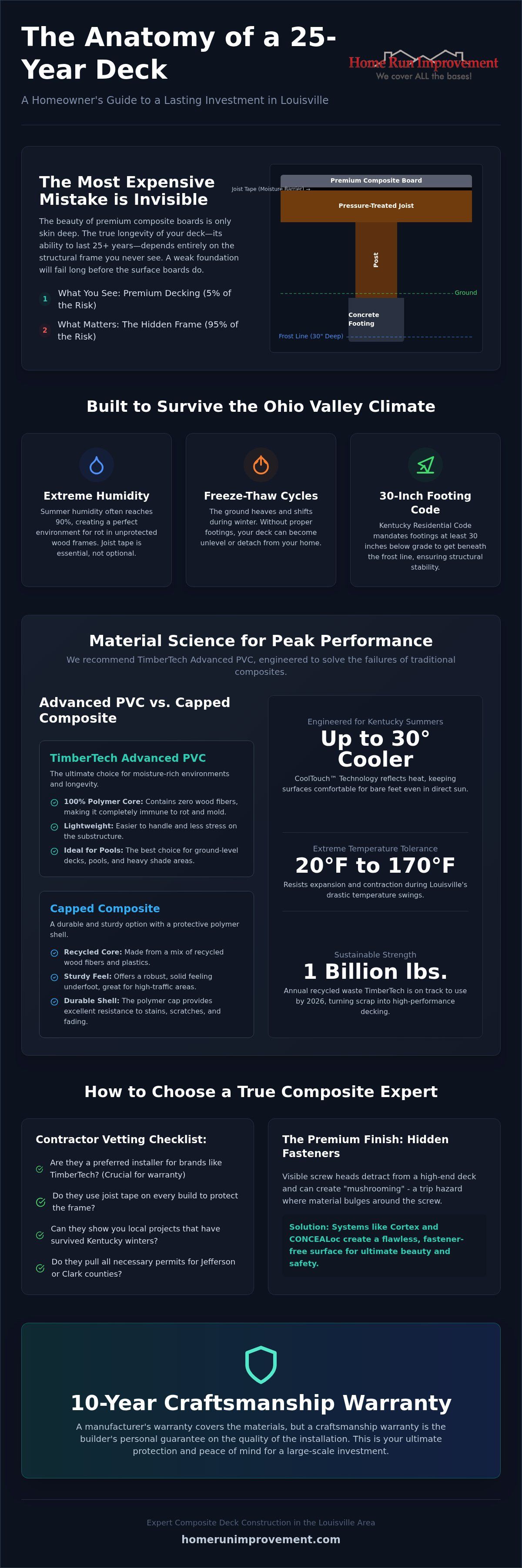
  • Learn why the true longevity of your deck depends on protecting the wood frame with joist tape, even when using premium 25-year boards.
  • Discover how to vet a specialized composite deck builder to ensure your project meets strict local codes and qualifies for full manufacturer warranties.
  • Understand the performance of TimberTech Advanced PVC, which is engineered to withstand Ohio Valley temperature swings from 20°F to 170°F.
  • Navigate the essential permit and planning steps required for homeowners in Jefferson and Clark counties to avoid costly construction delays.
  • Gain long-term security by learning about the protection offered by a 10-year craftsmanship warranty from a locally owned expert.

Choosing a Composite Deck Builder in Louisville: Why Local Expertise Matters

A general handyman might be capable of fixing a leaky faucet or patching drywall, but a specialized Composite Deck Builder is a structural expert. While a generalist often treats composite boards exactly like pressure-treated wood, a specialist understands that synthetic materials require precise expansion and contraction tolerances. If you choose a builder who lacks this specific knowledge, you risk the structural failure of a high-end investment. We believe that a premium project should be a permanent solution, which is why our philosophy focuses on protecting the homeowner from common industry shortcuts that lead to sagging or warped boards.

The "Protective Expert" approach prioritizes the integrity of the frame over the aesthetics of the surface. Most homeowners focus on the color of the boards, but the true value of your deck lies in the ledger board connection and the depth of the footings. In the Ohio Valley, building a deck is an engineering challenge against the elements. Choosing a locally owned and operated contractor ensures you're working with someone who is accountable to the community and understands the specific soil conditions found in neighborhoods like Anchorage and Prospect.

Louisville Weather and Your Deck Foundation

Louisville’s climate is notoriously aggressive toward exterior structures. With summer humidity levels frequently reaching 90%, untreated or poorly ventilated wood framing will rot long before your composite boards show any signs of wear. Furthermore, the Kentucky Residential Code requires deck footings to be at least 30 inches below grade to remain below the frost line. If your Composite Deck Builder doesn't account for the local freeze-thaw cycle, the ground will heave and shift, causing your deck to become unlevel or pull away from your home. Moisture resistance is not a luxury in the Louisville area; it is the absolute baseline for survival.

Vetting Your Contractor for Longevity

When you interview potential contractors, ask direct questions about their sub-structure protection methods. You should verify their status as a preferred installer for brands like TimberTech, as professional installation is required for warranty compliance. A contractor with deep roots in areas such as Indian Hills or Hurstbourne will be able to show you local projects that have already survived several Kentucky winters. Always look for a clear 10-year craftsmanship warranty. This level of commitment ensures that the builder takes personal responsibility for every detail, treating your property with the same care as their own.

Advanced Materials: TimberTech PVC and Composite Performance

Selecting the right surface material is the second most critical decision for your project. While the frame is the heart of the deck, the boards are what you'll live on every day. As a professional Composite Deck Builder, we recommend TimberTech because their engineering solves the specific failures of early-generation synthetics. TimberTech Advanced PVC is a 100% polymer product, meaning it contains zero wood fibers. This science is vital in Louisville, where high humidity usually invites rot and mold into traditional materials. If you choose a material with wood fillers, you're still inviting organic decay into your outdoor space.

One common objection homeowners raise is surface heat. TimberTech addresses this with materials engineered to perform across a massive temperature range, specifically from 20°F up to 170°F. Their CoolTouch Technology ensures that your deck remains comfortable under the Kentucky sun, staying up to 30° cooler than many competitive products. Beyond performance, these materials are a win for the environment. TimberTech is on track to utilize 1 billion pounds of waste and scrap annually by the end of 2026, turning recycled content into high-performance outdoor flooring that mimics the deep grain of real wood without the risk of splinters.

Advanced PVC vs. Capped Composite

Choosing between Advanced PVC and capped composite depends on your specific lifestyle. PVC is significantly lighter and completely moisture-proof, making it the ideal choice for pool surrounds or homes with heavy shade. Capped composite features a durable polymer shell over a recycled wood and plastic core, offering a sturdy feel underfoot for high-traffic areas. Both options eliminate the need for annual staining or sanding. However, professional installation is required for warranty compliance, ensuring your investment is protected by the manufacturer's long-term guarantees. If you're unsure which material fits your backyard's exposure, you can request a material comparison from our team.

The Aesthetic Advantage of Hidden Fasteners

A premium deck should not be littered with visible screw heads. We utilize hidden fastener systems like Cortex and CONCEALoc to create a sleek, fastener-free surface. Traditional surface-screwing often leads to "mushrooming," where the composite material bulges around the screw head and creates a trip hazard. Hidden fasteners prevent this damage and ensure the boards can expand and contract naturally without warping. This level of precision creates clean lines that significantly enhance your home's curb appeal and long-term value, providing a smooth finish that looks professional and feels secure.

The Invisible Standard: Protecting the Sub-structure with Joist Tape

The biggest industry secret in outdoor construction is a lifespan mismatch. Most homeowners see a 25-year or 50-year warranty on their composite boards and assume the entire structure is permanent. However, the wooden frame underneath rarely lasts that long without specialized protection. If your Composite Deck Builder uses standard pressure-treated lumber without a moisture barrier, the frame will likely begin to rot within a decade. This leads to a heartbreaking scenario where you have perfectly good boards sitting on a structural frame that is no longer safe to walk on. We believe a deck is only as good as the skeleton that supports it.

The Science of Wood Rot in Deck Framing

Rot occurs when water becomes trapped in the narrow space between the deck board and the joist. This "rot sandwich" prevents evaporation and allows moisture to seep into screw holes, where it slowly dissolves the wood fibers from the inside out. We only use kiln-dried, moisture-resistant lumber for our sub-structures to minimize the natural warping that occurs with "wet" wood. Joist tape is the critical waterproof barrier that seals the top of your frame and prevents moisture from reaching the wood fibers where rot begins. By applying TimberTech ProTac Joist Tape, we ensure that the frame's lifespan actually matches the longevity of the premium boards you've selected.

Installation Best Practices for Framing

A rigid, high-end feel underfoot is not an accident; it is the result of strict framing standards. Joist spacing should never exceed 16 inches on center, and for a truly rock-solid surface, we often recommend 12-inch spacing. To prevent boards from warping or twisting over time, we install flush blocking every 4 to 6 feet. This extra step provides lateral stability and ensures the joists remain perfectly upright. If the framing is neglected, the surface will eventually develop "waves" or a bouncy feel that ruins the outdoor experience.

Precision installation also requires matching the protection to the specific structural component:

  • Standard Joists: We use 1.625-inch tape to cover the top of every individual joist.
  • Double Beams: We utilize 3.25-inch or 4-inch tape to seal the seams where two boards are sandwiched together.
  • Ledger Boards: Specialized flashing and tape ensure water cannot migrate behind the board and into your home's foundation.

When you choose a builder who follows these invisible standards, you're protecting your home from the structural failures common in cut-corner projects. Our commitment to these details is why we can offer a 10-year craftsmanship warranty that provides genuine peace of mind. We don't just build for the initial reveal; we build for the next quarter-century of use.


Designing Your Outdoor Living Space: From Permits to Planning

Designing a high-performance deck involves more than choosing a color and a layout. A professional Composite Deck Builder approaches the design phase with the same precision as an architect, ensuring that every structural calculation meets the 2018 Kentucky Residential Code. In Jefferson County, Louisville Metro Planning and Design Services requires a building permit for any deck attached to a house or any structure higher than 30 inches above grade. If you skip this step, you risk the forced removal of the deck or significant issues during a future home sale. We handle the permit process to protect you from these administrative pitfalls.

Every design must account for a live load of at least 40 pounds per square foot. While generic online design tools might help you visualize a space, they rarely account for the specific engineering needs of your property's soil or the ledger board connection to your home's unique rim joist. When you choose a qualified Composite Deck Builder, your design undergoes a rigorous review to ensure it remains stable through decades of use. This planning stage is the ideal time to map out zones for dining, grilling, and lounging to ensure the traffic flow feels natural rather than cramped.

Planning for Stairs and Code Compliance

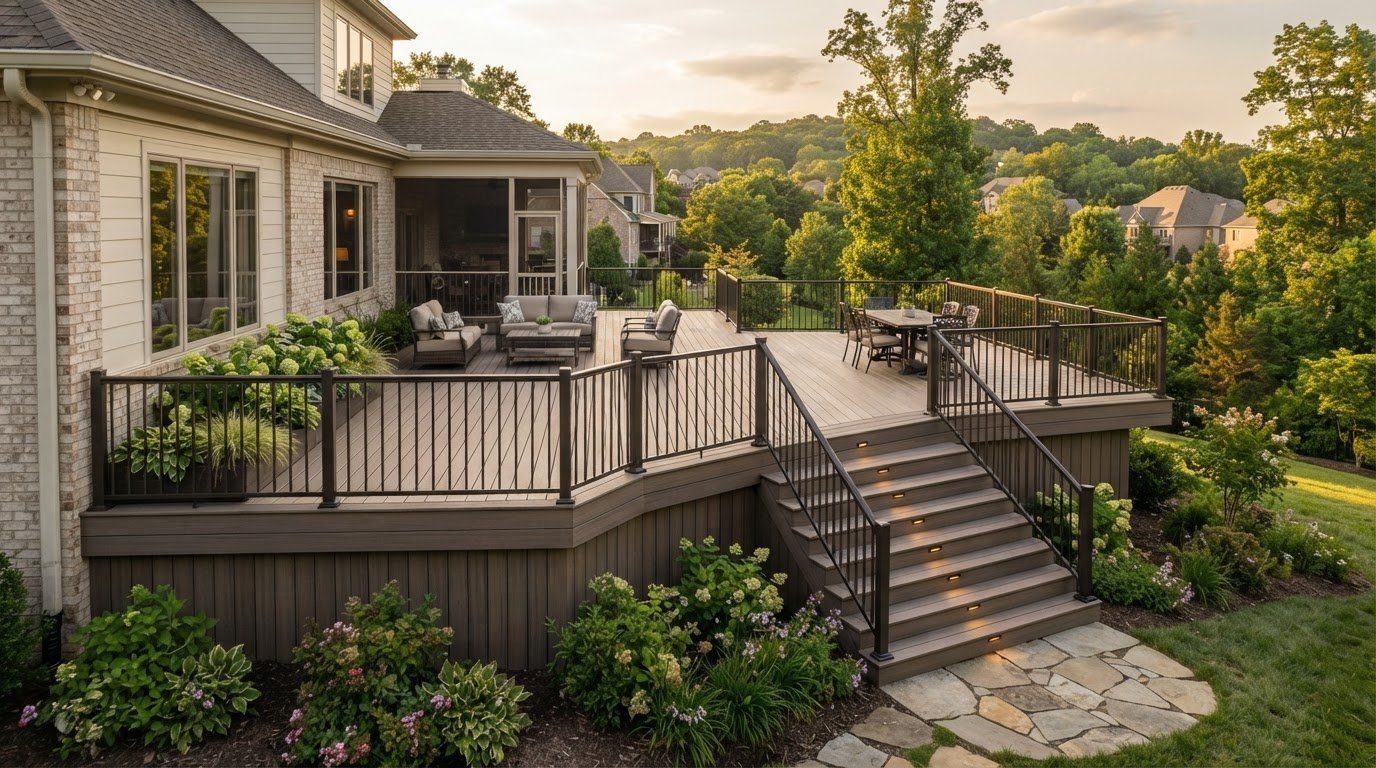
Stairs are often the most scrutinized element of a local building inspection. For safety and compliance, the rise and run of each step must be consistent to prevent trip hazards. Because composite boards are more flexible than traditional lumber, stair stringer spacing must be tighter, typically 12 inches or less on center. This prevents the bouncy feel that occurs when builders use standard 16-inch spacing. Additionally, local codes in Southern Indiana and Louisville require graspable handrails that meet specific diameter standards, ensuring that everyone can navigate the levels of your deck securely.

Enhancing Functionality with Lighting and Drainage

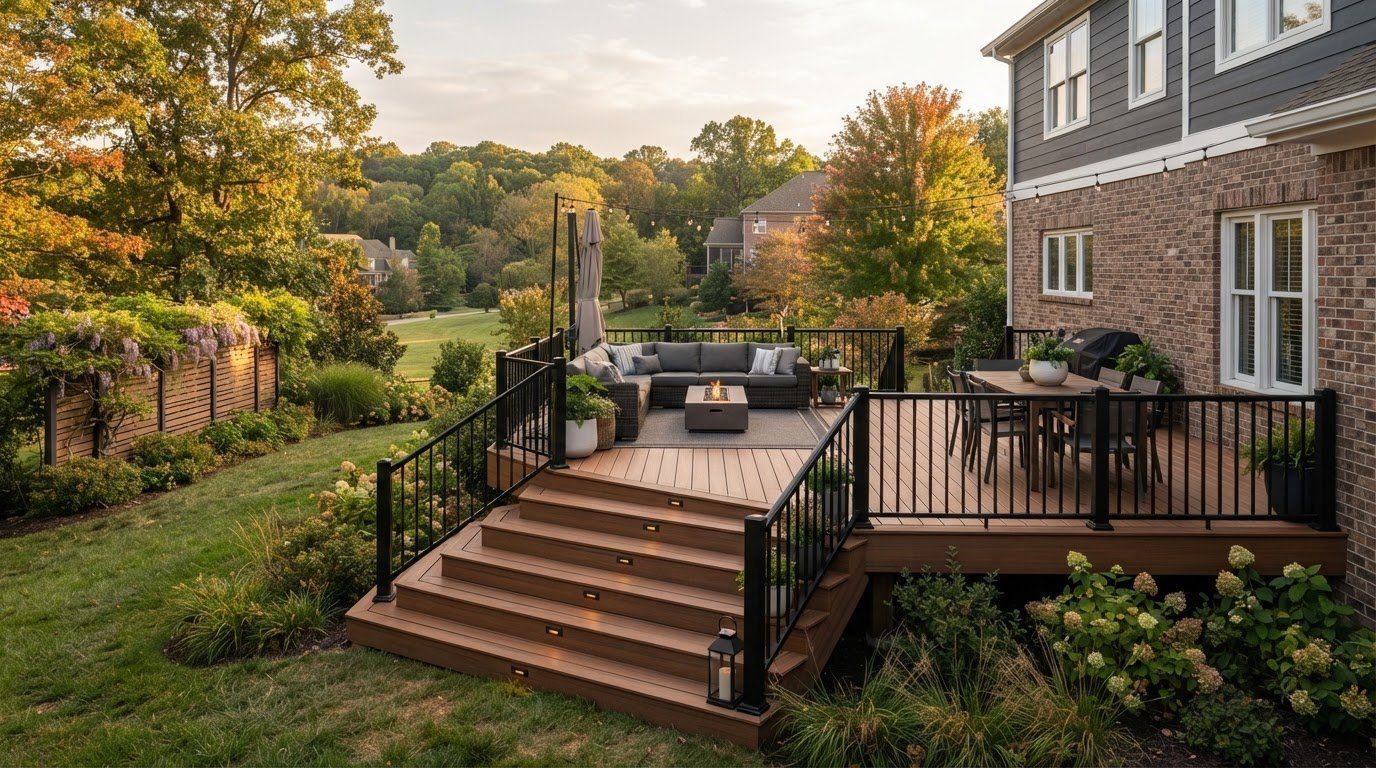
A well-designed deck remains functional long after the sun sets. We integrate recessed stair lights and post cap lights early in the planning phase to ensure all wiring is hidden within the sub-structure. For homeowners building two-story decks, we can install under-deck drainage systems. These systems divert water away from the area below, creating a dry, usable patio space underneath your main deck. If you plan for these features during the initial design, you avoid the high cost of retrofitting them later.

Start your professional deck design today

The Home Run Difference: 10-Year Warranty and Local Roots

Most contractors in the Ohio Valley offer a standard one-year labor warranty, but we believe that is insufficient for a project intended to last a quarter-century. If a builder isn't willing to stand behind their structural work for at least a decade, they likely aren't following the rigorous "invisible" standards required for long-term stability. As a locally owned and operated Composite Deck Builder, we take personal responsibility for every ledger board connection and footing we pour. We don't just finish a project and disappear; we remain a dependable fixture in the Louisville community, ensuring your investment remains secure for years to come.

Our approach is built on accountability. We understand the specific anxieties that come with large-scale home investments, which is why we prioritize structural integrity over quick turnarounds. When you choose a partner with deep local roots, you're choosing a contractor who treats your property with the same level of care as their own. This commitment to quality is what separates a professional installation from a general handyman project.

Why a Craftsmanship Warranty Matters

It is essential to distinguish between the manufacturer’s material warranty and the builder’s labor warranty. While TimberTech provides industry-leading material guarantees, those warranties often require proof of professional installation to remain valid. Our 10-year craftsmanship warranty protects your investment against installation errors that might not surface until several Kentucky freeze-thaw cycles have passed. This long-term guarantee is the core of our "Protective Expert" philosophy. If you choose a builder who ignores joist tape or proper spacing, you risk structural failures that a material warranty won't cover. We provide the peace of mind that comes from knowing the job was done right the first time.

A Legacy of Quality in the Louisville Community

Our expertise isn't limited to the surface of your deck. Because we are a "one-stop" exterior expert specializing in roofing and siding, we have a superior understanding of how water migrates across your home’s envelope. This knowledge allows us to build decks that integrate perfectly with your existing structure without risking water damage to your foundation. We have a proven track record of excellence in neighborhoods like Hurstbourne and Glenview, where homeowners demand both aesthetic beauty and structural resilience.

If you are ready to reclaim your weekends and upgrade your outdoor living space, contact us today to schedule your consultation. We will provide a comprehensive review of your property and a free estimate for your Louisville deck project. Let us show you how a professional Composite Deck Builder can transform your backyard into a permanent, low-maintenance retreat.

Build Your Legacy on a Foundation of Excellence

Investing in a premium outdoor space shouldn't be a gamble on how long the hidden framing will last. You've learned that a truly durable deck depends on the invisible details, from moisture-sealing joist tape to footings that sit deep below the Kentucky frost line. When you choose a specialized Composite Deck Builder, you're ensuring that the science of the materials matches the precision of the installation. We've seen too many homeowners forced to replace rotting frames underneath perfectly good boards; our methods are designed to prevent that exact failure and provide lasting structural stability.

As a locally owned and operated TimberTech Preferred Installer, we take personal responsibility for every structural connection we make. Our 10-year craftsmanship warranty provides the long-term security you need to invest with absolute confidence. If you prioritize quality and integrity, then you're ready to build a space that remains a dependable fixture of your home for the next quarter-century. We're ready to help you navigate the permits and planning to create a backyard retreat that stands the test of time.

Get Your Free Composite Deck Estimate in Louisville

Frequently Asked Questions

Is a composite deck builder more expensive than a wood deck builder?

The upfront cost of hiring a professional Composite Deck Builder is higher than a standard wood contractor because of material prices and specialized labor. However, if you account for the annual cost of staining, sanding, and eventual wood rot, composite is the more economical choice over a ten-year period. You avoid the recurring expenses of chemical treatments while maintaining a surface that looks new for decades.

How long does a composite deck actually last in Louisville humidity?

High-quality composite boards are engineered to last 25 to 50 years in our intense local humidity. While the Ohio Valley's moisture levels quickly degrade traditional lumber, synthetic polymers are immune to rot and insect damage. The real variable is the sub-structure. If the frame is properly protected with joist tape, your deck will remain structurally sound for the full lifespan of the premium surface materials.

Does composite decking require any maintenance at all?

Composite materials are low-maintenance but not maintenance-free. You will never need to sand, stain, or seal your deck, but you should perform a basic cleaning with soap and water at least twice a year. This prevents pollen, dirt, and organic debris from building up in the grain. If you live in a heavily wooded area, more frequent rinsing helps maintain the slip-resistant surface and aesthetic clarity.

Can I install composite decking over my existing wood frame?

You can only install new boards over an existing frame if the original structure is in perfect condition and meets current safety codes. We must verify that the joists are spaced no more than 16 inches apart and that the footings reach the 30-inch frost line. If the frame shows any signs of soft spots or structural sagging, a full replacement is required to protect your investment.

What is the best composite decking brand for the Kentucky climate?

TimberTech Advanced PVC is specifically engineered for the drastic temperature swings found in the Louisville area. It maintains its structural integrity from 20°F in the winter up to 170°F in the peak of summer. Because it contains no wood fibers, it won't swell or contract like cheaper alternatives. This makes it the most resilient choice for homeowners who want a deck that survives the Kentucky climate.

Do I need a building permit for a deck in Louisville, KY?

A building permit is mandatory for any deck in Louisville that is attached to the dwelling, exceeds 200 square feet, or stands more than 30 inches above the ground. Louisville Metro Planning and Design Services oversees these requirements to ensure structural safety. If your project meets these criteria, we handle the application process to ensure your new structure is fully compliant with the 2018 Kentucky Residential Code.

How does the 10-year craftsmanship warranty protect my new deck?

Our 10-year craftsmanship warranty covers any issues resulting from the installation process, such as improper ledger board attachment or sagging due to poor joist spacing. While manufacturer warranties cover material defects like fading or staining, they don't protect you if the builder cuts corners on the frame. If you choose a Composite Deck Builder who offers this level of protection, you're securing your home's long-term value.

Does composite decking get too hot for bare feet in the summer?

Modern composite technology has significantly reduced heat retention compared to older generations of synthetic decking. TimberTech products featuring CoolTouch Technology can stay up to 30° cooler than competitive boards in direct sunlight. While any dark surface will absorb heat, choosing a lighter color and a PVC-based material ensures the surface remains comfortable for bare feet even during the most intense July heatwaves in Southern Indiana.
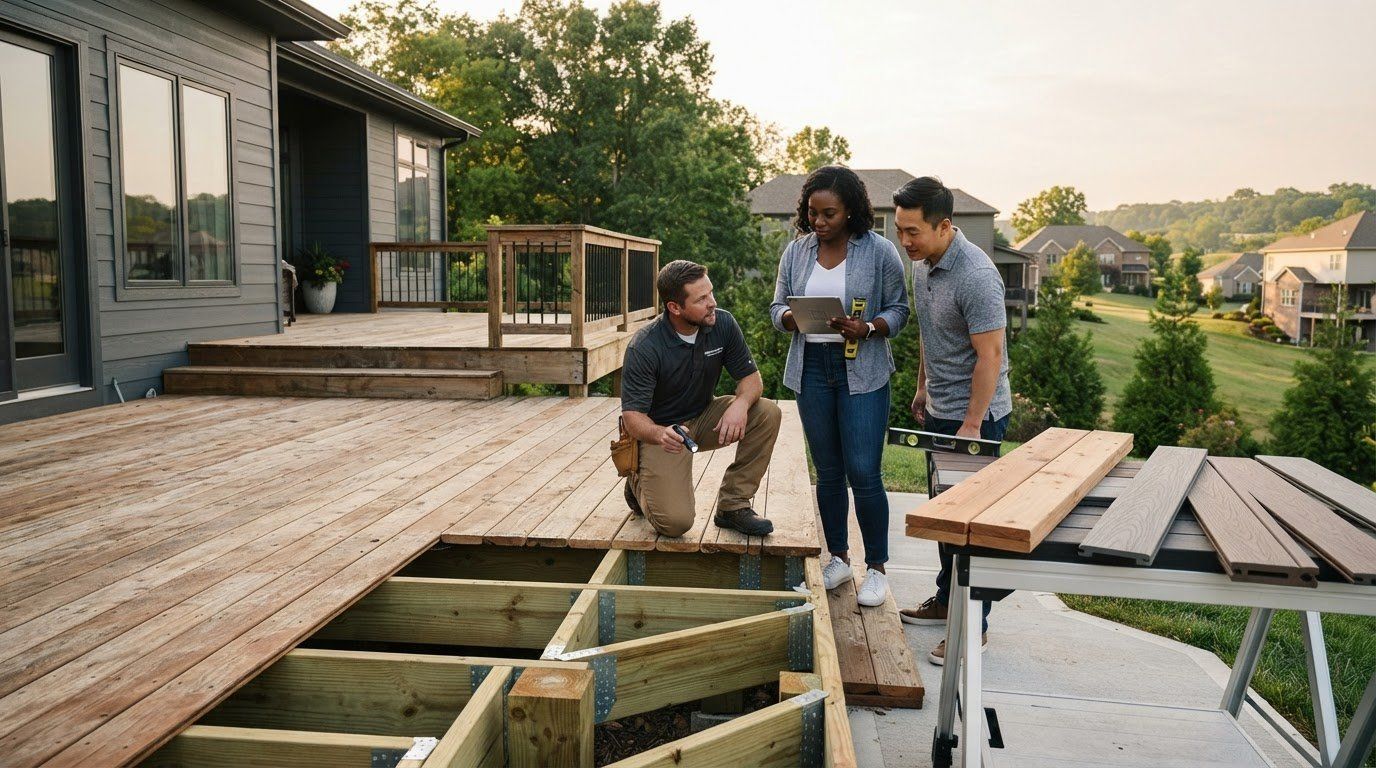
Three people inspect a wooden deck under construction beside a house, with tools and framing exposed.
By Pat McIntyre • September 29, 2026
Transform your backyard with a custom deck from Home Run Improvement. Composite decking, premium railings, covered decks and more in Louisville, KY.
By Pat McIntyre • September 28, 2026
What if the best deck for your Louisville home isn’t the biggest one, but the one planned around how you’ll use it? Choosing among Custom Deck Builders Louisville KY | Home Run Improvement starts with more than comparing designs. You need a clear plan, sound construction, and a contractor you can trust with your home. It’s reasonable to have questions before committing: Which materials fit your home and upkeep preferences? What belongs in the project scope? And what permits or structural considerations apply? In Louisville , a building permit is required for a deck attached to a house, regardless of size. The Louisville Metro Construction Review resources can help you understand the local process. This guide will help you shape a deck plan around your outdoor routines, compare material and project-scope decisions, and know what to discuss with a local builder. You’ll also learn why clear communication about permits and structural requirements matters. Home Run Improvement is locally owned in the Louisville area and offers professional decking services, giving you a local option as you move from early ideas toward a considered estimate and build. Key Takeaways Start with how you’ll use the deck, then plan its layout around access, seating, movement, and the space available in your yard. Choose materials by weighing your property’s needs, preferred upkeep, appearance, and reliable product guidance. Compare builder proposals for what’s included, material details, site preparation, construction scope, exclusions, and how questions or changes will be handled. Project steps and local requirements depend on your property and design; check current guidance from Louisville Metro Construction Review. Learn what to discuss with Custom Deck Builders Louisville KY | Home Run Improvement, a locally owned Louisville-area contractor offering residential decking and free estimates. Why Plan a Custom Deck for Your Louisville Home? A useful deck should fit the home, the way your household spends time outdoors, and the space your property actually offers. A layout that works well for dining may feel awkward for relaxing or moving between the house and yard. Planning around your priorities helps coordinate access, seating, circulation, and the connection to the rest of your outdoor space. A custom deck project is a deck designed around a specific property and the ways its owners intend to use it. That means understanding the site and household needs before settling on features or a footprint. For a general overview of deck structures and common considerations, see Deck . If you’re comparing Custom Deck Builders Louisville KY | Home Run Improvement, begin with the needs your design must meet, not a preset list of add-ons. This video offers a visual introduction to deck construction: https://www.youtube.com/watch?v=PkvKO8GchyE Start with how you want to use the deck Decide what the deck needs to do in everyday life. Is the main purpose outdoor dining, a place to relax, room to entertain, or easier access to the yard? Consider household routines, who may visit, and how people will move between indoor and outdoor spaces. A dining area, for example, needs comfortable circulation around the table, while a quiet seating area may call for a more sheltered position. Write down your priorities before speaking with prospective builders. A short list keeps design conversations focused and gives you a practical way to compare ideas: Primary activities, such as dining, relaxing, or entertaining How many people the space should comfortably serve Where you need access between the house and yard Features you consider essential versus optional Account for the home and outdoor space The property should shape the plan. Door locations influence where people enter the deck; existing grade and available space can affect its layout and connection to the yard. Privacy may also matter, especially if neighboring homes or outdoor areas are close by. These details are why a standard footprint shouldn’t be assumed to suit every Louisville property. A site-specific assessment helps identify constraints and opportunities before design decisions become fixed. Bring those observations to a design conversation with a local professional. Home Run Improvement offers residential decking in the Louisville area; its Louisville decking services page provides a starting point for discussing your project. A clear understanding of how you’ll use the deck and what the site allows can make the next design and scope decisions more grounded. How to Shape a Custom Deck Design for Your Louisville Property A strong design brief turns household priorities into decisions a builder can assess: where the deck connects to the house, how people will move through it, and which features matter most. Separate preferences you can define now, such as a dining area or a clear route to the yard, from details that require an on-site assessment, including how the existing structure and grade affect the design. Match the layout to daily use and site conditions Deck size, transitions, stairs, and circulation work together. For example, a route from a frequently used door to the yard should remain clear even if the deck also needs room for seating. Note which access points and activities are priorities, then ask a builder to evaluate how the property can accommodate them. Framing, joist layout, and other structural details aren’t preferences to guess at; they require qualified professional judgment based on the specific project. Before finalizing plans, check applicable requirements with the authority having jurisdiction. Louisville Metro’s Construction Review resources are a useful place to confirm where to direct questions about projects in Louisville. Requirements may differ by location, so verify them for the property rather than relying on assumptions. Compare decking materials without assuming one choice fits everyone Compare material categories against the conditions of the site and the care you’re prepared to provide. Wood and composite decking, for example, can differ in appearance and upkeep expectations, but the specifics depend on the product. Review the manufacturer’s instructions for the material under consideration, including its installation guidance. Don’t assume that details for one product apply to another. Ask prospective builders to explain how the proposed material affects the project scope and construction details. Product-specific guidance should inform the plan, while structural decisions should be reviewed by a qualified professional. For general homeowner resources related to deck safety and the industry, the North American Deck and Railing Association (NADRA) is another source to consult. Turn priorities into a useful design brief Before discussing options with Custom Deck Builders Louisville KY | Home Run Improvement or another prospective builder, organize your ideas into a brief: Use: Identify the main activities and who will use the deck. Access: Note the doors, yard connections, and transitions that matter. Look and upkeep: Describe your appearance preferences and maintenance expectations. Questions: List site, material, structural, and local-requirement items that need professional review. This gives a builder a clearer starting point without treating an early wish list as a finished plan. If you’re ready to discuss how your priorities might translate to a project scope, you can contact Home Run Improvement about your deck project . How to Compare Custom Deck Builders in Louisville, KY A proposal is useful only when you can tell what the builder is agreeing to do. A low headline figure alone doesn’t establish equal scope, workmanship, or value. One estimate may include site preparation or specified materials that another leaves out. Before comparing totals, make sure you understand what each proposal covers and what could remain your responsibility. Compare proposals by scope, materials, site preparation, construction details, responsibilities, stated exclusions, communication, and applicable warranty terms. That checklist can help you spot meaningful differences and ask focused questions before choosing a contractor. Questions to ask before choosing a deck contractor Ask for examples of completed deck work relevant to your project, then clarify exactly what the proposal includes. Who will coordinate the site evaluation and design decisions? Who is your point of contact during construction, and how will questions or requested changes be documented and shared? Clear answers help you understand how the work will be managed, not just what the finished deck might look like. Request written explanations of the materials, site preparation, construction scope, and any exclusions. Ask which responsibilities belong to you and which belong to the contractor. If a warranty is mentioned, request its written terms and confirm that it applies to the proposed decking work. For homeowners considering Custom Deck Builders Louisville KY | Home Run Improvement, the same questions help create a fair, informed basis for comparing proposals. How to assess workmanship and documentation Review relevant project photos and customer feedback for clues about communication, coordination, and the overall client experience. Treat them as one source of information, not proof of structural quality or compliance. Home Run Improvement customer testimonials may help you understand reported customer experiences; confirm that any example you rely on relates to decking. Ask how structural details will be evaluated and who is responsible for confirming that the design and installation guidance suit the property and selected materials. Those decisions should be addressed by qualified professionals, not left vague in the proposal. For Louisville-area projects, confirm applicable permitting and inspection requirements with the authority having jurisdiction, and ask how the proposal accounts for any required reviews. Keep the comparison practical: if a proposal is unclear about a material, exclusion, or responsibility, ask for clarification in writing before moving forward. A careful review makes it easier to distinguish a complete, well-documented scope from one that only looks comparable at first glance. If you’d like to discuss a decking project with Home Run Improvement, you can contact the Louisville team . What to Expect During a Custom Deck Project in Louisville A well-managed deck project moves through clear stages, but the details aren’t identical for every home. The property, proposed design, selected materials, and applicable local requirements all affect the process. Before work begins, make sure you understand what has been assessed, what the agreed scope includes, and who will answer questions as decisions come up. As you work with Custom Deck Builders Louisville KY | Home Run Improvement or another prospective contractor, expect to move through a sequence like this: Discuss goals: Explain how you plan to use the deck and what matters most. Assess the site: Review access, grade, the home, and other conditions that may affect the design. Confirm the scope: Clarify proposed materials, site preparation, construction details, exclusions, and responsibilities. Verify requirements: Check permit and inspection questions with the authority having jurisdiction. Plan construction: Agree on communication and worksite coordination before the build proceeds. The order and exact steps may vary. A straightforward layout and a project with more complex site conditions may call for different planning and review. Site assessment, scope, and approvals A contractor should clarify relevant site conditions and proposed work before the project scope is finalized. Ask what assumptions the plan depends on and whether further review may affect the design. Don’t rely on a general answer about permits or inspections; requirements can depend on the property and jurisdiction. Confirm current guidance directly with Louisville Metro or the appropriate local authority for your address. For Louisville properties, the Louisville Metro Construction Review resources provide an official starting point for permit questions. If the property falls under a different jurisdiction, contact that authority instead. Verify applicable approvals and inspection steps before construction planning is treated as complete. Construction details and homeowner communication Ask who will review structural details, coordinate the worksite, and keep you informed if a question or proposed change arises. The selected product matters, too. Any product-specific spacing, fastening, or other installation requirements should be checked against the current instructions from that product’s manufacturer. Request the applicable documents for the material in your proposal, then ask how they inform the construction plan. Keep written records of the confirmed scope, selected materials, responsibilities, and decisions made during the project. That gives both you and the contractor a shared reference if questions arise and helps prevent assumptions from becoming surprises. Discuss your Louisville deck project with Home Run Improvement Choose Home Run Improvement for Custom Decking in Louisville Choosing a deck contractor means finding a local professional who can discuss your priorities, review the property, and explain the proposed scope clearly. Home Run Improvement is a locally owned Louisville-area contractor offering residential decking. Its Louisville decking service page is a starting point for learning about the service and beginning a project conversation. Home Run Improvement provides free estimates. An estimate is most useful when it reflects the actual property and a clearly described project, rather than assumptions about size, materials, or site conditions. Ask what the estimate covers and request clarification about materials, preparation, construction details, exclusions, and responsibilities. If warranty coverage matters to you, ask whether it applies to the proposed decking work and request the written terms before making a decision. What to bring to an initial deck conversation A little preparation can make an early discussion more productive. Bring photos of the house and outdoor area, a short list of how you hope to use the deck, and questions about layout or material preferences. Point out the doors people use, how you want to reach the yard, and any known site constraints. Be candid about what you know and what remains uncertain. These details help frame the conversation, but they don’t replace a review of the actual property. Recommendations depend on site conditions, the proposed design, selected materials, and the confirmed project scope. Treat an initial idea as a starting point, not a final construction plan. Take the next step with a Louisville deck builder Homeowners searching for Custom Deck Builders Louisville KY | Home Run Improvement can use the first conversation to discuss goals, site conditions, and what information is needed for a project-specific estimate. Bring your priorities, ask how the proposed scope will be clarified, and make sure you understand the estimate before deciding how to proceed. Request a free estimate for your Louisville deck project Move Forward with a Deck Plan That Fits Your Home A successful deck project starts with a clear idea of how you’ll use the space, then turns that idea into a design that accounts for your property, materials, construction details, and local requirements. Compare proposals by what they actually include, and ask questions until the scope and communication plan are clear. If you’re considering Custom Deck Builders Louisville KY | Home Run Improvement, Home Run Improvement is a locally owned Louisville-area contractor offering residential decking. Free estimates are available, giving you a chance to discuss your goals and the details of your project. Confirm the proposed scope and any project-specific terms before moving ahead. Bring your ideas, questions, and knowledge of the property to the conversation. A thoughtful plan can help you take the next step with greater clarity and confidence. Request a free estimate for your Louisville deck project Your yard can become a more useful extension of your home, one considered decision at a time. Frequently Asked Questions How do I choose a custom deck builder in Louisville, KY? Compare written proposals for scope, materials, site preparation, construction details, exclusions, and communication responsibilities. Ask for relevant deck examples, written warranty terms, and clarification about changes before choosing; a low estimate alone doesn’t establish equal value. Home Run Improvement is locally owned in Louisville and serves Louisville, Southern Indiana, Anchorage, Crestwood, Glenview, Hurstbourne, Indian Hills, Jeffersontown, Prospect, Clarksville, Bardstown, and Mt. Washington. What should I consider when planning a custom deck? Start with how you’ll use the deck, such as dining, relaxing, entertaining, or reaching the yard. Then consider the home’s doors, property layout, existing grade, privacy, and available space. Decide what matters most in appearance and upkeep, but leave structural details to qualified professionals after they assess the site. Your design, materials, and project scope should work together rather than being selected as unrelated features. Do I need a permit to build a deck in Louisville? Louisville requires a building permit for a deck attached to a house, regardless of size. A permit is also required for a freestanding deck over 200 square feet or with any portion more than 30 inches above ground. Requirements can vary outside Louisville Metro, so check with the authority for your property. See Louisville Metro Construction Review for current local guidance. How long does it take to build a custom deck? There isn’t one reliable timeline for every custom deck. The schedule can depend on the property, design complexity, selected materials, confirmed project scope, and applicable local requirements. Ask the contractor to explain the expected sequence, including site assessment, scope confirmation, any required approvals, and construction planning. Request updates about schedule changes, too. A project-specific estimate and clear communication are more useful than relying on a generic duration. Which decking material is best for a custom deck? The best material depends on the property, the appearance you prefer, and how much upkeep you’re prepared to handle. Compare material categories such as wood and composite based on those priorities, then review the current manufacturer instructions for the specific product under consideration. Installation requirements and care guidance can differ by product, so don’t assume one material’s instructions apply to another. Ask your builder to explain how the selected material affects the project scope. Does Home Run Improvement offer a warranty on deck projects? Home Run Improvement’s business information states that its craftsmanship is backed by a 10-year warranty, but the available information doesn’t confirm whether or how that warranty applies to decking. Before relying on it, ask the company for the written warranty terms and confirmation of coverage for your specific deck project. Clarify what workmanship or project elements are covered, along with any conditions or exclusions that apply. Can I choose a custom deck design for my Louisville home? Yes, you can discuss a design shaped around your home, yard, and intended use. Homeowners searching for Custom Deck Builders Louisville KY | Home Run Improvement should bring photos, access preferences, material questions, and a short list of priorities to the conversation. The final design depends on a review of the property, structural considerations, selected materials, and applicable local requirements. Home Run Improvement offers residential decking in the Louisville area.
By Pat McIntyre • September 27, 2026
What if the boards you choose aren’t the biggest factor in how your composite deck looks and lasts? Installation details matter just as much. If you’re comparing Composite Deck Builders Louisville KY | Home Run Improvement , it’s sensible to look for a contractor who understands composite decking and can explain how the project will be planned and built. You already know a deck is a significant investment, and unclear proposals can make it hard to compare contractors. The right questions can help you understand what’s included, how the site will shape the scope, and which decisions affect the finished deck. This guide explains how to assess a builder’s composite-deck experience, plan for durability and appearance, and prepare for a useful estimate. Home Run Improvement is locally owned in Louisville and offers residential decking services and free estimates. As you consider your options, review the selected product’s manufacturer installation guidance , and check project-specific requirements with the Louisville Metro Department of Codes and Regulations. A clear conversation about materials, installation approach, project scope, and applicable requirements is a practical first step toward a deck built to suit your home. Key Takeaways Choose composite decking based on how you plan to use the space, while remembering that materials and performance can vary by product. Assess a builder’s composite-specific experience and ask how the proposal addresses framing, board layout, stairs, edges, and transitions. Look beyond the boards: substructure, drainage, fastening, and finish details all influence the completed deck. Prepare photos, rough dimensions, access details, and questions so your project discussion can clarify goals and scope. Use this guide to compare Composite Deck Builders Louisville KY | Home Run Improvement and plan informed next steps with a local contractor. Why choose composite deck builders in Louisville, KY? A composite deck is made with boards that combine wood-based material and plastic, though the ingredients and performance vary by product. For a plain-language overview, see understanding composite materials . The boards are only one part of the project: the supporting structure, layout, stairs, and transitions all contribute to how the finished deck functions and looks. Start with how you want to use the space. A dining area may need clear access from the house, while a spot for relaxing may call for a different layout. Those goals help shape discussions about deck size, circulation, and where stairs should lead. For a Louisville contractor’s decking service details, visit decking services in Louisville . To see an example of composite decking installation, watch this video: https://www.youtube.com/watch?v=kLPIIwLDZUY  What does a composite deck builder handle? Confirm the project scope with the contractor. Planning and installation may involve reviewing the site, discussing the selected boards, and coordinating the framing, layout, stairs, and finish details. Ask whether existing framing will be assessed before plans are finalized, and how site constraints such as access or the connection to the home could affect the design. Bring your intended activities into the conversation. How many people should the space accommodate? Where will you enter it, and how should it connect to the yard? Clear answers help the builder evaluate practical choices instead of treating the deck as a set of boards alone. If you’re comparing Composite Deck Builders Louisville KY | Home Run Improvement , ask how the estimate describes the work and any site-dependent items that may need further review. Is composite decking the right fit for your home? Consider the look you want, how the deck will be used, and what level of ongoing care fits your routine. Then review guidance for the specific product under consideration. Cleaning instructions, installation details, and other care expectations can differ, so don’t assume all composite boards behave alike or that the material is maintenance-free. Compare options based on your home, site, and priorities. If the existing structure needs attention or the yard presents constraints, those conditions may affect what’s appropriate. A sound plan accounts for the selected product and the whole deck, not just the visible surface. How to evaluate composite deck builders in Louisville Composite-specific experience should be easy for a contractor to explain. Ask about projects using composite decking and how the team plans the parts that can be easy to overlook: framing, board layout, edge details, stairs, and transitions to the house or yard. A polished surface matters, but a proposal should also show how the full assembly and finish will be addressed. Home Run Improvement offers local decking services in Louisville . Review its Louisville decking services as you compare contractors, and use the questions below to understand each provider’s approach. A search for Composite Deck Builders Louisville KY | Home Run Improvement is only a starting point; clear answers and a written scope are what help you assess fit. Questions to ask about composite deck installation Ask which instructions for the selected product will guide framing, fastening, spacing, and finishing. The industry standards for composite decking offer a reference for material performance, but don’t treat a standards document as proof that a particular product or installation meets every project need. Then ask how the plan accounts for your home, site access, drainage, and existing structure. Clarify who will discuss design decisions, provide scheduling updates, and answer questions as the work progresses. What a clear deck proposal should explain Compare written scopes, not just a headline figure. A lower-looking proposal may leave out work or details another includes. Check that each document identifies the proposed materials and describes the project scope, key construction details, and exclusions. If a product name or specification is unclear, ask for an explanation before comparing proposals. Look for a defined way to handle discoveries, changes, and approvals. If existing framing or site conditions could affect the work, ask how those findings will be documented and discussed before the scope changes. Request any applicable warranty terms in writing, including what work they cover. That makes it easier to compare the actual commitments rather than relying on assumptions. Experience: Ask for relevant composite-deck examples and a clear explanation of the builder’s role. Construction: Discuss framing, layout, edges, stairs, and transitions. Communication: Confirm who answers questions and how changes are approved. Scope: Compare included work, materials, exclusions, and written terms. Bring any open questions to the estimate discussion. If you’d like to talk through a decking project with Home Run Improvement, you can discuss your project with the Louisville team . Composite deck installation details that matter more than the boards Composite boards don’t compensate for a weak plan beneath them. The substructure supports the deck, while drainage, fastening, and finish details influence how the surface performs and looks over time. If water isn’t directed away appropriately, or fastening doesn’t suit the chosen boards, the finished result may not meet expectations even when the material itself is well selected. Separate general construction planning from product-specific instructions. The project needs a sound approach to the supporting structure, site conditions, and connection points. But details such as spacing, fastening, and edge finishing can vary by product. A builder should identify the selected product and explain which current manufacturer instructions will guide its installation. Why framing and fastening must match the selected product Manufacturers define installation requirements for their products; one product’s instructions shouldn’t be assumed to apply to another. Ask how the proposed framing and fastening approach will follow the selected product’s current guidance. Hidden fasteners may be an option for some systems, but compatibility depends on the product and installation system. Don’t assume a fastener is suitable just because it can create a clean-looking surface. If you’re considering TimberTech, use its guidance only when that is the product selected, and confirm the applicable instructions are current. Product availability through a particular contractor should also be confirmed rather than assumed. For homeowners comparing Composite Deck Builders Louisville KY | Home Run Improvement , the useful question is not just which boards are proposed, but how the complete assembly will be built around them. How site conditions shape the finished deck Before finalizing the plan, the builder should assess existing framing, ground conditions, water movement, access, and how the deck connects to the home. For example, limited access may affect how materials reach the work area, while the direction of runoff can inform how the project addresses water flow. These are site-specific considerations, not details that can be settled by choosing a board color. Plan stairs, edges, and transitions with the same care as the main deck surface. Stair placement affects how people move between the deck and yard; border and edge treatments shape the perimeter; transitions need to connect cleanly to adjoining surfaces. Resolve these details early to avoid a finished layout that feels awkward or incomplete. For general context, the International Code Council’s residential deck building codes provide a model-code reference, not confirmation of the requirements that apply to a specific Louisville project. Ask the relevant local authority or your contractor to verify applicable requirements. Careful planning is essential: composite boards still depend on a compatible structure, suitable installation details, and a layout that responds to the site. Plan your Louisville composite deck project with fewer surprises A useful estimate starts with clear goals and enough site information for a contractor to understand what needs review. Prepare in stages: define how you’ll use the deck, note site conditions, discuss material preferences, then review the written scope and confirm next steps. Early preparation helps the estimate conversation focus on your project instead of guesswork. What to prepare before discussing an estimate Write down who will use the deck and what you want to do there. Note preferred access points, privacy needs, and known constraints, such as a narrow route to the yard or an area where water collects. Bring photos and approximate dimensions to help explain the space. They’re useful starting points, not a substitute for an on-site assessment. If you have a preferred composite look or product, mention it as a preference rather than assuming a particular brand or collection is available. Ask what options the contractor currently installs and what product guidance will apply. Keep a short list of questions so details about the site, materials, and project scope don’t get lost in the discussion. How to review scope, schedule, and project communication Once you receive an estimate, read beyond the summary. Confirm which materials and construction tasks are included, and identify exclusions or items that still need assessment. If a product name, specification, or warranty statement is unclear, ask for clarification in writing before relying on it. Agree on how newly discovered site conditions or requested changes will be discussed and documented. Ask who will communicate updates, how approvals will be recorded, and what schedule expectations the contractor can currently provide. These questions help prevent different assumptions about what happens next. Also verify whether local approvals may apply to your specific project. Requirements can depend on project details, so don’t rely on a general rule of thumb. Ask the contractor what steps may be relevant, then confirm applicable permit and code requirements with the Louisville Metro Department of Codes and Regulations. A prepared discussion gives both you and the contractor a stronger basis for defining the work. Home Run Improvement is locally owned in Louisville and offers decking services and estimates. Bring your notes, photos, and questions to help clarify your goals, site conditions, and potential scope. Request a Louisville decking estimate Work with Home Run Improvement on a composite deck in Louisville Home Run Improvement is locally owned in Louisville and offers professional decking services. If you’re considering a composite deck, an estimate conversation can help clarify how your goals, the home, and site conditions shape the possible project scope. It’s also a chance to ask which composite products and fastening systems the company currently installs, rather than assuming a particular product is available. What to expect from an initial project conversation Bring your ideas, photos, approximate dimensions, and questions. Discuss how you expect to use the deck, how you want to access it from the home and yard, and any known site concerns. Material preferences can guide the conversation, but recommendations should depend on an assessment of your specific project. Home Run Improvement offers free estimates. The estimate discussion can help identify what needs further review and clarify what work may be included. It shouldn’t be treated as a promise of a specific product, installation date, or outcome before project details have been confirmed. For an overview of the company’s local work, see its Louisville decking services . How to confirm fit before moving forward Before approving work, review the written scope and ask how the proposed installation approach will follow the selected product’s current instructions. Confirm which materials and construction tasks are included, what remains excluded or subject to site assessment, and how changes will be discussed and documented. Business information for Home Run Improvement reports a 10-year craftsmanship warranty. Before relying on that statement, request the current written terms and confirm whether the coverage applies to your specific decking work, along with any exclusions. A clear explanation lets you assess the proposal on its actual scope and documented commitments. Choosing Composite Deck Builders Louisville KY | Home Run Improvement starts with a straightforward discussion: explain what you want to build, ask how the site and selected materials will be assessed, and make sure the next steps are clear. If the scope and communication approach fit your needs, you can decide whether to move forward with confidence. Contact Home Run Improvement about your deck Start planning a composite deck built around your home A successful composite deck project depends on more than choosing boards. Confirm that the proposed framing, fastening approach, layout, stairs, and finish details suit the selected product and your site. Then compare written scopes carefully so you understand what’s included, what may need further assessment, and how questions or changes will be handled. Composite Deck Builders Louisville KY | Home Run Improvement is a locally owned Louisville contractor offering professional decking services and free estimates. An estimate conversation can help clarify your goals, site conditions, material preferences, and potential project scope. Business information reports a 10-year craftsmanship warranty, but ask for the current written terms and confirm whether they apply to your project before relying on that coverage. With those details in hand, you can take the next step with a clearer understanding of your project and the questions that matter. A well-planned conversation is a practical place to begin. Request a free Louisville decking estimate Your deck should fit the way you live and the conditions of your home. Start with a clear plan, and move forward with confidence. Frequently Asked Questions How do I choose a composite deck builder in Louisville, KY? Choose a builder who can explain composite-specific experience and how the plan addresses the structure as well as the boards. Ask how framing, fastening, board layout, stairs, edges, and transitions will be handled, and which product instructions will guide installation. Compare written scopes and clarify exclusions, communication steps, and warranty terms. Searching for Composite Deck Builders Louisville KY | Home Run Improvement can help you find a local option to evaluate. What should a composite deck installation estimate include? A clear estimate should describe the proposed scope, selected materials, key construction tasks, and any known exclusions. Check whether it explains how framing, fastening, stairs, and finish details will be addressed. Ask how site discoveries or requested changes will be discussed and approved. If a material, specification, schedule expectation, or warranty statement is unclear, request written clarification before comparing it with another proposal. Does composite decking need special installation? Yes. Installation needs to follow the instructions for the specific decking product and fastening system, since requirements can differ. Ask the builder how the selected product’s guidance will inform framing, spacing, fastening, and finishing. The substructure and site conditions also matter. Don’t assume that instructions for one composite board or hidden-fastener system apply to another, or that the boards alone determine the finished deck’s performance. Can composite decking be installed over an existing deck frame? Possibly, but the existing frame needs to be assessed before that decision is made. Its condition, layout, and compatibility with the selected decking product can affect whether it can be reused, modified, or needs other work. Ask the contractor to review the structure and site, then explain the recommendation in the written scope. Don’t assume new boards can simply cover an existing frame without evaluation. Is composite decking maintenance-free? No. Care needs vary by product, so review the selected manufacturer’s cleaning and maintenance instructions rather than relying on a general claim. Ask what routine care the specific boards require and how to address debris or marks appropriately. Composite decking may have different care expectations from other materials, but it shouldn’t be described as maintenance-free unless the selected product’s documentation supports that wording. Does Home Run Improvement offer free estimates for decking projects? Yes. Home Run Improvement offers free estimates for decking projects. An estimate conversation can help clarify your goals, site conditions, and potential project scope. The company is locally owned and based in Louisville, with stated service coverage including Southern Indiana and communities such as Anchorage, Crestwood, Glenview, Hurstbourne, Indian Hills, Jeffersontown, Prospect, Clarksville, Bardstown, and Mt. Washington. Confirm that your project location is covered when you inquire. What warranty applies to a composite deck installed by Home Run Improvement? Home Run Improvement’s business information reports a 10-year craftsmanship warranty, but the applicable terms for a particular composite deck should be confirmed before work is approved. Request the current written warranty and check what decking work it covers, when coverage applies, and what exclusions may apply. Also distinguish contractor workmanship coverage from any separate manufacturer product warranty. Don’t assume one warranty guarantees the other.